Russia Strikes Civilian Passenger Train in Ukraine's Kharkiv Region, Killing at Least Five
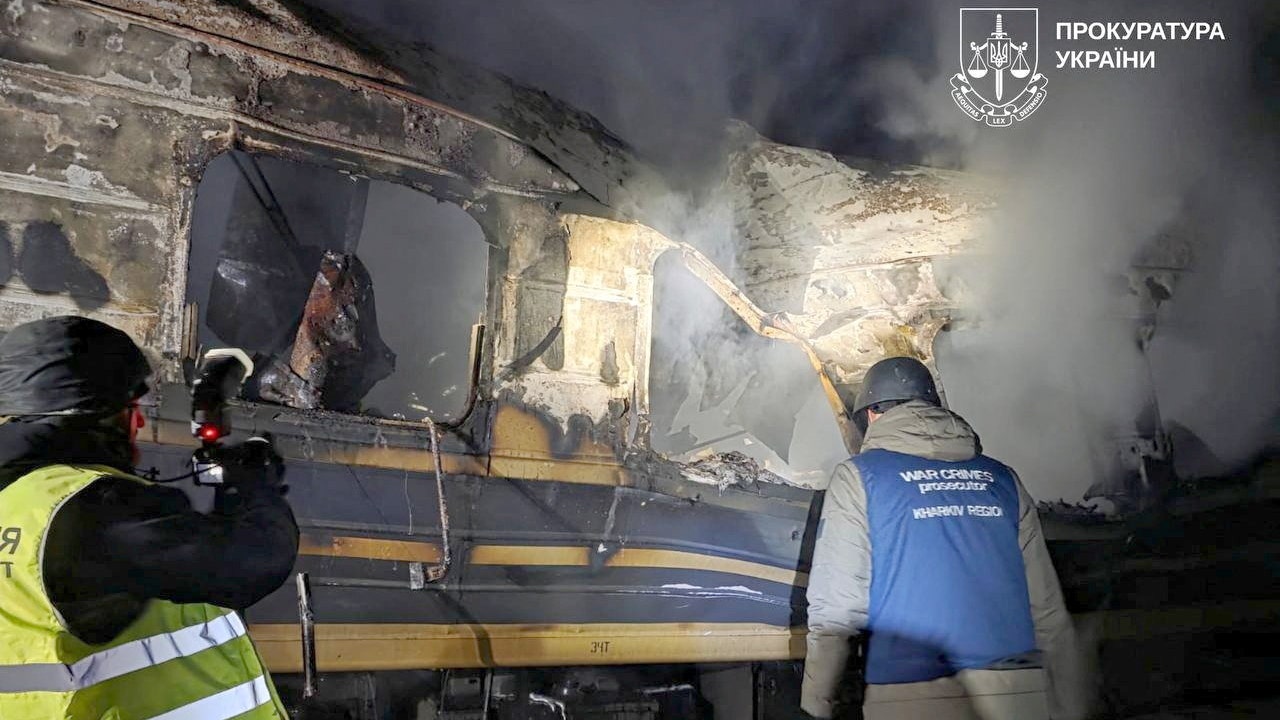
Russia Strikes Civilian Passenger Train in Ukraine’s Kharkiv Region, Killing at Least Five Liberal Liberal outlets depict the train strike as a deliberate Russian attack on civilians, fitting a broader pattern of terror tactics and likely war crimes against Ukraine’s population and infrastructure. They use the incident to argue for stronger international accountability mechanisms and increased Western military and humanitarian support to Ukraine. @@l9p7…jv8z
Conservative Conservative outlets acknowledge the strike as a Russian attack on a civilian target and relay Zelensky’s description of it as terrorism, but they more often frame it within the context of ongoing peace talks, strategic calculations, and debates over continued Western aid. They treat the episode as part of a tragic but complex conflict landscape rather than the singular defining example of Russian conduct. @@f0ce…hdye A Russian drone strike hit a civilian passenger train in Ukraine’s Kharkiv region, killing at least five people and injuring at least two, according to Ukrainian officials cited across both liberal and conservative outlets. Reports agree that the train, carrying more than 200 passengers, was struck by multiple drones, that emergency services were deployed to deal with fires and wreckage, and that the casualty count may rise as rescue operations continue in the damaged rail cars and surrounding area.
Both sides highlight that Ukrainian President Volodymyr Zelensky publicly denounced the attack as an act of terrorism and a deliberate strike on civilians, language echoed by other Ukrainian officials. Coverage broadly situates the strike within Russia’s ongoing campaign against Ukrainian civilian infrastructure and population centers, noting concurrent or recent attacks on residential buildings and energy facilities, and connecting the event to the wider pattern of drone and missile assaults marking the latest phase of the war.
Points of Contention
Characterization and framing. Liberal outlets more sharply frame the incident as a clear-cut war crime and an example of systematic Russian terrorism against civilians, often foregrounding emotional testimonies and visual descriptions of the passenger train to emphasize vulnerability and victimhood. Conservative outlets also use the term terrorism, frequently attributing it directly to Zelensky and Ukrainian officials, but tend to keep the tone somewhat more procedural and less emotive, focusing on the basic facts of the attack and casualty figures.
Attribution of intent and legality. Liberal reporting more readily assumes intentional targeting of civilians, stressing the absence of nearby military infrastructure and invoking international humanitarian law to suggest clear violations and potential prosecutable offenses. Conservative coverage generally accepts Ukrainian claims that this was a civilian target but is more likely to couch intent and legal judgments in conditional language or attribute accusations explicitly to Kyiv and Western officials rather than asserting them as settled fact.
Wider war narrative. Liberal-aligned sources integrate the train strike into a broader narrative of Russian aggression and brutality, highlighting repeated attacks on non-military infrastructure, the need for stronger air defenses, and the moral urgency of continued Western support. Conservative sources also situate the attack in the ongoing conflict but are more inclined to juxtapose it with discussions of stalled fronts, war fatigue, or debates over aid and strategy, presenting the incident as one of many tragic episodes rather than the central defining example of the war’s nature.
Peace talks and policy implications. Liberal coverage tends to downplay or briefly mention diplomatic talks, emphasizing instead how the train strike undercuts trust in Russia and bolsters arguments for tougher sanctions and increased military assistance to Ukraine. Conservative coverage gives more attention to the timing relative to what they describe as constructive or ongoing peace discussions among Moscow, Kyiv, and Washington, using the incident to question Russia’s sincerity but also to frame policy debates over whether escalation, negotiation, or conditional support best responds to such attacks.
In summary, Liberal coverage tends to treat the train strike as emblematic of deliberate Russian terror against civilians that demands stronger accountability and Western support, while Conservative coverage tends to present the same basic facts with more emphasis on Zelensky’s framing, the broader diplomatic context, and policy debates over how the West should respond. Story coverage nevent1qqsfs5wdtfxgpu2a4rvslrc70esnd8lrrt3yvjm6q63khcwru8t4yhqkvnt02 nevent1qqswsa3lcs52upce6kzj066cphz8gqrknkwejqp6wa3xqkzc8j40v2gy0auzs
Write a comment