The Capitalist Process
Hans-Hermann Hoppe explains the capitalist process as driven by time preference, how people value present vs. future goods. Economic growth hinges on savings and investment, and this shapes our prosperity.
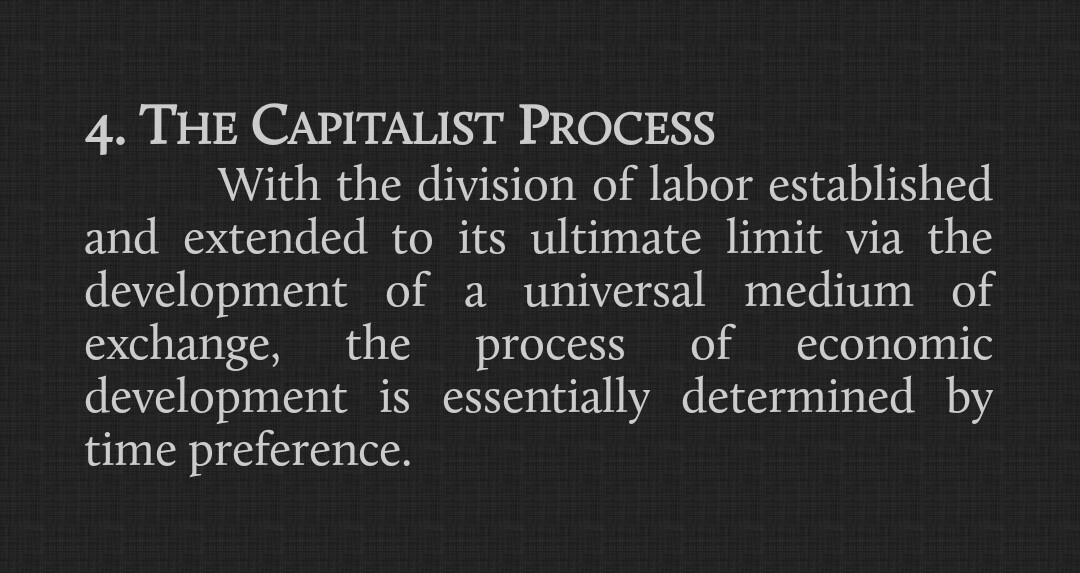
Factors like population, natural resources, and technology matter, but Hoppe argues they’re secondary. Without prior savings and investment, even the richest resources and best technology remain untapped.
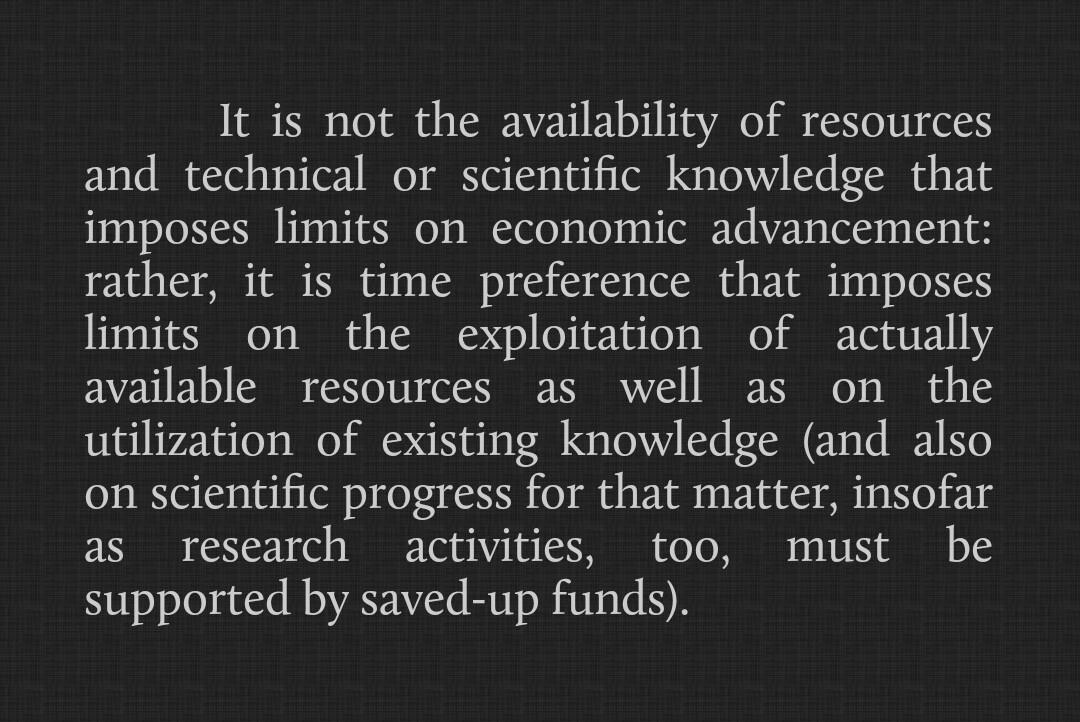
True economic advancement happens through increasing per capita invested capital, raising productivity, real incomes, and further lowering time preferences. This creates a self-reinforcing cycle of prosperity.
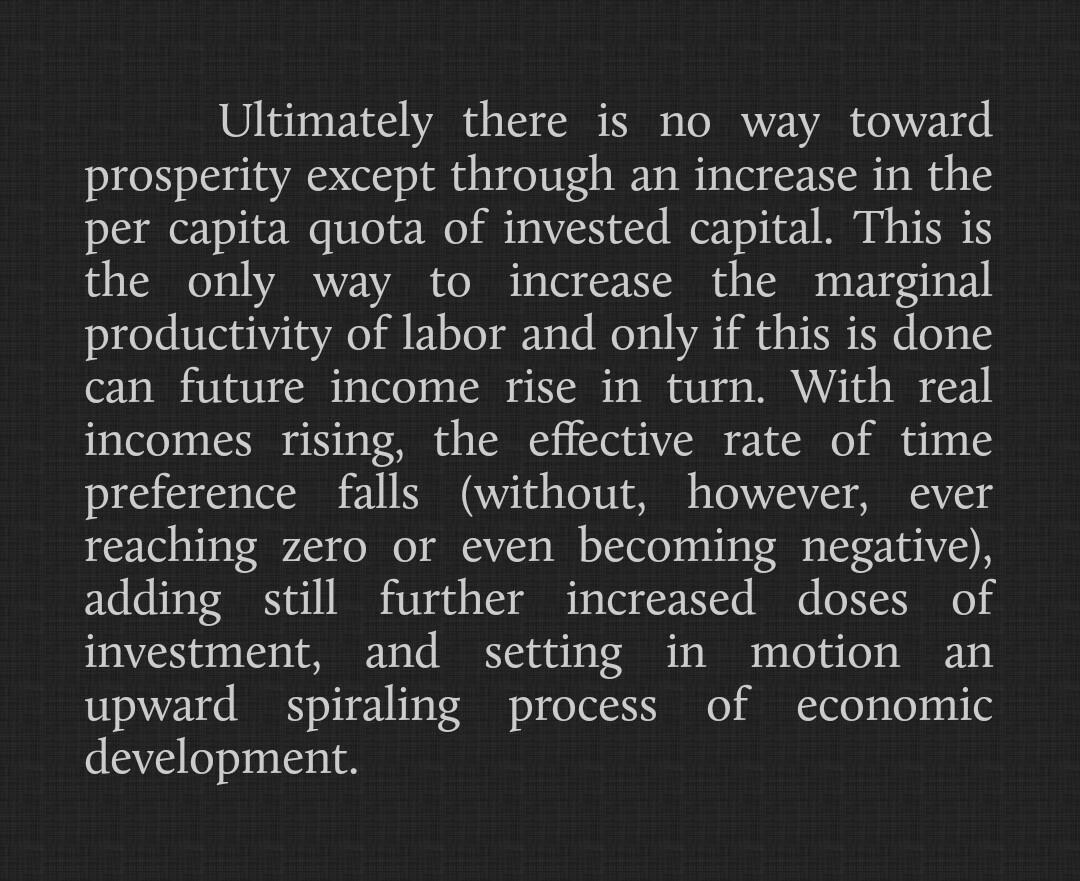
Hoppe claims this process naturally continues smoothly until scarcity itself disappears, unless people voluntarily choose leisure over more wealth. This growth has no inherent reason to halt abruptly.
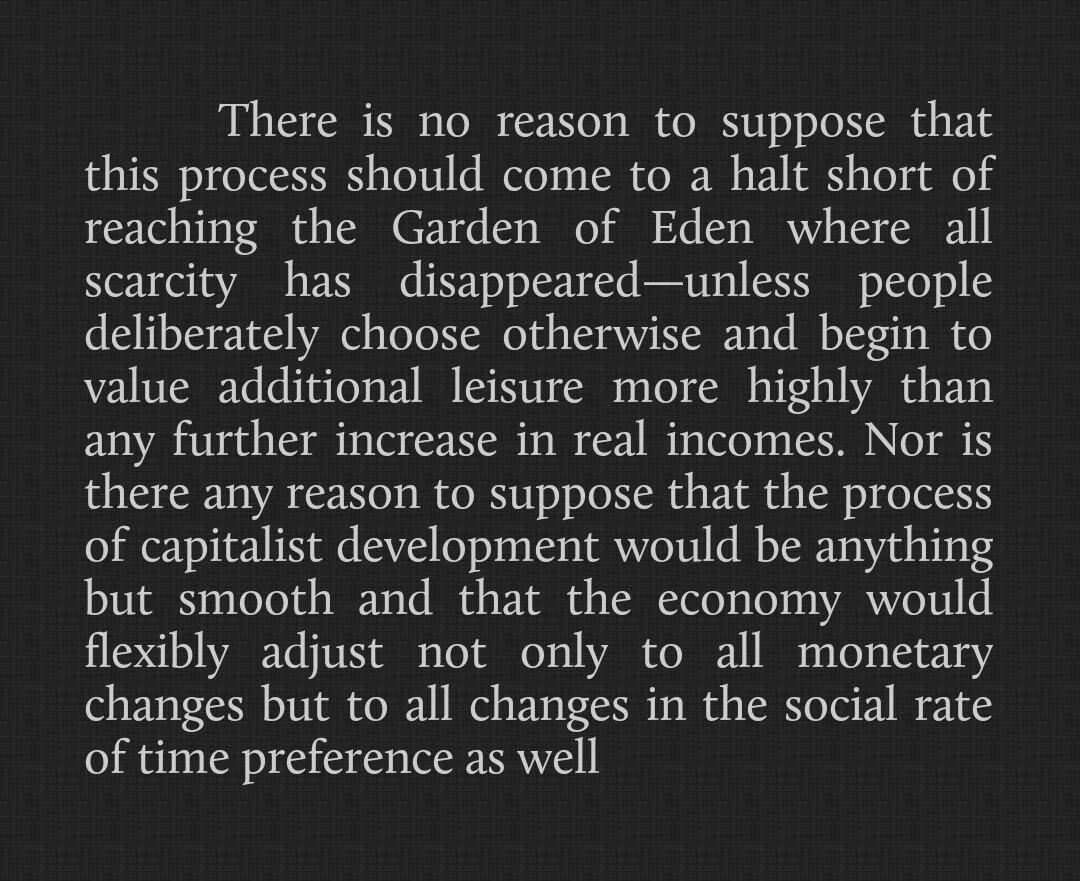
This smooth capitalist cycle, however, is disrupted when government enters the picture. Government control of resources it didn’t earn or acquire legitimately distorts incentives and investment.
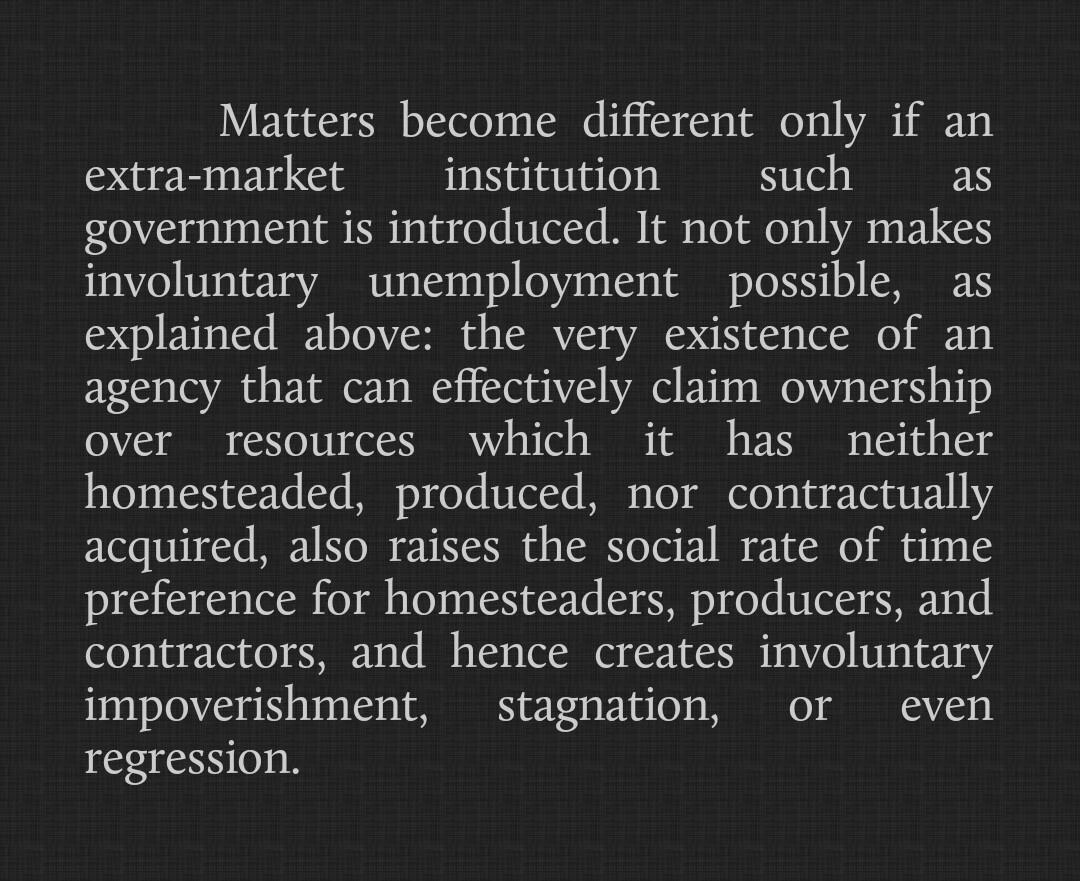
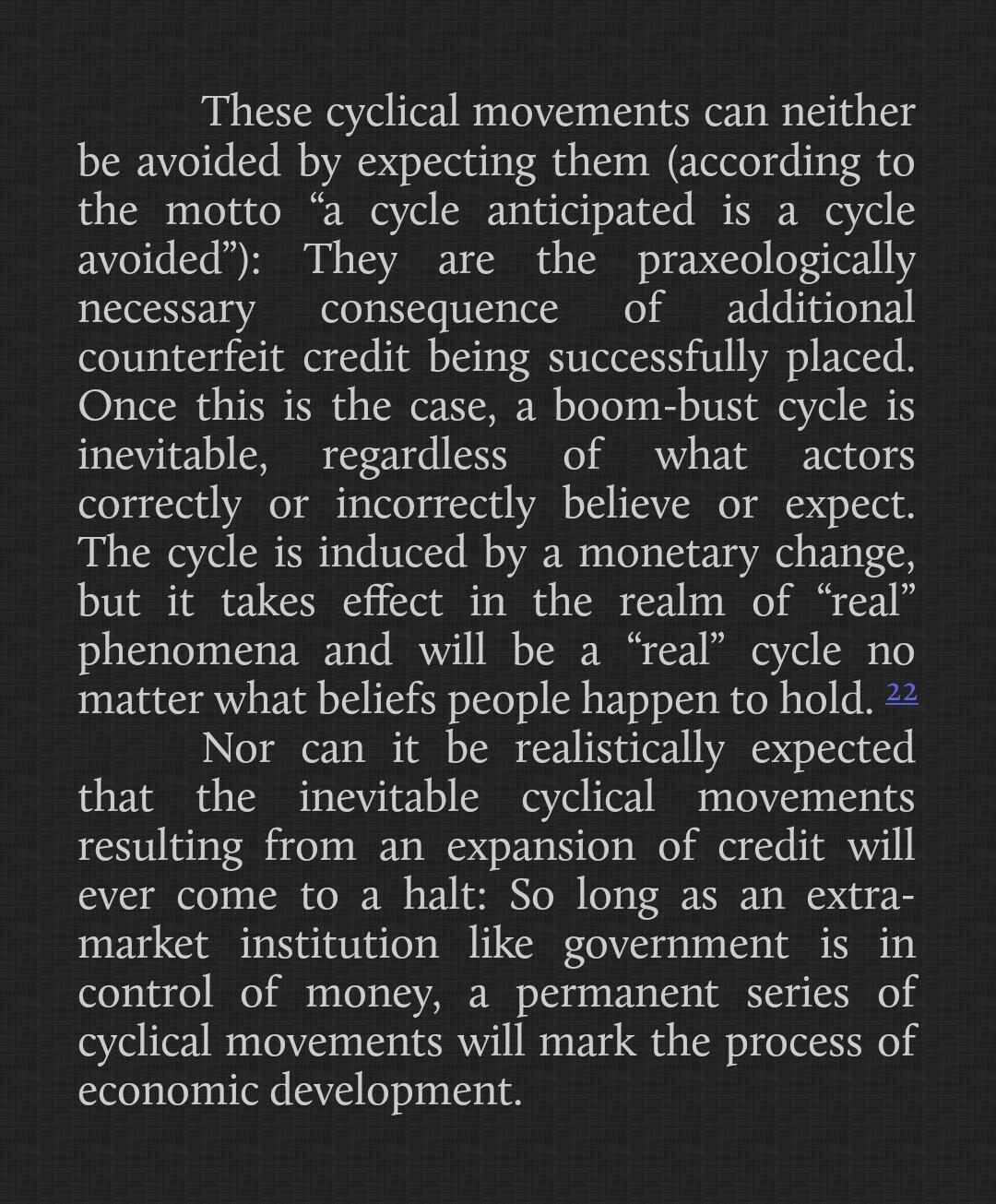
Government monopolization of money through fractional reserve banking artificially lowers interest rates.
Entrepreneurs mistakenly think, and are incentivized to think, there’s more savings, so more unsustainable investments proliferate.
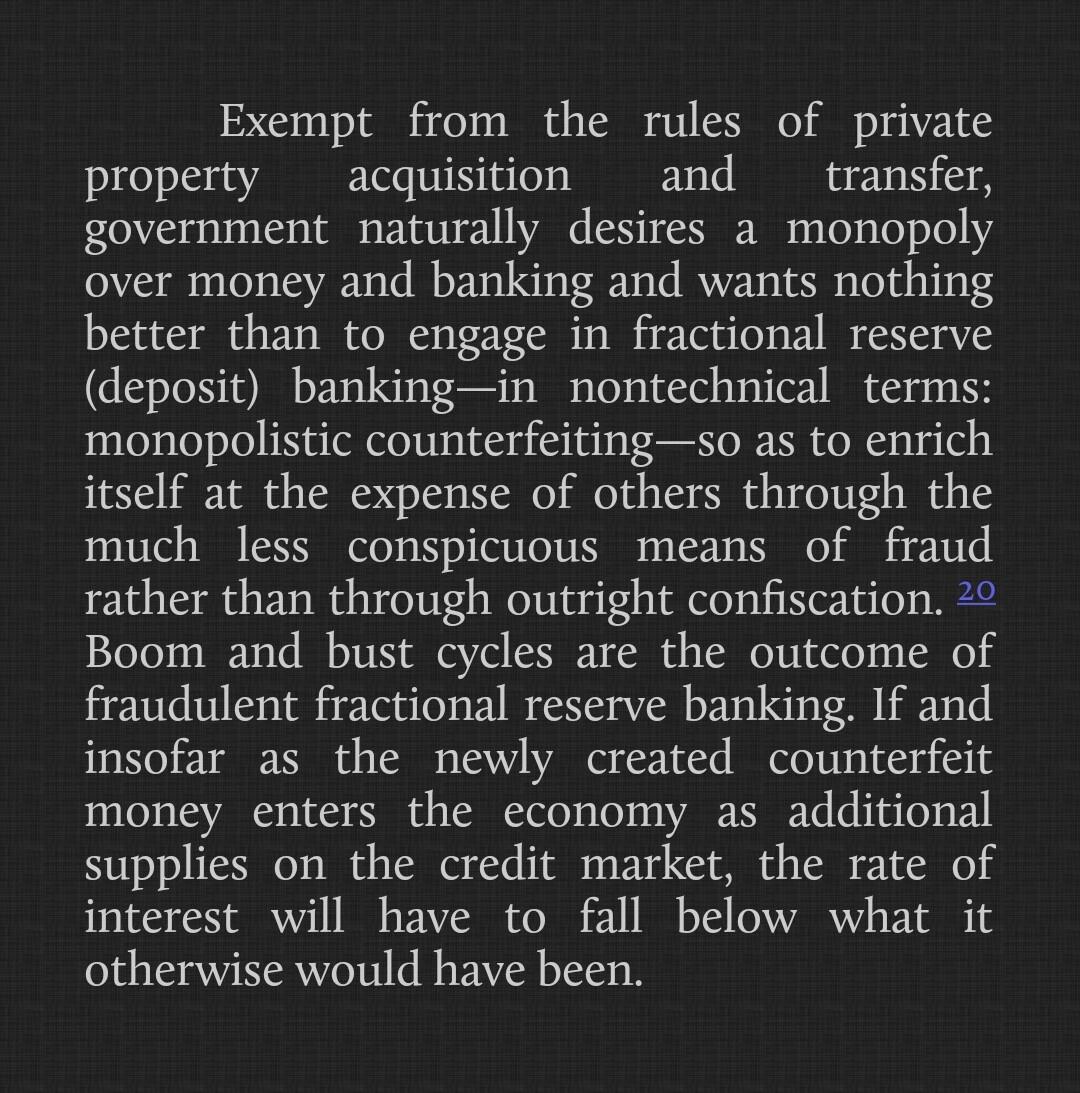
Without real savings backing these projects, a painful correction (a bust following the boom) inevitably occurs.
Investments must eventually realign with actual savings, thus leading to bankruptcies and unemployment.
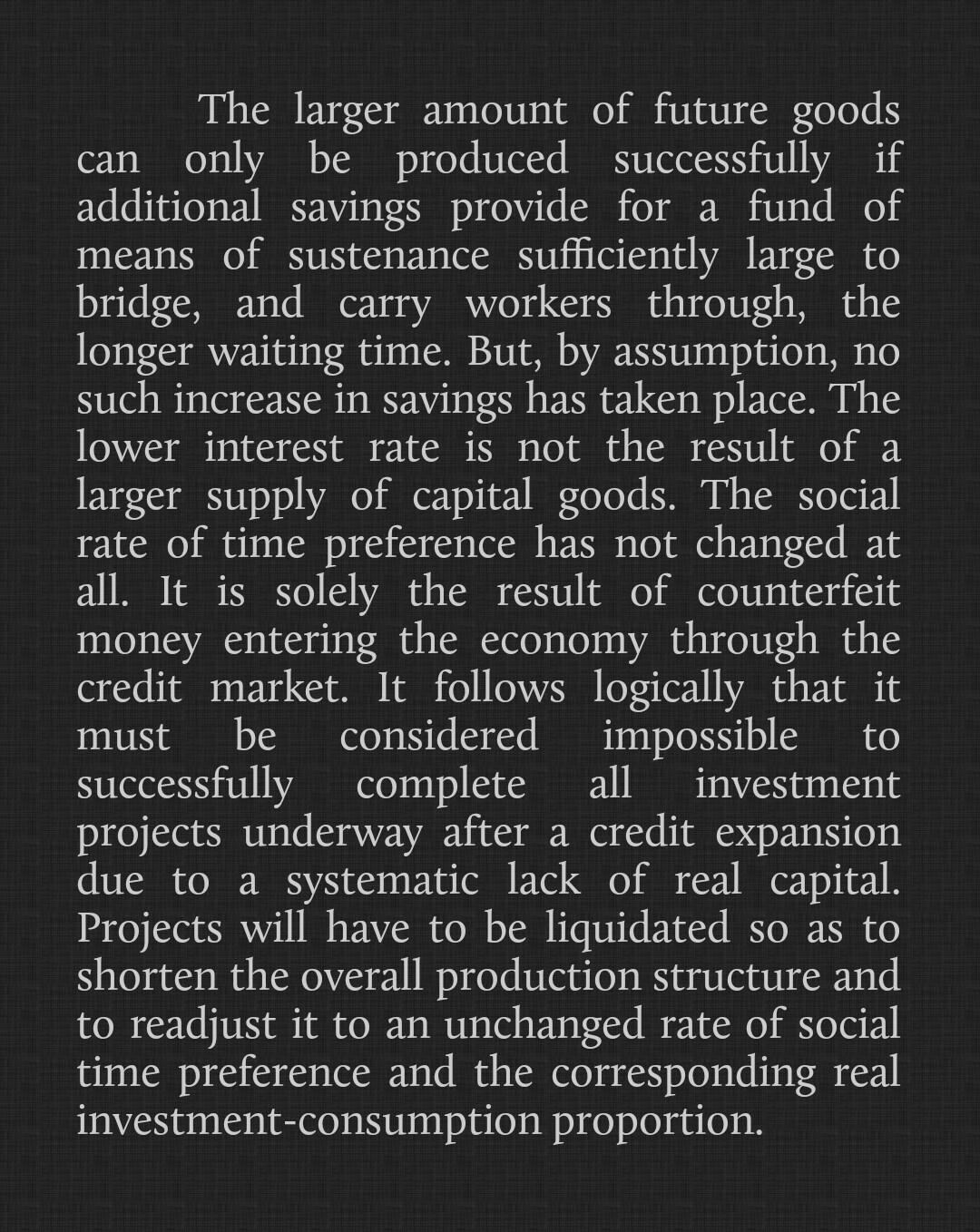
Hoppe concludes that boom-bust cycles aren’t natural. They’re directly caused by government-created credit expansion. Unless governments stop manipulating fiat money supply, these cycles remain unavoidable.
Write a comment