Wade Christofferson and the Mormon Leaders Who Knew But Never Told
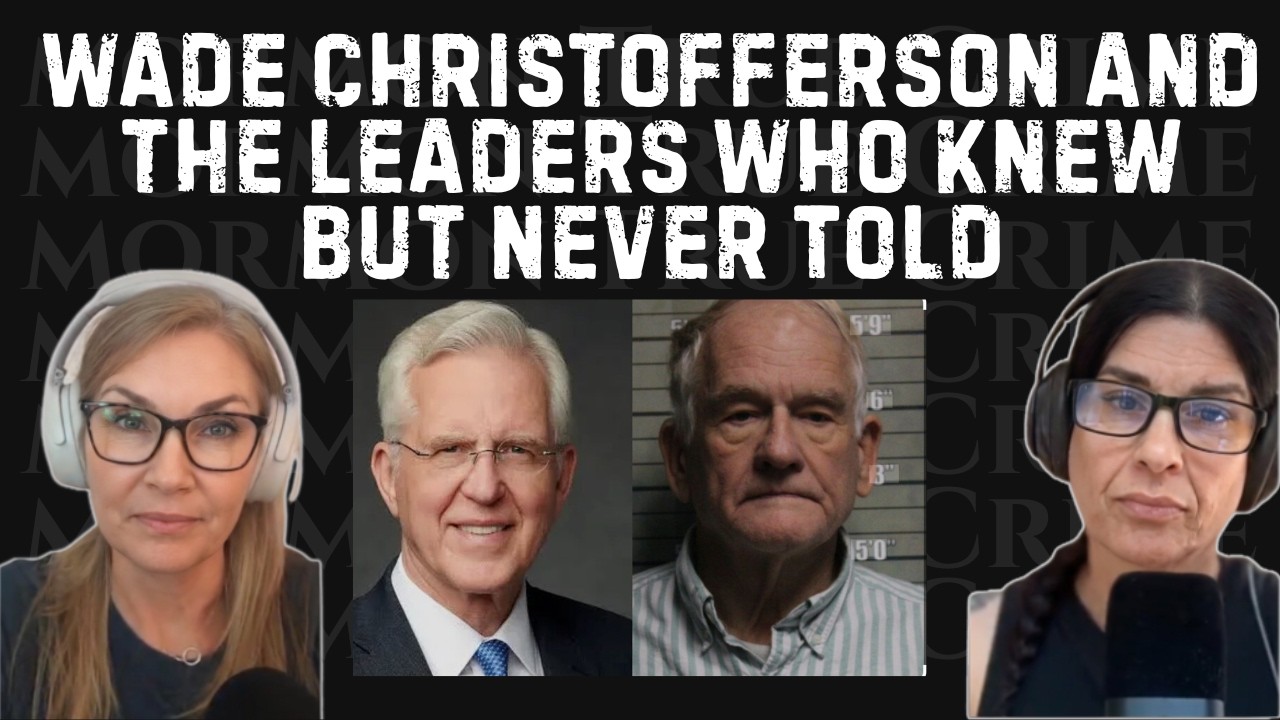
Source: Wade Christofferson and the Mormon Leaders Who Knew But Never Told
Publisher: YouTube | Author: Postmormon Postmortem
Published: July 30, 2026 | Archived: August 2, 2026
Video: Wade Christofferson and the Mormon Leaders Who Knew But Never Told
Channel: Postmormon Postmortem
Published: July 30, 2026
Duration: 35:23
Views: 1,323
Category: Education
Video ID: rfCccX00Kho
Description — YouTube
You already know how to spot it — the ward that closes ranks, the “we’re handling it internally,” the rumor that gets planted to replace the truth. What you don’t always get is the paper trail. This time, there is one.
Welcome back to Postmormon Postmortem’s Mormon True Crime series. Jess and Hannah walk through the Wade Christofferson case — the brother of Church of Jesus Christ of Latter-day Saints apostle D. Todd Christofferson — from the first documented allegation in 1985 to his guilty plea in federal court this month.
This is a case file, built chronologically from federal charging documents, investigative reporting, and the survivors’ own accounts.
What we cover:
- The 1985–1997 pattern in the Crystal Lake, Illinois ward, where Floodlit identified seven to ten alleged victims and found no evidence any of eighteen men in positions of authority ever contacted police
- Kristin Dunbar Mautz’s 1990/91 disclosure to Bishop Lee Donaldson — who did nothing until Wade was released from the bishopric on his own timeline
- The 1996 excommunication under stake president Bill Johnston, and the cover story that let the ward believe it was about an affair, not child sexual abuse
- The confidential membership record annotation: how it worked, who had to approve it, and its unexplained removal sometime between 1998 and 2006
- Wade’s five separate church leadership callings in Dublin, Ohio, held between 1998 and his November 2025 arrest — after the record meant to stop him from serving had already vanished
- What D. Todd Christofferson knew starting around 2020, and the legal distinction between a duty to report and a decision to look away
- Kevin Birch, the LDS Area Seventy told about the allegations in early 2025, and the calling Wade kept for months afterward
- The coded language in Wade’s 2025 letters to a Utah child, decoded in his December 2025 charging documents
- The Confidential Bishop Helpline, Kirton McConkie, and the broader institutional pattern of routing abuse reports to attorneys instead of law enforcement
- Wade Christofferson’s July 2026 guilty plea in the U.S. District Court for the Southern District of Ohio, and the mandatory minimum ten-year sentence he now faces
- Bishop Jim Sherwood’s 1996 outreach to Kristin Dunbar Mautz, and what changed between the two bishops who heard the same allegations four years apart
- Edward Nachel, the high council member who excommunicated Wade in 1996 and later told the Chicago Sun-Times that nobody contacted authorities, and who has since publicly apologized to victims
- The 2022 report Victim 1 filed with Crystal Lake police, and why the statute of limitations meant it went nowhere
- Statements from Laurieann Thorpe of Prevent Child Abuse Utah and Robert Peters of GRACE (Godly Response to Abuse in the Christian Environment) on institutional patterns of prioritizing adults over children
This one is for you if you’ve ever been told a “quiet resolution” was the compassionate option, if you’ve watched an institution protect its own math instead of a child, or if you’ve wondered how a confidential warning system can fail for thirty-five years and still get called “very strict” by the people running it. It’s also for you if you grew up learning that a temple recommend interview was a safe place to tell the truth, and you’re still working out what it cost the kids who did.
Here’s the pattern once you strip away the individual names: a warning existed. It was designed to follow one man everywhere he went. It disappeared instead, and nobody with the power to explain that disappearance ever has. This only makes sense if you understand how much institutional silence can absorb before anyone outside the institution finds out.
If this one landed, go back and listen to our Everyday Mormon Crimes launch episode, “Ted Bundy & Everyday Mormon Murders,” where we first mapped how membership status gets claimed or disowned depending on what’s convenient for the institution.
Episodes like this one — full case files, primary documents, every quote verified — take a lot more time than our usual Monday. If that work is worth something to you, this show runs on listener support, not ads.
Support the show: buymeacoffee.com/postmormonpostmortem
Ad-free listening from $2/month: patreon.com/postmormonpostmortem
TikTok & Instagram: @postmormonpostmortem
postmormonpostmortem.com
New Mormon True Crime episodes every Thursday
This episode discusses child sexual abuse in detail, including coded language used against child victims. Listener discretion advised.
Visit floodlit.org to see more of these types of cases.
Transcript — English (AssemblyAI, diarized)
0:00 Speaker 1: In early July 2026, a 73-year-old man stood in a federal courtroom in Columbus, Ohio, and pleaded guilty.
0:08 Speaker 2: To coercing and enticing 2 children under the age of 10. Hands-on abuse, one child in Utah, one in Ohio, roughly 20 times each.
0:19 Speaker 1: He faced a mandatory minimum sentence of 10 years and a maximum of life.
0:23 Speaker 2: His name is Wade Christofferson.
0:26 Speaker 1: His brother is the Todd Christofferson of the LDS Church First Presidency, one of the 3 men who sits at the very top of the entire organization.
0:36 Speaker 2: We already know what happened. We already know who did it. A federal judge made it official.
0:41 Speaker 1: So today isn’t a mystery, it’s a case file. 6 church officials knew before he was ever arrested, and not one called the police.
0:50 Speaker 3: Hannah and Jess, we got away. Now unpacking what they won’t say. Behind temple walls and cover-ups. We’re quarantine your coffee cups. It’s the post-Mormon postmortem. Digging up what they want forgotten. Trauma, truth, and crime, yeah, we’re surviving. It’s post-Mormon postmortem.
1:23 Speaker 2: Hello, Eternal Family. Welcome to Post-Mormon Postmortem’s Mormon True Crime series. I’m Jess.
1:29 Speaker 1: And I’m Hannah. Before we start, a quick warning. This episode discusses child sexual abuse in detail, including specific coded language the perpetrator used against child victims. If you don’t want to hear that, look after yourself and skip this one. Come back on Sunday for another full episode, or next Thursday for a new Mormon crime.
1:51 Speaker 2: For everyone else, we’re building this like an actual case file. 4 parts, chronological. We’re laying out the facts in the order they happened and letting the pattern form the way it did for us while we did the research.
2:04 Speaker 1: Okay, let’s go back to a reasonable place to start. In 1975, Wade Christofferson was a 22-year-old, recently returned missionary, a BYU student, newly engaged to Becky Moody, also 22. So that places us in context of his timeline, his life trajectory. Now we’re going to take a big jump forward. 10 years and 4 children later brings us to 1985. Wade, Becky, and their 4 children, Rachel, Reed, Beth, and Katie, had been living in Dubai in UAE for the past 5 years at that point.
2:39 Speaker 1: Wade was working as an assistant manager of the Dubai branch of the First National Bank of Chicago, and the family was planning their move back to the US. So, Jess, do you want to take it from 1985?
2:51 Speaker 2: Sure. 1985, Wade Christofferson is 32 years old, as Hannah said. He moved from the UAE to Crystal Lake, Illinois, and started attending the Crystal Lake First Ward, where Lee Donaldson is his bishop.
3:06 Speaker 1: The earliest documented allegation comes from this time period, from a survivor that the website Floodlit— shout out to Floodlit— calls Victim 1. She said Wade started abusing her within months of his family’s move to Illinois. In 1985.
3:23 Speaker 2: Between roughly 1988 and 1992, a second girl, 9 years old when the abuse started, 13 when it ended, was allegedly abused across 3 locations: Sandy, Utah, Wade Christofferson’s home in Crystal Lake, and in Nauvoo, Illinois.
3:40 Speaker 1: In the summer of 1990, Kristin Dunbar was 12 or 13. Kristin Dunbar Mort, as she is now, says that Christofferson assaulted her at least twice while she was sleeping over at his house.
3:53 Speaker 2: Here’s where it gets almost unbelievable. A few months later, in late 1990 or early 1991, Wade Christofferson was called to serve as Bishop Donaldson’s first counselor in the ward bishopric. The 2 men were close friends.
4:10 Speaker 1: During a temple recommend interview with Bishop Donaldson, Kristen told him directly what his new first counselor had done to her that summer.
4:19 Speaker 2: Kristin waited for Wade to be released from the bishopric. As she later said, quote, it never happened.
4:26 Speaker 1: Around 1991 or 1992, Kristofferson allegedly tried to assault another girl during a sleepover at his home. Floodlett identifies her as Victim 4. It was 2 in the morning, and he claimed he was looking for the family cat. She got away, called her parents, and her dad reported it to Bishop Donaldson. Donaldson said he would, quote, take care of it, close quote.
4:51 Speaker 2: Wade was quietly released from the bishopric around 1992. He wasn’t excommunicated and no one reported him. He continued attending church, although for a while he didn’t take the sacrament. That was the full extent of the consequences.
5:08 Speaker 1: Meanwhile, other girls in the ward were describing similar experiences. They said they woke up during sleepovers to find him hovering over their beds. Lying on the floor beside them or trying to climb into bed with them. He took photographs of girls that he never shared with them or their families.
5:27 Speaker 2: No one recognized the pattern yet. Each family believed what happened was an isolated incident, which allowed it to continue for another decade.
5:40 Speaker 1: I would Love to know, and this is not, there is no blame whatsoever on victim number whatever’s dad who reported it to the bishop, not the police, right? And the bishop said, I’ll take care of it. But you have to wonder in hindsight if he was like, what was the follow-up? What did you do? Right? Like, this man just tried to assault your child.
6:09 Speaker 2: Yeah. I, Hannah, I share your sentiment. What, as a father, as a mother, if that happened to my daughter, I don’t think the bishop is going to be the first place I go. Of course, I, you know, I’m not an active member of the church and thinking that that is the world as it is defined, but to not also at the very least follow up with the police so that they are investigating, and I’m not Again, not blaming people, but I am gobsmacked because I just think I would handle it so differently.
6:49 Speaker 1: Yeah. Or it’s, it would be a conversation of like, would you, would you do the same thing again? Right? Like I would be so curious to know the thinking now. I mean, it’s how this is allowed to continue. It’s how this perpetuates. And yes, that’s not again to blame the people for failing to, well, actually, I mean, Let’s just put, let’s just put responsibility where it lies. It doesn’t lie with any of the children in this story.
7:16 Speaker 1: It lies with all the adults, right? All the adults who didn’t, who, who knew that something was wrong and then didn’t take the right steps to make sure it didn’t happen again.
7:25 Speaker 2: Yes.
7:26 Speaker 1: Because otherwise, clearly there were parents who were allowing their kids to go sleep at this man’s house who Wouldn’t have done so if they had been informed. One can only assume, but in— I’m constantly surprised, so don’t quote me.
7:46 Speaker 2: Oh, you might as well.
7:46 Speaker 1: Don’t quote me on that. Okay, so here we are. Let’s get back to, um, get back on track with Bishop Donaldson, right? Uh, as you said, Wade Christofferson was released from the bishopric around 1992. In July 1996, Lee Donaldson was released as bishop and replaced by Jim Sherwood, who had served as first counselor in that bishopric before Wade replaced him.
8:12 Speaker 2: So interesting, the recycling there. So in December 1996, Bishop Sherwood invited Kristin to meet with him. According to Kristin’s account in the Salt Lake Tribune, he told her, quote, some girls have come forward and have talked to me about some experiences they’ve had with Wade Christofferson. It’s been mentioned that maybe you had an experience also, and I was wondering if you would be willing to share that with me.
8:40 Speaker 2: End quote.
8:41 Speaker 1: Kristin told him what had happened. Sherwood said, quote, yeah, unfortunately, that pretty much sounds like the same thing the other girls are telling me. Close quote. Then he asked if she was okay, and Kristin said he was the first person who ever did. He told her, I’m going to take care of this. It’s not right. It’s not okay.
9:03 Speaker 2: This time, church leaders took action. Wade was released from his calling, and in 1996, a stake high council in the Buffalo Grove Illinois Stake, led by stake president Bill Johnston, convened and excommunicated him for child sexual abuse.
9:20 Speaker 1: Edward Nashall, who sat on that high council, he later spoke about the case in an interview on Mormon Stories, and he also told the Chicago Sun-Times that, quote, Nothing was ever done to dissuade this guy from doing this stuff. Close quote. Before Wade was excommunicated, Nashell said no one contacted the authorities and the ward was never told what happened. Instead, a rumor spread that Wade had been disciplined for having an affair with a coworker who had blackmailed him.
9:51 Speaker 1: And that probably happened too, allegedly for comedic purposes only.
9:57 Speaker 2: The ward was left with a cover story that made Wade’s discipline look like it was about adultery instead of child sexual abuse.
10:07 Speaker 1: Nashville has since said that he feels guilty for staying quiet. He apologized directly to victims on Facebook and said that if people like him had spoken up decades earlier, they might have prevented 30 years of abuse. And that’s exactly what I was talking about, the kind of, like, hindsight, right? Like, If in hindsight you can look back and have evolved in your thinking, that’s great.
10:28 Speaker 1: But if you are still sticking to your, I did nothing wrong and, and wouldn’t do anything differently now, then that’s a problem. That’s a problem.
10:38 Speaker 2: So Floodlit identified at least 7 to 10 alleged victims connected to the Crystal Lake Ward during the 1980s and 1990s. It found no evidence that any of the 18 men in positions of authority over the ward and stake ever contacted Illinois police. That included the stake president, his 2 counselors, the 12 High Council members, and Wade’s bishop and counselors. In 1997, less than a year after he was excommunicated, Wade was rebaptized.
11:10 Speaker 1: After Wade was excommunicated, an annotation was added to his membership record. It was a confidential warning meant to alert future bishops and stake presidents that he had been disciplined for child sexual abuse. According to the church’s guidance, the bishop and stake president had to request it together, and church headquarters had to approve this annotation, this literal asterisk.
11:36 Speaker 2: Floodlit reported that removing the annotation would have required approval from the First Presidency.
11:44 Speaker 1: So if Wade moved to another ward or stake, a paper confidential Member Information Report would be automatically mailed to his new bishop and stake president. The warning was supposed to follow him wherever he went.
12:01 Speaker 2: One survivor says that a stake president confirmed to her in 2024 that the annotation had existed. Sometime between 1998 and 2006, it was removed. We don’t know who approved its removal or whether it happened before or after Wade moved to Ohio. The church has never publicly explained it.
12:22 Speaker 1: Episodes like this, the kind where we are pulling primary documents, verifying every quote, and reading full case files instead of just headlines, they take a lot of time. We are 2 women with full-time jobs, and if this work is something that means something to you, the show runs on listener support. Thank you so much for listening. We appreciate your support.
12:41 Speaker 2: If you want to back us monthly, we’re on Patreon, and we’ve also got Buy Me a Coffee. Both are linked in the show notes and at postmormonpostmortem.com.
12:50 Speaker 1: That’s it. That’s all we ask. Wade moved to Dublin, Ohio in mid-1997 and started attending the Dublin Ward, later renamed the Dublin First Ward, in the Columbus Ohio Stake. His brother, D. Todd, was already a General Authority. And in 1998, he joined the Presidency of the Seventy. He became an apostle in 2008 and joined the First Presidency October 2025.
13:25 Speaker 2: So that means Todd Christofferson wasn’t one of the First Presidency members who could have approved the removal of Wade’s annotation between 1998 and 2006. We don’t know who approved it.
13:40 Speaker 1: We don’t know who approved it, but we do know that the First Presidency has to approve it according to sources, right? And what we also know is that from 2006 to 2011, Wade served as second counselor in the Columbus Young Single Adults Second Ward, a congregation for people in their late teens and early 20s, or up to 30, I think.
14:02 Speaker 2: From 2016 to 2019, he served 2 separate terms as first counselor in the Dublin First Ward Bishopric. He then served as ward clerk from 2019 to 2023. From September 2023 until November 2025, the month that he was arrested, he was second counselor in the stake Sunday school presidency.
14:26 Speaker 1: Wade held 5 separate callings over nearly 20 years after the annotation meant to stop him from serving in those positions had been removed from his membership record.
14:38 Speaker 2: According to federal charging documents, during that period, Wade allegedly sexually abused a child identified by Floodlit as Victim 8 more than a dozen times between 2016 and 2020.
14:52 Speaker 1: Keith Smith, a longtime Mormon leader in Ohio, told the Chicago Sun-Times that Christofferson was still trusted right up until his arrest in 2025. No one in the congregation knew about his history in Illinois. And Smith called the arrest, quote, a shock and surprise, close quote. He also described the church’s child protection practices as, quote, very strict.
15:16 Speaker 2: The written policies may have been strict. They failed in this case, even after Wade had already been identified as a danger.
15:24 Speaker 1: Around 2020, a relative of one of Wade’s alleged victims told Wade’s brother, D. Todd Christofferson, that Wade had abused her. as a child decades earlier. The church later confirmed this in a statement to the Chicago Sun-Times, referring to multiple victims. It said Detard, quote, respected the adult victim’s wishes not to involve law enforcement at that time, close quote.
15:50 Speaker 2: Utah law requires adults to report suspected child abuse, but it doesn’t require them to report abuse disclosed by an adult decades after it occurred. Todd may have not had a legal duty to report it.
16:06 Speaker 1: Well, legality and morality are not necessarily different things. By then, Wade had allegedly abused between 9 and 12 children over 4 decades. And if you believe that people only get caught for the crimes that they commit, think again. The victims that D. Todd knew about were adults by 2020. Wade still had access to children. And there’s no public record that anything changed in his congregation after his brother, Apostle D.
16:38 Speaker 1: Todd Christofferson, knew from the mouth of a victim, allegedly, he pleaded guilty. It was a victim.
16:45 Speaker 2: Mm-hmm. In 2022, Victim 1, the earliest known alleged victim, confronted Wade in person. She asked whether he had been excommunicated and later rebaptized. He admitted that he had and told her he believed that he had been forgiven. Interesting.
17:04 Speaker 1: She reported him to Crystal Lake Police that same year, but the statute of limitations had already expired. He could not be prosecuted for what he had done to her.
17:14 Speaker 2: In 2025, one alleged victim met with Kevin Birch, an LDS Area Seventy who oversaw multiple stakes in the region, and personally reported the child sexual abuse to him.
17:27 Speaker 1: Okay, so a General Authority knew about it in early 2025. That was months before Wade was arrested.
17:35 Speaker 2: According to Floodlit, 5 separate church officials knew about the allegations before November 2025, and none of them reported Wade to police.
17:45 Speaker 1: Yeah, as you said, Wade Christofferson was still serving in his calling on November 24th, 2 days before his arrest became public.
17:54 Speaker 2: In May 2025, Wade allegedly began using coded language in letters he sent from Ohio to a girl in Utah identified as Victim 9. The letters continued for about 6 months. On November 5th, her father became suspicious after overhearing a FaceTime call and discovered what the coded language meant.
18:14 Speaker 1: So this bitch won’t learn and needs to die in prison. The next day, her father overheard Wade asking the girl to show him her snow and her friends. He walked in and found her lifting her shirt for the camera, and I nearly puked having to say that.
18:34 Speaker 2: That same day, Wade allegedly admitted to both fathers that he abused Victim 8 and Victim 9. He texted Victim 9’s father, quote, I’m deeply sorry for what I have done and will be meeting with my bishop to start the repentance process, end quote.
18:54 Speaker 1: I don’t know if you saw, but I physically recoiled. I, my body involuntarily moved back.
19:02 Speaker 2: Yeah, that’s so gross.
19:03 Speaker 1: Fucking audacity of this man to claim that he is starting the repentance process. Well, do you know what I’m sorry means? It means I won’t do it again, you dumb bitch.
19:17 Speaker 2: And this fucker, it’s just code. He’s just using the language of the church against the dad. Well, I’m gonna repent, you know.
19:26 Speaker 1: I—
19:27 Speaker 2: he’s signaling That I’m a member of the same group that you’re a member of. You have to forgive me because I’m seeking repentance. And it is, it is malicious. It is nefarious. He is totally using the church coded language against the dad to encourage the dad not to report him for what he did. It’s so disgusting.
19:51 Speaker 1: Exactly. And this was a man in his 70s, and we know that he’s been doing this since his 30s. Minimum.
19:57 Speaker 2: He’s a pro. He’s a pro at it.
19:59 Speaker 1: So he’s been doing it without getting reported, even though people have raised the alert. I mean, reported to the authorities. So even though victims told, somehow it never made it to the authorities. He knows exactly what he’s doing.
20:14 Speaker 2: He does. He knows that all he has to do is say, I’m so sorry, I’m seeking repentance, I will repent for all of these things, and they’ll let him speak. do it again. He can continue to do it.
20:24 Speaker 1: Then you can tell yourself it was taken care of, right? Bishop Donaldson said, we’ll take care of it. Yeah, they mean internally, right? And that doesn’t mean anything. So within days of this admission, in the fall of 2025, Wade searched his phone for criminal defense attorneys, sex crimes, Columbus, Ohio, and In Ohio, do clergy have to report child abuse confessions? One more.
20:54 Speaker 1: He also looked into leaving the country and texted a relative in Arizona to ask if he could come and stay indefinitely. I hope his life in prison is hell.
21:04 Speaker 2: Same. On November 12th, Dublin Police opened an investigation after Victim 8’s father, who is the brother of Victim 9’s father, Reported his own child’s abuse. Investigators searched Wade’s home and found a room with children’s handwriting on the walls, along with a mattress, pillows, and blankets.
21:27 Speaker 1: Floodlit broke the story on November 20th, 5 days before any mainstream outlet reported it. The church released Wade from his Sunday school calling on November 24th, 1 day before the story came public. He stayed in that calling for months. After Kevin Birch had been told about the allegations.
21:48 Speaker 2: If you want to see all the resources we used in developing this and every episode, become a supporter on Patreon. You can also support the show at Buy Me a Coffee. Either one directly funds the research on episodes like this one.
22:08 Speaker 1: All right. December 2025.
22:10 Speaker 2: In December 2025, charging documents revealed the full coded language. SS meant secret Spanx. Snow meant female genitalia. Friends meant nipples. A smiley face meant rubs. And the detail that turned my stomach, Wade used an asterisk to mean naked. The same symbol used for the safety flag meant to protect children from him.
22:43 Speaker 1: He’s sickoed. In its December 5th statement, the church gave a timeline for the latest allegations. It said a local Ohio leader learned about the allegations involving the Utah victim on the evening of November 6th and reported that to the police the next day. The same leader learned about the Ohio victim on November 11th and reported the allegations on November 12th.
23:08 Speaker 2: In this case, the local leader reported the allegations within a day. That happened in November 2025. It doesn’t explain why church leaders failed to report what they knew in 1996, around 2020, or in early 2025 after Kevin Birch was told. So worth being precise here. Fast reporting once in 35 years doesn’t undo the 5 times that it didn’t happen.
23:37 Speaker 1: No, it just means that for the first time it was done right. So, okay, well done for doing the bare minimum. Well done for doing the least that you’re expected to do. Report abuse. I mean, you shouldn’t have to be patted on the back for that. In April 2026, Kristin Dunbar-Mortz spoke publicly at an event at Harvard Divinity School She was 48. She said, quote, I went to my bishop.
24:02 Speaker 1: I reported it. I was a child expecting safety, expecting protection. Instead, I was given punishment.
24:13 Speaker 2: Which brings us to what we’re talking about today. 73-year-old Wade Christofferson pleaded guilty in the U.S. District Court for the Southern District of Ohio to coercion and enticement of a minor. Before Judge Edmund A. Sargas Jr., he admitted sexually abusing the Utah child and a second child in Ohio roughly 20 times each. He faces a mandatory minimum sentence of 10 years and a maximum of life in prison.
24:43 Speaker 2: His sentencing has not been scheduled at the time of this recording.
24:48 Speaker 1: But when it is, we will let you know and we will be following up. Edward Nachell, who sat on the High Council that excommunicated Wade in 1996, said, Todd Christofferson should have done more after learning about the abuse around 2020, regardless of whether the law required him to report it. Yes, we don’t need to live our lives to the letter of the law if something is right or wrong.
25:12 Speaker 1: Nachal said Todd should have, quote, sat him down and told his brother, either you go to the police or I go, close quote.
25:23 Speaker 2: D. Todd Christofferson has declined requests from reporters to speak about the case and has not addressed Of course, because he doesn’t want to sully the name of the church. He doesn’t want to admit what he knew and the failing, the moral failing on his part for doing anything about this. So frustrating. And this whole idea that they’re handling it quietly, that protects the perpetrators.
25:55 Speaker 2: Not the victims.
25:58 Speaker 1: I mean, and to me it is about the church, but it’s also about his entire family, right? I imagine that a lot of these people have pretty big egos tied up in image and appearance.
26:09 Speaker 2: Agreed.
26:10 Speaker 1: And legacy. And, you know, I don’t know D. Todd personally, obviously. I’m just speaking in generalities that, um, The questions that arise in my mind are, you know, okay, Wade Christofferson didn’t become this way in a vacuum. So one reason that people are reluctant, especially men report being incredibly reluctant as an adult to disclose that they experienced child sexual abuse— this comes from Jim Clementi of the FBI— it’s that they don’t want people to immediately suspect them of being an abuser, right?
26:52 Speaker 1: If I tell somebody I was abused, they’re going to think I’m a child abuser because the causation— people have this idea in their head. Most people who abuse children were abused. That’s true. But it doesn’t mean that most people who are abused will abuse children, right? That’s the difference.
27:08 Speaker 2: Right.
27:08 Speaker 1: So most people who abuse children, who were abused, will not go on to abuse children. Of course not. They understand the devastation, the life-altering nature of—
27:17 Speaker 3: Yes.
27:17 Speaker 1: That psychopathy. They wouldn’t ever do that. Conversely, most people who abuse children were abused, right? So the small percentage of those people— so it raises questions. What happened in their family? What happened in their upbringing? What happened in the upbringing of his children? I mean, this isn’t me being salacious, gossipy, casting— this is like, I am a human with a brain.
27:42 Speaker 1: And a human with a brain knows that these things don’t occur in a vacuum. There’s a sickness in the culture that just doesn’t allow any of this stuff to be talked about. Yeah.
27:53 Speaker 2: Well, and it does, it makes me wonder, and again, this is just me wondering, not making any claims here, but when Dee Todd was told around 2020 and then chooses to do nothing. It makes me wonder, was this just confirmation of a pattern he had already seen? Was it new information or was it just like, oh, again, you know, here we go again. And so then, you know, he’s developed this kind of callous, this immunity to the information.
28:28 Speaker 2: And it’s just like, shake his head and move on. I, I, it just, I think it’s really hard to logic my way through that over this lifetime, he didn’t know what his brother was doing. It’s just difficult.
28:46 Speaker 1: Yeah. I mean, I agree with you 100%. I mean, I’m kind of like, I’m putting myself in the position of like, would I know if my siblings were up to these kind of crimes? Well, it just depends on the relationship, doesn’t it? I mean, it does.
29:01 Speaker 2: Yeah. Like, fair enough.
29:03 Speaker 1: There are many siblings who would disclose and share. And in fact, there’s, there are these brothers, this is on the Floodlit site, a pair of brothers in England, um, obviously Mormon, cuz this is on Floodlit, um, who abused together. Again, it just depends on the relationship. And we are speaking in generalities, not about this specific case. Um, well, unless we are, unless we specify that we are talking about this specific case.
29:27 Speaker 2: Exactly. So just for everyone listening, we’re just riffing, just talking through some of the things that The thinking. Doing these kinds of deep dives brings up, it brings up a lot of questions, a lot of thinking.
29:39 Speaker 1: Of course, right? Because you can’t look at a case and not wonder about, well, especially when it’s so ubiquitous, so, like you said, okay, here we go again. Nobody, nobody gets caught the first time, right? I mean, it just hasn’t happened. Um, unless you are the unluckiest sod in the world. So his victims, I would bet every dime in my bank account, are far more numerous than the documented ones.
30:07 Speaker 1: I mean, anyway.
30:08 Speaker 2: I agree.
30:10 Speaker 1: The culture is one that allows, uh, it to go unpunished, untalked about, unacknowledged. Um, Lori Ann Thorpe of Prevent Child Abuse Utah, again, speaking generally, not about this specific case, she said, Anytime we prioritize the safety of adults over children, that’s a failure. Anytime that a child is hurt and isn’t reported and the adults knew about it, it’s a failure. And obviously, as she says, that is true regardless of the timeframe, regardless of when it happened.
30:50 Speaker 1: Yeah.
30:57 Speaker 2: This wasn’t the first time the church had a system that kept reports of child abuse inside the institution instead of sending them to the police. In 2022, the Associated Press reported on the church’s confidential bishop helpline, which had operated since 1995. Bishops who called about serious allegations were referred to attorneys at Curtin McConkie, the church’s law firm. The attorneys determined whether the abuse had to be reported.
31:27 Speaker 2: The calls were protected by attorney-client privilege, and the call logs were destroyed each day.
31:35 Speaker 1: The Arizona Press coverage focused on a case in Bisbee, Arizona, where Paul Adams abused his daughters for 7 years. The bishops who knew about it called the helpline instead of the police. It’s one of the most sickening stories I’ve ever heard.
31:51 Speaker 2: It really is.
31:52 Speaker 1: Utah State Legislator Merrill Nelson was involved in the church’s response for 2 years while the abuse continued.
32:01 Speaker 2: Robert Peters is the director of institutional response at GRACE, or Godly Response to Abuse in the Christian Environment. The organization investigates how Christian institutions respond to abuse, and Peters previously spent years prosecuting sex crimes. Speaking broadly about the church’s policies, he said, quote, any efforts draped in legal language that prioritize wolves over sheep are inconsistent with the faith itself, end quote.
32:32 Speaker 1: So here’s what we know. Several girls reported Wade Christofferson to 2 bishops in the same Illinois ward during the early 1990s. Kristen told Bishop Donaldson that his counselor had assaulted her and he did nothing. And then finally, in 1996, with the appointment of Jim Sherwood as bishop, he acted. And other girls talked about their similar experiences. A stake high council excommunicated Wade for child SA, and an annotation was added to his membership record.
33:05 Speaker 1: The bishop and stake president, as I said, they had to request it together. And this is the bit that is like, mm, so intriguing.
33:12 Speaker 2: Mm-hmm.
33:13 Speaker 1: That removing it required approval of the First Presidency. Wade moved to Ohio, and sometime between 1998— was it Hinckley? Hinckley was prophet— and 2006, the annotation disappeared. And we have no explanation as to why it was, how or why it was removed.
33:35 Speaker 2: Nope. Wade held 5 separate church callings over the next 19 years. Before November 2025, 5 church officials had learned about the allegations, including 2 bishops, a stake president, an apostle, and an Area Seventy. None of them reported Wade to the police. One victim reported him herself in 2022, as we noted, but the statute of limitations had already expired. Wade Christofferson is going to prison.
34:05 Speaker 2: We now know how his criminal case ends. The church still hasn’t explained how the annotation on his record was removed, why he was allowed to hold 5 more callings, or why the church leaders repeatedly failed to report him over the next 35 years. That’s it for today. Thank you for listening to this week’s Post-Mormon Postmortem. We’ll be back next week with a new episode of Mormon True Crime.
34:34 Speaker 1: Absolutely. Until then, we appreciate you listening. Big shout out to Floodlit. We are linking them in the show notes. This website is a labor of love doing the Lord’s work. Go investigate. And for us, if you could hit like and subscribe, that would be worth a million dollars.
34:53 Speaker 2: Yeah. Floodlit is worth their weight in gold. And to that end, go ahead and send them some financial support. It’s worth it. It’s worth everything that they’re doing.
35:03 Speaker 1: 100%.
35:04 Speaker 2: You can find us at postmortemandpostmortem.com or on the socials at Post Mormon Post Mortem. And Hannah, before we go, I’m sorry for what I said when I was Mormon.
35:15 Speaker 1: Jess, I am sorry for what I said when I was Mormon too.
- Reference: https://www.youtube.com/watch?v=rfCccX00Kho
Write a comment