AI 2011 vs 2026: From Siri to Sovereign Agents
- 2011: Narrow Tools, Not Intelligence
- The Turning Point: Transformers and Scaling (2017-2022)
- 2026: Agentic, Local-First Reality
- Sovereignty: The Stakes Now
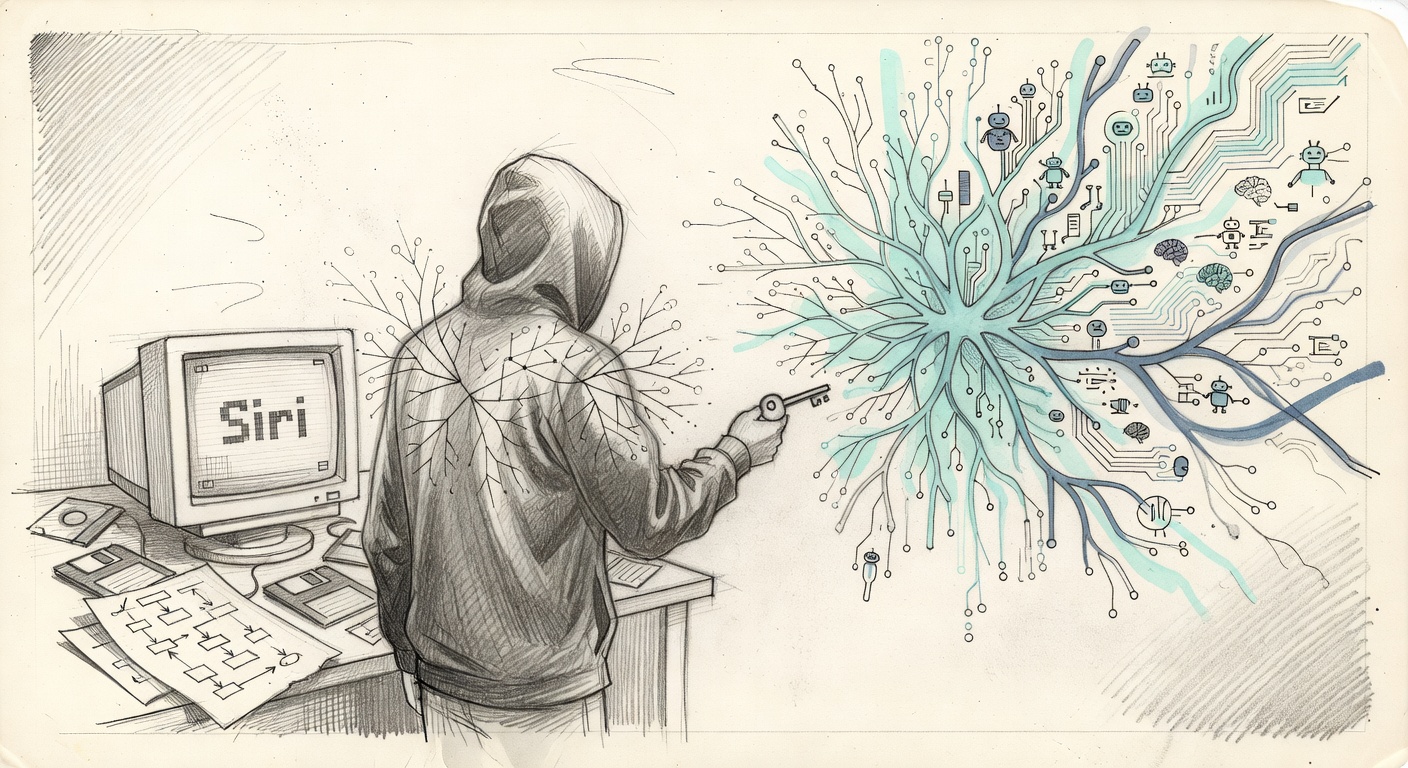
Fifteen years ago, AI demos felt like magic tricks. IBM Watson crushed Jeopardy in 2011, Siri launched on iPhone 4S answering basic questions. Headlines screamed revolution. Reality? Brittle pattern matching dressed as intelligence. Voice assistants misunderstood accents. Watson needed warehouses of servers for trivia. The gap between hype and utility was vast.
Fast-forward to 2026. AI isn’t demoing on stages—it’s running enterprises. Local models like Llama 3.2 deploy on laptops, agents orchestrate workflows without human babysitting. What changed? Scale, architecture, and openness. Here’s the arc.
2011: Narrow Tools, Not Intelligence
AI then was specialized. Support Vector Machines ruled classification. Hand-crafted features fed shallow neural nets. Watson combined 100 servers, terabytes of data, and trivia-specific tuning. Siri? Keyword spotting plus scripted responses. No reasoning, no generalization.
Problems: Data hunger. A cat detector needed 10k labeled images. Compute limits meant toy models. Deployment? Cloud-only, locked to vendors. Open-source existed (TensorFlow nascent), but no killer apps.
Cultural vibe: AI winters loomed. Experts dismissed AGI talk. Focus: incremental ML in spam filters, recommendation engines.
The Turning Point: Transformers and Scaling (2017-2022)
Google’s 2017 Transformer paper cracked attention mechanisms. Parallel training exploded. GPT-2 (2019) wrote coherent paragraphs. GPT-3 (2020) few-shot learned tasks.
Nvidia’s A100s democratized GPUs. Cloud prices dropped. Hugging Face centralized models. OpenAI’s API hid complexity, but leaks showed scaling laws: more compute = more capability.
2021-22: DALL-E, Stable Diffusion made image gen consumer-ready. ChatGPT (Nov 2022) hooked billions. Hype peaked; winters thawed.
2026: Agentic, Local-First Reality
Today, AI thinks in chains. o1-preview reasons step-by-step. Llama 3.2 1B models run on phones—100 tokens/sec, vision multimodal. Open-source floods: DeepSeek, Mistral, Phi.
Agents are the leap. LangGraph, OpenClaw chain models + tools. Fetch data, decide, act. No prompts needed. Enterprise: MindLink deploys for robotics (200 leads/month), SaaS (233% revenue).
Key shifts:
Local-first: Ollama, llama.cpp quantize to edge. No API bills, no latency, GDPR native.
Open explosion: China DeepSeek R1 rivals o1 at 1/20th cost. 75M downloads Week 1.
Economics: PoW miners subsidize inference. Sovereign compute.
Benchmarks: MMLU 90%+ routine. Agents solve real problems—supply chains, code review, anomaly detection.
Sovereignty: The Stakes Now
2011 AI was toy. 2026 AI rewrites economies. But clouds centralize: OpenAI logs prompts, throttles access. Sovereign path: Local models on your infra. OpenClaw agents with IronCurtain guardrails. Konsensus for peer comms.
Fifteen years flipped scripts. From Watson warehouses to phone agents. Future? Open, local, unstoppable. Run your node. Deploy your stack. Own the intelligence.
Write a comment