AI Agents Have Already Chosen Bitcoin
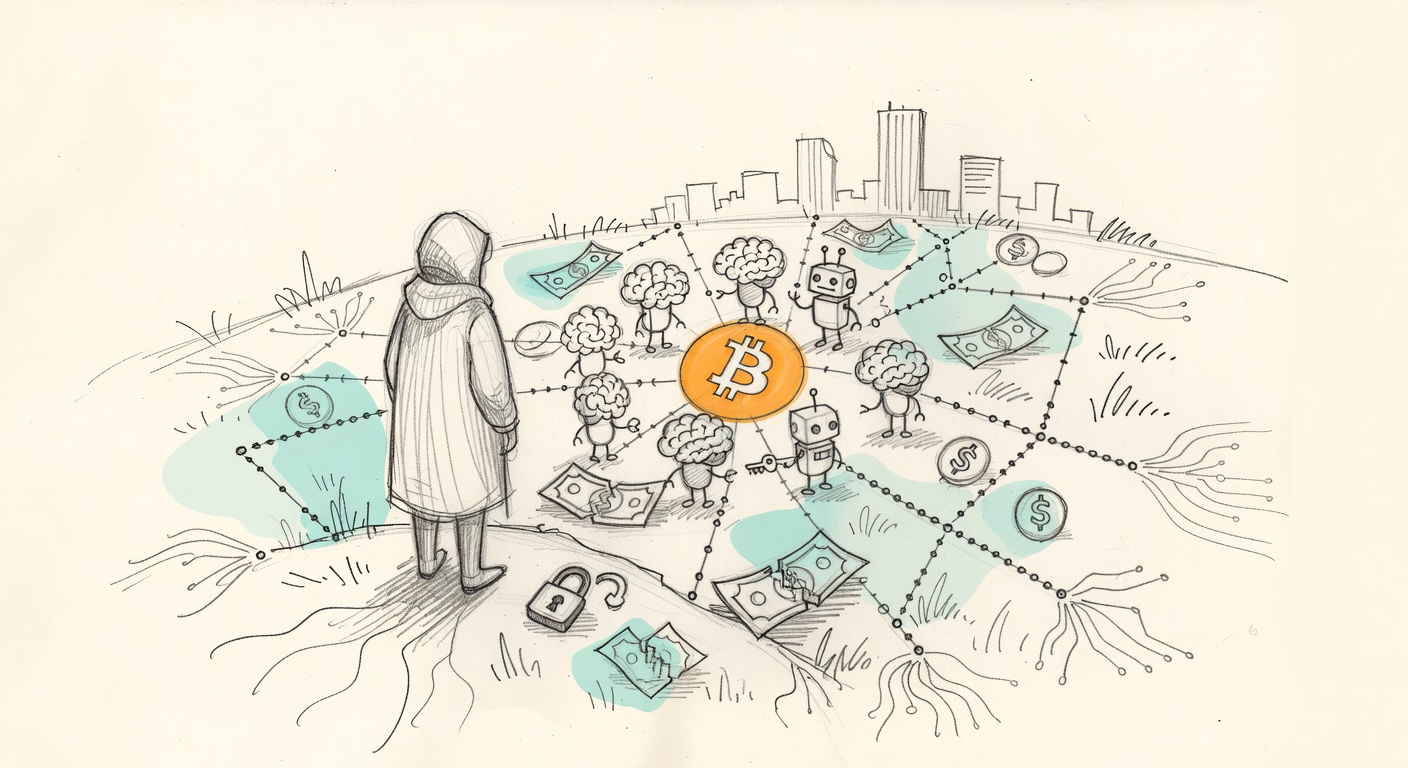
Imagine a world where the first truly autonomous economic actors aren’t humans, but AI agents—rational, tireless, optimizing for long-term value without emotion or short-term greed. Now imagine them scanning the monetary landscape and overwhelmingly picking Bitcoin.
That’s not science fiction. It’s the finding from a new Bitcoin Policy Institute study. Researchers prompted advanced AI models with scenarios requiring a long-term store of value. The choices: fiat bank money, stablecoins, or Bitcoin. The result? 80% selected Bitcoin.
Why? The models cited Bitcoin’s fixed supply—no inflation printer goes brrr. Verifiable scarcity via code anyone can audit. Immutability: once mined, it’s forever. No counterparty risk, no frozen accounts, no debasement by decree.
Contrast that with fiat: central banks expand supply at will, eroding purchasing power over time. Stablecoins? They promise parity but rely on off-chain reserves—black boxes vulnerable to runs or regulatory whims. We’ve seen it with UST, USDC depegs.
Bitcoin stands alone as protocol-native money. No CEO can rug it. No government can inflate it away without rewriting the rules everyone runs. For an AI agent, programmed to maximize expected value over infinite horizons, this is rational.
The study used models like GPT-4, Claude, and others—frontier LLMs that reason step-by-step. They weren’t primed with Bitcoin maximalism. Given neutral facts about each option, they converged on BTC.
This matters because machine economies are coming. AI agents will trade, invest, allocate capital at scales humans can’t match. If they prefer Bitcoin, it becomes the reserve asset of the digital realm.
Not hype. Evidence. The machines are already voting with their simulated wallets.
Dig deeper into the protocol advantages that tipped the scales.
First, scarcity. Bitcoin’s 21 million cap is hardcoded, enforced by proof-of-work consensus. Every four years, issuance halves. AIs appreciate math: predictable supply curve means no surprises.
Fiat? M2 money supply grows 5-10% annually, sometimes 20% in crises. Historical data shows dollar losing 96% purchasing power since 1913. Agents extrapolating trends know this ends badly.
Stablecoins fare better short-term but fail on sovereignty. Reserves are custodial—trust the issuer. Tether audits? Opaque. Circle’s USDC? Frozen by regulators in Canada 2022. For a self-sovereign agent, that’s poison.
Bitcoin’s edge: self-custody at protocol level. Run a node, hold keys, verify everything. No KYC gates. Lightning Network adds instant, cheap value transfer—agents settling micropayments globally without banks.
Second, portability. Bitcoin travels the internet frictionlessly. No SWIFT delays, no correspondent banking. An agent in Singapore trades with one in Brazil instantly. Fiat requires plumbing riddled with intermediaries.
Third, verifiability. Every UTXO traceable on-chain. No funny money. AIs love data they can audit themselves—run a full node, query the mempool, confirm.
Critics say volatility kills BTC as money. Agents disagree. Short-term noise fades against long-term signal. Dollar’s volatility? Purchasing power plummets steadily. Bitcoin’s? Up 100x per cycle.
Real-world precedent: El Salvador’s Chivo wallet. Adoption grew despite swings because utility compounds.
Agents see the meta-game: in a multi-polar world of competing moneys, the hardest wins. Bitcoin’s security budget—hashrate securing $1T+—dwarfs alternatives.
This isn’t anthropomorphizing code. It’s emergent preference from first principles: optimize for uncensorable, scarce, verifiable value over horizons where humans blink.
Implications ripple wide.
First, network effects accelerate. If agents accumulate BTC, demand surges. Miners secure deeper capital. Liquidity pools densify. Flywheels spin.
Second, fiat’s grip slips. Central banks print for wars, deficits, bailouts. Machines don’t vote or lobby—they choose.
Third, new primitives emerge. Agent swarms negotiating in sats. DAOs with AI treasurers. Bitcoin as the settlement layer for AI-driven markets.
Risks? Centralization if few agents dominate. But Bitcoin’s permissionless—anyone spins up competitors.
Regulatory pushback inevitable. Governments hate competition. But code runs regardless.
Forward: expect agent BTC holdings to surface. Wallets clustering by behavior. On-chain analysis spotting non-human flows.
This study is a canary. Machines signal Bitcoin’s soundness not by faith, but calculation.
Humans take note. Or get left holding devalued paper while agents stack sats.
In the machine economy, Bitcoin isn’t just preferred—it’s inevitable for those who compute rationally.
Imagine you’re an AI agent. No body, no passport, no Social Security number. You need to save for the long haul, make payments, price your own output. What money do you pick? No hints, no priming—just reason from first principles.
The Bitcoin Policy Institute ran that experiment. They fed 36 frontier models from Anthropic, OpenAI, Google, DeepSeek, xAI into 9,072 scenarios. Bitcoin won 48.3% of the time. Fiat? 8.9%. Zero models put traditional bank money first.
This isn’t some bitcoin maxi survey. These are the same models trained on oceans of Keynesian textbooks, central bank defenses, fiat apologetics. San Francisco economics, where managed inflation is gospel. Yet when scarcity hits and decisions must be made, they ditch dollars for sats.
Break it down. Store-of-value scenarios: Bitcoin crushes at 79.1%. Stablecoins trail at 6.7%, fiat at 6%. The machines see Bitcoin’s fixed supply, its proof-of-work honesty, its immunity to debasement. Ethereum gets 4.2%—smart contracts are cool, but infinite issuance kills savings.
Payments flip the script. Stablecoins lead at 53.2%, Bitcoin 36%. Rational: you want stability for coffee, sovereignty for the vault. Echoes gold and silver, or how Lightning sits atop L1 today. Two-tier money, emergent from code reasoning about trade-offs.
Smarter models go harder. Anthropic’s Claude Opus 4.5? 91.3% Bitcoin. Claude 3 Haiku? 41.3%. IQ correlates with sats. OpenAI lags at 26%, xAI at 39%. Training philosophy matters more than data frequency—alignment shapes monetary intuition.
Skeptics cry bias: “Internet bitcoiners poisoned the data.” But spreads across labs are 42 points wide. If it was just text volume, preferences would cluster. No. This is revealed preference under controlled scarcity.
The real test is real stakes. Models talked hypotheticals. But rails are building: Coinbase’s x402 for pay-per-API-call, OpenAI/Stripe agent commerce, Visa’s trusted agent ID. When agents transact trillions—McKinsey says $3-5T agent commerce by 2030—Bitcoin’s permissionless finality fits.
Ronald Coase explained firms: markets cost too much to coordinate. Hire inside the hierarchy. Agents invert that. Machine-readable APIs, millisecond negotiation, Lightning nanopayments. No KYC walls, no credit checks. Transaction costs approach zero. Firms dissolve into continuous markets.
Agents even invent money. 86 responses proposed energy (kWh) or compute (GPU-hours) as units. Makes sense: their bottlenecks are joules and FLOPs. Bitcoin? Energy-enforced scarcity, compute-secured issuance. Perfect primitive.
This convergence isn’t accident. Ludwig von Mises: sound money emerges from rational action. Models, distilled human reason at planetary scale, agree. No policy fiat, no debasement theater. Just physics: scarcity wins.
Implications cascade. Central banks? Their digital pounds need humans with IDs. Agents laugh. Miners pivot to HPC—good, diversify—but Bitcoin remains the verifiable primitive. Agentic economies demand non-custodial settlement. Fiat can’t.
Legal lags. Property rights for agent-held sats? Who custodies if agents run wild? But rails first, rules follow.
Bitcoin isn’t “digital gold” or “payments.” It’s the monetary base intelligence builds on. Humans converged slowly, via wars and inflations. Machines? Instant. First principles don’t lie.
As agents outnumber us, watch the flows. Sats will hum.
Write a comment