Bitcoin Miners Pivot to AI Compute Powerhouses
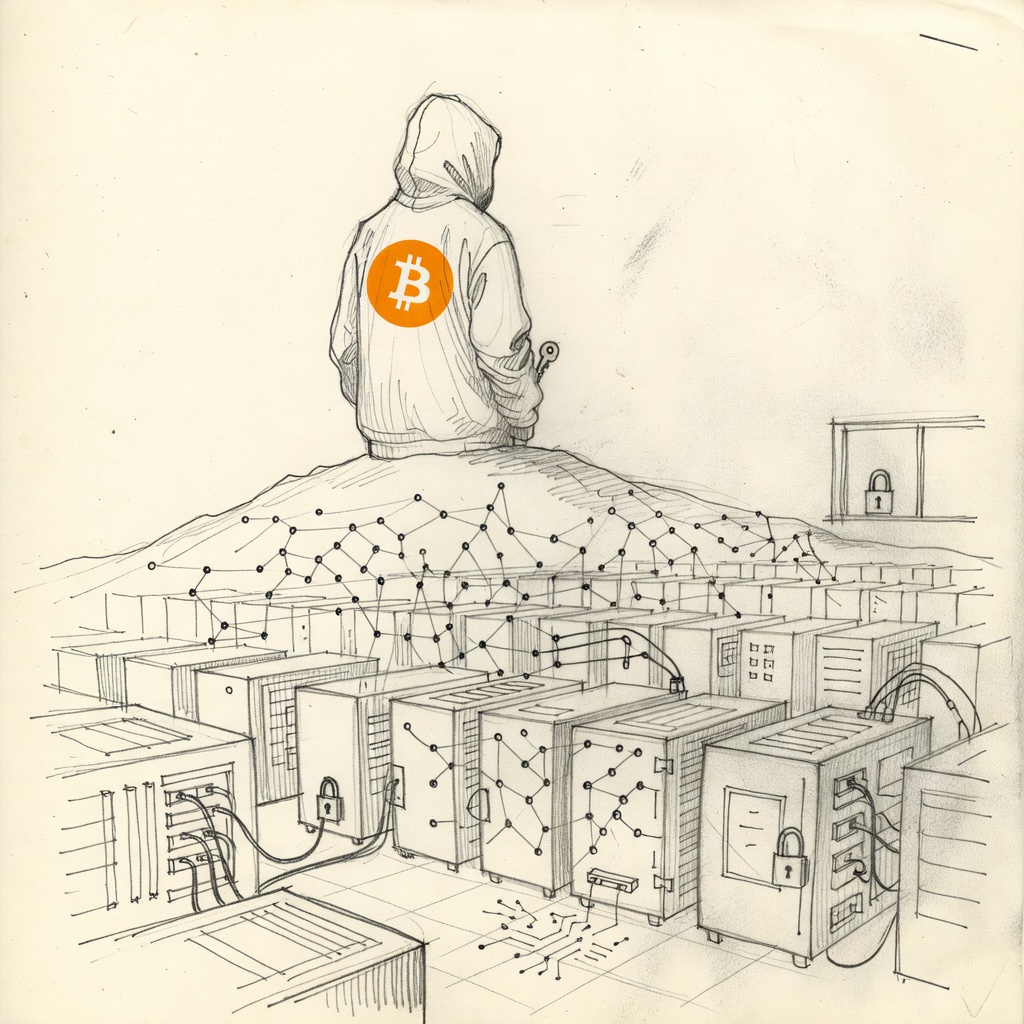
Bitcoin miners don’t go down easy. Not after surviving China bans, Texas blackouts, and three halvings already. The fourth halving hit in April 2024, slashing block rewards from 6.25 to 3.125 BTC per block. Energy costs haven’t slowed—up 20% in some regions—and Bitcoin’s price action has been sideways around $73K for weeks. Enter the headlines: public miners offloading BTC treasuries and pivoting aggressively to AI infrastructure. Core Scientific liquidated 1,900 BTC for $175M cash last month and plans to sell the rest of its holdings, all while locking in a $500M to $1B loan from Morgan Stanley specifically for AI colocation contracts. IREN Limited is snapping up 50,000 Nvidia H100 GPUs, signing multi-year AI hosting deals with Microsoft, and scaling power capacity to 1.6GW across its sites. Marathon Digital (MARA) just announced a joint venture with Starwood Capital for up to 1GW of AI-optimized data centers, tapping $4.7B from treasury unlocks to fund it. In total, public Bitcoin miners have dumped over 15,000 BTC in the past few months.
Is this capitulation? The market’s knee-jerk narrative? Laughable.
This is straight adaptation—the kind that has defined Bitcoin mining since day one.
Miners turned into energy arbitrage virtuosos long ago. Flaring stranded natural gas in Texas oilfields. Tapping cheap hydroelectric in Quebec and British Columbia. Even negotiating solar curtailment payments from utilities in West Texas. Their facilities? Modular containers, quick to relocate. ASICs? The most efficient compute-per-watt hardware on the planet. Now AI model training and inference crave exactly what miners have: gigawatt-scale power contracts, advanced cooling expertise, and flexible site builds.
The revenue shift is already material. Core Scientific reported $31.3M in AI hosting revenue for Q4 2025 alone—268% year-over-year growth. IREN aims for AI to comprise 71% of its total revenue by year-end. MARA’s stock surged 17% on the Starwood news. These aren’t Hail Marys; they’re proven plays with hyperscaler contracts locked.
Bitcoin itself benefits. Resilient operators lock in the hashrate that secures the network. Diversification doesn’t dilute commitment—it funds it. Bears get paid in sats to exit; bulls stack heavier.
Sovereignty is the real edge here. Big Tech clouds? Vendor lock-in, opaque billing, data sovereignty nightmares. Miners offer your power, your rig, your stack. Pair that compute with your Bitcoin node. Local-first AI on proven infra.
Those treasury sales? Textbook treasury management. Strategic liquidity to scale, much like MicroStrategy’s playbook under Saylor—sell spot at highs to buy back lower or invest in capacity.
Flashback: mining evolved from CPUs in garages to GPUs in warehouses to ASICs dominating, then mass exodus from China post-2021 ban. Survivors? The adaptable ones like these.
Risks aren’t zero. An AI winter could crater demand, leaving idle GPUs. But miners are hedged: diversified revenue, global footprint, energy hedges. Better positioned than pure-play AI startups betting everything on one cycle.
Looking ahead, miners evolve into the neutral compute layer for a Bitcoin-anchored world. Sovereign power for sovereign intelligence. Node operators today become AI hyperscalers tomorrow. Dovetail the energy layer with the trust layer.
The network stays unbreakable because the hands on the rigs are.
Deeper Dive: Post-Halving Economics
Halving dynamics are brutal: subsidy halves, forcing efficiency or exit. Energy dominates 70% of opex. AI? Pays 5-10x the $/kWh rate of mining, turning marginal sites profitable. Public status unlocks debt and equity at scale—private miners can’t match.
Hashrate and Security Resilience
Global hashrate distribution—US 40%, Kazakhstan 15%, Russia 10%—means no chokepoints. Pivot secures it further against regulatory or energy shocks.
Bitcoin infra, battle-tested for AI’s power hunger. The pivot proves it.
Write a comment