Evaluating Rancho One Villas in Palm Springs Before You Sign
- Why Rancho One Sits in a Separate Bracket
- Contract Clauses Worth Reading Twice
- Running the Numbers on a Realistic Scenario
- Decision Criteria That Actually Matter
- Frequently Asked Questions
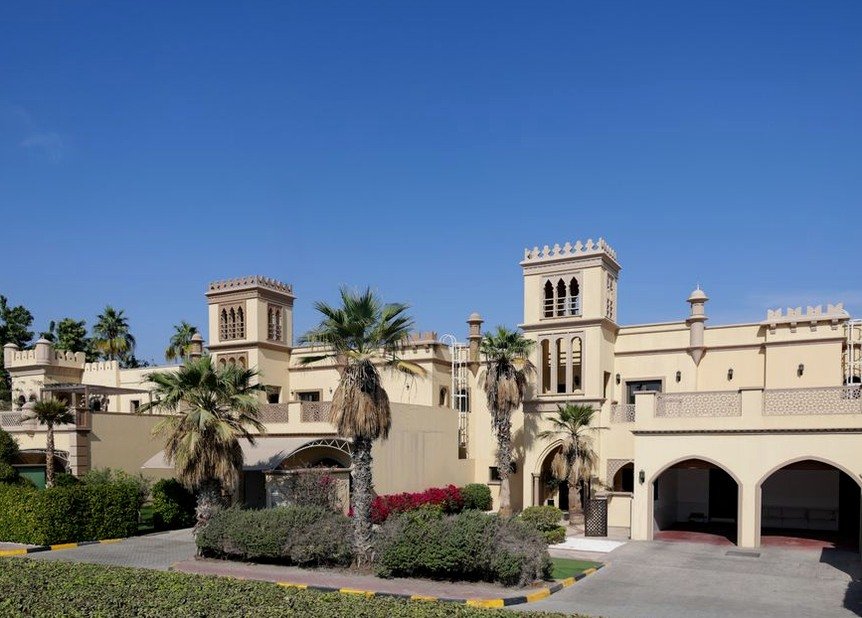
Rancho One is Nakheel’s villa neighbourhood inside Palm Springs, a 382-hectare master community in southern Dubai launched in November 2026. Prices start from AED 7,000,000 on a 60/40 payment plan, with handover projected for Q4 2030. Those three numbers—entry price, split ratio, and a four-year wait—frame every decision a buyer needs to make before wiring the first instalment. Getting them wrong, or ignoring the contract mechanics behind them, is where most off-plan mistakes happen.
Why Rancho One Sits in a Separate Bracket
Palm Springs contains 15 planned neighbourhoods: eleven for townhouses, four for villas. Rancho One belongs to the villa tier, which means larger plots, lower density, and a price floor roughly twice the townhouse entry point of AED 3.8 million. That gap matters for resale. Villa buyers in Dubai master communities typically compete in a thinner secondary market than townhouse buyers, so liquidity depends more heavily on location within the community and the developer’s track record. Nakheel, operating under Dubai Holding Real Estate, has delivered large-scale communities before, but Palm Springs itself remains entirely unbuilt. Every home is sold off-plan, before construction begins.
Contract Clauses Worth Reading Twice
The 60/40 payment plan means 60% of the purchase price is due during construction and the remaining 40% at or around handover. Before signing, confirm exactly how that 60% is staged. Some Nakheel projects tie instalments to construction milestones (foundation poured, structure complete, finishing), while others use calendar dates regardless of build progress. The difference is significant: milestone-linked payments give you a natural pause if construction stalls, whereas date-linked payments keep draining your account even if the site is idle.
Check whether the Sales and Purchase Agreement includes a completion-delay clause. Dubai’s RERA regulations generally allow developers a grace period—often 12 months beyond the stated handover date—before buyers can claim remedies. With Q4 2030 as the target, that grace window could push actual possession to late 2031 without triggering any penalty. Know this timeline before you budget rental income or plan a move-in.
Three other clauses deserve attention. First, the service-charge estimate: villas in resort-style communities with 35 km of trails, landscaped spines, and open space exceeding 30% of the masterplan carry higher maintenance costs than a standard suburban plot. Ask for the projected per-square-foot service charge and compare it against existing Nakheel communities. Second, the assignment or resale clause: can you sell your unit to another buyer before handover, and if so, what fee does the developer charge? A 2-4% transfer or NOC fee is common, but some contracts restrict resale entirely during early construction phases. Third, confirm the escrow account number registered with RERA. All off-plan payments in Dubai should flow through a regulated escrow, and verifying this upfront protects your capital if the project faces delays.
Running the Numbers on a Realistic Scenario
Suppose you commit to a villa at the AED 7,000,000 starting price. Under 60/40 terms, AED 4,200,000 is payable during construction (roughly 2026-2030), and AED 2,800,000 at handover. Spread across approximately four years, the construction portion averages about AED 1,050,000 per year—though actual instalments will be lumpy depending on the milestone or calendar schedule. That annual outflow needs to come from somewhere: savings, business income, or returns on other assets. If you are financing through a UAE bank, note that most lenders do not offer mortgages on off-plan properties until a project reaches a certain construction percentage, often 50% or higher. You may need to self-fund the first two years entirely.
On the revenue side, comparable four-bedroom villas in newer Dubai master communities currently achieve gross rental yields in the 5-6% range, but those are built and occupied communities with established tenant demand. Palm Springs will house nearly 50,000 residents at full buildout, yet Rancho One buyers taking handover in 2030 will be among the earliest occupants. Early-phase rental demand is unpredictable. Budget conservatively: assume several months of vacancy after handover while the neighbourhood matures, and factor DLD registration fees (4% of purchase price, AED 280,000 on a 7-million villa) plus agent commission into your total acquisition cost.
Decision Criteria That Actually Matter
Plot position within the neighbourhood affects long-term value more than the base price. Corner plots, plots backing onto the central park or the coastal edge, and plots away from future commercial zones tend to hold premiums at resale. Ask the sales team for the full plot map and price schedule before choosing. If two plots differ by AED 200,000 but one faces open green space, the premium usually pays for itself.
Developer reputation and delivery history carry weight, but they do not eliminate construction risk. Nakheel has completed major projects, yet Palm Springs is a ground-up masterplan with infrastructure still to be laid. Cross-check progress updates against RERA filings periodically after purchase. The community’s first release covers about 500 homes, so early buyers form a relatively small cohort—giving you some leverage in requesting information directly from the developer’s project team.
For current availability and unit details, the listing page for Rancho One villas in Palm Springs on Alcenza’s portal shows the active inventory alongside the payment plan breakdown.
Frequently Asked Questions
What does the 60/40 payment plan mean for cash flow?
You pay 60% of the villa price in staged instalments during construction (2026-2030) and the remaining 40% at handover. Confirm whether instalments follow build milestones or fixed calendar dates.
Can I resell the villa before handover?
Most Nakheel off-plan contracts permit assignment, but typically charge a transfer fee and may restrict resale during early construction. Review the specific clause in your SPA.
When is the realistic move-in date?
Handover is projected for Q4 2030. Add the developer’s contractual grace period—often 12 months—so practical possession could extend into late 2031 without penalty.
Are service charges likely to be high?
Palm Springs reserves over 30% of its area as open space with 35 km of trails, which increases landscaping and maintenance costs. Request the developer’s projected service-charge rate per square foot and benchmark it against comparable Nakheel communities.
Write a comment