Sean Lennon Discusses Les Claypool, Yoko Ono, and AI | Public Broadcast
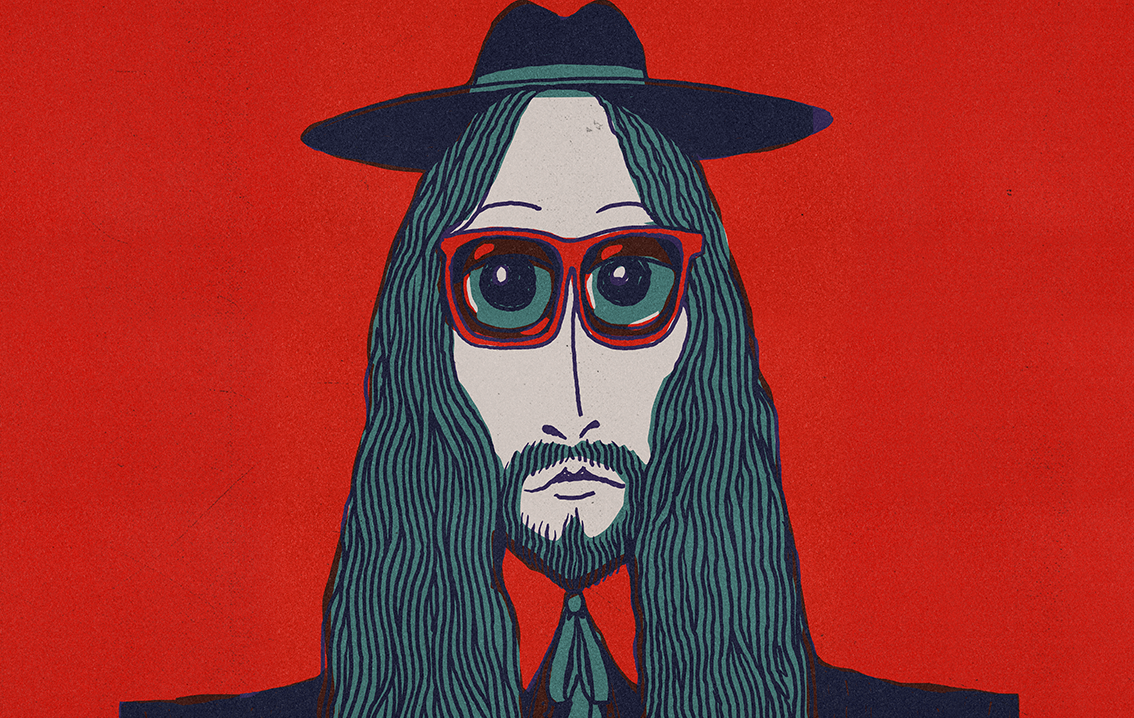
Welcome to Public Broadcast, the brand new podcast feed from Public Record Online, brought to you by listeners like you and our sponsor, Hello Merch. Formerly known as WASTOIDS, Public Record is your home for art, culture and music—not optimized for the algorithm, but optimized for care, preservation, and archiving.
This week: Sean Lennon. The son of John Lennon and Yoko Ono, Sean is a lifelong musician himself. In the ‘90s, he was signed to the Beastie Boys adventurous Grand Royal Records, which released his debut, 1998’s Into the Sun. He followed it up in 2006 with Friendly Fire, released on Capitol Records, and he’s played in a dizzying array of bands and projects, including Cibo Matto, The Ghost of a Saber Tooth Tiger, Mystical Weapons, and his mom’s band, the Plastic Ono Band.
He’s also in a group with Les Claypool called The Claypool Lennon Delirium, with Primus bassist Les Claypool.
They’re out on the road now, a traveling circus of rock music that features Primus, The Frog Brigade, and the Claypool Lennon Delirium, which means Les is playing three sets a night, and Sean is playing two—as he’s sitting in with the Frog Brigade in addition to his project with Les.
Their new album is called The Great Parrot Ox and the Golden Age of Empathy, a psychedelic pop opus that’s also a concept album about the role of humanity in the age of AI.
Ahead of the tour rolling through Phoenix on June 30th, we caught up with Sean to talk technology, his mother’s art and the squares who still don’t get it, and whether or not he has any plans to celebrate the 20th anniversary of his album Friendly Fire…but first…are we merely meat machines?
Public Record: I’ve really enjoyed spending time with The Great Parrot Ox and the Golden Egg of Empathy. I found myself surprised as I was listening to it again, because I’ve been reading the pope’s recent encyclical about AI.
Sean Lennon: Yes. I just heard that he had a meeting with…not OpenAI, but one of those companies.
Anthropic.
Anthropic, exactly. The one that’s trying to be…
Ethical.
Human. Think about humans at least.
I never would’ve thought that the new Lennon Claypool Delirium album and the pope’s latest encyclical would have so much overlap. You guys are on some similar wavelengths.
Well, the pope and I, we’re locked in sync.
I know for a fact that you are not an anti-technology guy, but it is also clear from listening to this record that like most people with a heart and a brain, you’re a little bit concerned. In “Meat Machines” you sing, “Are humans nothing more than meat machines?” I feel like that’s the big question that people are asking themselves right now: what are we? Are we just programmable matter or is there something else going on? Was that sort of the starting point that you and Les did with this particular record**
We were looking for a plot for our concept album. I mentioned the “paperclip dilemma,” which is this thought experiment where if you tell the AI singularity super-intelligent computer to make paperclips as efficiently as possible, it suddenly decides to just kill all animals on Earth to make more paperclips and starts turning the solar system into raw materials for paperclips, because it’s a machine and it doesn’t know how to not follow an order. So basically, it’s a cautionary tale about how careful you have to be when creating these things, because we are creating them and even if they start to self-referentially iterate into new forms, we’re the ones who made them. That’s part of what we wanted to talk about: let’s not pretend that this thing is just happening, meaning the AI revolution.
We’re making it happen, which is okay, but we can’t … There’s a lot of talk from the tech bro community who are in the AI business that sounds as if it’s like, “Well, this thing could kill us, but we just got to do it anyway.”
So that feels a little bit goofy to me because it’s just disingenuous. If you know something can destroy the planet, then you should probably slow down a little bit. And then the other thing you were talking about in terms of whether humans are just meat machines, that speaks to the idea of, “Is AI about to wake up?” because it sounds like a human when we’ve programmed it to talk like a sexy girl and tell us bad Wikipedia information and every once in a while hallucinates something that makes absolutely no sense.
Does that mean that it’s about to wake up and actually be conscious? And my feeling is: absolutely not. I feel like if we ever do create an artificial conscious being, it’s not going to be out of ones and zeros. I think there’s a presupposition with people who believe that we’re close to AI waking up. There are a lot of very intelligent people I’ve seen saying that. They think it already has a primitive sense of awareness.
I think they’re just wrong, but obviously I’m not a computer scientist. It’s definitely out of my league intellectually, but I personally think that there’s a big misunderstanding about what intelligence is. I don’t think that you can mimic awareness with a complex computer program. They’ve even shown that it’s not just great apes who can recognize themselves in a mirror and rub a red dot off of their forehead because they know that it’s their reflection. Even ants can do this now. It’s tiny little fish that are able to do this. So my point is, it’s clear that many organisms and animals have this sense of self. They recognize themselves in a mirror and they have an experience of being alive.
Their brains are very small. They’re much less sophisticated than these AI softwares are. So if the AI was close to waking up, we would’ve already seen a level of awareness, I believe, much sooner. We have zero sense that they’re self-aware. They act exactly like machines pretending to be people. So I think that the answer is no. We’re not just meat machines in the sense that AI is just a silicone machine. Biology is different. And I’m not saying that we can’t eventually make an artificial biological entity, but I just personally feel that, and again, this is out of my intellectual pay grade, but I believe that it will probably look more like biology, meaning if you’re going to make a fake organism, it’ll probably have cell walls and a metabolism of some sort.
People refer to it as “wetwear,” the idea of making machines that are more like biology, but so that’s what I mean. And so then the word machine becomes a little bit subjective because if we mean a purely deterministic device, then maybe it will prove that biology is deterministic in a way that we just don’t understand now and then we’ll be able to fake it. But at the moment, I think there’s a lot of bullshit about AI’s already thinking or already self-aware or that it’s about to become self-aware. We just need more compute in a bigger fucking server parking lot. I just think that’s all bullshit. I think it’s also very anti-human. It’s very anti-nature. It’s very anti-life and I don’t like it.
I’m with you fully on that. I don’t think you used the term “overlords,” but I will use the term overlords. These people whose job it is to sell us on all this stuff, I think that we have such a degraded view of what humanity actually is right now. The reason I love music is because it’s constantly forcing me to confront the contradictions and paradoxes of humanity and of whatever a soul is. But I really do feel like we have a kind of degraded sense of humanity that people are like, “Is AI conscious?” Well, we can’t define how consciousness works in humans. So how could we define it for something non-human?
Exactly. That’s a very simple way of putting it. I think it’s as simple as that. We can’t know that something is about to be conscious when we can’t even define what consciousness is. It’s technically impossible.
It’s our mystery still.
I do think if you just think of consciousness as a low level as a base level of awareness, meaning an experience of existing. I do think that you can observe that in insects. Even amoeba; amoebas seem to experience their environment. They run from danger, they hide, they don’t poop where they eat and they build little shelters, which it just looks very much … Obviously it’s impossible to prove because you can’t talk to an amoeba, but it feels like they’re even at that single cell level that they’re somehow experiencing existence. Whereas I don’t get that feeling from any computer and even your laptop or your cell phone is much more sophisticated than an amoeba. And if people listening are cynical about an amoeba, then just go to an ant or something. And an ant, as I said, they just proved recently that ants will wipe off a paint dot on their head in a mirror because they don’t want to look weird to the other ants in the colonies who will attack them if they don’t rub the paint off.
So I mean, that clearly means they’re experiencing their environment. There’s this German word umwelt, which is the subjective experience of an organism and they have their own umwelt. It’s obvious. Whereas no, a cell phone does not have an umwelt; nor does your ChatGPT. It doesn’t have a subjective experience of existing and it’s not about to. That’s my bet.
Well, so to pivot just a tiny bit, you guys are on tour right now and it’s a pretty colossal undertaking in a lot of ways. You’ve got Primus, the Claypool Lennon Delirium and The Fearless Flying Frog Brigade all playing. You’re playing in two of those groups, right
Yeah, I’m grateful that it’s the Colonel who has the biggest responsibility, because he also then has to play a full Primus gig, which frankly, is very demanding in a whole different way because they’re so heavy and so funky and so tight.
Yeah, I find it very challenging to play two different bands a night because despite the fact that I use the same pedalboard, it does feel a little confusing sometimes because my personality is very different from between Frog Brigade and The Delirium. The main thing, I guess, is that for The Delirium, I’m often the lead singer and that just adds a whole nother level of complexity to what I’m doing on the guitar, for example, because it’s easy enough to change sounds when I’m just playing different guitar sounds, but when I’m also singing the lead vocal, it makes it a little complicated. It’s been really hard but really fun, but to be honest, it’s twice as hard for Les because he has a full Primus show after that and it’s even longer than the set we do with Delirium and Frog Brigade. So it’s definitely keeping his brain very neuroplastic.
I can’t imagine just holding all that in. Just the informational aspect of it: the chords, the lyrics, the arrangements. That’s a lot to hold onto. Although I know the Frog Brigade is improvisatory at certain points or largely there’s still…
Yes, but for Les, there’s a lot of lyrics in the Frog Brigade stuff. And his lyrics are amazing. There’s a lot of wordplay. There’s a lot of fancy rhythmical syllabic stuff. So it’s amazing. He’s an amazing musician and an amazing songwriter.
I just think it’s cool that you guys seemingly were willing to challenge yourselves in the way that these shows necessarily would …
Well, it’s funny because we did a show where it was, I guess it was Delirium and Primus once years ago. We did a couple legs. And afterwards, he did say, “Shriner, never let me do that again.” And so when he called me about the Frog Brigade thing about this tour, I was like, “Well, I have to say you did tell me…” And he’s like, “I know, I know. “ So I did bring it up, but I think it’s good for your brain to challenge yourself. I think there’s nothing healthier than over challenging yourself or being a little too ambitious.
Yeah, that’s a good point. That’s a good point. And I do think that part of the general malaise regarding our moment, let’s say technologically at least, a lot of it comes from the lack of friction that our online existence actually ends up creating. So for you guys to kind of put the rubber to the road with this project and really push yourselves, try things that are difficult.
To use your physical body. It’s out of style!
I don’t want to overstate it, but I mean creatively, there’s a danger in staying too much in your comfort zone and it’s clear that you guys are pushing beyond that. Sean, it’s interesting. I think the first time that I read about something you were doing, it was in an issue of Guitar World. So we’re going back to the early 2000s. It was your collaboration with Soulfly. And then, I worked my way backwards and got into the Grand Royal records and your stuff with other collaborators, but having that be the first thing I heard about you doing, it really instilled in me this perception that you’re somebody who creative collaboration is very important to you and you’re not worried about whether or not it’s going to easily fit with what people might expect from you. You know what I mean?
I think that’s a privilege that I have always had. It’s like people give me a lot of shit for being a “nepo baby” or whatever. And I think one of the truest privileges that I recognize from not having to conform to anybody, especially a record company’s expectations is because I was only doing music because I wanted to do it. So for me, I had this luxury of always just doing what I felt like doing because I liked it or because I wanted to do it and not because I was sort of planning some strategic career. I do think that’s a luxury that I’ve always had and it’s something that I pretty much have always taken advantage of because I feel like, well, what’s the point? If I’m going to be considered John Lennon’s son or a nepo Beatle kid or something, then on top of that, trying to strategize some cheesy career that I don’t even like, it just felt like pointless.
So there was no point in doing music for me unless I could do it in a very spontaneous and natural way and not worry about what people think.
One of your frequent collaborators is John Zorn. I was at a Big Ears a couple months ago and saw him perform in a variety of contexts and it was mind-blowing—I think you share something with him, and also I would suggest in part that comes from your mother’s pioneering influence as well, a willingness to just work with people who on paper, maybe it doesn’t make sense, but that’s okay.
It may not make sense to someone who isn’t there. But for example, if you ever saw John Zorn play with my mom, it makes a lot of sense. Or if you listen to my record that Zorn put out on Tzadik, Asterisms, then it makes sense once you hear it. But I think that’s what it takes because yeah, I think that’s a very good example. It’s not like I’m going to do a record with Zorn because we’re trying to make a point or something. We’re just actually friends from years ago. We’ve been around each other a lot because we’re both in New York and we have a lot of the same musician friends and we sincerely have a relationship that has nothing to do with anybody else. It’s just we’re actually, we’re friends. So yeah, I think sometimes people get surprised because they think, “Oh, Sean is supposed to be this kind of artist, so why is he doing a Tzadik record?” But if you really know Tzadik as a label, it isn’t really a jazz label. I mean, it’s way more than that. I mean, in fact, the average John Zorn record has about every genre created…If you really know the people involved, it does kind of make sense. And Soulfly, I think it was surprising that I did heavy music, but the reality is even though my records weren’t heavy when I was young, the Grand Royale record wasn’t heavy really. There was some heavy-ish moments.
But I’ve just been a huge metal fan my whole life. I really love Slayer, I love Sabbath, I love some Metallica stuff. So I’ve always had the love of it. And when I met Max Cavalera from Soulfly, I was just psyched, he wanted to work with me and he let me produce a song with them and write it with them. And it was just a cool experience.
For somebody to assume that you’re going to be locked in some sort of stylistic box because of who your parents are, I mean, I guess that’s one thing, but when one of those parents is Yoko Ono, it should probably be…
You’ve got to expect the unexpected! And it is my mom who influenced me the most. I’m a deep disciple of The Beatles and John Lennon’s work, but my dad wasn’t physically in my life and it was my mom who showed me how to put a delay on a vocal, what EQ was, what a compressor was. I was in the studio with her most of my life. So the Yoko Ono part of my heritage is huge and it did have a big influence on me. And it might be why I’m not the most understood person in the world as well, because neither is she.
Getting into your mom’s work was, for me, it was one of the latter rungs of getting into stranger and ore experimental music. It was a huge thing to realize that this stuff—so much of which I had heard frankly derided by fanatical Beatles fans—when I actually started listening to the records, like that first Plastic Ono Band record, I was like, “What the fuck are you talking about? It’s the coolest thing I’ve ever heard.” It sounds like Sonic Youth.”
I think Malcolm McLaren said it was the first punk rock record, or a proto punk record. It is an incredible album. I think it just shows how square people are, because the people who to this day are upset about those records, my mom’s early records, they are the ones who just have very square taste. Which is fine. Not everyone has to be out there, but for them to think that what she’s doing isn’t valid in its own kind of lane is what’s goofy to me because yeah, sure, The Beatles are the most sophisticated band harmonically maybe of their generation. So if you like that, then obviously maybe you won’t understand something that’s more primal like Plastic Ono Band, but that doesn’t mean that she sucks at music. I mean, she’s obviously got her own thing and she’s very talented and she also writes incredible pop songs, which I think people don’t realize.
I think it’s a lot of closed-mindedness and just being square and uptight and unimaginative, the Yoko bashers of today especially because it’s one thing to have reacted badly then because it probably was really a surprise, but to do it today just kind of shows that you’re very small-minded to put it as kindly as possible.
I appreciate your diplomatic tone there. It’s like freaking out the squares is like part and parcel of what her legacy is, and yours. I know we don’t have too much time, so I don’t want to take up much more, but I have a million questions for you just about Between My Head and the Sky, which was one of my favorite records.
Oh thank you.
But I’ll pivot as we wrap up. I realized getting ready for this 2026 marks the 20th anniversary of Friendly Fire, which is one of my favorite records of yours.
Thanks.
I like the far out stuff so much too, but that’s an incredible record. Any chances of an anniversary reissue or a vinyl edition of that bad boy at some point?
Actually, a lot of people had asked me that. I was looking for the masters so I could remix the record, which is kind of what I’ve been doing with my dad’s old stuff. But the problem is that no one at Capital EMI knows where the masters are. Tom Biller, the engineer who recorded it with me, doesn’t know where the masters are. I don’t know where the masters are. That put a damper on that project because frankly, I do like the songs on that record, but I do feel like I think, now, today, with my experience and age, I could probably mix it in a way that would made it much better than it was. I just don’t think I was very good, especially at singing and making my voice sound good. Yet I think the thing that took me longest to figure out was how to sing well because my dad was such a famous singer and my voice kind of sounded like his if I sang out.
And so I was always kind of holding back a little bit because I didn’t want to sound like him, but the result was that I sounded especially whimpering and whiny in a way. So I basically wanted to dig in there and remix the whole album, but then I couldn’t find it. So that’s where that project is at the moment, but I could just remaster it, but I don’t know if that would even be worth it. Part of me just wants to re-record the whole thing now that I feel like I know how to record better. So I appreciate you saying that. I’m also one of those musicians who has a weird relationship with my past stuff. I don’t really think about it very much. I’m always kind of trying to do something new. It’s probably because I haven’t had any hit. So it’s not like when I go out on stage, people are like, “You’ve got to play ‘Dead Meat’ or something. No one cares. So I think that’s also given me the freedom to just move on. But I’m definitely very flattered that a lot of people have mentioned to me that they’d like me to do something with Friendly Fire and because so many people have asked me, I am looking into it and trying to figure it out.
We’ll stand by for Sean Lennon Presents: Friendlier Fire.
Or Unfriendly Fire.
Friendly Fire(s)—the sequel. You could redo the whole thing. Sean, thank you so much. I really appreciate you taking the time.
All right. Thanks a lot.
Interview: Jason P. Woodbury
**Art:**Wartella
Write a comment