Banned Books 442: Giertz — A Shepherd's Letter
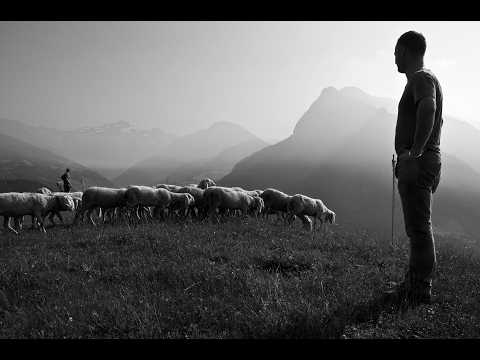
Riley and Gillespie sit with Bo Giertz and read his open letter to the churches, A Shepherd’s Letter. The episode opens in the section “Crises and Sources of Strength,” where Giertz addresses a church under siege — not only by Nazi persecution and Soviet communism in his own day, but by the quieter, more pervasive threat of Western secularism and industrialization.
What we covered
-
The crisis that doesn’t kill the church: Giertz writes in 1949. His opening move is not a lamentation but a song of praise: “Blessed be the God and Father of our Lord Jesus Christ.” The situation was no less critical in the apostolic age — and so the church cannot use crisis as a reason to go silent.
-
Living hope vs. the shallow eschatology of liberalism: Giertz anchors the letter in 1 Peter 1:3 — “a living hope through the resurrection of Jesus Christ.” Liberal theology offers “this life, but it just doesn’t end.” Each crisis — 30 Years’ War, WWI, WWII — has produced a church that backed down from her confession under pressure.
-
Liberal theology as fondant: Riley’s image — beautiful, elaborate, inedible. “You can’t eat liberal theology. It doesn’t sustain, because it’s Christless.” The sacraments are gone, the resurrection is metaphorized, what remains is a social program with Jesus in the title.
-
Joy as the keynote of early Christendom: Giertz: “The great joy is the keynote of early Christendom.” The resurrection witnesses did not calculate what people might be willing to hear — they went out singing praises. Paul and Silas in prison, singing hymns in chains.
-
Suffering as natural, not surprising: Giertz quotes 1 Peter 4: “Do not be surprised at the fiery trial.” Early Christendom regarded persecution as completely natural — the suffering of Christ imposed upon the members of his body.
-
Pastoral vocation: “Do not make the church your mistress.” Riley’s reform of council meetings: begin with Scripture, catechism, and prayer — then finances, then the pastor leaves. Eugene Peterson’s model (Under the Unpredictable Plant): the pastor is just a chaplain at the voters’ assembly.
-
Creedal language as the formal dialect of faith: If you don’t learn the formal language of the church in church, you cannot speak faith informally in your home or your street.
A Shepherd’s Letter is available from 1517 Publishing, translated by Bror Erickson.
Write a comment