You Have Come from Afar
▶️ Watch on YouTube · 🎧 Listen on Spotify
19 July 2026 · The Seventh Sunday after Trinity · Mark 8:1–9
“I have compassion on the multitude, because they have now continued with Me three days and have nothing to eat. And if I send them away hungry to their own houses, they will faint on the way; for some of them have come from afar” Mk 8:2–3.
Grace to you and peace from God our Father and the Lord Jesus Christ. Amen.
Notice where we are. Mark tells us, but we might read past it. This is not where we stood the last time Jesus fed a crowd. The five thousand were fed on the near side, in Galilee, among the children of Israel, on the green grass by Bethsaida. When it was over, twelve baskets were left, one for each tribe of Israel.
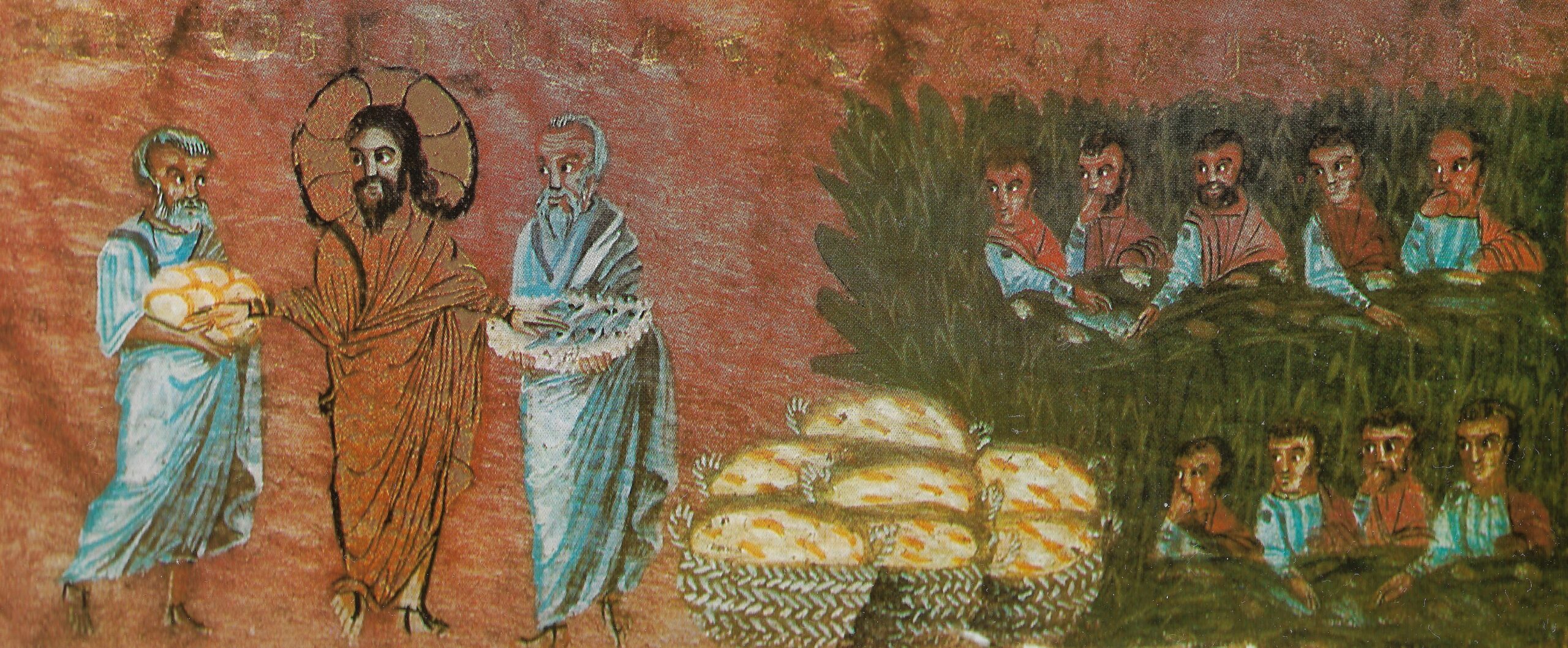
This is another day and another shore. Jesus has crossed the sea. He has been north in Tyre and Sidon, pagan country, where a Gentile woman begged Him for the crumbs the dogs get, and He called her faith great. He has come down into the Decapolis, the ten Gentile cities east of the sea, and there opened a deaf man’s ears. Now, out in that wilderness, four thousand people have gathered around Him. They have been with Him three days, and their food is gone.
And Mark mentions something subtle about them: “Some of them have come from afar” (Mark 8:3). Not from Jerusalem or the villages of Israel, but from among the nations.
Paul explains what that word means. He writes to the Gentiles in Ephesus: remember that you were once “aliens from the commonwealth of Israel, and strangers from the covenants of promise, having no hope, and without God in the world” (Eph. 2:12). That is the crowd in the Decapolis. No temple, no priesthood, no promise, no claim on the God of Abraham. They walked a long way on empty stomachs to a Jewish rabbi in the desert, and by every reckoning, they had no right to even a crumb from His hand.
That crowd is you. You were not born into Israel. There is no covenant in your blood, no ancestral claim on the God who fed His people manna in the desert. Left to yourself, you stand at the edge of the promise, without hope and without God in the world. That is where every one of us begins. We do not come to this table by birth, and we do not come by right. Outsiders.
And there is an even harder word. Despite being brought so close, we treat the table as a small thing. The Large Catechism says it: we come to the Sacrament “like strangers,” out of habit and duty, “without natural longing and without love.” We look at plain bread, plain wine, the same words we heard last month, and do the arithmetic. Seven loaves, four thousand mouths. It won’t be enough. Not for my week. Not for what I’m carrying. The world sets a louder table, and we would rather eat there. We remain strangers while we kneel.
But watch your Lord and what He does. He does not wait in Galilee for the nations to find Him. He crosses the water into Gentile territory, goes out to people who have no hold on Him, looks at the four thousand, and His heart turns over. “I have compassion on the multitude,” He says, “because they have now continued with Me three days and have nothing to eat. And if I send them away hungry to their own houses, they will faint on the way; for some of them have come from afar” (Mark 8:2–3).
Three days. Three days these Gentiles stayed hungry in the wilderness to keep hearing Him, because His Word was worth more to them than bread. But three days- that’s resurrection! He will not send them away empty. He knows how far they have to walk, and He knows they’ll drop on the road. So He takes the seven loaves in His hands, the hands that make bread from sand and stone every summer of your life, gives thanks, breaks them, and hands the pieces to His disciples to carry through the crowd. And they eat. Every one of them, filled. They sit on the open ground, the dirt that belongs to every nation under heaven, and the God they had no claim on feeds them to the full.
How does an outsider get to this table? Paul says it: “But now in Christ Jesus you who once were far off are made near by the blood of Christ” (Eph. 2:13). By the blood. The loaves He broke that day pointed to a body about to be broken. The thanks He gave over the bread He would give again on the night He was betrayed. He was walking toward Jerusalem to be handed over and to bleed, and His blood is the price of your nearness. You never crossed the distance to God. He crossed it. He came out to buy the stranger back with His life. This was the promise from the beginning, that in Abraham all the families of the earth would be blessed, and here it is kept, in a Gentile wilderness, with seven loaves in His hands.
And then count what is left. Seven baskets, full (Mark 8:8). More at the end than at the start. That is no God who runs short on you. Seven is the number of fullness, the number of the whole Church: plenty for these thousands and plenty over for everyone not yet gathered in. There is bread in His hands for the nations. There is bread for you.
The Epistle makes the same point: you were once a slave, and sin’s payment was death: “the wages of sin is death” (Rom. 6:23). However, the stranger who has been brought near does not receive what he has earned. Instead, he is given what he could never earn: “the gift of God is eternal life in Christ Jesus our Lord” (Rom. 6:23). This is not wages but a gift. All gift, all the way down into the belly.
So, listen to where this comes down this morning on your own ground. You who were once far off, Gentiles in Sheboygan County, strangers by birth to the covenants of Israel, have been made near by the blood of Christ. In the water of your Baptism, He reached out and carried you home, and now you are “no more strangers and foreigners, but fellowcitizens with the saints, and of the household of God” (Eph. 2:19). In a few minutes, the same Lord who crossed the sea for a Gentile crowd will set His table here in this wilderness and do it again. He takes the bread. He gives thanks. He breaks it. And into the mouths of strangers He puts His own body, “given for you,” and His own blood, “shed for you for the forgiveness of sins.”
Don’t look at it and call it too little. It is the fullness of God, put into the hand of a stranger, plenty for your wilderness with baskets to spare. Your Lord does not send anyone away hungry. He calls you in, sits you down, and fills you Himself. You have come from afar, so come and eat, and be fed.
In the name of the Father and of the Son and of the Holy Spirit. Amen.
Rev. Christopher R. Gillespie · St. John Ev. Lutheran Church & School — Sherman Center, Random Lake, Wisconsin
Full archive: https://sjrl.org · More writing: https://outerrimterritories.com
Write a comment