Prehistoric Yukon ‘Cheetahs’ Were Fish Eaters, Not Really Cheetahs at All: Study
Slender, agile cheetahs that roamed the Yukon 30,000 years ago were not technically cheetahs at all, but relatives of the puma that adapted to mostly eat fish instead of antelopes in a harsh northern climate, new research shows. A study published in the journal Current Biology analyzed fossils found in the Yukon and Wyoming in the United States belonging to Miracinonyx trumani, also known as the “American cheetah.” With their gracefully slim bodies and long legs, the now-extinct cats appeared to resemble African cheetahs. But the researchers found the cats were actually closer relatives of the puma, having diverged from the puma lineage around 2.6 million years ago as growing grasslands and cooling temperatures drove diversification in many North American mammals.
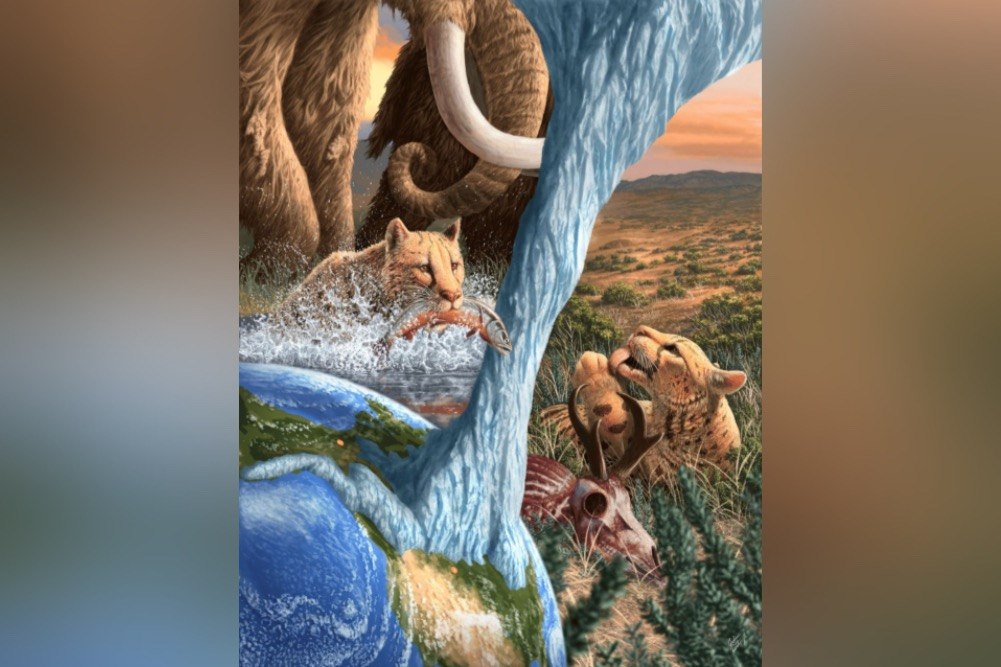
Fossil analysis reveals that the ‘American cheetah,’ Miracinonyx trumani, found in the Yukon and Wyoming, was not a true cheetah but a relative of the puma. These extinct cats, resembling African cheetahs with slim bodies and long legs, diverged from the puma lineage about 2.6 million years ago. The research indicates they adapted to a harsh northern climate by primarily eating fish instead of antelopes.
- Fossils of Miracinonyx trumani, known as the ‘American cheetah,’ were found in the Yukon and Wyoming.
- These extinct cats were not true cheetahs but were closer relatives of the puma.
- They diverged from the puma lineage approximately 2.6 million years ago.
- The ‘American cheetah’ adapted to a northern climate, primarily eating fish instead of antelopes.
- Their slim bodies and long legs resembled African cheetahs.
Write a comment