Hedgehog Fyrka Story About a Little Hedgehog Afraid of the Dark
- How the Story Builds Its Argument
- What Fyrka Actually Does to Overcome His Fear
- Why the Parents’ Role Is Understated but Essential
- Practical Checklist for Reading This Story with a Child
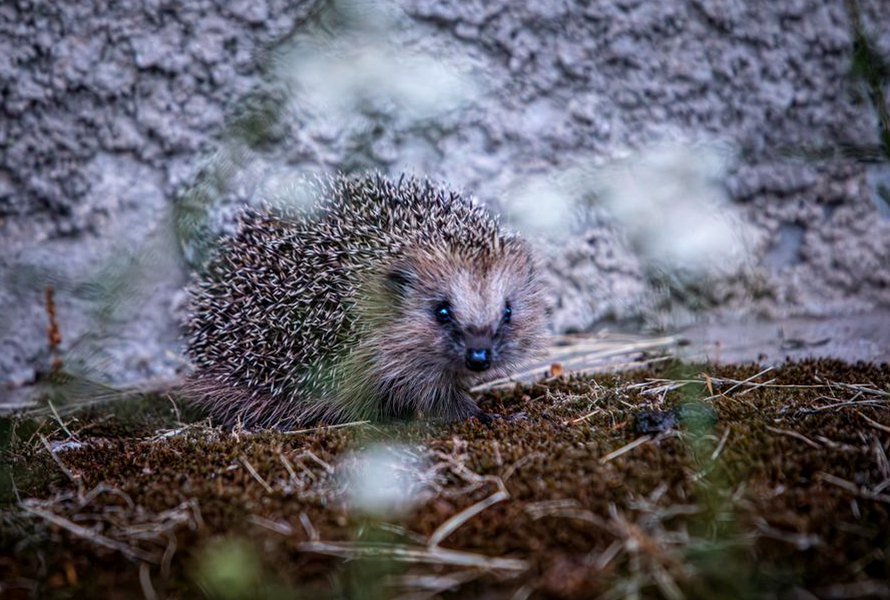
Few children’s stories handle the fear of darkness as honestly as this one does. The hedgehog Fyrka story about a little hedgehog afraid of the dark works because it doesn’t dismiss fear as silly or solve it through magic. Instead, it traces the precise internal shift a child must make: from hiding in a corner to choosing to look out the window.
Fyrka is not a coward in the classic fairy-tale sense. He is kind, helpful, and genuinely loved by his parents. His problem is a vivid imagination that floods darkness with invented monsters — ghosts, phantoms, shapes without names. That specificity matters. A child who fears the dark rarely fears nothing; they fear something they have assembled from fragments of overheard conversations and half-remembered warnings. In Fyrka’s case, the fragments came directly from his neighbour Shisha, who admitted later that he had invented the ghost stories as a joke.
How the Story Builds Its Argument
The plot is constructed with quiet care. Fyrka’s parents leave him alone during a winter blizzard — not through negligence, but necessity. They trusted him, explicitly, to look after the house “like a big one.” That trust becomes the pivot of the whole story. When darkness falls and the cold seeps in, Fyrka’s fear is real and physical: chattering teeth, imagined beasts, a retreat to the furthest corner of the room.
What rescues him is not a lamp or a parent’s return. It is a conversation through a wall with Shisha, who is brisk and even a little rough in his honesty. Shisha calls Fyrka a crybaby — and that provokes something more useful than comfort would have. Fyrka’s pride reasserts itself. He pushes back, articulates his problem clearly (“I have a rich imagination”), and in doing so begins to own the fear rather than be owned by it.
Shisha’s apology is worth noting. He admits he fabricated the ghost stories, distinguishes between real dangers (hunters, large wild animals) and imaginary ones, and then offers a practical redirect: look out the window at the snow. The story does not pretend that all fear is irrational. It separates warranted caution from fantasy-fed panic.
What Fyrka Actually Does to Overcome His Fear
The technique Fyrka uses is specific enough to be replicable. He closes his eyes and reconstructs the room from memory — every corner, every piece of furniture — in full light. The mental map replaces the dark unknown with a known space. When he opens his eyes, the fear has loosened its grip. He then does something physically active: he runs around the room, peers into the darkest corners, and shouts into them. The darkness does not shout back.
This two-step — mental reconstruction followed by deliberate physical exploration — is not a fairy-tale contrivance. It mirrors approaches used in real work with childhood anxieties: familiarize the feared space in a neutral state, then re-enter it with agency rather than avoidance. The story presents this naturally, without labeling it as a technique or moralizing about bravery.
Why the Parents’ Role Is Understated but Essential
Fyrka’s mother and father had been trying for a long time to help him. Bedtime stories about fearless animals, evening forest walks, patient reassurance — none of it worked. This is honest. External reassurance rarely dissolves deep fear in children; it can even reinforce it by signaling that the fear is real enough to require constant management.
What finally worked was enforced independence combined with peer-level challenge. The parents did not engineer this deliberately - they simply had to go. But the story frames their trust in Fyrka as the emotional counterweight to his fear. He could not let them down. That social and relational anchor proved more effective than any bedtime story about a brave bear, because it was personal and immediate.
Practical Checklist for Reading This Story with a Child
- Before reading, ask the child what they imagine might be in the dark - let them describe it without correction.
- During the scene where Shisha admits he invented the ghosts, pause and ask whether any of the child’s own fears might be built from someone else’s story.
- After the reading, try Fyrka’s memory exercise together: eyes closed, reconstruct one familiar room in full detail from light to corner.
- Follow with a brief physical walk through a dim (not pitch-black) room, naming each piece of furniture aloud as you pass it.
- Return to the child’s original answer about what lives in the dark, and ask whether they want to revise it.
Write a comment