Twenty-Four Words for an nsec
Every Nostr private key ever generated can be losslessly encoded as twenty-four words, recovered byte-for-byte forever, stamped onto Bitcoin steel plates.
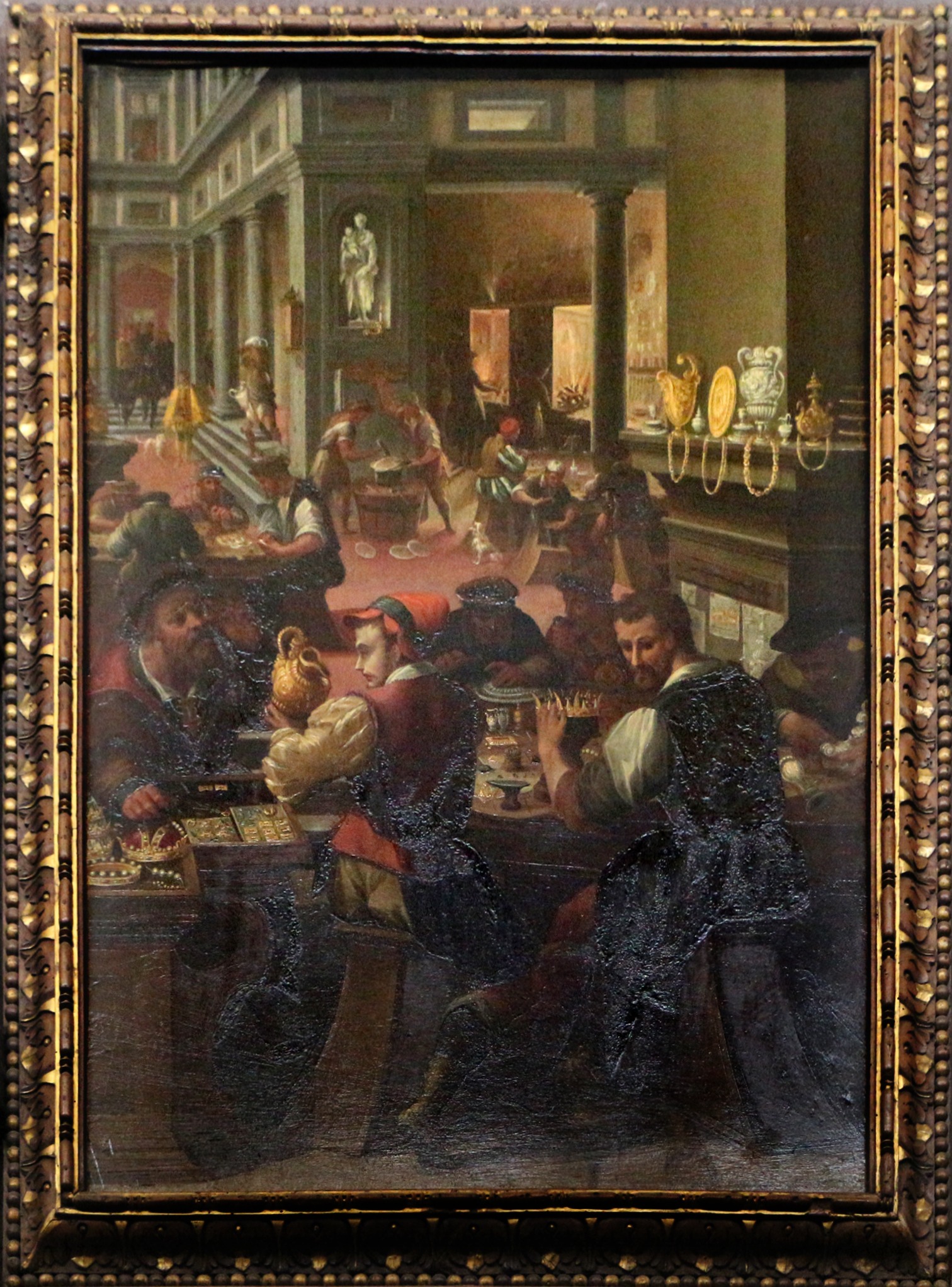

Every Nostr private key ever generated can be losslessly encoded as twenty-four words, recovered byte-for-byte forever, stamped onto Bitcoin steel plates.
Keir Starmer wants to ban children from social media, and he's promising it as a gift ; more childhood, more safety, more freedom to grow up. What he isn't saying is that the only way to enforce a ban on some users is to identify all of them, which means the actual product on offer isn't child protection but a national identity checkpoint wearing a parenting costume, built one biometric scan and one device-level filter at a time. This is the oldest move in the state's playbook: when confronted with a technology it can't yet control, slap a permission slip on it, and call the leash a seatbelt

Google Maps charges you in surveillance on every trip. OpenStreetMap and Organic Maps let your phone route locally, third parties excluded.
Today's $1.75 trillion SpaceX IPO isn't just the largest in history, but it may be the clearest signal yet that American capital markets have become completely detached from the profit-and-loss system that's supposed to govern them. So before you pile your savings or pension into this IPO, ask yourself: if AI is a "national security priority" and your subscription doesn't cover the real cost, who's actually footing the bill and who's the real customer being served?

As SpaceX, OpenAI, and Anthropic prepare to dump nearly $4 trillion in combined valuation onto public markets, the question is no longer whether these companies are "good investments," but whether the entire concept of stock ownership, as currently constructed, still means what you think it means. What if the real choice on the table isn't between AI and Bitcoin, growth and value, or risk-on and risk-off; but between holding a security entitlement that evaporates the moment the system convulses, and holding the only asset in human history that no central bank, broker, or bankruptcy court can ever take from you?

The zkSNACKs coordinator died because we ran the only one; Wasabi the client survived because that layer was protocol-shaped, not operator-shaped.

Praxeology joins cypherpunk cryptography: privacy is a fact of action, a defensible norm, and a buildable property under pressure.
Four mining pools control two-thirds of Bitcoin's hashrate. Behind each one sits a publicly traded corporation with shareholders to appease, regulators to placate, and a board of directors one bad quarter away from pivoting to AI, as Bitfarms already has. This is about who gets to produce money, who gets to secure the network, and whether Bitcoin remains a peer-to-peer system built by individuals or becomes yet another financial infrastructure owned by institutions too large to fail and too regulated to resist.

Tools move bits and settle payments. Reliability over time and adjudication of broken deals remain unbuilt institutional work.
Privacy implementation is progressive. Each tier addresses a different adversary and stops where its threat model is covered.
Cryptography fails when humans fail. OPSEC ties each defense to a specific adversary and sustains the discipline over time.
Nostr moves identity from platform databases into user-held keypairs, so a ban no longer deletes the social graph.
Bitcoin's base layer is transparent by design. Privacy on Bitcoin is an architectural achievement built in layers above it.
What if the greatest threat to your Bitcoin sovereignty isn't just the financial system at all, but it's the smartphone in your pocket? While Bitcoin eliminated trusted third parties from money, most Bitcoiners still access that freedom through devices controlled by Apple and Google. As governments push toward digital IDs, age-verification mandates, and compliance-by-design operating systems, the battle for financial freedom is quietly moving beyond Bitcoin itself and into the devices that connect us to it. GrapheneOS has emerged as one of the most important tools in the modern cypherpunk arsenal and why sovereign money ultimately requires sovereign devices.

Bitcoin's monetary rules hold because every full node validates blocks against them. A chain that breaks them carries no value.
Nakamoto solved double-spending without a central operator and produced base money instead of another claim on an issuer.
Nostr accounts cannot be sold because sellers cannot prove they forgot the private key, which collapses the market for reputation handoffs.

Content encryption hides what was said. The transport layer leaks who is communicating with whom, enough for targeting decisions.
Homomorphic encryption, MPC, and trusted enclaves each run a computation on inputs the executing party is not permitted to see.
The Wall Street Journal warns you about the dangers of “private money” called stablecoins, while defending a dollar system that is nothing but a pyramid of bank-created IOUs backed by debt and the state’s monopoly on violence. The truth is that private, apolitical money isn’t the risk, but it’s the only escape from a collapsing fiat empire The real divide is no longer between regulated and unregulated money, but between systems that require trust in power and systems that remove it entirely.
