Following Jesus ✝️𓅦𓅦𓅦

Following Jesus ✝️𓅦𓅦𓅦

Self-professed followers of Jesus the Messiah on Nostr. Protestants, Roman Catholics and Orthodox welcome. (No LDS or JWs)

Curated by Marakesh 𓅦

The Tears of Your Savior Settle It

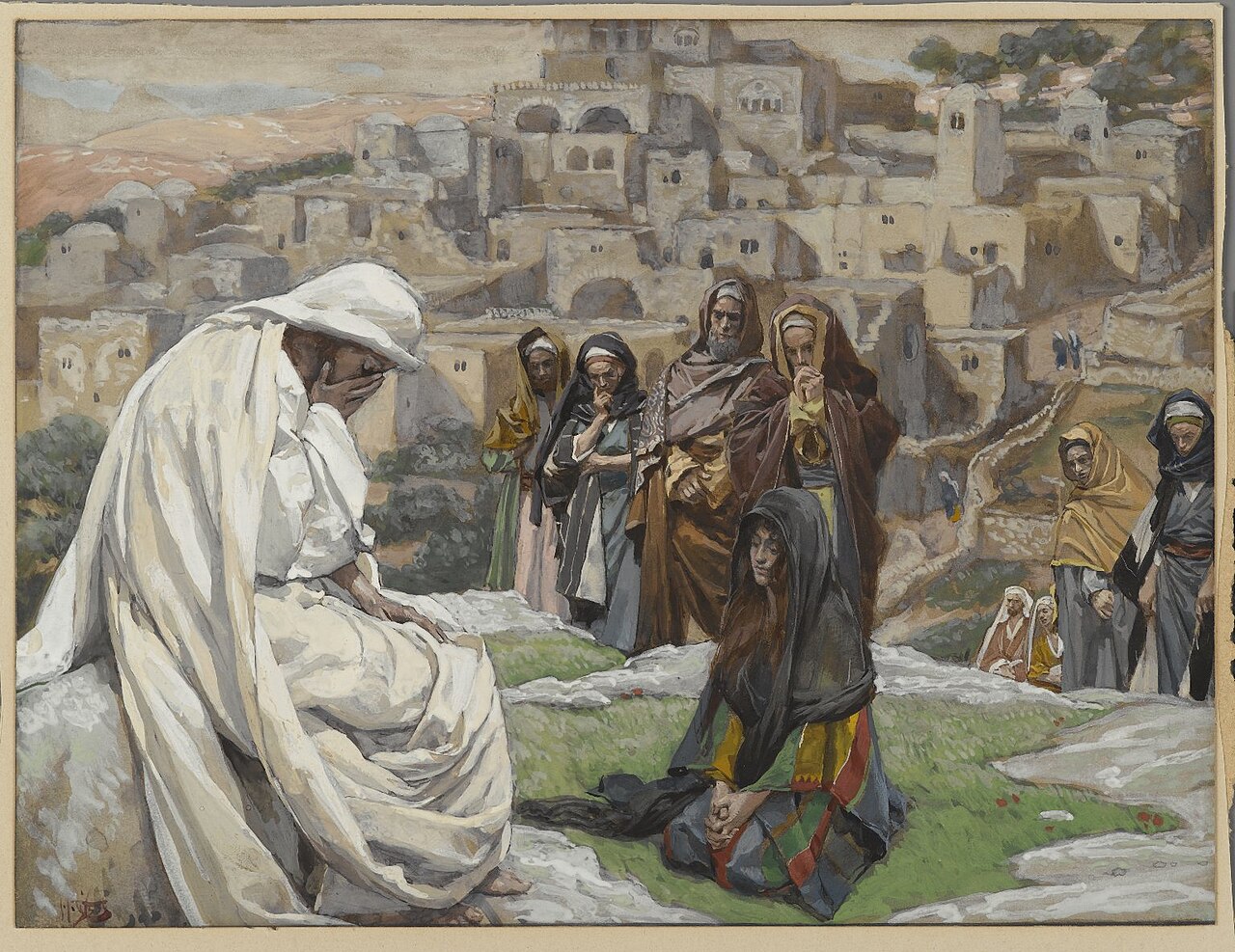
Jesus cries twice in the Gospels — once at a grave, and once outside a church. The grave we understand. The other one is worse, and it is the only thing in that whole city worth crying about. You can read God's oath that He has no pleasure in the death of the wicked and still lie awake wondering whether He meant it about you — but the tears of your Savior settle it.
Cover image for The Tears of Your Savior Settle It

Without Leaving the Others Undone

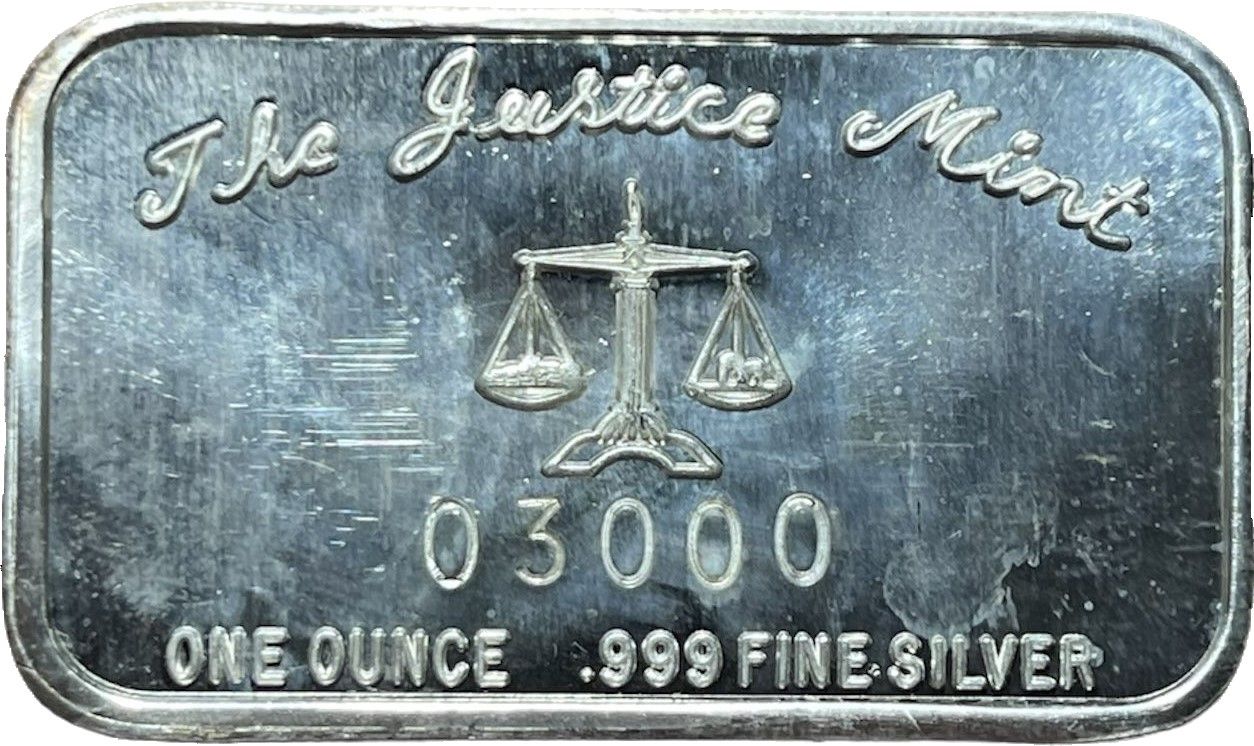
Jesus comes to dinner and will not wash His hands. The mint was never commanded — grain, wine, flock, that is what God said to tithe — but a tenth of the mint costs nothing, and being seen to give it is worth a great deal, so justice gets stepped over on the way to the herb garden. Christ does not cancel the mint; He keeps the weightier matters and the little ones both, and leaves not one undone. He keeps none of it for Himself: the hands He would not wash at that table are the hands they nailed down.

Cover image for Without Leaving the Others Undone

Jeremiah Chapters 11–12

This week the preacher becomes the sufferer. Jeremiah announces the covenant curse (Jer. 11:3) and then learns that the men of his own hometown have marked him for death (Jer. 11:21). Three handings-over run through these chapters: Judah handed over to the curse she chose, Jeremiah handed over like a docile lamb brought to the slaughter (Jer. 11:19), and God's own dearly beloved of My soul handed over into enemy hands (Jer. 12:7). When Jeremiah asks the oldest question, why do the wicked prosper, the answer isn't information. It's a warning that the running gets harder, from the God who has run it Himself.

Cover image for Jeremiah Chapters 11–12

He Was Faithful the Whole Time You Were Not

Jesus tells the parable of the unjust steward immediately after the lost sheep, the lost coin, and the lost son. Johann Gerhard saw why: Christ knows how easily we misuse that teaching for carnal security, taking the sweetest thing God ever said and turning it into a permission slip. Paul answers that man with a desert full of graves. Israel was baptized into Moses, ate the same spiritual food, drank from the Rock that was Christ, and two of them reached the Promised Land. The warning lands on the man who thinks he stands. So does the promise: God is faithful, the way of escape has an address, and the door behind you was never bolted.

Cover image for He Was Faithful the Whole Time You Were Not

Chaos, Job, Galatians... and Coldcard

Over the past few days I've found myself thinking about four seemingly unrelated things: the reported Coldcard vulnerability, the book of Job, Galatians 6:7, and the role of chaos in our lives. The more I reflected, the more I realized they all point toward the same question: what do we make of faithful people who genuinely try to do the right thing and still suffer? This isn't really an article about hardware wallets. It's about uncertainty, resilience, honest stewardship, and why I'm still convinced that Bitcoin—and perhaps life itself—is better understood through the lens of faithfulness than certainty.

Cover image for Chaos, Job, Galatians... and Coldcard

Holiness Runs Down from God and Never Back Up

The men haggling in the temple courtyard knew which oaths could be collected on. Swear by the gold and you're bound; swear by the temple and you can walk away. Jesus calls that blindness: holiness runs down from God to the thing and never back up, and the temple is holy only for Him who dwells in it. We do the same arithmetic with our years and our giving, wanting a righteousness we can audit. But the altar was holy before you got here, and the gift on it is Christ's own body and blood.

Cover image for Holiness Runs Down from God and Never Back Up

You Were Carried Through the Door Before You Could Walk

Two cries stand side by side in this Sunday's readings: "Lord, Lord" and "Abba, Father." The first belongs to an applicant outside the office door with his accomplishments in a folder; the second to a child who never wondered whether he was allowed in the house. Jesus doesn't dispute the applicants' resume. He disputes that it ever mattered. What every false prophet wants is to turn sons back into applicants.

Cover image for You Were Carried Through the Door Before You Could Walk

Jeremiah Chapter 10

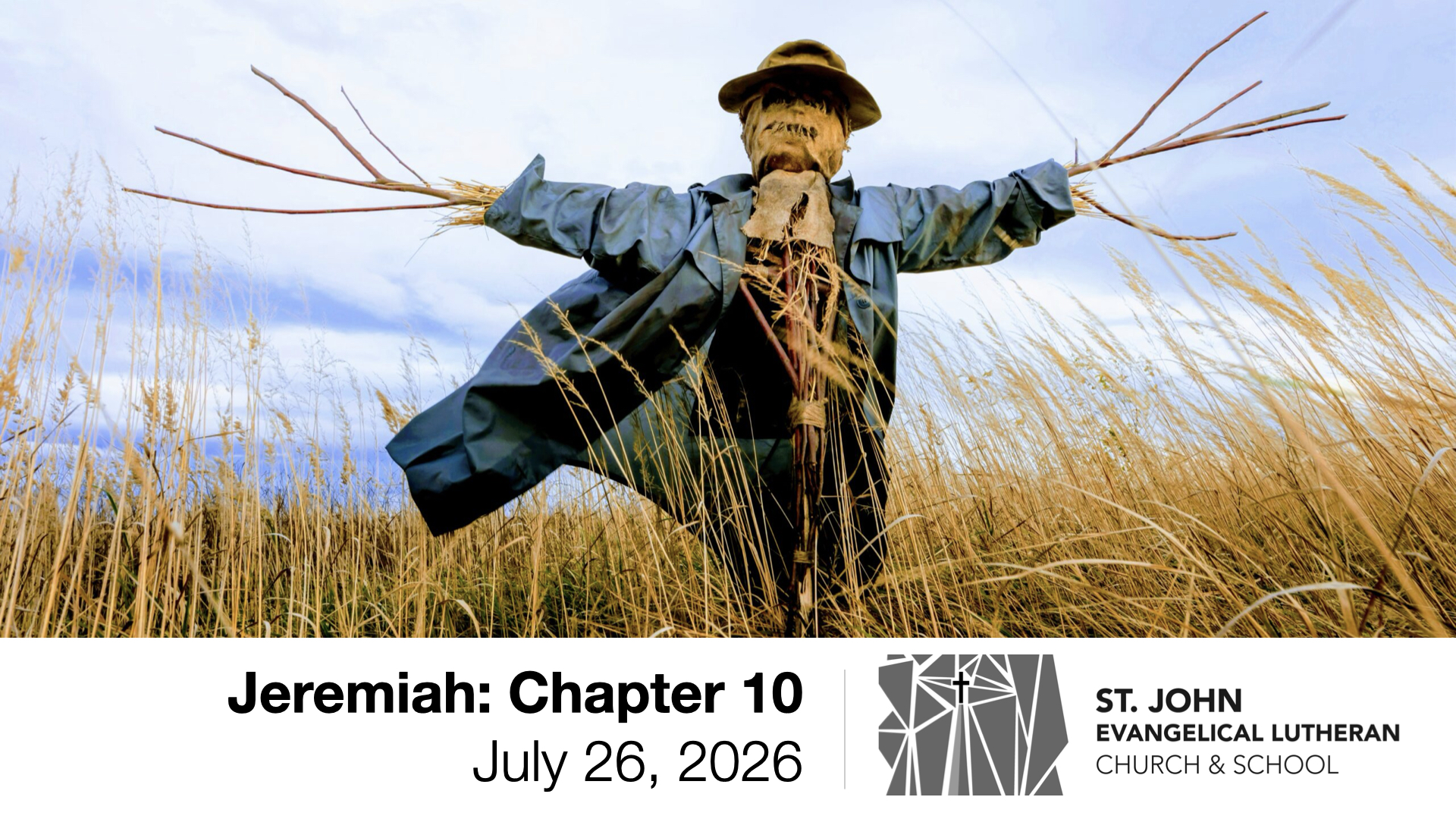
This week's class takes up Jeremiah 10, the prophet's longest satire on idols: a god cut from a tree, dressed in silver, nailed down so it will not topple (Jer. 10:4), a scarecrow in a cucumber field, carried because it cannot walk. Over against it stands the true God, the living God and the everlasting King (Jer. 10:10), who needs no carrying but carries His people (Isa. 46:3–7). Which direction the carrying runs is the whole difference between idolatry and the Gospel.

Cover image for Jeremiah Chapter 10

They Kept the Husk and Threw the Kernel Away

On the Sabbath, the Pharisees found a rule to keep and lost the mercy it was meant to carry — husk without kernel. James diagnoses the same disease in the church: zeal that hides self-seeking envy. Christ, the One greater than the temple, was Himself crushed like the grain, so that guilty husk-keepers might be fed with mercy instead of judged by the letter.

Cover image for They Kept the Husk and Threw the Kernel Away

You Have Come from Afar

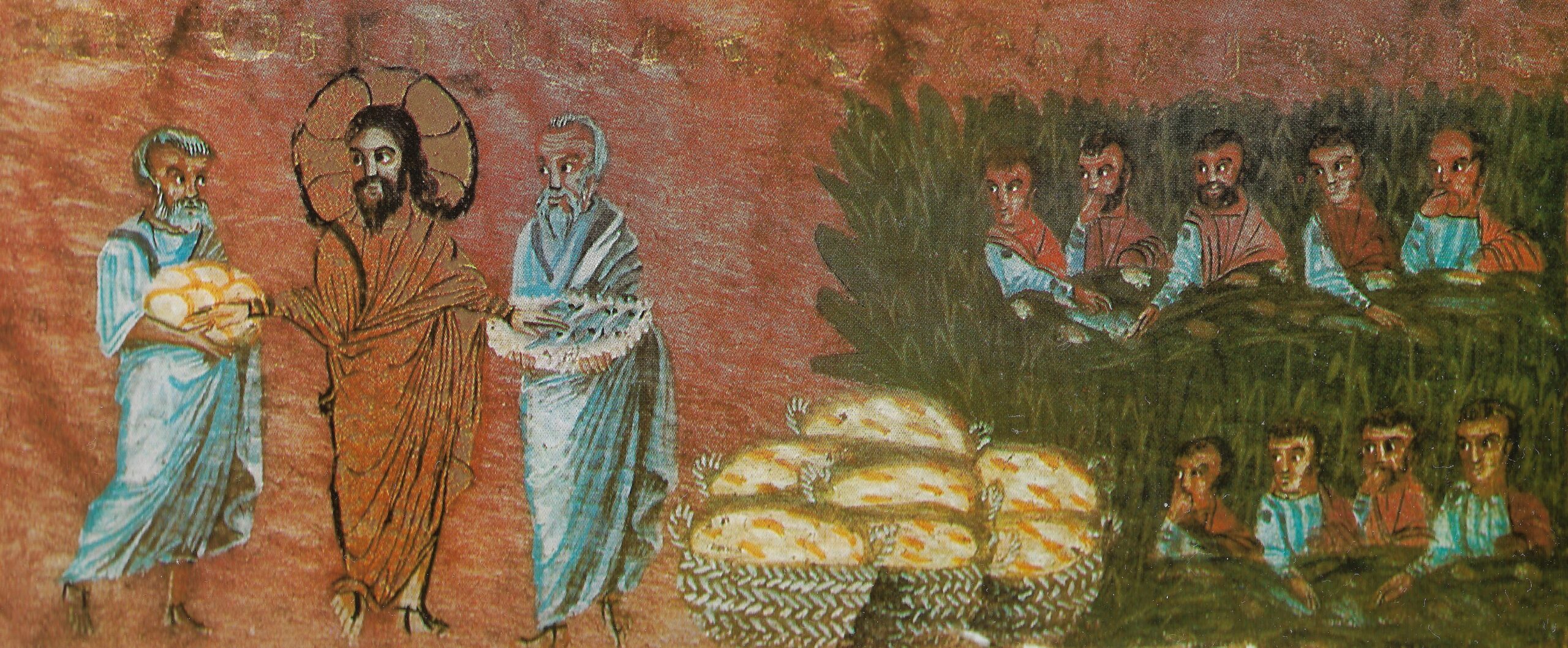
The four thousand Jesus feeds in Mark 8 are Gentiles — outsiders with no claim on the God of Israel. Paul says the same of us: once strangers, far off, until brought near by the blood of Christ. What Christ did on that Gentile shore, He does again in the Sacrament, filling those who have no right to the table with more than enough.

Cover image for You Have Come from Afar

Jeremiah Chapter 9

This week's class takes up Jeremiah 9, where the prophet names the root sickness twice — **"they do not know Me"** (Jer. 9:3, 9:6) — and hands us the one boast that survives it: **"that he understands and knows Me"** (Jer. 9:24). Paul later routes the whole Gospel through that verse: no flesh may boast, unless it boasts in the Lord (1 Cor. 1:31).

Cover image for Jeremiah Chapter 9

Why Trading Still Matters — And What Most People Get Wrong

Short-term trading is often dismissed as a zero-sum game, driven by hype and luck. But for those who approach it with discipline and conviction, trading can be a meaningful craft — a way to fund deeper work, align with values, and sharpen focus. In this piece, I share why I only trade equities (not crypto or forex), how I avoid signal-following hype, and why consistent, small gains often matter more than chasing spikes. This isn’t gambling — it’s Proof of Work.

Cover image for Why Trading Still Matters — And What Most People Get Wrong

He Crossed the Water for This

The Gerasene demoniac was a man no one could bind. James names the wisdom that builds a life like that: earthly, unspiritual, demonic, breeding envy and self-seeking until it makes "every evil thing." Then Jesus crosses the sea to unclean pagan ground for this one man, and with a single word, "Come out," He drowns Legion under the water. The man is left sitting, clothed, in his right mind. That is his Baptism, and ours, where the same word of Christ still drowns what binds us and seats us at His table.

Cover image for He Crossed the Water for This

The Benevolent King

Bitcoin's governance already works like a well-checked monarchy disciplined by exit, not a democracy — and judged on skin in the game, Luke Dashjr is the owner-king you want, not the caretaker you fear.

Cover image for The Benevolent King

Jeremiah Chapter 8

Jeremiah 8 is a chapter of missed chances. Judah will not turn back — the stork in the sky knows her seasons, but God's people do not know the time of the LORD's judgment — and the prophets cry 'Peace, peace' where there is no peace. 'The harvest is past, the summer is ended, and we are not saved.' And then the ache that gives the chapter its name: 'Is there no balm in Gilead? Is there no physician there?' — a question the whole Gospel rises up to answer.

Cover image for Jeremiah Chapter 8