How Democracy Abolishes Itself - Again - and Slides Into Authoritarian Rule
The German government is working to effectively abolish the IFG, while the EU is once again pushing to extend and expand Chat Control.

The German government is working to effectively abolish the IFG, while the EU is once again pushing to extend and expand Chat Control.
Bitcoin's governance already works like a well-checked monarchy disciplined by exit, not a democracy — and judged on skin in the game, Luke Dashjr is the owner-king you want, not the caretaker you fear.

The USA celebrates 250 years of independence and democracy. But was the country ever a true democracy? A critical assessment from Roman roots to financial oligarchy.

Joe Lauria on Ukraine, Russia and censorship
The Demon Kratie (Demo(n) Cracy) is an allegorical story about the origins of societal control and the illusion of freedom.

Democracy promises freedom and popular power. But what if participation is real only inside a curated menu of acceptable outcomes? A simple test exposes the difference between theory and design.

A conversation about democracy, truth, courage and the future of Europe.
It’s about democracy, censorship, power – and the courage not to bow down.
We live in a civilization built on broken promises, where politicians lie, institutions gaslight, and the entire architecture of trust has revealed itself to be a trap. The solution isn't to find more trustworthy rulers; it's to build systems that don't require trust at all. Bitcoin and Nostr aren't just technologies, they're proof that in the 21st century, we can replace the fragility of human promises with the certainty of mathematical proof, and make the age-old game of "choosing between evils" completely obsolete.

This manifesto emerges from the collective work of activists, technologists, journalists, human rights defenders, and entrepreneurs, who participated in the Decentralized Resistance Gathering 2025.

This morning I wrote a long reflection for a friend who asked me to explain why socialism doesn’t really work in practice. I used real examples from Europe, where social democracy often looks successful on the surface but hides deep structural imbalances. My intention is not to argue but to clarify the economic and moral principles that sustain or destroy freedom.

Europe’s assault on free speech has become widespread and far-reaching. But every step toward a surveillance state is a step away from functional democracy. If citizens fear speaking freely, policymaking will eventually rely on guesses and lies. And democracy becomes a theatre.

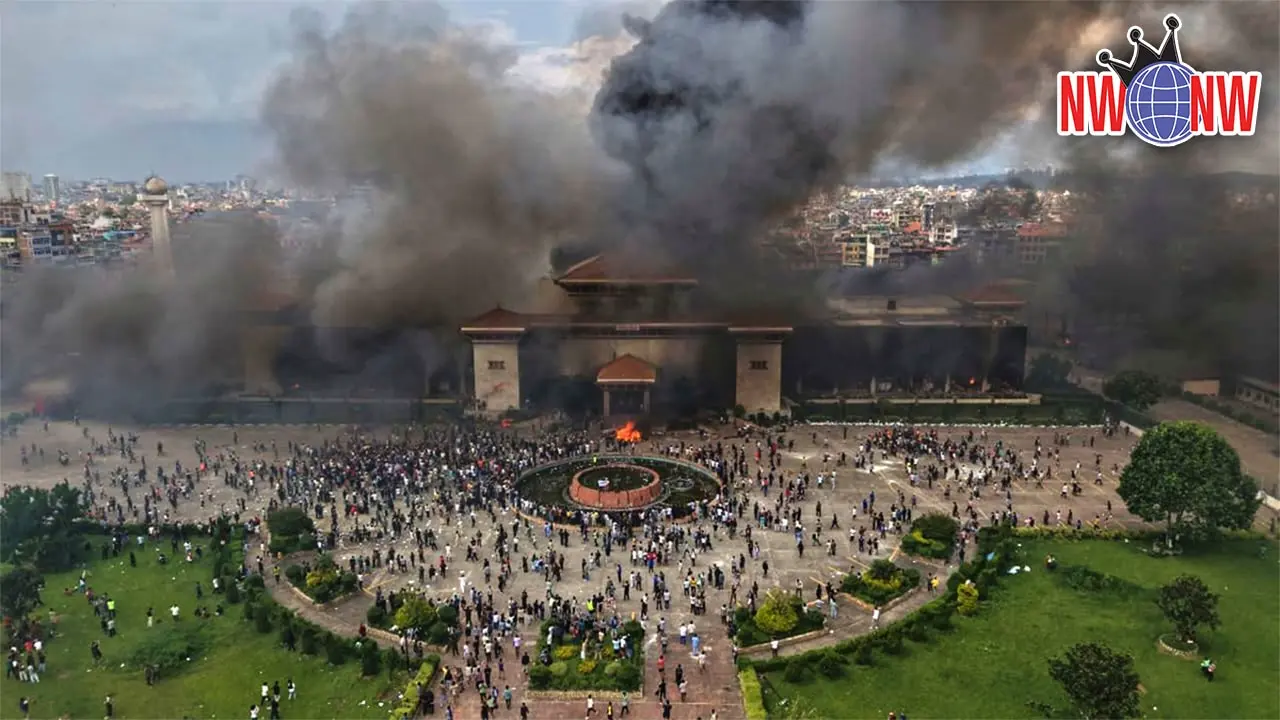
This week on New World Next Week: Nepalese nepos get taken down by Discord democracy; The Power of Siberia 2 is tanking Gazprom; and masks are the new orange in New Brunswick.
The concept of "self-licking ice cream cone" originates from an analysis of the Kuwait War 1991. Three decades later, the EU's funding of activists - who in turn drive the bureaucracy towards its own goals - appears as a farcical repetition.

Criptocracia, a trustless open-source electronic voting system

Eurocrats are talking about "“channel private savings” into investments. Is the EU simply drawing inspiration from countries such as Sweden, or might something more nefarious be afoot?
While governments spend like there's no tomorrow and devalue their currencies to the limit a silent network continues to grow. It needs no approval. It doesn't ask permission. It just works. It's called Bitcoin. And it's not just money. It's a perfect republic. A real republic, without ballot boxes or parties, without licenses or favors. A system of rules that cannot be corrupted or rewritten. A space where private property is protected with mathematics and energy, not promises. Where no one rules over anyone, and everyone is equal before the code, its constitution. Bitcoin has its own division of powers, like any well-designed republic: - The code is the legislative branch. It defines the rules: twenty-one million, scheduled reduction, adjustable difficulty. They do not change by majority. They are not negotiated. They are clear, predictable and visible to all. - The miners are the executive branch. They execute those rules, validate transactions, secure the network. They do not govern. They do not legislate. They only comply with technical precision. - Nodes are the judiciary. They verify. They confirm. They reject what does not conform to protocol law. They do not buy. They don't shut down. Here's how it works. Simply, elegantly and resiliently. In a world where trust is in crisis, Bitcoin offers certainty. In an era of inflation and surveillance, it offers ownership and privacy. Its architecture is underpinned by something firmer than laws: by mathematics, energy and a network of shared principles. It doesn't need to be defended. It needs to be understood. Bitcoin does not impose. It invites. It does not demand faith. It offers verification. It is an open network that operates around the clock. A republic without borders where anyone can participate. Here, no one gives you rights: you already have them. All you need is a private key to exercise them. Bitcoin is evidence that as the old system runs out of steam, this digital republic becomes the only sensible option.

How did "the land of the free and the home of the brave" become "the land of the greedy and the home of the slaves"? April fifth, 1933, is the answer.


