The Latest Bitcoin & Macro news: Weekly Recap 23.03.2026

- 🧡Bitcoin news🧡
- 💸Traditional Finance / Macro:
- 🏦Banks:
- 🌎Macro/Geopolitics:
- 🎁If you have made it this far, I would like to give you a little gift:
🧠Quote(s) of the week:
Cole Walmsley:
This quote from the Rothschilds in 1863 is spot on: “The few who understand the system will either be so interested in its profits, or so dependent upon its favors, that there will be no opposition from that class, while, on the other hand, the great body of people, mentally incapable of comprehending… will bear its burdens without complaint.”
Henry Ford understood the system, which is why he said this: “It is well enough that people of the nation do not understand our banking and monetary system, for if they did, I believe there would be a revolution before tomorrow morning.”
Perhaps Abraham Lincoln knew it better than anybody, saying this in 1864, “The money power preys upon the nation in times of peace and conspires against it in times of adversity. It is more despotic than monarchy, more insolent than autocracy, more selfish than bureaucracy. I see a crisis approaching in the near future that unnerves me and makes me tremble for my country’s safety. Corporations have been enthroned, an era of corruption will follow, and the money power of the country will endeavor to prolong its reign by working upon the prejudices of the people until the wealth is aggregated in a few hands, and the republic destroyed.”
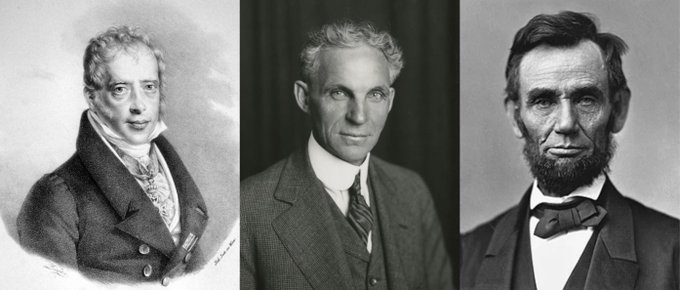
They don’t want you to know about the truth of central banking. But knowing the system is one thing. Having an escape is another. That’s why Satoshi Nakamoto made the biggest difference: “I’ve developed a new open source P2P e-cash system called Bitcoin. It’s completely decentralized, with no central server or trusted parties, because everything is based on crypto proof instead of trust.”
🧡Bitcoin news🧡
Photos hosted by Azzamo ( https://azzamo.net/) Due to personal reasons, no recap timeframe for 09.03-16.03.
On the 14th of March:
➡️Bitcoin educator Andreas Antonopoulos says he will stop producing livestreams and new content due to health issues. Antonopoulos previously said he has been suffering from debilitating migraines and has tried nearly every treatment available, but nothing has successfully stopped them.
➡️Stanley Druckenmiller: “Bitcoin is a solution looking for a problem.” “I’m sad it ever happened.” “It wasn’t needed as a store of value.”
Reply by Peter Parker is spot on: “Talking for decades, no solutions. Satoshi Nakamoto: “The root problem with conventional currency is all the trust that’s required to make it work. The central bank must be trusted not to debase the currency, but the history of fiat currencies is full of breaches of that trust”.
On the 15th of March:
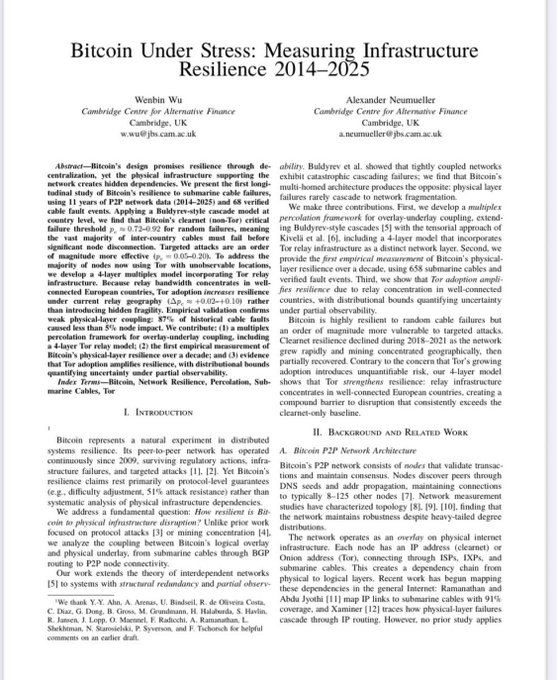
➡️TFTC: ‘You could cut almost every submarine cable on the planet, and Bitcoin would still work. An 11-year study analyzed Bitcoin’s resilience to submarine cable failures using 68 verified cable-fault events from 2014 to 2025. Random cable failures would require roughly 72% to 92% of inter-country connections to go down before causing major node disconnection. Even targeted attacks on critical infrastructure still require disrupting 5% to 20% of key connections to have a meaningful impact. In practice, 87% of historical cable faults caused less than 5% node impact. The study also found that Tor usage increases Bitcoin’s resilience, as relay bandwidth is concentrated in well-connected regions. Bitcoin’s physical infrastructure resilience is wildly underappreciated.’
On the 16th of March:
➡️Strategy has acquired 22,337 BTC for ~$1.57 billion at ~$70,194 per bitcoin. As of 3/15/2026, we hodl 761,068 $BTC acquired for ~$57.61 billion at ~$75,696 per Bitcoin.
Vijay Boyapati: ‘One big difference between this bear market and the last is that we have a whale permanently taking big blocks of Bitcoin off the market. What is amazing (and surprising even to me) is he’s still raising significant amounts of capital to do this despite sentiment being at historic lows. These capital raises have much more power as Bitcoin falls (obviously) because more Bitcoin can be pulled from the market for the same amount of dollars. Eventually, bears and those who want to liquidate exhaust their selling supply, and a floor is set. When other market participants realize this and that Bitcoin didn’t die, Saylor will be joined by others in accumulating BTC. I don’t think that has quite happened yet, but when it does…’
➡️Bitcoin Teddy: ‘I don’t think the average person understands the asymmetry of this trade’
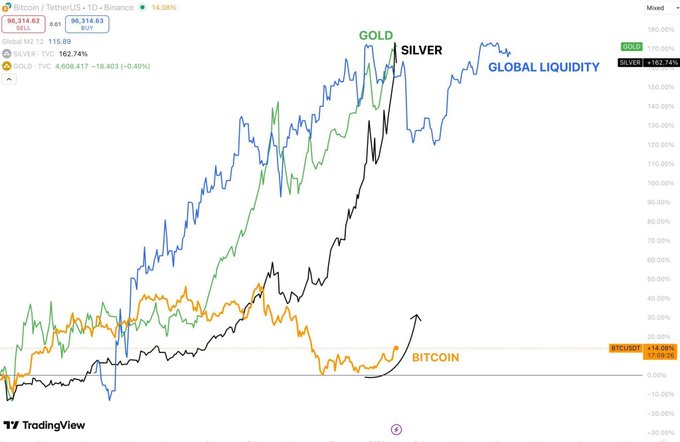
➡️Gold tumbles below 5K as Bitcoin jumps to $73K. The regime shift divergence is accelerating. Historically, Bitcoin has been dumped first amid geopolitical chaos. Worth watching closely. - ZeroHedge
➡️TFTC: Paraguay requires all bitcoin transactions over $5,000 to be reported to the government. The country’s tax authority just issued Resolution 47/26, mandating disclosure of wallet addresses, transaction hashes, and network details for every qualifying transaction. It covers purchases, sales, mining, staking, airdrops, lending, payments, and even transfers between your own wallets. Exchanges are required to hand over user data. Paraguay was one of the most Bitcoin-friendly countries in Latin America. Cheap hydroelectric energy, light regulation, and a growing mining community. That’s changing fast. No new taxes yet. But this is exactly how financial surveillance starts. You build the reporting infrastructure first, then the taxes come later. Every time. The justification is “FATF compliance” and “transparency.” The same language every government uses before it tightens the screws. This is the playbook. The country welcomes Bitcoin when it needs investment. Then once the infrastructure is built, the reporting requirements show up.’
➡️Oliver L. Velez: Everyone in history who has ever tried to f*ck with Bitcoin is either:
- Dead;
- Reputationally destroyed;
- Bankrupt; or
- In jail
Let that sink in. If Wall Street comes in and thinks they’re going to bring their bullsh*t paper games, which I know all too well, to BTC and win, they have an entirely different thing coming to them. The story below is a case in point.’
‘BlockFills just filed for Chapter 11 bankruptcy. $50-100 million in assets against $100-500 million in liabilities. BlockFills was a Chicago-based institutional crypto trading and lending firm backed by Susquehanna, CME Ventures, and Nexo. They processed over $60 billion in trading volume in 2025 and served around 2,000 institutional clients, including hedge funds, asset managers, and mining companies. Here’s the timeline of how it unraveled: February 11 - BlockFills halts all customer withdrawals and deposits, citing “market and financial conditions.” Late February: CoinDesk reports the firm lost approximately $75 million. CEO and co-founder Nicholas Hammer steps down.
Early March: Dominion Capital sues, alleging BlockFills misappropriated customer crypto assets, commingled client funds with operational funds, and concealed significant losses. A federal judge issues an emergency order freezing BlockFills’ bitcoin holdings.
March 15 - Chapter 11 filed in Delaware. Reliz Ltd. and three affiliated entities enter bankruptcy. The pattern is identical to every crypto lending blowup we’ve seen. Aggressive leverage in derivatives, counterparty risk exposure to other struggling firms, client funds not properly segregated, and losses hidden until they couldn’t be hidden anymore. This is what happens when you hand your bitcoin to a third party and trust them to manage the risk. Not your keys, not your coins isn’t a meme. It’s a risk management framework. The firm’s own backers include some of the biggest names in traditional finance. Susquehanna and CME Ventures did their due diligence and still got it wrong. If they can’t assess counterparty risk in this market, what chance does a retail investor have? The answer is simple. Stop trusting intermediaries with your Bitcoin.’ - TFTC
On the 17th of March:
➡️Bitcoin is currently on its 9th green daily candle in a row. The last time this happened was in July 2021, which resulted in a further +72% move.
On the 19th of March:
➡️A testnet for Bitcoin Improvement Proposal 360 has been deployed, aiming to strengthen Bitcoin against quantum computers. - Bitcoin Magazine
This appears to be a backdoor change to the Bitcoin consensus rules to benefit certain companies. Quantum computing at the level needed to break encryption is still theoretical. The problem still doesn’t exist.
➡️Due to low energy costs in Iran, you can mine 1 Bitcoin for just $1,320 and sell it for $69,000.
On the 20th of March:
➡️Regime shift really kicking in: gold -13% since start of the Iran war, Bitcoin +6%.
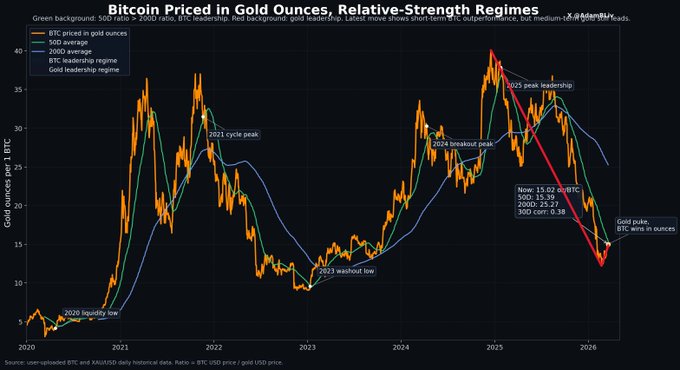
Adam Livingston: ‘With today’s collapse in the gold price, it really seems like we may be living in a SIMULATION: Every single Bitcoin bear market priced in gold has lasted EXACTLY 14 months. We are now seeing exactly yet another reversal in BTC/Gold… after the cycle top at the end of 2024. Did we officially hit the bottom for Bitcoin? If we didn’t, this historical BTC/Gold trend would be broken.’
➡️River: ‘The Federal Reserve employs 24,000 people. Yet we have no idea what inflation will be. Bitcoin employs no one. Yet we know exactly what its supply will be. There’s a lesson in that.’
➡️Bitcoin News: Morgan Stanley files second amended S-1 for its proposed spot Bitcoin ETF. Morgan Stanley Wealth Management oversees about $8 trillion in AUM and recommends a 0–4% allocation to bitcoin. A 2% allocation would represent $160 billion, ~3X the size of IBIT.
On the 21st of March:
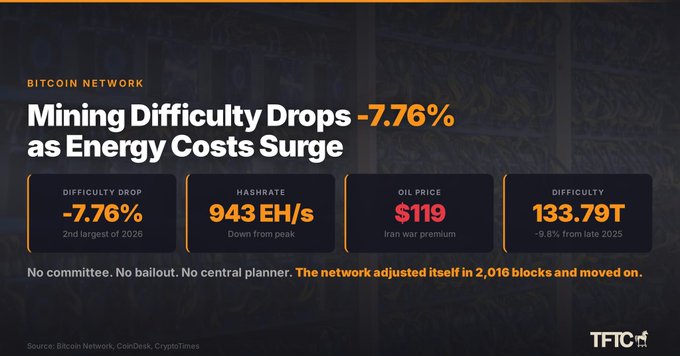
➡️TFTC: ‘Bitcoin’s mining difficulty just dropped 7.76%. That’s the second-largest drop of 2026.
Hashrate has retreated to roughly 943 EH/s. Miners are shutting off machines. The reasons are compounding. Post-halving economics have squeezed margins with BTC around $70,600. Energy costs are climbing as the Iran conflict pushes oil above $119. And some miners are pivoting rigs to AI hosting, where the margins are better right now. An estimated 8 to 10% of global Bitcoin mining operates in energy markets directly sensitive to oil and gas prices. When energy spikes and block rewards are halved, the math stops working for miners on the margin. They power down. The difficulty adjusts. The network adapts. This is Bitcoin working exactly as designed. Every other system in the world requires intervention when conditions change. The IEA is telling people to stop driving. Countries are rationing fuel. Airlines are cutting routes. Central banks are holding emergency calls. And Bitcoin’s network just calmly recalibrated itself in 2,016 blocks to make mining 7.76% easier, so the remaining miners can continue securing the network profitably.
The difficulty adjustment is the most underappreciated feature in all of Bitcoin. It guarantees that no matter what happens in the world, whether energy prices spike, governments ban mining, or half the hashrate disappears overnight, Bitcoin keeps producing blocks roughly every 10 minutes.
Difficulty is now 133.79 trillion, about 9.8% below its late 2025 peak. The weak hands are being flushed. The strong miners with cheap power and efficient hardware will absorb the hashrate when conditions improve.’
➡️Bitcoin News: A long-dormant Bitcoin wallet moved 2,100 BTC (~$147.7M) after over 13 years, having originally received the coins in July 2012 when they were worth just $13,685. The transaction appears to consolidate holdings rather than sell, and the funds remain in the same legacy address.
➡️TFTC: ‘Bitcoin moved 2.4% tonight. A geopolitical headline hit, thin weekend liquidity did the rest, and $864 million in overleveraged positions got flushed. 240,000 traders wiped out. Gold dropped 11.2% this week. The S&P hit its lowest close of 2026. The Russell 2000 is in correction territory. And the guy who bought Bitcoin on a Saturday morning and went to the park with his kids didn’t even notice.
No margin call. No liquidation. No stress. Just an asset sitting in cold storage doing exactly what it’s supposed to do during global uncertainty. The 240,000 traders who got wiped tonight all had one thing in common: they added complexity to something that was already working. Buy Bitcoin. Put it in cold storage. Go live your life. Stay humble. Stack sats.’
On the 22nd of March:
➡️’Bitcoin collapses below $68,000 after President Trump threatens to “obliterate” Iran’s power plants. Just 24 hours ago, President Trump said he was considering “winding down” the Iran War. Over $240 million worth of levered crypto positions are liquidated in 60 minutes after President Trump threatens to “obliterate” Iran’s power plants.’ -TKL
On the 23rd of March:
➡️TFTC: ‘The ECB just admitted that dollar stablecoins are a threat to European monetary sovereignty. Piero Cipollone, a member of the ECB’s Executive Board, gave a keynote address today in Brussels, outlining Europe’s strategy for tokenized financial markets. The message was clear: if Europe doesn’t build its own on-chain settlement infrastructure, dollar stablecoins will become the default backbone of European digital finance.
His exact words: a world where “a single dominant platform and stablecoin with broad network effects” would have “serious consequences for Europe’s monetary sovereignty.”
The response is already in motion. The ECB is launching “Pontes” in Q3 this year, a system that bridges tokenized asset platforms with central bank money settlement. Their longer-term project, “Appia,” aims to deliver a comprehensive blueprint for a European tokenized financial ecosystem by 2028.
€4 billion in tokenized fixed-income instruments have already been issued across Europe since 2021, including sovereign debt from EU member states. This isn’t theoretical anymore. Cipollone also took a shot at stablecoins directly, noting that even fiat-backed stablecoins “rarely trade exactly at par, even during calm market conditions.” The argument: only central bank money carries zero credit and liquidity risk. This is Europe’s answer to America’s stablecoin push. While Washington negotiates the CLARITY Act and stablecoin yield deals with Coinbase and the banks, the ECB is building state-controlled rails to make sure tokenized finance runs through central banks, not private issuers.’
💸Traditional Finance / Macro:
On the 16th of March:
👉Meta stock surges following reports that they’re laying off 20% of the company due to AI.
Tuki: ‘Are you watching what’s happening right now? This morning, JPMorgan told Meta to fire 20% of employees to save $5 billion. Literally, tonight, Meta did it. And the stock SURGED. Read that one more time. 14,000 people just lost their jobs, and Wall Street celebrated. The stock went UP. Your job is not an asset to the company. It’s a cost nd the market just proved it will REWARD companies for deleting you. This is a business model. Fire humans.. Buy AI. Watch the stock go up. Repeat. Your loss is their gain. Literally. They freed up 14,000 salaries to buy more GPUs from Jensen.’
On the 23rd of March:
👉OpenAI reportedly offering private-equity firms a guaranteed minimum return of 17.5% in push to raise fresh capital.
🏦Banks:
👉🏽No news
🌎Macro/Geopolitics:
’In the Netherlands, a striking pattern is emerging: the wealthier, more highly educated, and more urban someone is, the more likely they are to vote left. At first glance, this seems counterintuitive. But it fits a modern, gradual version of the ideas described in Friedrich Hayek’s The Road to Serfdom. In cities like Amsterdam and Utrecht, a class of highly educated professionals has emerged, with relatively high incomes and strong labor-market positions. They benefit from globalization, knowledge work, and rising property prices. At the same time, they are often less directly dependent on short-term market incentives and more closely connected to sectors in which the state plays a significant role.
This creates a paradox: those who benefit most from a free economy may feel the least urgency to defend its limits. There is also a cultural layer. Within urban elites, voting left often functions as a moral signal. Issues such as climate policy, redistribution, and regulation are framed not only economically but also normatively. Meanwhile, the costs of these policies tend to fall more heavily outside this group. This produces a dynamic in which: Economic winners advocate for more state intervention Costs are diffused or externalized The role of the state gradually expands Not through coercion, but through broad consensus. This echoes Hayek’s core argument: freedom rarely disappears suddenly. Instead, it erodes gradually, through incremental shifts toward centralization — often supported by groups that can afford the consequences, at least in the short term.’ - Roaldcs on X
This phenomenon is increasingly visible across Europe. Expanding government structures also tend to attract more Europhile and left-leaning young professionals. A growing ecosystem of civil servants, researchers, policy advisors, commentators, and NGOs depends — directly or indirectly — on public funding.
Over time, this can create a self-reinforcing system: the larger the state becomes, the more constituencies emerge that benefit from further expansion.
On the 14th of March:
👉🏽According to a Consumentenbond study (July 2025), groceries are on average 12% cheaper in Belgium, 15% in Germany, and even 20% in France compared to the Netherlands. Yet we’re now told that the Netherlands is often just as cheap — or even cheaper. Yes, some products may be cheaper in the Netherlands, and heavy discounting can narrow the gap. But the overall picture remains clear: structurally, groceries are more expensive in the Netherlands.
And still, we get officials suggesting “it’s not that bad.” Right… sure.
Source: Peter Hein van Mulligen, Chief Economist at Statistics Netherlands - ‘Nederland vaak goedkoper dan België en Duitsland, ondanks gevoel dat alles duurder wordt’ | WNL
Mathijs Bouman opposes lowering gasoline taxes. The “house economist” of Nieuwsuur compares gasoline to chocolate, coffee, and beef. Yes, because you obviously need those three to get to work. What a brilliant economist, ffs!
On the 15th of March:
👉🏽TKL: ‘This is absolutely insane: Before the Iran war, US oil companies were generating ~$62 billion in annual free cash flow with oil prices at $55/barrel. Now, with oil prices at $100/barrel, US oil companies are expected to generate $163 billion in annual free cash flow if current prices are sustained. In other words, US oil giants are set to rake in an additional +$100 BILLION in free cash flow per year if oil prices remain elevated. We are arguably witnessing the most profitable market conditions in history for US big oil.’
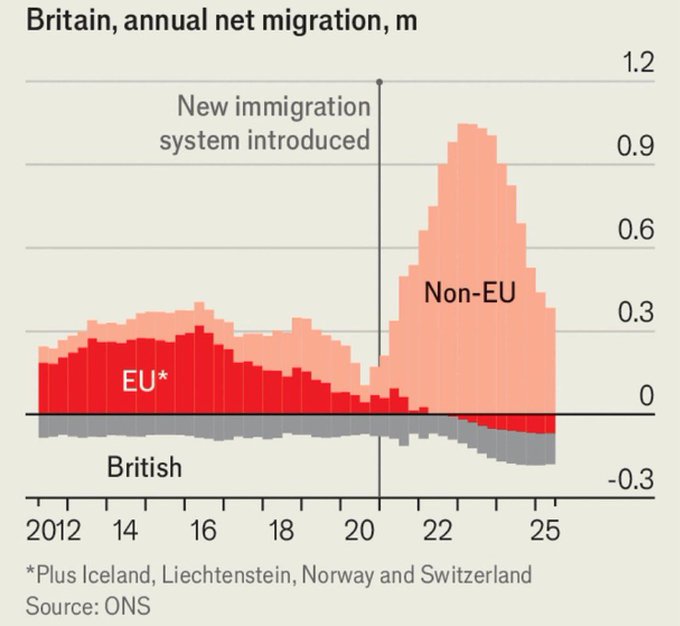
👉🏽Isn’t it ironic that many Brits voted for Brexit because they wanted immigration to go down? How did this happen?
👉🏽Kamala won 13 of 14 states that don’t require voter ID. She won 2 out of 23 states that require a photo ID. Just going to leave that here. I wonder, if you need ID for banking, flights, and even some jobs, why not for voting?
My statement is not about fraud. The numbers are basically right, but the logic is backward. Red states pass strict voter ID laws, and blue states generally don’t. Trump won the states with photo ID laws because they are already deeply conservative states (like Alabama and Oklahoma). Harris won the states without them because they are deeply Democratic states (like California and New York). It’s about which party controls the state legislature. Most countries require ID to vote. Why is it controversial in the U.S.?
👉🏽The Netherlands:

This is often presented as the justification for wealth taxes: breaking the “inheritance of success” to improve social mobility. But in practice, it increasingly resembles punishing success rather than promoting opportunity. In the Netherlands, access to education is publicly funded and not restricted to those with money. Lower-income families receive subsidies, and healthcare is universally accessible. In other words, equal opportunity is already structurally embedded in the system. When policy shifts from equal opportunity to forced equal outcomes, it risks undermining the very people who generate a disproportionate share of economic value and tax revenue. If those individuals are discouraged, overtaxed, or pushed out, the system may ultimately struggle to sustain the social programs on which it depends. A welfare state can only redistribute what is first created. If you weaken the incentives to create wealth, you weaken the foundation on which redistribution rests. That is why policies driven by resentment rather than long-term economic sustainability risk becoming self-defeating.
More tax Dutch shenanigans: 👉🏽NETHERLANDS JUSTIFICATION OF THE 36% UNREALIZED GAINS TAX Former State Secretary Eugène Heijnen actually said it: “Money moves from the citizen to the government. We can use their money to create wealth in another way.”
…such remarks offer a revealing insight into how parts of the political class view citizens, prosperity, and property. In their eyes, the citizen appears to be a means for state enrichment, rather than the other way around.
On the 16th of March:
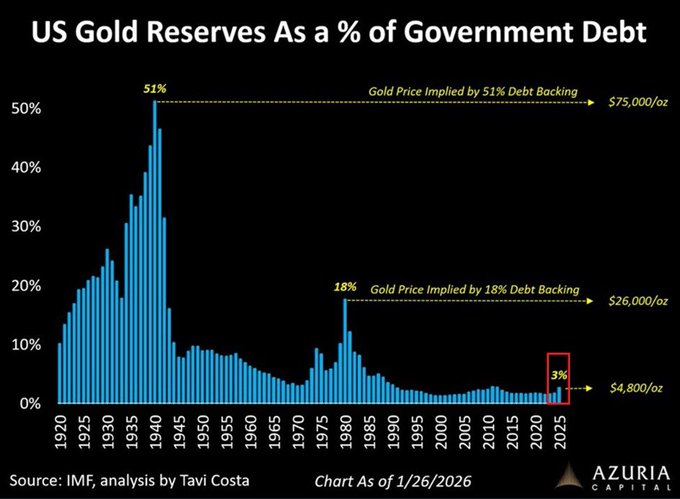
👉🏽US gold reserves have never been this small relative to government debt: Gold reserves now reflect just 3% of US federal debt, one of the lowest readings on record. This comes despite the US holding 8,133.5 metric tons of gold, the largest stockpile in the world, and prices surging to record highs. By comparison, the ratio was ~18% in 1980, or 6x higher. At the same level of reserves, gold prices would have to rise by 400% to $26,000/oz to match the 1980s peak. Meanwhile, in the 1940s, gold reserves backed over 50% of federal debt. To match the 1940s ratio, gold would need to surge +1,340% to ~$75,000/oz. Gold reserves are highlighting just how astronomical US debt has become.
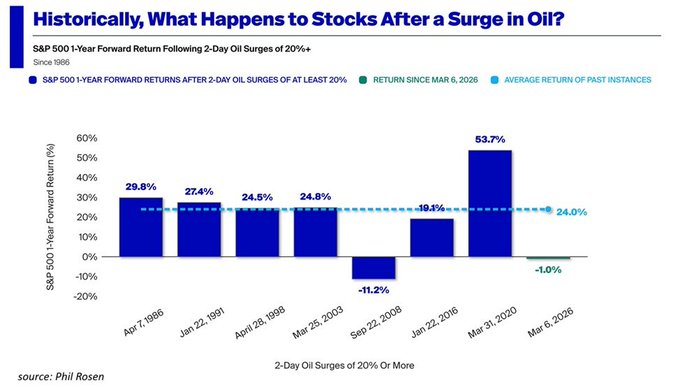
👉🏽History suggests oil shocks are buying opportunities: Over the last 40 years, the S&P 500’s 12-month return following a 2-day oil spike of +20% has been +24%. In 6 out of 7 instances since 1986, the S&P 500 has been higher 1 year after such an oil spike. The strongest recovery was +54% following the 2020 pandemic crash, driven by a massive stimulus response from central banks and governments. The only negative outcome was -11% during the 2008 Financial Crisis. Put differently, every oil shock over the last 40 years that did not lead to a prolonged recession was followed by a strong rally. Oil shocks are historically brief and provide long-term buying opportunities.’ - TKL
On the 17th of March:
👉🏽Balaji: ‘If Iran wins, it’s the end of five eras.
- 1991-2026: the unipolar era
- 1974-2026: the petrodollar era
- 1945-2026: the postwar era
- 1776-2026: the union era
- 1492-2026: the Western era
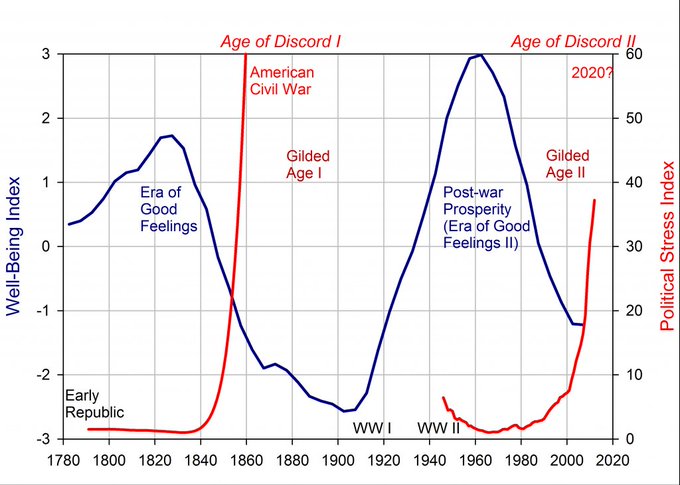
Specifically, the end of the petrodollar (1974) would also be the end of the unipolar moment (1991) and the postwar order (1945). It would mark the moment when Eurasian powers were once again dominant over Western powers (1492). Finally, a rapid decline in the dollar’s purchasing power, coupled with military defeat, could well break apart the American union (1776).
Few seem to viscerally understand just how dependent America is on money printing. But the end of the petrodollar is the end of Keynesianism as we know it. And if there’s a sudden cost-of-living spike on top of pre-existing levels of political polarization, which are already near Civil War levels…we could see the scenarios that Dalio, the Fourth Turning, and Turchin have described.’
👉🏽‘Why the world’s most powerful navy can’t secure a 21-mile gap. The Strait of Hormuz is only two shipping lanes wide. But here’s the thing… Iran lined both sides with decades of preparation: naval mines, mobile missile batteries on the coast, swarms of fast-attack boats, and cheap drones that don’t show up on radar until it’s too late. The U.S. Navy was built to dominate open oceans against conventional fleets. Hormuz is a narrow strait where a missile-firing speedboat can hit a destroyer before it has time to react. That’s why three weeks in, oil is still stuck, and the Pentagon says escorts are “too dangerous.” Iran turned geography into a weapon the U.S. can’t outspend.’ -Mario Nawfal
👉🏽
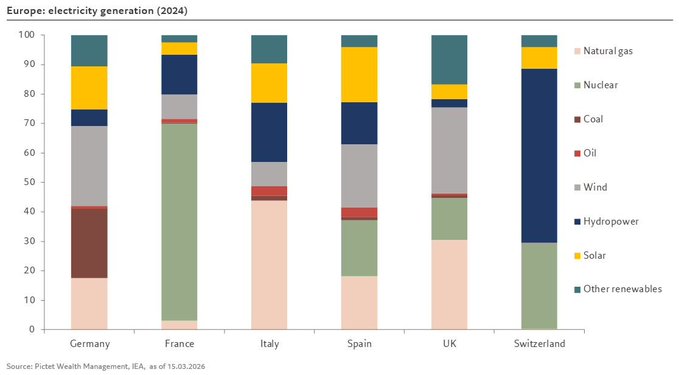
👉🏽The share of renewable/clean energy in Europe is (much) higher than in the rest of the world. Electricity production is perhaps the most important example. For example, the share of clear energy in US electricity production is roughly 35%, compared to up to 90% in some European countries. The question policymakers and climate activists must ask themselves is:
- Should we continue to destroy our economy through massive deindustrialisation, energy-intensive industries relocation, and energy insecurity, as the marginal impact of further decarbonization declines?
- Should we continue to focus our ‘activist’ actions on Europe just because we can, or should we aim for other parts of the world where the impact (if we have any) on decarbonization will be much, much bigger? (chart via @fwred) - Jeroen Blokland
👉🏽“Conspiracy Theorists” adding yet another W to their list: U.S. cancels mRNA vaccine development, citing ‘more risks than benefits’.
On the 19th of March:
👉🏽The Netherlands recorded €130 billion in unrealized gains on the Groningen gas field in just one month. It seems only fair that citizens receive 36% of that as a resource dividend this year, in line with the Box 3 tax on unrealized gains. That would amount to roughly €2,600 per person. Box 3 drama.’ -Tsartoshi
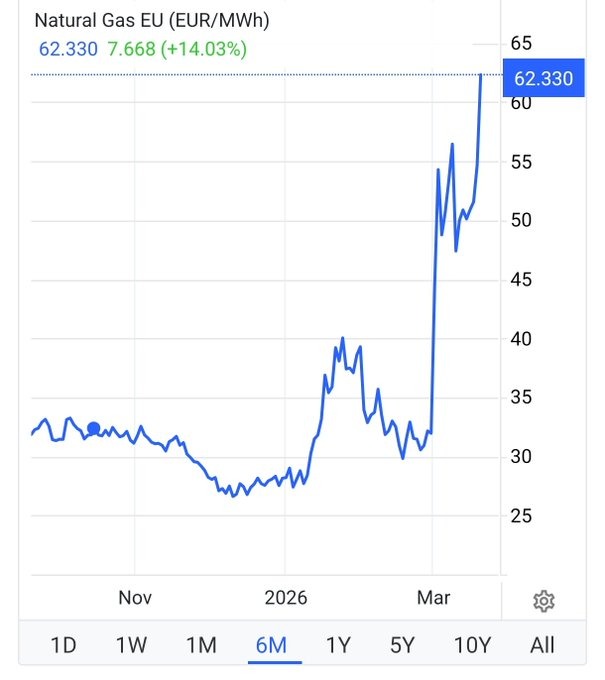
👉🏽Regarding Energy and dumping concrete on our gas fields in Groningen, have a look at the bigger picture:
‘Soon, countries across Europe will begin subsidising energy costs as prices surge. Apart from the fact that many of these governments helped create this vulnerability by undermining their own energy security, the result will be extremely paradoxical. Most of these countries already run structural budget deficits, leaving very little room to manoeuvre. That will only reinforce the “instinct” among policymakers to raise taxes to contain those deficits. In other words, households will end up paying for their own energy subsidies (with some income leveling in between. That process will continue until the next crisis arrives. And when it does, the familiar slogan of policymakers will return: “We must stabilise the economy, or the financial markets, or both.” At that point, governments will once again allow deficits to explode, knowing that central banks will ultimately be forced to absorb the newly issued debt, buy bonds, and turbocharge the money printing machine. The same dynamic applies to rising healthcare costs, expanding welfare bills, and higher defence spending. Once you understand that, you will see the issue right in front of you. If you are a sitting duck, tied to assets that cannot yield a (real) return or be moved across borders, such as real estate, then your exposure to this system is far greater than many realise. And once you see that clearly, the conclusion becomes hard to avoid: your portfolio needs a massive rebalancing to protect itself from that dynamic.’ - Jeroen Blokland
👉🏽Dutch tax burden as % of GDP: • 2000: 36.8% • 2010: 36.3% • 2015: 37.0% • 2020: 39.3% • 2025: 39.7% Every election, they promise tax reform. Every year, the number goes up. At what point do you stop believing them?
👉🏽TKL: ‘This is absolutely insane: The world is quite literally facing what appears to be the largest energy crisis in history. US crude oil futures are now trading at a $20+/barrel DISCOUNT to Brent, also one of the largest on record. As the US increases production and taps into reserves, the EU is facing a full-out energy crisis. European natural gas prices are up another +30% today, and physical crude oil prices in Oman and elsewhere are trading at $150+/barrel. In other words, the gap between Oman and US prices now stands at ~70%, or ~$70+ per barrel. It has become so bad for Europe that the market is now pricing in 2 interest rate HIKES in 2026, even as the US removes sanctions on Russian oil. US rate cuts in 2026 are almost entirely priced out as a result, with Core PPI Inflation on PRE-WAR data rising to its highest since February 2023. The entire global economy just took a complete 180-degree turn in 3 weeks.’
👉🏽WallStreetMav: ‘The US Treasury debt jumped by another $1 trillion in five months, and by $2 trillion in 7.5 months to $39 trillion now. We will hit the $40 trillion milestone in a few months, with the war in Iran likely to add an extra $100 to $200 billion that was not expected. Buy your gold and silver on this price dip … This debt train won’t be stopping. We are already spending 25% of all tax revenue on interest payments for the national debt. This is not even remotely sustainable as the debt continues to grow faster than the economy. Source: Wolfstreet.com’ Just some extra information on the US debt situation: Total US debt has nearly DOUBLED since 2018, with the US Debt-to-GDP ratio now up to 124%. Meanwhile, US debt is projected to surge by $2.4 trillion per year over the next 10 years, reaching a record $64 trillion by 2036, according to CBO estimates… yikes!

👉🏽Australian Prime Minister Albanese went to a Sydney mosque for Eid prayers to stand against Islamophobia, only to end up being threatened, with everyone screaming “Allahu Akbar” at him. He sits there terrified, not knowing what to do. Soon after leaving the mosque where he had just been threatened, the Australian Prime Minister was heckled and called a dirty dog and a pig. He wanted to show solidarity with the Muslim community and almost got lynched.
After the Bondi Beach massacre, his government fervently defended the muslim community while everyone else was chastising them, and they repaid him with such treatment. Just remove weak men from power. Situation solved.
👉🏽Mayor Mamdani’s homophobic, racist, terrorist-sympathizing wife, who recently got exposed, called black people ni*rs and gay people f**s, has shut down her 𝕏 account. Good thing people got screenshots!
Grok: ‘Rama Duwaji (NYC Mayor Zohran Mamdani’s wife, aka NYC First Lady) deactivated her old _RamaDee X account shortly after a Washington Free Beacon report linked it to her 2013-2015 posts (age ~15-18). Those included N-word usage, anti-gay slurs (“fgts,” “gay ass people”), and praise for Palestinian militants like Leila Khaled/First Intifada “freedom fighters.” Deactivation came amid backlash over the resurfaced content, plus her recent IG likes questioning Oct 7 reports. Screenshots preserve it all.’
👉🏽New York Governor Kathy Hochul is facing BACKLASH after telling Republicans to “jump on a bus and head down to Florida” not long ago. Now, she’s urging wealthy New Yorkers to come back to New York.
- “Tax the rich” to fund stupid socialist causes
- The rich leave your state
- Your tax collection falls
- You don’t have money for stupid socialist causes
- Go to 1
They never learn No commentary needed. Just the receipts. 𝗞𝗮𝘁𝗵𝘆 𝗛𝗼𝗰𝗵𝘂𝗹, 𝟮𝟬𝟮𝟮: 𝘛𝘩𝘦 𝘦𝘳𝘢 𝘰𝘧 𝘛𝘳𝘶𝘮𝘱 𝘢𝘯𝘥 𝘡𝘦𝘭𝘥𝘪𝘯 — 𝘫𝘶𝘴𝘵 𝘫𝘶𝘮𝘱 𝘰𝘯 𝘢 𝘣𝘶𝘴 𝘢𝘯𝘥 𝘩𝘦𝘢𝘥 𝘥𝘰𝘸𝘯 𝘵𝘰 𝘍𝘭𝘰𝘳𝘪𝘥𝘢 𝘸𝘩𝘦𝘳𝘦 𝘺𝘰𝘶 𝘣𝘦𝘭𝘰𝘯𝘨. 𝘎𝘦𝘵 𝘰𝘶𝘵 𝘰𝘧 𝘵𝘰𝘸𝘯. 𝘠𝘰𝘶 𝘢𝘳𝘦 𝘯𝘰𝘵 𝘕𝘦𝘸 𝘠𝘰𝘳𝘬𝘦𝘳𝘴. 𝗞𝗮𝘁𝗵𝘆 𝗛𝗼𝗰𝗵𝘂𝗹, 𝟮𝟬𝟮𝟲: 𝘔𝘢𝘺𝘣𝘦 𝘵𝘩𝘦 𝘧𝘪𝘳𝘴𝘵 𝘴𝘵𝘦𝘱 𝘴𝘩𝘰𝘶𝘭𝘥 𝘣𝘦 𝘵𝘰 𝘨𝘰 𝘥𝘰𝘸𝘯 𝘵𝘰 𝘗𝘢𝘭𝘮 𝘉𝘦𝘢𝘤𝘩 𝘢𝘯𝘥 𝘴𝘦𝘦 𝘸𝘩𝘰 𝘺𝘰𝘶 𝘤𝘢𝘯 𝘣𝘳𝘪𝘯𝘨 𝘣𝘢𝘤𝘬 𝘩𝘰𝘮𝘦. 𝘉𝘦𝘤𝘢𝘶𝘴𝘦 𝘰𝘶𝘳 𝘵𝘢𝘹 𝘣𝘢𝘴𝘦 𝘩𝘢𝘴 𝘣𝘦𝘦𝘯 𝘦𝘳𝘰𝘥𝘦𝘥. Same woman. Four years apart. Same mouth.
You see how socialism works? Eventually, the harsh reality is that someone has to pay for all this, and nothing is “free” hits. Socialism is great, until you run out of the money that other people made whilst you were bitching.
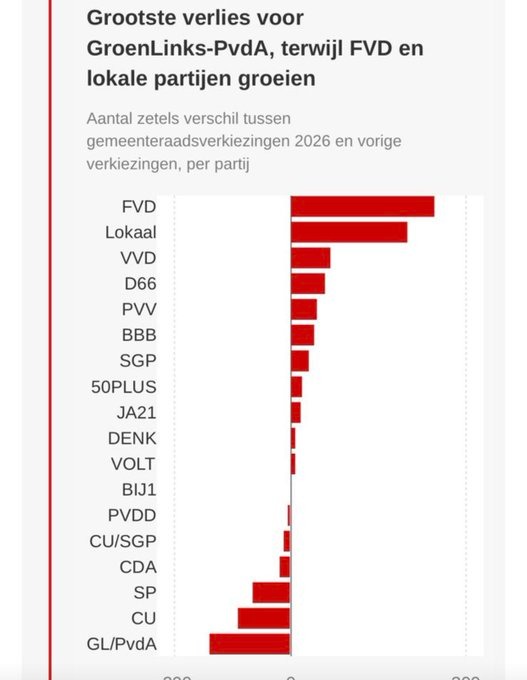
👉🏽Netherlands elections: So much for the merger. Anything else to say about the success of #Klaver and co.? At a glance, the picture shows a clear shift to the right, with significant gains for FvD and notable losses for GL/PvdA, CU, and SP.
On the 20th of March:
👉🏽Michael A. Arouet: ‘Something is clearly out of balance when someone earning £10k and someone earning £140k take home the same net amount. No wonder so many hard-working people and entrepreneurs are leaving the UK. Would you want to live in a country that punishes hard work and job creation?’

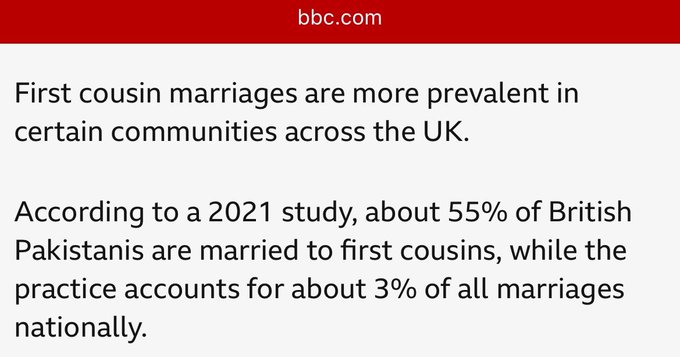
And I want to add another fun stat: 55% (the majority) of Pakistani marriages in England are between first cousins…
Read that again. Not all cultures are equal.
‘The 55% figure for first-cousin marriages among British Pakistanis is real and widely cited, originating from a 1988 West Yorkshire study of 100 mothers (55 of whom were married to first cousins) and referenced in a 2021 BBC report. Nationally, cousin marriages are ~3% of all marriages. Recent data from Bradford show consanguineous rates (1st+2nd cousins) in that community fell from ~62% to 46% (2007-2019), and were lower still (36%) for UK-born mothers. Rates vary by generation and area but remain far higher than the UK average.’ -Grok
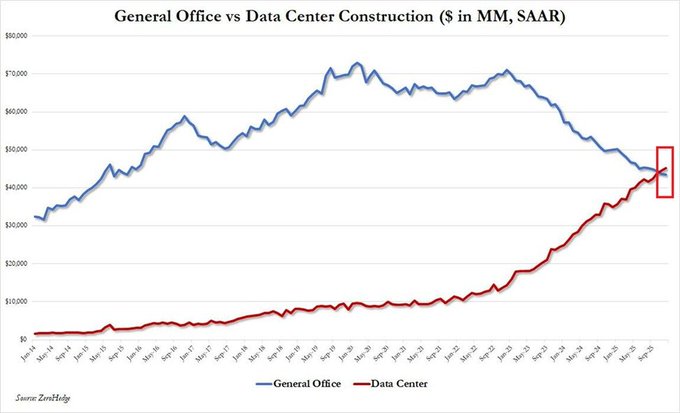
👉🏽TKL: ‘The value of US data centers under construction has officially surpassed the value of office buildings under construction for the first time in history. Data centers under construction are up 29% YoY to a record $45.1 billion. Meanwhile, the value of offices under construction is down 13%, to $43.5 billion, the lowest since October 2015. Since ChatGPT launched in November 2022, data center construction has increased by 228%. Over that same period, office construction is down 38%. AI is reshaping the US economy.’
👉🏽‘This map tells you exactly who’s winning and losing the energy war.
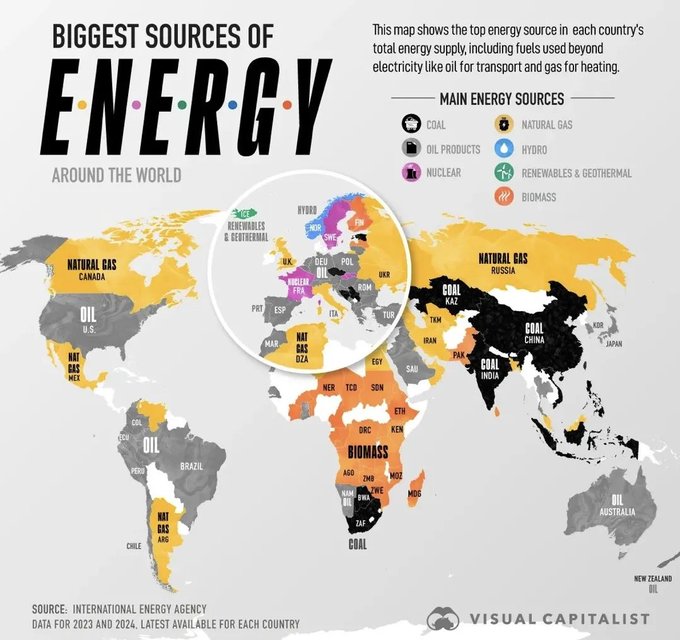
The vulnerable:
Germany, Italy, Japan, South Korea
All dependent and exposed.
The insulated: US (domestic Oil), Russia (Natural Gas), China (Coal, still very reliant on imports of fossil fuels), France (Nuclear)
Notice something? Every country screaming loudest about the energy crisis runs primarily on imported oil. Every country that stays quiet has a domestic supply. The vulnerable countries on this map are now in a race against time. Coal is dirty. Nuclear takes decades to build. Renewables can’t replace baseload overnight. There are no quick fixes on this map. Energy security is built in the decades before one.’ - Jack Prandelli
👉🏽On this day in 1602, the Dutch East India Company was established. This trading company was not only a commercial enterprise but also an instrument of war in the Dutch Republic’s global conflict with Spain. The VOC was the most valuable company of all time.

Fun fact: You associate carrots with their orange colour because Dutch farmers decided it should be Before the 16th century, carrots were black, purple, white, red, and yellow Farmers in Hoorn found a mutant orange strain and bred it into consistency through selective hybridisation They made orange the default Then exported it to every kitchen on earth The Dutch didn’t conquer with armies They also decided what your carrots look like. Oranje Boven!
👉🏽Netherlands: Economist Jona van Loenen argues that inheritance tax should be increased: “It’s dangerous if we end up with a society where work doesn’t pay, but the bank account of your parents does. We should have an open discussion about that.” But many would argue the opposite. Box 3: Taxes on savings and investments are already rising.
Now the next step seems to be taxing what remains after a lifetime of saving — at the moment of death. After decades of paying income, capital, and wealth taxes, the state claims another share of the proceeds when assets are passed on. For critics, that feels like taxation layered on taxation. The desire to leave something behind for the next generation has historically been a core driver of saving, investing, and long-term thinking. Undermining that incentive risks weakening one of the foundations of economic progress and family stability. When the perception grows that private property is no longer secure, the consequences can extend beyond tax policy — affecting trust, investment, and long-term economic behavior. For many, that is where the real concern lies.
👉🏽Sorry, kids stuck in attic rooms — D66, VVD, and CDA have just decided to maintain priority housing for status holders. That makes it harder for migration-critical parties to support the cabinet on other proposals if there’s no meaningful progress on migration policy 👇 The cabinet cannot have it both ways: seeking a majority with the left on migration, while relying on the right for support on other issues.
Maarten van den Berg: ‘Dutch voters are now getting: More EU integration More Green Deal policies More asylum inflows Fewer available homes Longer working lives A larger government Higher taxes and burdens …and more Even though Dutch voters largely supported policies pointing in the opposite direction.’
On the 21st of March:
👉🏽’Oil is up 40% in Europe. In the countries closest to Iran, it barely moved. You’re not paying for a real shortage. You’re paying for a story.
- Iran closed Hormuz to the world. But Chinese tankers are still passing through. Iran is literally selecting who gets oil
- China stockpiled 1.4 billion barrels before the war started. They knew. Europe stockpiled nothing
- Turkey, Georgia, and the Caucasus sit right next to Iran. Pipeline oil is still flowing. Prices not moving.
- Europe doesn’t even buy Iranian oil. They’re paying a 40% premium on oil that was never disrupted for them
- The “shortage” raised prices most in the countries furthest from the conflict and least in the countries next to it That’s not a supply crisis. That’s Europeans being scammed.’ - CapexBT China spent a year filling every tank it had while Europe was busy patting itself on the back for ‘energy transition’ plans that didn’t include a Plan B.
On the 22nd of March:
👉🏽Michael A. Arouet:‘This is unreal. Believe it or not, in London, parents are trying to reduce their income because they are better off earning £99k than £144k. The UK is on track to replace Germany as Europe’s champion of absurdities. How is this even possible?’
🎁If you have made it this far, I would like to give you a little gift:
What Bitcoin Did - This Is The Macro Reset | Nik Bhatia “5 to 10% is going to cause immense damage. When cash flows stop at the margin, everything collapses because of leverage.” Nik Bhatia returns to break down the macro landscape as war in Iran sends oil to $100, the dollar surges, and volatility clouds the outlook. Nik explains why he’s wiped the slate clean on his macro thesis, why the US economy may still avoid recession despite the chaos, and how the Genius Act could reshape the global dollar system through stablecoins. They also get into AI job displacement, why treasuries are still the bedrock of global finance, Bitcoin’s decoupling signal, and whether the four-year cycle is finally dead. Click here: https://youtu.be/VrIJgf5IEhY
Credit: I have used multiple sources!
My savings account: Bitcoin. The tool I recommend for setting up a Bitcoin savings plan is PocketBitcoin, especially suited for beginners or people who want to invest in Bitcoin with an automated investment plan once a week or monthly. (from now on, full KYC, so be aware)
Use the code SE3997
Get your Bitcoin out of exchanges. Save them on a hardware wallet, run your own node…be your own bank. Not your keys, not your coins. It’s that simple. ⠀ ⠀ ⠀⠀ ⠀ ⠀⠀⠀ Is this post helpful to you? If so, please share it and support my work with a zap. ▃▃▃▃▃▃▃▃▃▃▃▃▃▃▃▃▃▃ ⭐ Many thanks⭐ Felipe - Bitcoin Friday! ▃▃▃▃▃▃▃▃▃▃▃▃▃▃▃▃▃▃
Write a comment