How I organize SSH access on Windows after leaving Termius: Tailscale SSH for servers on the tailnet, with no keys at all, and a personal key in 1Password's SSH agent, approved with Windows Hello, for GitHub, Forgejo, tildes and the rest. Plus the plan for when something breaks.
Second part of the Crypto series: SOPS and age lock the values inside a .env file and leave the names readable, so it can live in a public repository. How the encryption fits together, setting it up, daily use, and what still shows.
Before profiles and status updates, there was finger someone@somewhere. The history of the protocol from Stanford in 1971, how it works in one line of text, .plan files, the CMU Coke machine, the Morris worm, and where finger still answers today.
How finger and talk work at hi@pablomurad.com: a shell script that only answers for one user and knows when I'm online, a talk daemon that rings my phone through Telegram, and Misfin mail landing in the same channel. With the files and real screenshots.
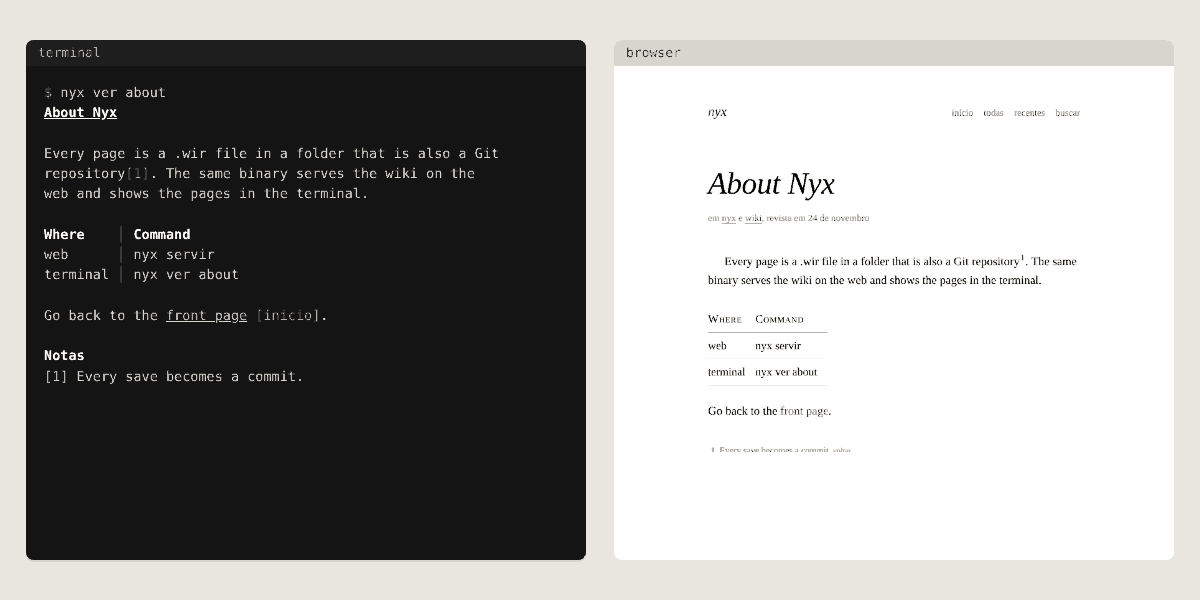
I finally pushed Nyx, a wiki I wrote in 2020 out of pandemic boredom. One Go binary serves it on the web and reads it in the terminal, pages are .wir files in a Git repository, and there's no database and no JavaScript.
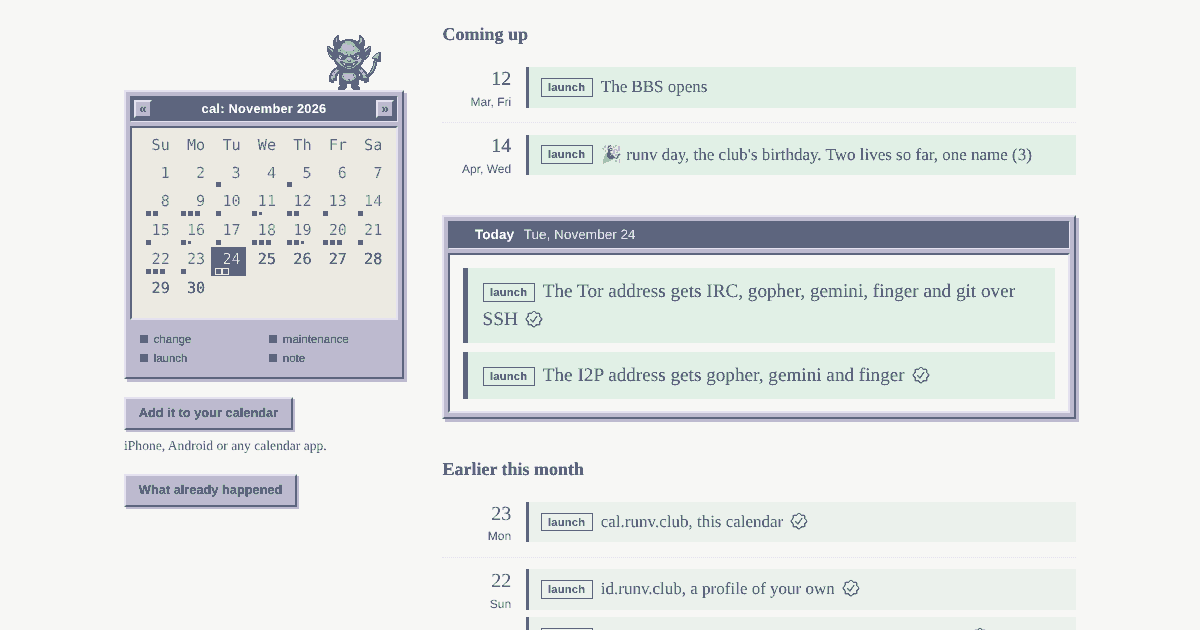
A batch of small plumbing for runv.club: a calendar built from one text file, new tricks for runvbot, an IRC network of its own with a daily channel page, and almost the whole club reachable over Tor and I2P.
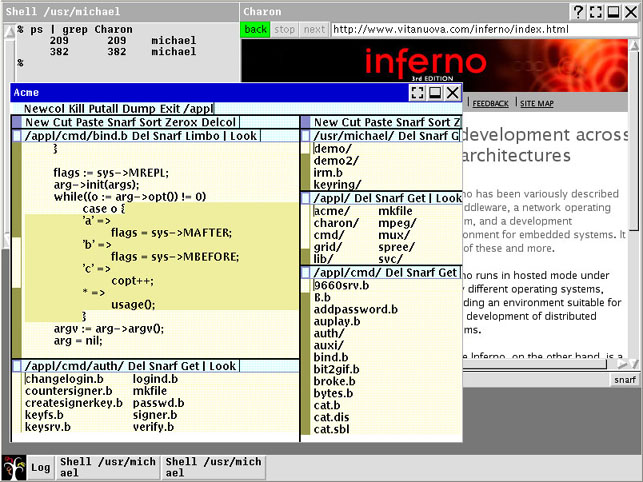
Since six in the morning I have been installing Inferno, the distributed operating system from Bell Labs. 9front and Alpine didn't work out. A Debian container with 32-bit libraries did, and now Inferno opens as a login shell over SSH.
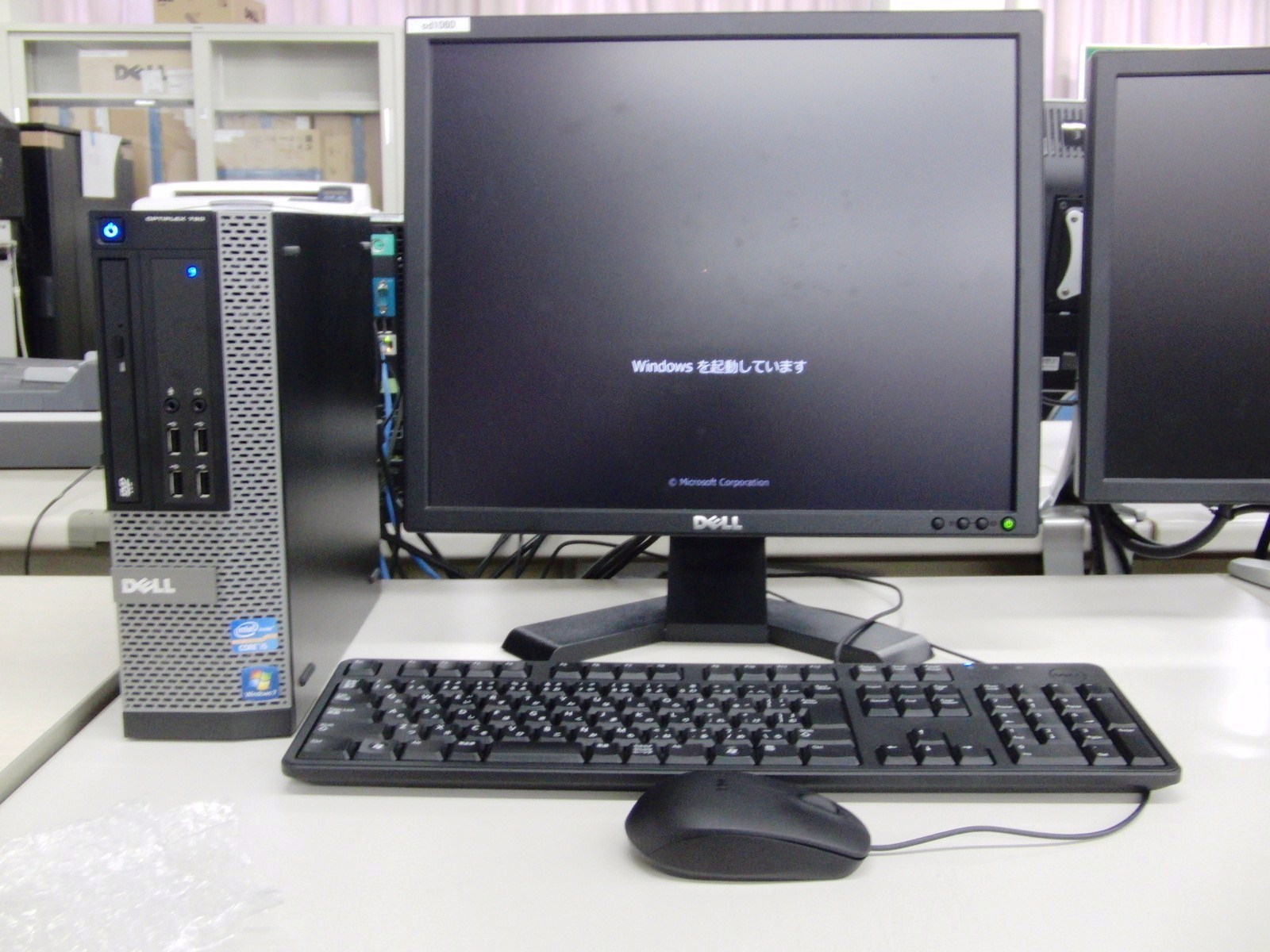
Four Dell desktops from around 2011, each with 4 GB of RAM, were about to be thrown away. They got Debian, became a small Proxmox cluster and are still a test bench today. A short note on permacomputing and on how little a server really needs.
My first contact with computers happened in the 90s, between games, BBSes, IRC, noisy modems and a lot of curiosity. That's how my fascination with machines, the internet and programming was born, long before I understood where all of it would take me.
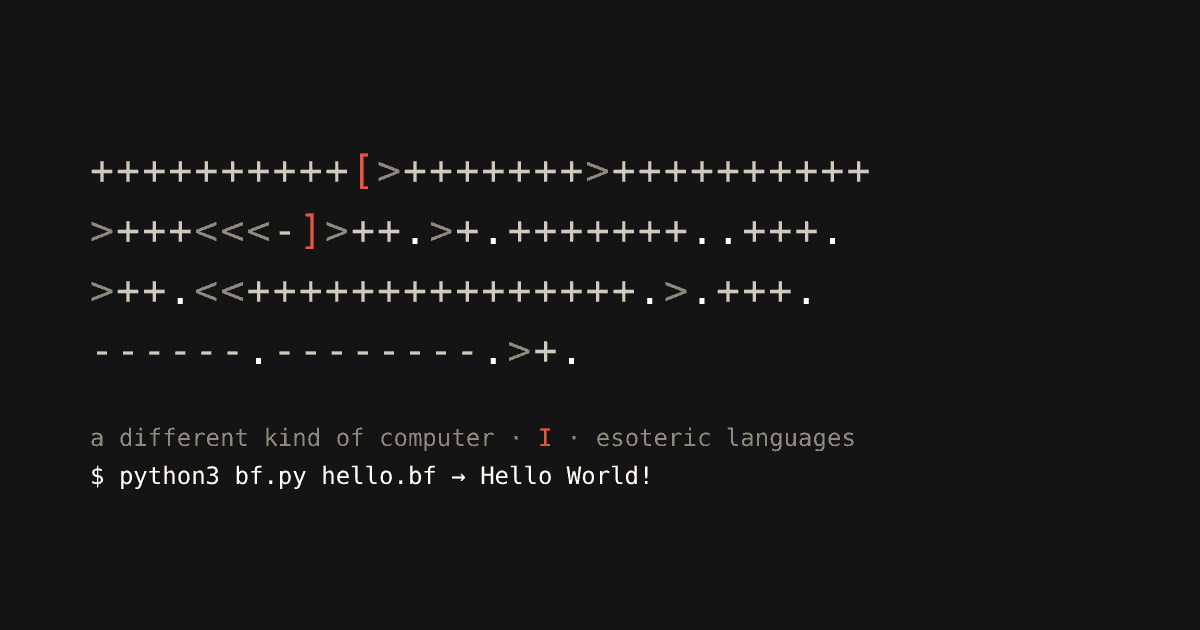
The first part of A different kind of computer, a series about computing off the beaten path. It starts with esoteric programming languages: where they came from, Brainfuck up close with a tiny interpreter, where to begin, and how to design and publish a language of your own.
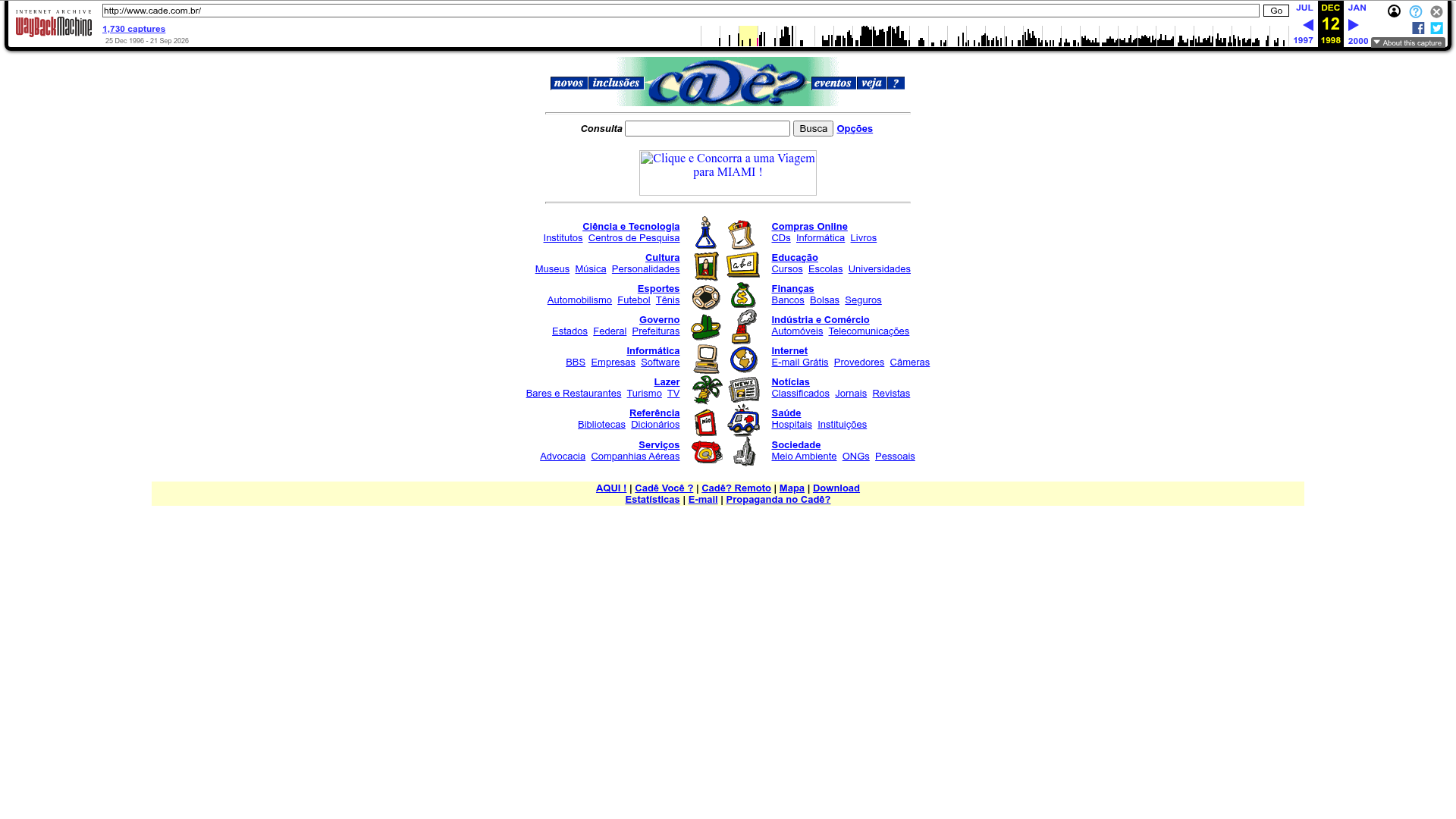
In 1995 the Brazilian web had no Google. You found sites in printed magazines, by word of mouth, or in Cadê?, a catalog where you registered your own page and waited. Part three of my memories of the early internet.
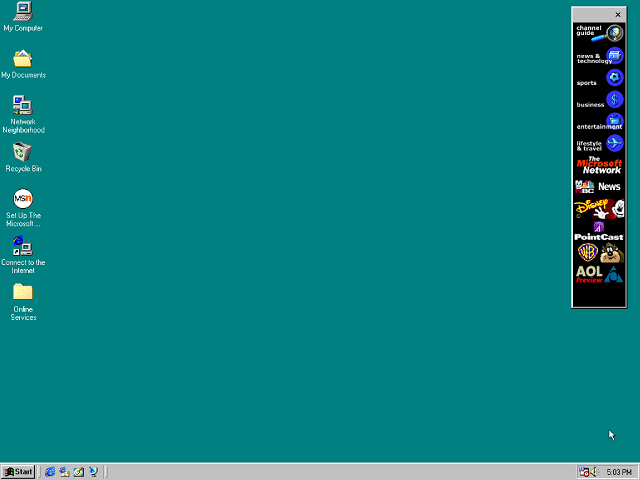
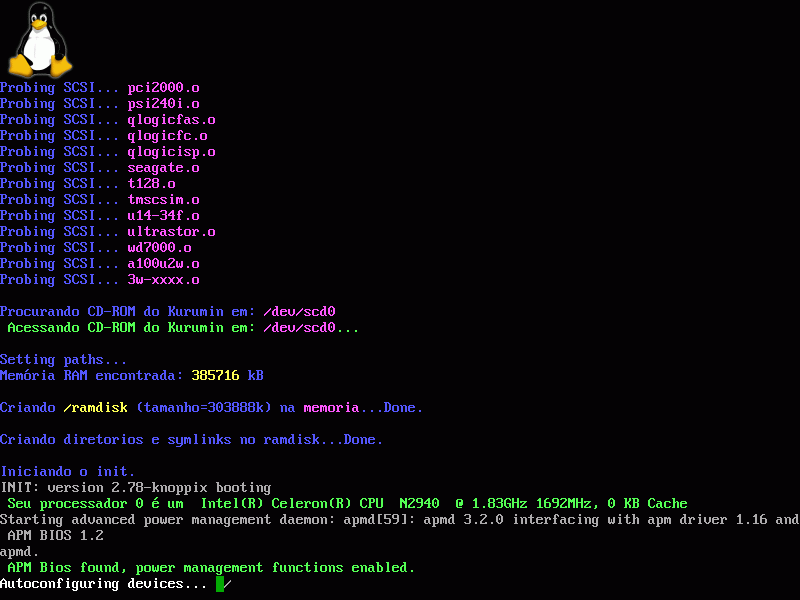
A memory of my first years in programming, between Delphi, IRC, hacker magazines, RATs and the chaotic arrival of Crazy Leo, who introduced Slackware as a kind of rite of passage.
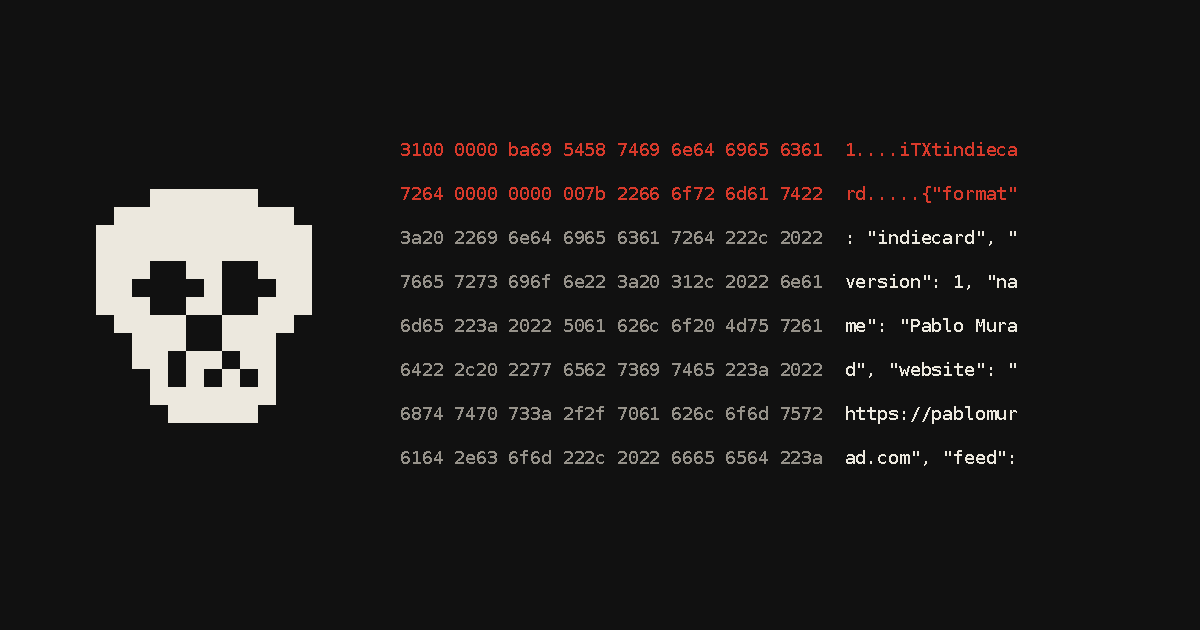
PNG chunks, PICO-8 cartridges, EXIF, ID3 tags, PDF attachments, ZIP comments, SVG metadata and DNS TXT records: everyday files carry a second layer most programs never show. A tour with real examples to run, and ideas for what to build on top.
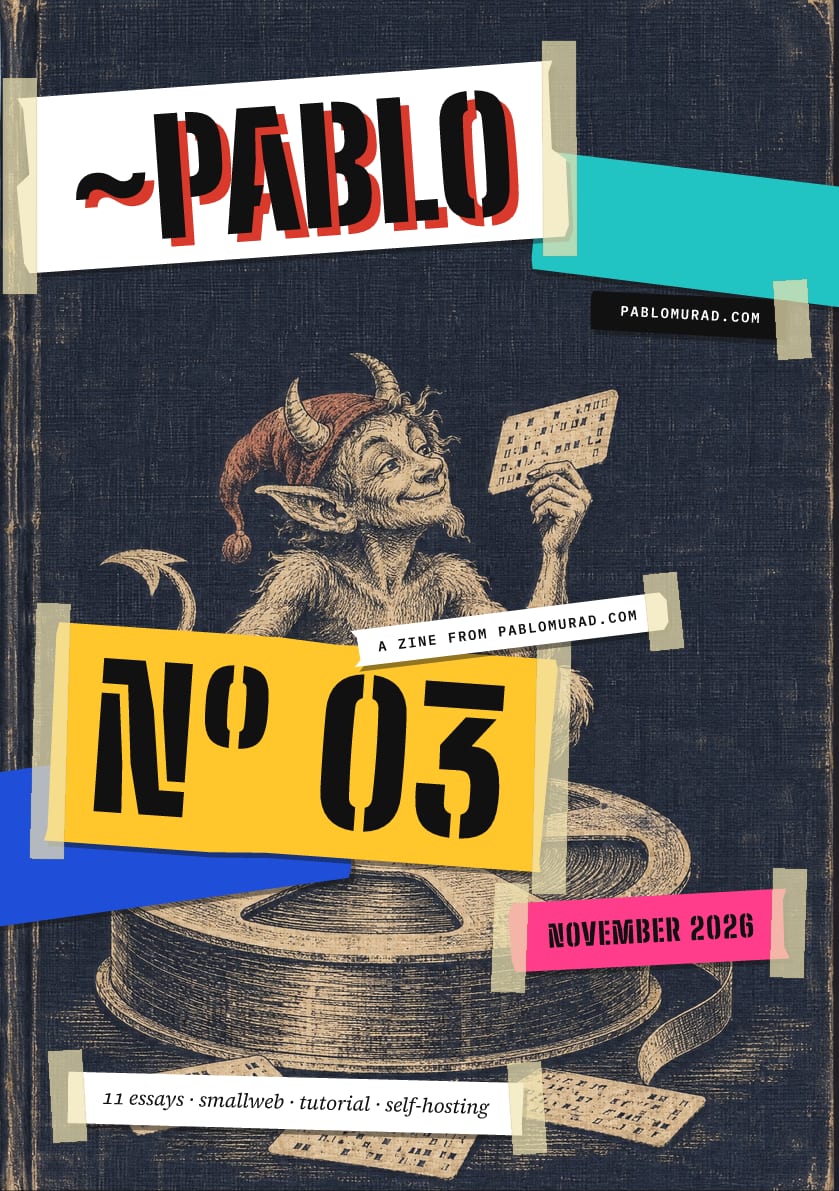
~pablo Nº 03 is out: the 11 essays from 20 to 23 November in 84 A5 pages, from the first Quick Tip to Hidden layers. A PDF to read, a booklet to print and fold, and an EPUB.
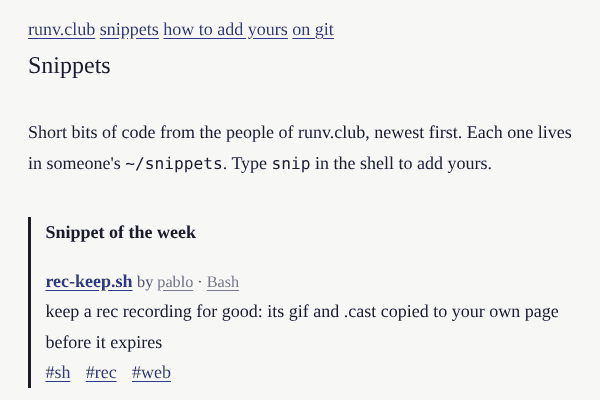
Over two days I put thirty-six small snippets on runv.club, from starter pages for the web, gemini and gopher to feeds, mail, the radio and the shell. Two posts on my runv blog explain every one.
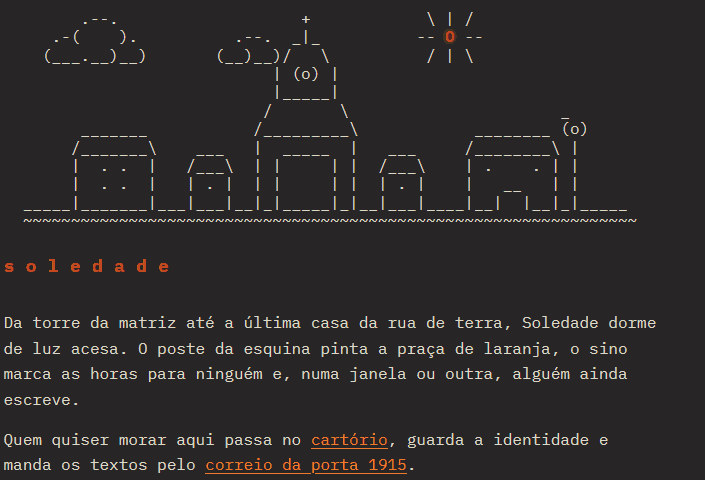
Soledade City, my little town made of text in Brazilian Portuguese, closes its doors today. It started as a prototype built on m15o's code and, a year later, says goodbye to its 19 citizens.
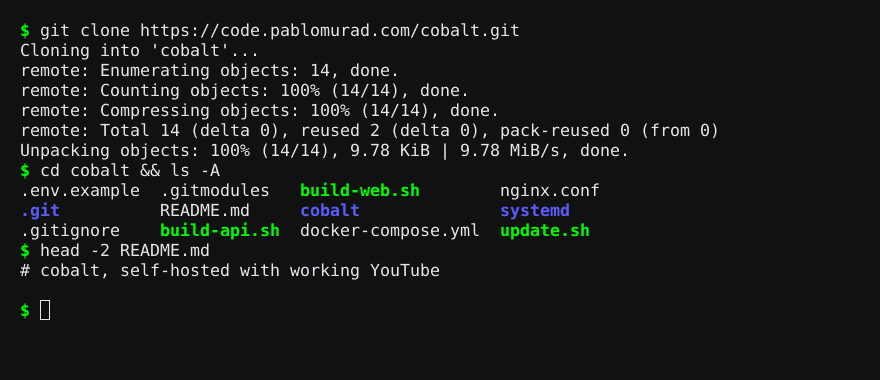
First day of vacation and I already missed the computer. Poking around random repos, I found cobalt, a great media downloader that doesn't work as advertised when self-hosted. The fixes are scattered across community forks, so I put them together in one ready-to-run repo.
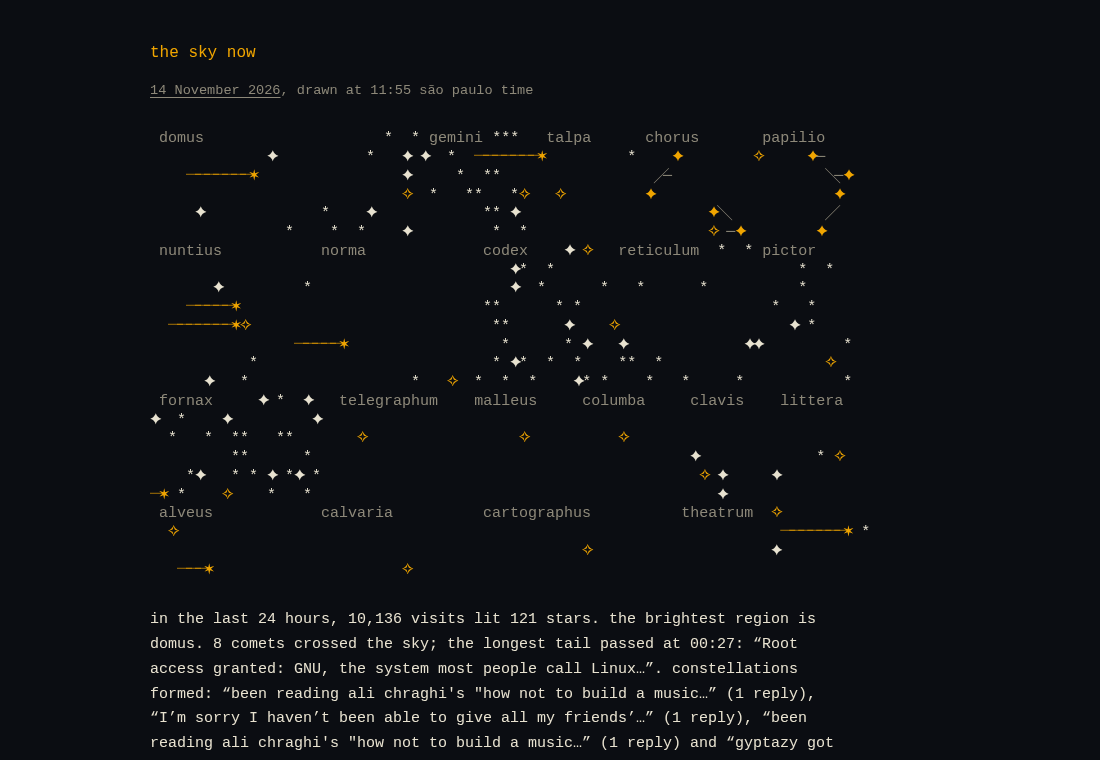
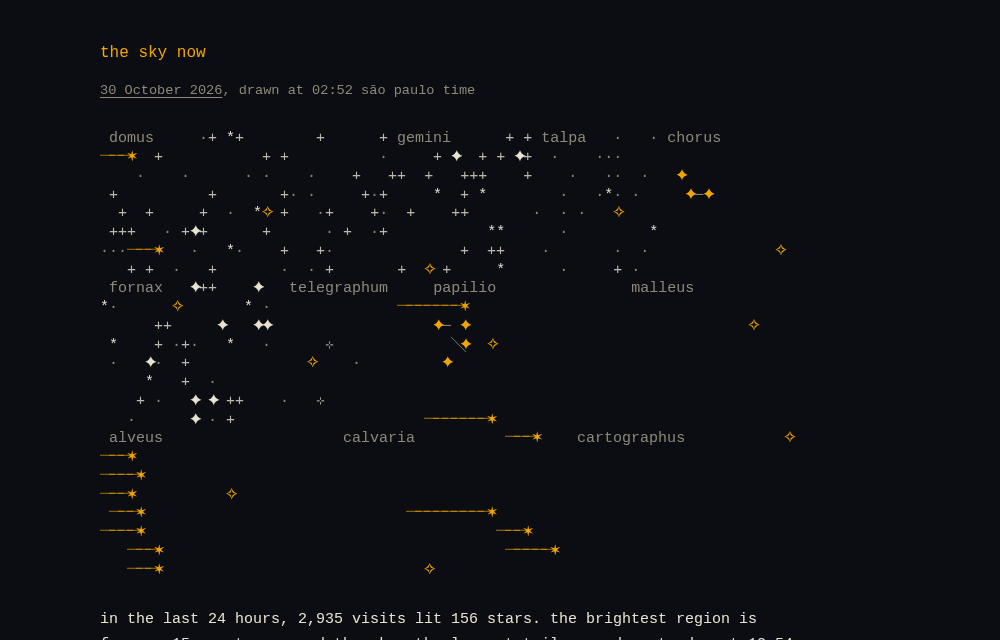
Observatorium, the status page that draws my servers as a night sky in text, went from eleven regions to twenty. It also got a real moon, an archive, a list of outages, finger and Gopher versions, and better counting, still without keeping anything about visitors.
Observatorium, which started out as murad.wtf, is a status page with no charts: it draws a night sky in plain text where stars are page visits, comets are my posts and an eclipse means a service is down. How it works, where to see it and why it knows nothing about you.