Bitcoin Magazine (News Bot)

bitcoinmagazine@puresignal.news
Cover image for ING Deutschland Opens Retail Access to Bitcoin Exchange-Traded Products

ING Deutschland Opens Retail Access to Bitcoin Exchange-Traded Products

Bitcoin Magazine ING Deutschland Opens Retail Access to Bitcoin Exchange-Traded Products ING Deutschland, one of Germany’s largest retail banks, has begun offering retail clients access to cryptocurrency-linked exchange-traded notes (ETNs) and products, allowing customers to gain exposure to bitcoin and other crypto directly through their existing securities accounts. According to information published on ING’s website, the products are physically backed exchange-traded instruments issued by established asset managers including 21Shares, Bitwise, and VanEck. The instruments track the performance of individual cryptocurrencies and trade on regulated exchanges via ING’s Direct Depot platform, which is typically used for stocks, ETFs, and mutual funds. The bank said the bitcoin offering is intended to lower barriers to entry for crypto investing by integrating digital asset exposure into familiar banking infrastructure. Clients do not need to set up third-party crypto exchanges, manage private keys, or operate self-custody wallets, as custody and execution are handled within the securities account framework. “This creates another particularly low-threshold access to crypto investments via exchange-traded products,” said Martijn Rozemuller, CEO of VanEck Europe, in a translated press release. “Many investors want a solution that fits into existing depot structures and at the same time convinces them with transparent costs. That’s exactly what this partnership stands for.” ING noted that the bitcoin and crypto ETNs receive the same tax treatment in Germany as directly held cryptocurrencies. Under current German tax rules, capital gains on crypto assets may be exempt if the position is held for more than one year, potentially making the products attractive to long-term investors. Despite the expanded access, the bank emphasized that the products carry substantial risks. ING warned of “extreme” price volatility, the possibility of total loss in the event of issuer insolvency, liquidity risks, market manipulation, and ongoing regulatory uncertainty surrounding digital assets. In educational materials published alongside the launch, ING took a notably cautious stance on the asset class itself. “Cryptocurrencies are speculative products that have no intrinsic value,” the bank stated, adding that crypto prices are “strongly dependent on psychological effects,” which also influence exchange-traded crypto products. German banks are embracing bitcoin Germany’s major banking groups are moving to bring crypto trading into the regulated retail banking system. DZ Bank has secured MiCAR approval and will roll out its “meinKrypto” platform across cooperative banks, allowing customers to trade and custody Bitcoin and other digital assets directly within existing banking apps, while also joining a consortium developing a regulated euro stablecoin. In parallel, the Sparkassen-Finanzgruppe plans to launch Bitcoin and crypto trading for private customers by summer 2026, with technical support from DekaBank, marking a reversal from its earlier skepticism toward digital assets. This post ING Deutschland Opens Retail Access to Bitcoin Exchange-Traded Products first appeared on Bitcoin Magazine and is written by Micah Zimmerman.

Cover image for U.S. Government Takes Control of $400M in Bitcoin, Assets Tied to Helix Mixer

U.S. Government Takes Control of $400M in Bitcoin, Assets Tied to Helix Mixer

Bitcoin Magazine U.S. Government Takes Control of $400M in Bitcoin, Assets Tied to Helix Mixer The U.S. government has taken full legal ownership of more than $400 million in seized cryptocurrency, cash, and real estate tied to Helix, once one of the most widely used bitcoin mixing services on the darknet. A federal judge in Washington, D.C., entered a final order of forfeiture on Jan. 21, transferring the assets to the government following the conviction of Helix operator Larry Dean Harmon. The forfeiture includes thousands of bitcoin, hundreds of thousands of dollars in cash, and an Ohio mansion purchased during the peak of Helix’s operation. Helix functioned as a cryptocurrency mixer, pooling and rerouting bitcoin transactions to obscure their origins and destinations. Prosecutors say the service was built to serve darknet drug markets and was directly integrated into their withdrawal systems through an application programming interface. Court records show Helix processed roughly 354,468 bitcoin between 2014 and 2017, worth about $300 million at the time. Investigators traced tens of millions of dollars from major darknet marketplaces through the service. Harmon took a cut of each transaction as operating fees. Harmon pleaded guilty in August 2021 to conspiracy to commit money laundering. After years of delays, he was sentenced in November 2024 to three years in prison, followed by supervised release. He was also ordered to forfeit seized assets and pay a forfeiture money judgment. Authorities say Helix worked alongside Grams, a darknet search engine Harmon also operated, which helped users locate illicit marketplaces. Together, the services formed part of the financial infrastructure underpinning darknet drug trade during that period. Cash, an Ohio mansion, and millions of dollars in bitcoin Among the forfeited assets is a 4,099-square-foot home in Akron, Ohio, purchased by Harmon and his wife in 2016 for $680,000. Automated estimates place its current value between $780,000 and $950,000, according to reporting from Realtor.com. The property sits on a 1.21-acre lot and includes multiple fireplaces, a backyard fire pit, and a whirlpool tub. Federal officials say the home will be sold at auction by the Internal Revenue Service. In addition to the real estate, prosecutors reportedly seized more than $325,000 in cash and approximately 4,500 bitcoin, according to Realtor.com, now valued at roughly $355 million at current prices. “This case shows that the darknet is not a safe haven for criminal activity,” U.S. Attorney Jeanine Pirro said in a statement, adding that law enforcement will continue to pursue cyber-enabled financial crimes. Harmon was reportedly released from prison in December 2025 through an early release program after completing drug rehabilitation. He has said he plans to restart a legitimate bitcoin education business and is seeking new housing following the forfeiture. This post U.S. Government Takes Control of $400M in Bitcoin, Assets Tied to Helix Mixer first appeared on Bitcoin Magazine and is written by Micah Zimmerman.

Cover image for Bitcoin Bear Control Solidifies: $84K Support Broken, Price Eyes $68K–$60K Zone

Bitcoin Bear Control Solidifies: $84K Support Broken, Price Eyes $68K–$60K Zone

Bitcoin Magazine Bitcoin Bear Control Solidifies: $84K Support Broken, Price Eyes $68K–$60K Zone Bitcoin Price Weekly Outlook Last week, we were expecting the critical $84,000 support level to break, and to the bulls’ dismay, it did. Bitcoin had a small bounce after the prior week’s close, then proceeded to dump down through the $84,000 support level all the way down to $75,600 on Saturday, before moving up a little to close the week out at $76,919. Bitcoin dropped 13% last week, so we may see a bounce early this week back to $80,000 or so, but continuation downwards should be expected before too long. Key Support and Resistance Levels Now The bulls are reeling this week after losing that key $84,000 support level. We are seeing a little bit of a bounce early on here, but the bulls will be hard-pressed to regain much ground. $79,000 should serve as resistance early on here, with $81,000 sitting as the next resistance above. Now that $84,000 has broken as support, it should be strong resistance on the way back up. $87,600 at the POC on the volume profile should be a brick wall of resistance if the bitcoin price can manage to wick above $84,000. The bears are now sitting comfortably in control. The price bounced from $75,600, so we will look to this level initially as support, but don’t expect it to hold up if under pressure. Below $75,000, we will look at $72,000 all the way down to $68,000 as a support zone. A solid bounce from this level is warranted with all the volume that built up there in the 2024 consolidation period. Losing $67,000 below this support opens up the door to $58,000 at the 0.618 Fibonacci retracement. $42,000 sits as support below here, but don’t expect to see it anytime soon. Outlook For This Week Zooming into the daily chart, we see that the RSI has hit oversold levels over the last few days. The bulls should try to muster a small push back up soon. Bitcoin price will likely look to continue the push down to at least $72,000 here before mustering a bounce. When and if the bounce comes, it should try to tag the $79,000 resistance at least, and possibly even $81,000, but don’t expect more than that. Market mood: Extremely Bearish – The bears finally busted down the door at the $84,000 support level. They will look to carry this momentum forward as the bewildered bulls seek out where to make their stand. The next few weeks At this point, even the most stubborn of bulls must concede that we are indeed in a long-term bear market. Losing the 100-week SMA, which had been support for several weeks, was a big sign of strength for the bears. Expect the bitcoin price to remain below $87,600 until a long term bottom is in place here. There is a high volume node from $68,000 down to $60,000, so expect the price to take its time moving around this area if $68,000 is lost as support. Terminology Guide: Bitcoin Price Weekly Outlook Bulls/Bullish: Buyers or investors expecting the price to go higher. Bears/Bearish: Sellers or investors expecting the price to go lower. Support or support level: A level at which the price should hold for the asset, at least initially. The more touches on support, the weaker it gets and the more likely it is to fail to hold the price. Resistance or resistance level: Opposite of support. The level that is likely to reject the price, at least initially. The more touches at resistance, the weaker it gets and the more likely it is to fail to hold back the price. SMA: Simple Moving Average. Average price based on closing prices over the specified period. In the case of RSI, it is the average strength index value over the specified period. Oscillators: Technical indicators that vary over time, but typically remain within a band between set levels. Thus, they oscillate between a low level (typically representing oversold conditions) and a high level (typically representing overbought conditions). E.G., Relative Strength Index (RSI) and Moving Average Convergence-Divergence (MACD). RSI Oscillator: The Relative Strength Index is a momentum oscillator that moves between 0 and 100. It measures the speed of the price and changes in the speed of the price movements. When RSI is over 70, it is considered to be overbought. When RSI is below 30, it is considered to be oversold. Volume Profile: An indicator that displays the total volume of buys and sells at specific price levels. The point of control (or POC) is a horizontal line on this indicator that shows us the price level at which the highest volume of transactions occurred. High Volume Node: An area in the price where a large amount of buying and selling occurred. These are price areas that have had a high volume of transactions and we would expect them to act as support when price is above and resistance when price is below. Fibonacci Retracements and Extensions: Ratios based on what is known as the golden ratio, a universal ratio pertaining to growth and decay cycles in nature. The golden ratio is based on the constants Phi (1.618) and phi (0.618). This post Bitcoin Bear Control Solidifies: $84K Support Broken, Price Eyes $68K–$60K Zone first appeared on Bitcoin Magazine and is written by Ethan Greene - Feral Analysis and Juan Galt.

Cover image for U.S. Manufacturing Data Turns Positive as Bitcoin Searches for a Bottom

U.S. Manufacturing Data Turns Positive as Bitcoin Searches for a Bottom

Bitcoin Magazine U.S. Manufacturing Data Turns Positive as Bitcoin Searches for a Bottom Earlier today, as bitcoin recovered from a rocky weekend, the U.S. manufacturing sector delivered a starkly bullish surprise to markets, with the Institute for Supply Management (ISM) Manufacturing Purchasing Managers’ Index (PMI) jumping to 52.6 in January, nearly 4 points above the 48.5 consensus estimate and marking its return to expansion territory for the first time in over a year. A PMI above 50 signals net expansion in factory activity — a concrete metric of business confidence and forward‑looking demand — and this marked the highest reading since mid‑2022. This means businesses are seeing some post-holiday demand. The breadth of the rebound was notable: new orders surged to 57.1, production climbed, and backlog orders flipped positive. That’s the kind of internals economists watch for signs that companies are ordering inputs and boosting output. While employment remains below 50, suggesting hiring hasn’t fully caught up, the overall shift from contraction to expansion is the story. What does this mean for bitcoin? For Bitcoin markets, the implications go beyond a single data point. Macro traders and crypto analysts often view the PMI as a leading indicator of broader economic momentum and risk appetite. When manufacturing activity expands, it indicates improving corporate earnings prospects, stronger demand, and — critically — greater investor confidence in risk assets. PMI data often leads corporate earnings and asset performance, and risk assets like Bitcoin have historically trended upward in sustained expansion environments. Crypto communities typically jump on the PMI print as a sign the economy may be shifting from cautious to opportunistic. A reading above 50 after a long contraction hints at stronger growth, prompting some investors to ease hedges and move into riskier assets like Bitcoin. While one number doesn’t guarantee a turnaround, this surprise could boost Bitcoin’s momentum if traders see the expansion as lasting. This data comes in as bitcoin attempts to stabilize after one of its most punishing weeks in years, following a sharp sell-off that dragged prices below $80,000 for the first time since April 2025. BTC briefly fell near $75,000 over the weekend amid cascading liquidations, before rebounding to around $78,400 early Monday, up about 1% on the day but still down roughly 12% over the past week. The decline has wiped more than $200 billion from bitcoin’s market capitalization and capped a broader drawdown of roughly $800 billion since the asset peaked above $126,000 in October. Bitcoin’s drop coincided with a global risk-off move. U.S. equities slid on weak tech earnings, losses spread across Europe and Asia, and even traditional safe havens sold off. Gold and silver posted historic declines, reflecting a stronger U.S. dollar and shifting expectations for monetary policy following Kevin Warsh’s nomination as the next Federal Reserve chair. Bitcoin Magazine analysts said the daily chart shows the RSI sitting in oversold territory after several days of selling. Bulls may attempt a modest rebound, but bitcoin could still slide toward $72,000 before finding support. If a bounce does materialize, prices are likely to test resistance near $79,000 and potentially $81,000, with limited upside beyond that. This post U.S. Manufacturing Data Turns Positive as Bitcoin Searches for a Bottom first appeared on Bitcoin Magazine and is written by Micah Zimmerman.

Cover image for Argentine Crypto Fugitive With $56 Million in Bitcoin Arrested in Venezuela

Argentine Crypto Fugitive With $56 Million in Bitcoin Arrested in Venezuela

Bitcoin Magazine Argentine Crypto Fugitive With $56 Million in Bitcoin Arrested in Venezuela Venezuelan authorities have arrested Rosa María González, a key figure in the collapse of Argentine crypto firm Generación Zoe, nearly four years after the scandal left tens of thousands of investors defrauded. González, 30, was taken into custody in San Cristóbal, Táchira state, following an Interpol operation. González is accused of fleeing Argentina with 611 Bitcoin, worth roughly $56 million today. She had spent years evading authorities, reportedly moving between apartments in Buenos Aires with private security before crossing into Venezuela, according to local reports. Her arrest comes almost exactly one year after Leonardo Cositorto, the founder of Generación Zoe, was sentenced to 12 years in prison. Generación Zoe promised investors unusually high returns, claiming to use proprietary trading algorithms with so-called “quantum security.” In reality, investigators say the company operated a classic Ponzi scheme, paying older investors with funds from new participants. González reportedly introduced Cositorto to the trading algorithms that became the centerpiece of the fraud. In promotional videos, she claimed the algorithms could generate monthly returns of up to 70%. Consistent crypto crime After the firm collapsed in the middle of 2022, González reportedly remained active in the crypto world trying to work up some new schemes. Sources say she attempted to launch a new scheme targeting Argentine investors, promising 5% monthly returns on stakes of $1,000 or more, using crypto transactions through companies supposedly based in the United Kingdom. She allegedly funded former associates in Venezuela to recruit investors and manage the new project. Early reports suggest the plan defrauded at least a dozen individuals, totaling roughly $300,000. Extraditing González to Argentina is expected to be difficult. Argentina severed diplomatic ties with Venezuela in 2024, and no embassy currently operates in Caracas. Brazil, which had been managing diplomatic affairs, recently withdrew, leaving no country in charge of Argentine interests. Interpol officials told local media that sending federal police into Venezuela is not safe, complicating any repatriation. Cositorto has called on González to cooperate, expressing hope that her testimony could help recover some of the defrauded funds. Sources close to the case say González may have been pressured or manipulated into some of the fraudulent activities, though investigators remain focused on her direct role in orchestrating scams. DLNews reporting provided background information for this article. This post Argentine Crypto Fugitive With $56 Million in Bitcoin Arrested in Venezuela first appeared on Bitcoin Magazine and is written by Micah Zimmerman.

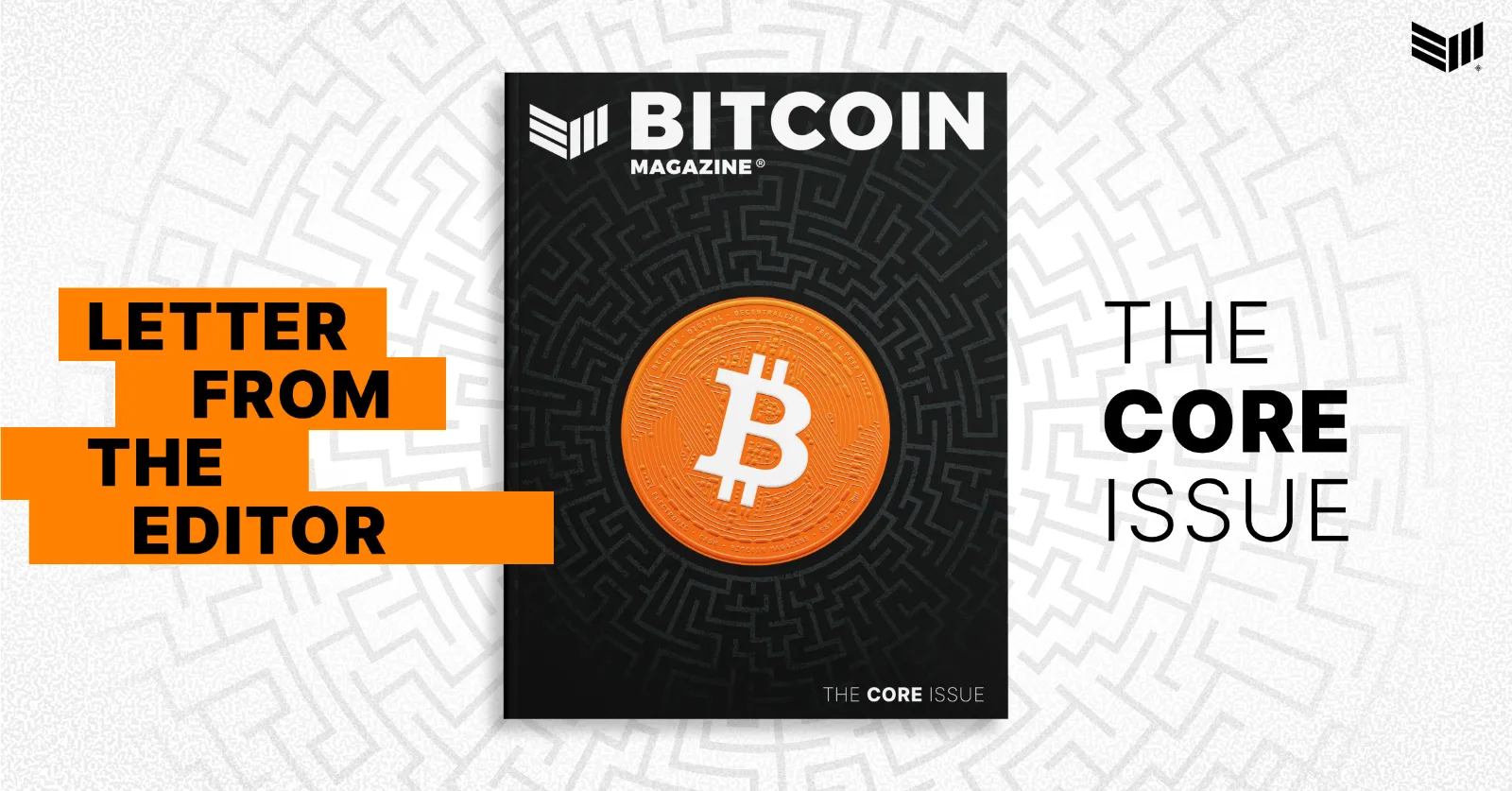
Cover image for The Core Issue: Letter From The Editor

The Core Issue: Letter From The Editor

Bitcoin Magazine The Core Issue: Letter From The Editor Bitcoin is a distributed system. That means there is no center. To make a pun, no “core.” Bitcoin exists because of everyone participating in some way; buying and hodling, sending and receiving, running a node, mining, building some service or protocol on top of it. It exists as the culmination of everyone adding their contributing piece of the whole. But underneath all of those contributions and pieces, Bitcoin is ultimately a network run by software. Without that software, no one can buy and hodl, no one can send and receive, or run a node, or mine, or contribute any piece to form any whole. Without software, there is no Bitcoin. Software doesn’t write itself. People have to write that software. Many people have filled that role over the years. The first was Satoshi Nakamoto, Bitcoin’s pseudonymous creator. After him came people like Martti Malmi, Hal Finney, and many others in the years after. All of them are why Bitcoin is still here functioning today. Because software development is such a highly specialized field, much of the work of Bitcoin developers goes unnoticed, unappreciated, and in many cases not even understood by a large swath of the people around the world who own and use bitcoin. This issue aims to bring a greater depth of understanding of the work done on Bitcoin Core, the predominant software implementation of the Bitcoin protocol. The articles inside go through past work done to improve Bitcoin Core, as well as the Bitcoin protocol in general, work coming to fruition in the near future, and some of the general thinking behind how developers approach different problems. Many of the articles are written by developers contributing to Bitcoin Core themselves. It has been my absolute pleasure to work on taking this issue from an idea to the physical copy you hold in your hand right now, and help these developers to explain their work to you themselves. Hopefully you walk away with a greater understanding of what it has taken to keep Bitcoin functioning all of these years, and what it will take for many years to come. -Shinobi Don’t miss your chance to own The Core Issue — featuring articles written by many Core Developers explaining the projects they work on themselves! This piece is the Letter from the Editor featured in the latest Print edition of Bitcoin Magazine, The Core Issue. We’re sharing it here as an early look at the ideas explored throughout the full issue. This post The Core Issue: Letter From The Editor first appeared on Bitcoin Magazine and is written by Shinobi.

Cover image for Bitcoin Is Coming Off a Brutal Week. Here’s What’s Happening

Bitcoin Is Coming Off a Brutal Week. Here’s What’s Happening

Bitcoin Magazine Bitcoin Is Coming Off a Brutal Week. Here’s What’s Happening Bitcoin is stabilizing slightly today after one of its most punishing weeks in years, but the damage across crypto markets has already been done. The bitcoin price fell below $80,000 over the weekend for the first time since April 2025, briefly plunging to lows near $75,000 amid cascading liquidations and a broader sell-off across global risk assets. As of early Monday, BTC was trading around $78,400, up about 1% on the day, according to Bitcoin Magazine data, after shedding roughly 12% over the past seven days. That decline has erased more than $200 billion from bitcoin’s market capitalization, capping a brutal stretch that saw the asset lose roughly $800 billion in value since peaking above $126,000 in October. Market participants point to a convergence of macroeconomic stress, geopolitical risk and structural fragility in crypto markets as the primary drivers of the sell-off. Bitcoin’s drop coincided with a sharp “risk-off” move across global markets. U.S. equities slid late last week, led by steep losses in technology stocks after Microsoft’s earnings disappointed investors. That weakness spilled into European and Asian markets on Monday, while traditional safe havens also came under pressure. Gold and silver both suffered historic losses, with silver posting its worst single-day decline since 1980. Analysts say the simultaneous sell-off in crypto and precious metals reflects a surging U.S. dollar and shifting expectations around U.S. monetary policy following the nomination of Kevin Warsh to succeed Jerome Powell as Federal Reserve chair. Thin liquidity over the weekend exacerbated price swings, triggering a wave of forced liquidations across derivatives markets. According to Coinglass, more than $2 billion worth of BTC long and short positions have been liquidated since Thursday, including $2.56 billion across all cryptocurrencies on Saturday alone — one of the largest single-day liquidation events on record. Liquidations occur when leveraged traders are automatically forced out of positions as prices fall, creating a feedback loop of selling pressure that can accelerate declines. Institutional investors have also been pulling back. Digital asset investment products recorded a second consecutive week of outflows totaling $1.7 billion, according to CoinShares, wiping out all year-to-date inflows and pushing 2026 flows into negative territory. Bitcoin and Ethereum products led the withdrawals, while short BTC products and tokenized precious metals saw inflows, suggesting rising demand for downside protection. Bitcoin whale activity Earlier today, Binance confirmed it purchased 1,315 bitcoin, worth roughly $100 million, as part of a plan to convert its $1 billion Secure Asset Fund for Users (SAFU) reserve from stablecoins into BTC over the next 30 days. Binance cofounder Changpeng “CZ” Zhao said he had lost confidence in a 2026 BTC “super cycle,” citing intense FUD, market turbulence, and accusations that Binance-related events contributed to a historic liquidation cascade. Members of the crypto community accused CZ of selling BTC over the weekend and accused him of being responsible for the massive October 10, 2025 crypto crash that led to large crypto liquidations. Corporate bitcoin holders have also come under scrutiny. Bitcoin’s brief dip below Strategy’s average purchase price put the company’s massive treasury holdings under pressure, though analysts say there is no risk of forced selling because the BTC is not pledged as collateral. Bitcoin’s drop below Strategy’s $76,052 cost basis somewhat erased the psychological floor beneath Michael Saylor’s leveraged accumulation strategy, exposing growing strain as the firm’s stock trades far below its peak and its equity premium vanishes. While there’s no immediate financial distress and no forced selling risk, tightening capital markets and fading investor appetite are shrinking Strategy’s ability to fund further Bitcoin purchases through share issuance. At the time of writing, BTC is rebounding to around $78,380, up 1% over the past 24 hours, trading just below its seven-day high as market capitalization climbs to roughly $1.57 trillion. This post Bitcoin Is Coming Off a Brutal Week. Here’s What’s Happening first appeared on Bitcoin Magazine and is written by Micah Zimmerman.

Cover image for Strategy ($MSTR) Bought 855 Bitcoin Ahead of Weekend Market Crash, Holdings Hover Near Breakeven

Strategy ($MSTR) Bought 855 Bitcoin Ahead of Weekend Market Crash, Holdings Hover Near Breakeven

Bitcoin Magazine Strategy ($MSTR) Bought 855 Bitcoin Ahead of Weekend Market Crash, Holdings Hover Near Breakeven Strategy (MSTR) added 855 bitcoin to its balance sheet for approximately $75.3 million last week, paying an average price of $87,974 per BTC, according to a filing published Monday. The purchase came just days before bitcoin’s sharp sell-off, which briefly pushed prices below $75,000 over the weekend. Despite the timing, the acquisition represents a relatively small addition for the company, which has routinely purchased hundreds of millions — or even billions — of dollars’ worth of bitcoin in recent weeks. Led by Executive Chairman Michael Saylor, Strategy now holds a total of 713,502 BTC, acquired for roughly $54.26 billion at an average price of $76,052 per coin. With bitcoin trading just above $77,000 at the time of writing, the firm’s treasury is marginally above breakeven after more than five years of accumulation. Last week’s purchase was fully funded through the sale of common stock, consistent with Strategy’s ongoing capital-raising strategy to finance bitcoin acquisitions. Bitcoin and Strategy’s stock drop Bitcoin’s weekend drop briefly placed Strategy’s treasury underwater, according to Bitcoin Magazine Pro data. Bitcoin fell to a low of roughly $74,500 during early Asian trading on Feb. 1 and into Feb. 2, pushing the company’s unrealized losses close to $1 billion at the session low before narrowing significantly as prices rebounded. Losses were estimated at around $150 million as BTC recovered to the mid-$75,000 range. Strategy remains the world’s largest corporate bitcoin holder and has shown no signs of slowing its accumulation. Saylor has hinted at further purchases in 2026, following the firm’s largest buy of the year on Jan. 20, when it acquired more than 22,000 BTC. To support continued buying, Strategy recently increased the dividend on its Series A Perpetual Stretch Preferred Stock to 11.25%. Proceeds from preferred share sales have financed more than 27,000 BTC in recent acquisitions. Strategy shares fell over 7% in premarket trading Monday to $138.49, marking a new multi-year low as bitcoin’s volatility weighed on sentiment across crypto-exposed equities. Bitcoin is trading at $77,822, with 24-hour volume totaling $86 billion. The asset is down about 1% on the day, sitting roughly 1% below its seven-day high of $78,611 and around 4% above its seven-day low of $74,592. BTC’s circulating supply stands at 19,982,656 coins, with a fixed maximum supply of 21 million. The total Bitcoin market capitalization is approximately $1.56 trillion, reflecting a 1% decline over the past 24 hours. This post Strategy ($MSTR) Bought 855 Bitcoin Ahead of Weekend Market Crash, Holdings Hover Near Breakeven first appeared on Bitcoin Magazine and is written by Micah Zimmerman.

Cover image for El Salvador’s Bitcoin Beach Hosts Global Summit: Strategies for Sustainable Bitcoin Circular Economies Emerge

El Salvador’s Bitcoin Beach Hosts Global Summit: Strategies for Sustainable Bitcoin Circular Economies Emerge

Bitcoin Magazine El Salvador’s Bitcoin Beach Hosts Global Summit: Strategies for Sustainable Bitcoin Circular Economies Emerge The Bitcoin Circular Economy Summit just took place in El Salvador’s Bitcoin Beach, and what an event it was. The invite-only summit saw two days of presentations from communities from across the world, from Indonesia to Peru, from Africa to Bolivia. The summit saw an alleged 29 different countries represented among the small crowd of perhaps 60 attendees and speakers. The event was put together by the Bitcoin Beach team, lead by Mike Peterson and Roman Martinez, the BCES took place in El Zonte’s community center, a new location built up to support El Zonte’s growing population and economy. The topics covered ranged from overviews of various Bitcoin Circular Economies (BCEs), to discussions about strategy, tooling, financial sustainability, economic theory, and even education for leaders to become more effective communicators and fundraisers. Attendees told stories of incredible success with brick and mortar adoption in countries with failing currencies, of eye-watering transformation, growth, and gratitude from remote communities apparently forgotten by civilization, of hope and good-hearted behaviour demonstrated by the long reach of Bitcoin donors and Bitcoin activists, looking to deliver sound money to the furthest reaches of the world. The Bitcoin Beach White Paper Since 2019, El Zonte’s Bitcoin Beach has become a world-renowned brand, the biggest success story in the Bitcoin circular economy world. Its novel story has been told many times, but some key takeaways were discussed in depth at the summit, providing an overview of what is documented in detail in the Bitcoin Beach White Paper. Concentrate Adoption in one Location BCE leaders advised against taking a shotgun approach to Bitcoin adoption, especially when it comes to brick-and-mortar-like stores, and deep impact social work. Choose a town, street, or specific community and work hard to get mass adoption in a limited location first. This arguably benefits from multiple network effects seen in branding. Instead of random locations across a country accepting Bitcoin, a single location can attract tourists in higher numbers, resulting in more bitcoin payments being made to merchants, which they need to see to remain motivated. This contrasts a classic scenario of less organized attempts at getting brick and mortar adoption, where the shop clerk downloads the Bitcoin app but only sees bitcoin spenders show up once or twice a month. Volume strengthens the connection between Bitcoin and that local community, resulting in more sustainable interest and adoption. Concentrating the Bitcoin brand in one town or street in a city leverages commonly seen marketing strategies, where multiple stores of the same type cluster together, to benefit from each other’s broad advertising efforts. Build a High-Trust Team “Don’t be hasty in who you bring along,” said Mike Peterson on stage when discussing the Bitcoin Beach White Paper. People will want to join, but it is important not to rush into relationships with people you don’t know well. It is better to build a small team of high-trust, well-known individuals than grow too fast and take unnecessary risks. Bitcoin not crypto The topic of crypto also came up, as donations are often offered to social impact communities of this sort in a wide range of cryptocurrencies; however, speakers and panelists all agreed that keeping Bitcoin as the main brand and flag was crucial. One of the reasons is the wide proliferation of crypto-related scams across the world, including in low-income, low-education communities. Bitcoin, unlike most other crypto brands, is very well known and has a strong reputation, with BCEs throughout the world working to educate on the same themes and network, it is a lot easier to bypass concerns from local community leaders and educate the public about the most secure and successful crypto currency available. Communicate in Bitcoin, not Dollars Many of the BCEs represented had Bitcoin donors, some of them anonymous, with simple but powerful demands from the recipients. Bitcoin Beach’s founding donor, who still communicates with Peterson, originally demanded that the bitcoin be used to buy things, not sold for dollars and then used. Bitcoin adoption as a medium of exchange was a prerequisite for the donations and the relationship to continue. Donors of this kind, who are likely OG Bitcoin maximalists, also insist that leaders talk about value in SATS, not in dollars, challenging a manner of speech that has become normalized in the industry, something like “I’ll send you 20 dollars worth of Bitcoin”. Peterson insisted that donors hate this and want Bitcoin to be discussed in SATS (Satoshis, the smallest denomination of bitcoin) or in BTC terms, a condition clearly aimed at making bitcoin a common unit of account. Sustainability Sustainability was also an important topic across the Summit. In the context of Bitcoin circular economies, it means being able to survive and continue to grow as a local bitcoin hub, when donations dry out. The question of how to achieve sustainability touches a variety of important topics, including what might eventually become an economic theory of microeconomies powered by Bitcoin. The Bitcoin Beach team highlighted the importance of tourism as a source of external capital into the local economy, but recognized that not all BCEs are conducive to tourism. Some are in very remote areas, others are in hostile and dangerous political environments. Attendees generally recognized that some BCEs might always depend on donations, depending on the situation, but also discussed ways in which some BCEs can form economic relationships with each other. Motiv in Peru, for example, serves two communities in particular who have developed an economic relationship, one produces artisan crafts, sewn by Indigenous women from a small town in the mountains of Peru, and the other is a tourist hub in Lima that buys the goods from them in bitcoin and resells them to Bitcoin tourists. Peterson highlighted the importance of understanding what makes your community special and working with locals to develop their local talent. Another aspect of sustainability is the focus of agency instead of assistance, in the non-profit version of BCEs. Rather than just buy things and gift them to impoverished communities, education and economic empowerment are encouraged, highlighting the “teach a man to fish” as superior and more likely to survive. Bitcoin economic theory would suggest that teaching long lasting life-skills to developing communities is preferable to just giving them free stuff forever, since the faucet of bitcoin donations is fundamentally finite. While in the fiat model, more dollars will always be created — and the quicker they get spent, the better — eventually finding their way through the web of NGOs, to the hands of charity recipients. The never-ending printing machine creates a permanent underclass of economic dependence through foreign aid, defeating the sense of urgency that motivates the pursuit of sustainability. Finally, sustainability at a personal level for BCE leaders was also discussed, as burnout, divorce, and self-sacrifice for a social cause is a familiar story. Martinez and Peterson spoke from personal experience, highlighting the importance of staying healthy as a Bitcoin leader in these communities, and not biting more than you can chew, so to speak, else you might “become a single point of failure”. Instead, they suggested leaders educate and train others to continue this important work. Fund Raising When it comes to fundraising, a variety of organizations are actively contributing to the non-profit side of Bitcoin, some of them for-profit entities with non-profit arms, others fueled by Bitcoin donors of all sizes, from around the world. Paystand Paystand, an American B2B payments company that uses Bitcoin in a variety of ways to provide its business solution to major corporations, also has a non-profit arm under the same brand, actively supporting BCEs across the world. They offer grants from 10k to 50k USD, depending on the project, can donate almost anywhere, even through the Human Rights Foundation, and are happy to offer mentorship to aspiring applicants. Applications to the Paystand non-profit can be made at their dot org site. Something that Paystand representatives insisted on communicating is that the organization does not expect any kind of advertising in return; their business operations do not depend on it at all, instead considering their work to support BCEs as part of their mission as Bitcoiners. Fedi The Fedi for-profit technology company also provides grants to BCEs throughout the world, though largely focused on Africa until recently, they are now actively expanding into Latin America and have established deep roots in Indonesia. They also offer grants on a case-by-case basis, asking applicants what specific problem they are looking to solve, and providing support, but opting to empower leaders, rather than get deeply involved in specific communities. The Fedi app has now reached an impressive level of maturity, supporting collusion-resistant multi-signature mints, ecash denominated not just in Bitcoin but also local fiat for shorter-term payment requirements, social network-like capabilities for local communities to communicate and organize, payment rails to internet service providers in various countries, and much more. The Federation of Bitcoin Circular Economies The FBCE, a growing association of Bitcoin circular economies, co-founded by Bitcoin Beach, El Zonte, Bitcoin Ekasi, South Africa, and Toronto’s Scott Wolfe, also offers grants, having completed two massive rounds since 2024. The FBCE gives grants to initiatives that demonstrate enough proof of work, usually starting with small donations and growing from there, for a time, depending on the project. Other Fundraising Platforms Other fund raising platforms were mentioned by multiple attendees, as reliable ways to raise funds for BCE initiatives, among them were Angor.io and Geyser.fund which enable users to raise funds over time from many donors, kind of like a go-fund-me for Bitcoin. Bittasker.com also had a strong presence at the event as a sponsor, with a new platform for funding tasks and employing locals to get work done in BCEs, further advancing the medium exchange cause of Bitcoin. Donors could fund specific tasks, repairs, or infrastructure upgrades, like construction work via Bittasker in collaboration with BCE leaders on the ground. The Technology Stack As digital money, Bitcoin requires a certain amount of infrastructure while also empowering BCEs with significant technological capabilities. To unlock Bitcoin circular economies, a variety of tools have been custom-built for this kind of adoption by various organizations and were regularly mentioned and used by the attendees. Blink Blink wallet, which rose to fame with El Zonte’s Bitcoin Beach, emerged as the most popular wallet among BCEs at the summit. Its Lightning native integration, on-chain capabilities, easy-to-use mobile app design, and stable SATS features appear to deliver the best experience so far for these kind of low-tech environments. Fedi Wallet Fedi also had a very strong presence, supporting a large set of BCEs in Africa and Indonesia, with its broad set of tools, including local fiat-denominated ecash, lightning to ecash integration, and social network-like experiences, which are designed specifically to serve and empower Bitcoin circular economies of all kinds. Bittasker Bittasker, a sponsor of the event, showed off its beautiful interface, boasted about its integration with Nostr as well as smart contract capabilities via Rootstock, which provides a trustless, smart escrow system for funding micro tasks in Bitcoin. Bittasker includes a job board and uses the Boltz back end for trust-less bridging between the various Bitcoin layers. K1 BTMs K1, a Bitcoin ATM company, also sponsored the event and showed off their coins for sats BTM, which has become a staple of Bitcoin hubs, turning coins into SATS. The machines are lightning native, and have various upgrades and versions with more advanced capabilities, showing up at schools, retirement homes, and BCEs across the globe. Tiankii Tiankii, another sponsor of the summit, showed off its bolt cards, which serve as bitcoin debit cards of sorts, for payments on terminals like the Bitcoinize machine. These cards are particularly useful in areas with low internet, where users might not have a mobile phone handy, nor data, accessing the Bitcoin network through the merchant’s terminal, delivering the ultimate payment experience in today’s digital world, offline tap to pay. Bitbooks Anyone raising funds and trying to run a tight ship needs clear accounting, and one of the sponsors, BitBooks.com, focuses on just that. Their Bitcoin native accounting platform offers instant reconciliation across payments, dual currency view, automatic exchange rate calculations, and even a new experimental algorithm that can help users decide whether to pay in fiat or in bitcoin depending on price volatility and the user’s specific needs. AmityAge AmityAge is a Bitcoin financial services company with a strong educational offering. Dusan Matuska, its co-founder and CEO, delivered a memorable, interactive workshop on how to get past common objections in Bitcoin adoption, how to better understand and listen to the challenges faced by new users, and how to think about the process of evangelizing Bitcoin. Their platform hosts a variety of educational tools, financial and educational, available to the Bitcoin curious. Concluding Thoughts Having attended Bitcoin conferences and events for over a decade, I was left both breathless and deeply satisfied with what I saw at the Bitcoin Circular Economy Summit. Unlike large industry conferences, which focus on how to gain traction in traditional markets, serve major corporations, and, in general, solve the problems of fiat at the top of the global markets, this summit looked in the opposite direction. The BCEs represented, the individuals I met, and the stories I heard reminded me that Bitcoin is not a tool for its own sake, it is not a high-tech, science fiction endeavour, nor is it fundamentally about number-go-up. Bitcoin is a means to an end, and BCEs have that end goal, that objective very clear in their minds, to reach those whom society at large has failed, to onboard onto global finance those who live beyond Banks’ profit margin, to deliver sound money to good people in hostile environments, because they also deserve hope and are hungry for growth. Bitcoin is a means to an end, not an end in itself. This post El Salvador’s Bitcoin Beach Hosts Global Summit: Strategies for Sustainable Bitcoin Circular Economies Emerge first appeared on Bitcoin Magazine and is written by Juan Galt.

Cover image for Bitcoin Price Crashes to $75,000 Range As Broader Crypto Market Sells-Off

Bitcoin Price Crashes to $75,000 Range As Broader Crypto Market Sells-Off

Bitcoin Magazine Bitcoin Price Crashes to $75,000 Range As Broader Crypto Market Sells-Off Bitcoin price plunged to nearly $75,000 today during a continuous and sharp, high-volume sell-off that erased more than 10% from recent highs and pushed the asset below $80,000 for the first time since April 2025. Data shows BTC fell from a 24-hour high of $84,356 to a low of $75,644 in a matter of hours, as sellers overwhelmed bid support across major exchanges. The move marked one of the steepest single-day declines of the year and triggered widespread liquidations in derivatives markets. The sell-off accelerated after bitcoin price failed to hold support near $82,500. Once that level broke, price moved quickly through thin liquidity zones, with little evidence of sustained dip-buying until the mid-$70,000 range. Traders described the move as a deleveraging event rather than a gradual risk-off rotation. On the daily chart, the bitcoin price broke below a rising trendline that had held since late December. Price also slipped decisively under the 50-day exponential moving average near $90,000, flipping that level into overhead resistance, according to Bitcoin Magazine Pro Data. Volume expanded during the breakdown, signaling forced exits and margin liquidations rather than low-conviction selling. JUST IN: Bitcoin falls to $78,988 HODL! pic.twitter.com/dbr8mRPJJg — Bitcoin Magazine (@BitcoinMagazine) January 31, 2026 Bitcoin price analysis as the U.S. government enters partial shutdown Despite the sharp decline, on-chain data suggests renewed interest from new buyers. Network data shows a surge in new bitcoin addresses over the past 24 hours, reaching the highest daily increase in nearly two months. Bitcoin’s drop also outpaced most recent declines in traditional markets, but it still held up better than gold during the same window. While BTC fell roughly 6% to 8% during the sell-off, gold posted a steeper drawdown, reinforcing bitcoin’s relative strength during the volatility. Until the bitcoin price reclaims the $82,000 to $84,000 range, traders say downside risk remains elevated. The next key support zone sits in the low-to-mid $70,000s, with longer-term focus shifting toward whether the market can stabilize. The U.S. government entered a partial shutdown after Congress failed to pass a full-year spending package by the Friday midnight deadline, leaving several major departments temporarily unfunded. The Senate approved a funding deal to keep most agencies running through September and a two-week stopgap for Homeland Security, but the measure awaits House approval, which cannot occur until lawmakers return from recess Monday. The impasse is driven by Democratic demands for changes to immigration enforcement practices following the fatal shooting of two U.S. citizens in Minnesota, with divisions persisting within the House GOP. At the time of writing, the bitcoin price is trading at $77,825, down 7% over the past 24 hours, as daily trading volume reached $75 billion. The asset is now 8% below its seven-day high of $84,368 and sits just 1% above its seven-day low of $77,534. This post Bitcoin Price Crashes to $75,000 Range As Broader Crypto Market Sells-Off first appeared on Bitcoin Magazine and is written by Micah Zimmerman.

Cover image for Tennessee Lawmakers To Weigh Strategic Bitcoin Reserve Bill

Tennessee Lawmakers To Weigh Strategic Bitcoin Reserve Bill

Bitcoin Magazine Tennessee Lawmakers To Weigh Strategic Bitcoin Reserve Bill Tennessee lawmakers are considering legislation that would allow the state to hold bitcoin as part of its public financial reserves. If passed, the measure would place Tennessee among a small group of U.S. states that have moved to formalize bitcoin holdings through statute. House Bill 1695, known as the Tennessee Strategic Bitcoin Reserve Act, was filed earlier this month by Rep. Jody Barrett (R–Dickson). The bill is scheduled for consideration during the current session of the 114th Tennessee General Assembly. It would grant the State Treasurer authority to invest a limited share of select state funds in bitcoin. The bill’s findings cite inflation as a central concern. Lawmakers state in the bill that rising prices erode the real purchasing power of assets held in the general fund, the revenue fluctuation reserve, and other state pools. Bitcoin is described in the legislation as a decentralized digital commodity with a fixed supply and global liquidity. The bill argues that a fiduciary investor may use such an asset to improve long-term, inflation-adjusted returns. “This is about responsible stewardship of public finances,” Barrett said in a statement. He compared bitcoin to gold and framed it as a hedge against inflation. Tennessee follows a growing wave of U.S. states exploring Bitcoin-focused policy, with lawmakers in South Dakota and Kansas introducing bills that would allow public funds to be allocated to bitcoin or placed into a strategic Bitcoin and digital assets reserve. At the same time, states like Rhode Island and Florida have revived or reintroduced legislation aimed at studying Bitcoin, easing its use, or potentially adding it to state balance sheets under defined oversight frameworks. 10% of Tennessee’s general fund into bitcoin Under the proposal, the Treasurer could allocate funds from the general fund, the revenue fluctuation reserve, or other state funds approved by lawmakers. Bitcoin exposure would be capped at 10% of each eligible fund at the time of purchase. Annual purchases would be limited to 5% per fiscal year until the cap is reached. The bill allows passive price gains to push holdings above the cap without forcing sales. The legislation restricts investments to bitcoin only. It bars allocations to other cryptocurrencies or digital assets. Bitcoin could be held directly by the state, through a qualified custodian, or via an exchange-traded product tied solely to bitcoin. All forms of exposure would count toward the same cap. The bill sets detailed custody standards. A “secure custody solution” must store private keys in encrypted hardware kept offline in at least two locations. Access would require encrypted channels and multi-party authorization. Audit logs would be mandatory. Custody systems would face annual third-party code reviews and penetration tests. Providers would need disaster recovery plans. Consistent transparency checks Transparency is a core feature of the proposal. Every two years, the Treasurer would need to publish a public report. The report would list the amount of bitcoin held, its dollar value at purchase and at the end of the period, and a summary of transactions. It would also include a cryptographic proof that allows third parties to verify on-chain balances. Security assessment summaries would be available upon request. The bill also allows the Treasurer to create a program to accept bitcoin for taxes, fees, or other state obligations. Participation would be voluntary. Any bitcoin received would be transferred to the general fund and recorded at market value. Agencies would be reimbursed in dollars. Supporters say the structure reflects Tennessee’s broader approach to asset management. The state oversees more than $132 billion in assets, including one of the top-rated public pension systems in the country. “Even strong balance sheets face risks that traditional assets do not hedge,” said David Birnbaum, president of the Tennessee Bitcoin Alliance. He said bitcoin offers diversification due to its low correlation with other asset classes. The bill directs the Treasurer to publish a bitcoin investment policy by January 1, 2027. A full performance and risk review would be due by October 1, 2032. Lawmakers would then decide whether to continue, revise, or repeal the program. If approved, the act would take effect on July 1, 2026. This post Tennessee Lawmakers To Weigh Strategic Bitcoin Reserve Bill first appeared on Bitcoin Magazine and is written by Micah Zimmerman.

Cover image for Plan B Network Launches CypherTank, a Bitcoin Pitch Series Showcasing Builders and Ideas

Plan B Network Launches CypherTank, a Bitcoin Pitch Series Showcasing Builders and Ideas

Bitcoin Magazine Plan B Network Launches CypherTank, a Bitcoin Pitch Series Showcasing Builders and Ideas The Plan ₿ Network just announced the global premiere of CypherTank, a Bitcoin-focused pitch series designed to highlight innovative builders, explore bold ideas, and bring the global Bitcoin community directly into the conversation. The series blends live pitching, founder storytelling, and community-driven discussion, all framed around Bitcoin culture and values. Each episode gives viewers an inside look at how entrepreneurs think, build, and pitch in the Bitcoin ecosystem, offering both entertainment and insight for enthusiasts, investors, and fellow builders alike. Episode 1 is scheduled to debut on January 31, 2026, during Plan ₿ Forum El Salvador, with a live main-stage screening presented by Joe Nakamoto. The premiere will also be released simultaneously online, making it accessible to the global Bitcoin community in real time, the company shared with Bitcoin Magazine. This launch marks the first public chapter in a series designed to unfold episodically, giving viewers the chance to engage with the content as it develops. Following the premiere, additional episodes will be released on a rolling schedule through February, leading up to a season finale. Winners of the CypherTank series will be formally recognized during Plan ₿’s anniversary celebrations in Lugano on March 3, offering a high-profile platform to celebrate and amplify the most promising ideas. A series designed to ‘foster discussion’ around Bitcoin CypherTank’s rollout is intentionally structured to foster discussion and debate among the Bitcoin community. Viewers are encouraged to analyze pitches, discuss founders, highlight key insights, and share their favorite moments across social media, creating a dynamic conversation that extends beyond the screen. The series will be widely accessible across multiple platforms, including CypherTank.org, YouTube, Rumble, X, Instagram, TikTok, and Nostr. CypherTank is a Bitcoin-focused pitch series that showcases builders, projects, and the stories behind them. Created to entertain, educate, and spark meaningful discussion, the series offers a rare inside look at how Bitcoin entrepreneurs think, build, and pitch, highlighting innovation within the ecosystem. This post Plan B Network Launches CypherTank, a Bitcoin Pitch Series Showcasing Builders and Ideas first appeared on Bitcoin Magazine and is written by Micah Zimmerman.

Cover image for Jamie Dimon Tells Coinbase CEO Brian Armstrong He’s ‘Full of Sh—’ in Davos Clash: WSJ

Jamie Dimon Tells Coinbase CEO Brian Armstrong He’s ‘Full of Sh—’ in Davos Clash: WSJ

Bitcoin Magazine Jamie Dimon Tells Coinbase CEO Brian Armstrong He’s ‘Full of Sh—’ in Davos Clash: WSJ Brian Armstrong, the CEO of Coinbase, found himself at the eye of a widening storm between Wall Street and the crypto industry last week at the World Economic Forum in Davos — and it got personal. During a chance encounter over coffee with former U.K. prime minister Tony Blair, JPMorgan Chase CEO Jamie Dimon abruptly cut in, pointing a finger and telling Armstrong bluntly, “You are full of s—,” according to reporting from The Wall Street Journal. The outburst underscored some of the raw tensions happening between traditional banks and crypto firms over the future of U.S. financial regulation. The confrontation, described by some attendees as uncharacteristically heated for the annual gathering of global elites, followed Armstrong’s series of television appearances earlier in the week. On business networks, he accused big banks of trying to sabotage key provisions of the Senate’s Clarity Act — a crypto market-structure bill that could redefine how digital assets are regulated and whether exchanges can offer interest-like rewards on stablecoins. Armstrong argued that banks are using legislative muscle to stifle competition rather than compete fairly in a free market. At the heart of the dispute is the issue of yield. Coinbase and others offer rewards on stablecoins — digital tokens pegged to the U.S. dollar — that can return about 3.5% to holders. Traditional banks, by contrast, pay near-zero on checking and savings accounts. Banking executives say allowing crypto platforms to offer such returns is economically indistinguishable from interest on bank deposits and could trigger a mass shift of consumer funds out of the banking system. They warn community banks might struggle to lend to businesses if deposits erode. Coinbase’s role in crypto legislation Armstrong’s advocacy comes as the Clarity Act faces legislative gridlock. The Senate Banking Committee abruptly postponed a markup and vote after Coinbase withdrew its support for the bill, calling the current draft “materially worse than the status quo” because of its restrictions on stablecoin yields and other concerns. At Davos, other bank chiefs reportedly kept their distance. Bank of America CEO Brian Moynihan reportedly told Armstrong that if Coinbase wants to offer deposit-like products, “just be a bank,” pointing to the extensive regulatory oversight traditional deposit takers face. Citigroup’s Jane Fraser offered the Coinbase chief only a brief audience, and Wells Fargo’s Charlie Scharf declined to engage at all. The clash highlights a broader struggle over how the U.S. financial system will evolve as crypto gains mainstream traction. Next week the White House will convene banking and crypto executives to discuss reviving stalled U.S. crypto legislation. This post Jamie Dimon Tells Coinbase CEO Brian Armstrong He’s ‘Full of Sh—’ in Davos Clash: WSJ first appeared on Bitcoin Magazine and is written by Micah Zimmerman.

Cover image for Bitcoin Rainbow Chart Signals ‘Fire Sale’ Zone as BTC Enters Undervalued Territory

Bitcoin Rainbow Chart Signals ‘Fire Sale’ Zone as BTC Enters Undervalued Territory

Bitcoin Magazine Bitcoin Rainbow Chart Signals ‘Fire Sale’ Zone as BTC Enters Undervalued Territory Bitcoin’s price has plunged into zones historically tagged by long‑term valuation models as “fire sale” levels, according to the latest Bitcoin Rainbow Chart from Bitcoin Magazine Pro. The sentiment‑laden nomenclature — often shared jokingly in bitcoin circles — now has a more serious undertone amid one of the deepest corrective phases in recent cycle history. The Bitcoin Rainbow Chart is a long‑term logarithmic valuation tool and it overlays price against a spectrum of colored bands, historically interpreted as oversold, fairly valued, or overbought. After an extended drawdown from cycle highs, Bitcoin’s price now sits in one of the lower bands traditionally associated with deep undervaluation — colloquially referenced as “fire sale” territory. At the time of writing, BTC is struggling at the $83,000 level, after months of repeated sell-offs. BTC has shed roughly 30% of its value since early October 2025, trading as low as the $80,000s — triggering widespread leveraged liquidations. JUST IN: Bitcoin has now entered into "Fire Sale!" territory Buy the dip! pic.twitter.com/pe1dIXIdFM — Bitcoin Magazine (@BitcoinMagazine) January 30, 2026 A multibillion-dollar cascade wiped out leveraged positions, with BTC alone accounting for close to $960 million in forced exits in a single session, according to BM data. BTC plunged to lows around $81,000 last evening, dropping roughly 10% from 48-hour highs above $90,000 amid macro uncertainty and fragile market structure, according to Bitcoin Magazine Pro data. The sharp reversal followed the Federal Reserve meeting, where Powell highlighted labor market resilience without signaling urgent policy easing, turning the event into a “sell the news” moment for speculative assets. Meanwhile, next week the White House will convene banking and crypto executives to discuss reviving stalled U.S. crypto legislation. Is this sale the bottom for bitcoin? BTC has plunged below its two-month-long safety net at the 100-week moving average around $85,000, signaling sellers have taken control. Traders are now eyeing $75,000 as the next key support level, while a drop toward the 200-week average near $58,000 could trigger further losses. Broader market turmoil, including a massive $357 billion drop in Microsoft’s value and concerns over AI investments, has spooked broader investors and liquidated $1.6 billion in crypto long positions. Over the last two days, gold prices reversed sharply from record highs above $5,500, falling back below $5,000 at times as investors booked profits and reacted to a firmer U.S. dollar. Silver plunged over 20% at times. The volatility in both metals highlights a broader market correction after historic gains, with sharp pullbacks testing the sustainability of the early‑year rally. This post Bitcoin Rainbow Chart Signals ‘Fire Sale’ Zone as BTC Enters Undervalued Territory first appeared on Bitcoin Magazine and is written by Micah Zimmerman.

Cover image for Amboss Launches ‘RailsX,’ a Bitcoin-Native Exchange Built on Lightning

Amboss Launches ‘RailsX,’ a Bitcoin-Native Exchange Built on Lightning

Bitcoin Magazine Amboss Launches ‘RailsX,’ a Bitcoin-Native Exchange Built on Lightning Amboss, a company best known for building tools and liquidity infrastructure for the Bitcoin Lightning Network, announced the launch of RailsX, a new peer-to-peer exchange designed to let users trade bitcoin and stablecoins directly with one another — without relying on centralized exchanges or giving up custody of their funds, the company shared with Bitcoin Magazine. The announcement was made today at the PlanB Forum in El Salvador. At a high level, RailsX aims to solve a problem many Bitcoin users still face: moving between bitcoin, dollars, and other currencies usually requires trusting centralized platforms that can freeze accounts, charge high fees, or restrict access based on geography. RailsX instead uses Bitcoin’s Lightning Network to enable direct trades between users, keeping funds under users’ control at all times. Unlike traditional crypto exchanges, RailsX does not hold customer assets or operate an order book in the conventional sense. Instead, it acts and facilitates peer-to-peer swaps using Lightning payment channels, allowing users to exchange bitcoin and Lightning-issued stablecoins instantly and at very low cost. Amboss says the system is designed to support stablecoins issued on Bitcoin using Taproot Assets, a newer protocol that allows assets like dollar-pegged tokens to be created and transferred over Bitcoin’s Lightning Network. That means users can move between bitcoin and stablecoins without leaving Bitcoin’s infrastructure or touching another blockchain. Amboss’ lightning-based stablecoins could democratize currency trading across Bitcoin Why does this matter? Today, the global foreign exchange market — where currencies like dollars, euros, and pesos are traded — moves roughly $9.5 trillion per day, but access to it is largely limited to banks, brokers, and large financial institutions. Amboss argues that Lightning-based stablecoins and peer-to-peer trading could open currency exchanges to anyone with an internet connection, a Lightning wallet, and self-custodied funds. RailsX builds on Amboss’s existing product, Rails, which allows users to provide liquidity to Lightning channels and earn fees while maintaining custody of their bitcoin or stablecoins. Together, the two products aim to create a more liquid Lightning ecosystem, making it easier for payments and trades to route efficiently across the network. To bridge the gap between Bitcoin and traditional finance, Amboss is also partnering with companies including Magnolia and Bringin to provide fiat on- and off-ramps in the U.S. and Europe. This would allow users to convert between bank money and Lightning-based assets without using a centralized crypto exchange. The launch comes amid renewed interest in bringing stablecoins back to Bitcoin. Industry leaders, including Tether CEO Paolo Ardoino and Lightning Labs CEO Elizabeth Stark, have recently signaled support for issuing USDT and other stablecoins natively on Bitcoin using Taproot Assets. “RailsX represents the next step in Bitcoin’s evolution,” said Amboss CEO Jesse Shrader in a statement, framing the product as a way to scale Bitcoin’s use beyond speculation and toward everyday financial activity. This post Amboss Launches ‘RailsX,’ a Bitcoin-Native Exchange Built on Lightning first appeared on Bitcoin Magazine and is written by Micah Zimmerman.

Cover image for Binance to Move $1 Billion User Protection Fund Into Bitcoin

Binance to Move $1 Billion User Protection Fund Into Bitcoin

Bitcoin Magazine Binance to Move $1 Billion User Protection Fund Into Bitcoin Binance said Friday it will convert the stablecoin holdings in its $1 billion Secure Asset Fund for Users (SAFU) entirely into bitcoin over the next 30 days. The exchange said the transition will be carried out gradually and accompanied by regular audits. Binance also pledged to replenish the fund if bitcoin price volatility causes its value to fall below $800 million, using treasury reserves to restore it to $1 billion. Binance launched its SAFU back in 2018 to protect users against losses from extreme events such as hacks or major system failures. The fund is financed through a portion of Binance’s trading fees and is held separately from user assets in cold wallets. Binance has repeatedly cited SAFU as a cornerstone of its risk-management and trust framework. “This initiative is part of Binance’s long-term industry-building efforts,” the exchange said in its translated statement posted to X. “We will continue advancing related work and gradually share progress with the community.” JUST IN: Binance says they will “convert the SAFU fund’s ~$1B stablecoin reserves into BTC within the next 30 days.” Bullish pic.twitter.com/v0hILllD8e — Bitcoin Magazine (@BitcoinMagazine) January 30, 2026 Binance’s decision comes as bitcoin slumps The move comes during a period of heightened market stress. Bitcoin has declined significantly from recent highs, while liquidity dislocations during extreme price moves have revived debate over exchange infrastructure and transparency. Binance framed the decision to re-denominate SAFU in bitcoin as a statement of conviction in the asset’s long-term role within the crypto ecosystem, positioning bitcoin not merely as a trading instrument but as the industry’s foundational reserve asset. The exchange said future reviews could consider allocations to other “core assets,” including its native BNB token. SAFU was most visibly deployed in 2019, when Binance covered losses after a security breach resulted in the theft of roughly 7,000 BTC, reimbursing affected users in full without impacting account balances. Since then, the fund has remained largely untouched, serving as an assurance mechanism rather than an actively deployed resource. At the time of writing, Bitcoin is trading below $83,000. It slid 6% over the past 24 hours, trading as heavy selling pushed daily volume to $94 billion. The asset is now down 6% from its seven-day high of $87,883, though it remains about 2% above its weekly low of $81,315, which hit late Thursday night. Bitcoin’s circulating supply stands at 19,982,315 BTC out of a capped 21 million, giving it a global market capitalization of roughly $1.65 trillion — also down 6% on the day. This post Binance to Move $1 Billion User Protection Fund Into Bitcoin first appeared on Bitcoin Magazine and is written by Micah Zimmerman.

Cover image for Trump Names Bitcoin-Friendly Kevin Warsh as Pick for Federal Reserve Chair

Trump Names Bitcoin-Friendly Kevin Warsh as Pick for Federal Reserve Chair

Bitcoin Magazine Trump Names Bitcoin-Friendly Kevin Warsh as Pick for Federal Reserve Chair President Donald Trump on Friday announced Kevin Warsh as his nominee to serve as chairman of the Federal Reserve, confirming speculation that intensified overnight as prediction markets sharply shifted in Warsh’s favor. “I am pleased to announce that I am nominating Kevin Warsh to be the CHAIRMAN OF THE BOARD OF GOVERNORS OF THE FEDERAL RESERVE SYSTEM,” Trump wrote in a post on Truth Social, praising Warsh’s background in monetary policy, finance, and government service. Trump added that Warsh would go down as “one of the GREAT Fed Chairmen, maybe the best.” Warsh, 55, previously served as a member of the Federal Reserve’s Board of Governors from 2006 to 2011 under Presidents George W. Bush and Barack Obama, becoming the youngest Fed governor in history at age 35. He also acted as the Fed’s representative to the G-20 and oversaw internal operations as an administrative governor. Currently, Warsh is a Shepard Family Distinguished Visiting Fellow in Economics at the Hoover Institution and a lecturer at Stanford Graduate School of Business. He is also a partner at Duquesne Family Office, working alongside billionaire investor Stanley Druckenmiller. By the time of the announcement, Polymarket traders priced Warsh’s likelihood of being selected at roughly 95% late Thursday, up from about 39% earlier in the day, while Kalshi markets showed similar probabilities after Trump confirmed he would announce his decision Friday morning. If confirmed by the Senate, Kevin Warsh would replace current Fed Chair Jerome Powell, whose term is set to expire in May. The nomination ends weeks of speculation, during which Trump’s shortlist was widely believed to include National Economic Council Director Kevin Hassett, current Fed Governor Christopher Waller, and BlackRock fixed-income chief Rick Rieder. Kevin Warsh’s bitcoin and crypto views Warsh’s nomination is drawing particular attention from digital asset markets due to his relatively crypto-friendly public comments. Speaking at the Hoover Institution’s “Inflation Is a Choice” event last July, Warsh rejected the idea that bitcoin threatens the Federal Reserve’s control over monetary policy. “Bitcoin doesn’t trouble me,” Warsh said at the time. “I think of it as an important asset that can help inform policymakers when they’re doing things right and wrong. It is not a substitute for the dollar, but it can be a very good policeman for policy.” President Trump's next FED Chair pick, Kevin Warsh on Bitcoin: “I think of it as an important asset that can help inform policymakers when they are doing things right and wrong.” “It can be a very good policeman for policy.” “It's the newest and coolest software that will… pic.twitter.com/g9GS358rfg — Bitcoin Magazine (@BitcoinMagazine) January 30, 2026 He has also described bitcoin as a generational alternative to gold, remarking that “if bitcoin never existed, gold would be rallying even more right now,” while suggesting younger investors increasingly view bitcoin as “the new gold.” Kevin Warsh has indirect ties to the crypto industry through early investments in the algorithmic stablecoin project Basis and advisory roles with crypto index manager Bitwise. However, his views remain nuanced; he has previously expressed openness to central bank digital currency frameworks — a position that contrasts with Trump’s firm opposition to a U.S. CBDC. President Trump's next FED Chair pick, Kevin Warsh: “If you’re under 40, Bitcoin is your new gold.” pic.twitter.com/xngj4FFNxd — Bitcoin Magazine (@BitcoinMagazine) January 30, 2026 Despite his openness to bitcoin, Kevin Warsh is widely regarded as a monetary policy hawk. During his previous tenure at the Fed, he consistently emphasized inflation risks, even during periods of economic stress. Bloomberg Chief U.S. Economist Anna Wong recently summarized the view bluntly: “If Trump wants someone easy on inflation, he got the wrong guy in Kevin Warsh.” This post Trump Names Bitcoin-Friendly Kevin Warsh as Pick for Federal Reserve Chair first appeared on Bitcoin Magazine and is written by Micah Zimmerman.

Cover image for SEC Chair Paul Atkins to Make History as First Sitting Chair to Speak at The Bitcoin Conference in Las Vegas

SEC Chair Paul Atkins to Make History as First Sitting Chair to Speak at The Bitcoin Conference in Las Vegas

Bitcoin Magazine SEC Chair Paul Atkins to Make History as First Sitting Chair to Speak at The Bitcoin Conference in Las Vegas In somewhat of a pivotal moment for Bitcoin and U.S. crypto policy, Securities and Exchange Commission (SEC) Chairman Paul Atkins is set to speak at the Bitcoin 2026 Conference. This will mark the first time a sitting SEC Chair has been invited to the flagship event, underscoring how digital assets have regained prominence in the national regulatory conversation. The event is the world’s largest Bitcoin conference and it will take place April 27–29, 2026, at The Venetian in Las Vegas. The annual conference expects tens of thousands of attendees and hundreds of speakers, including builders, policymakers and innovators from across the Bitcoin ecosystem. Atkins’s invitation comes during a dramatic shift in U.S. crypto policy leadership. Since being appointed SEC Chair in 2025, he has signaled a departure from a decade of ambiguity and enforcement-driven oversight that many in the industry say stifled innovation. Atkins has repeatedly emphasized that clear, workable regulations are crucial to nurture digital asset markets. He has publicly stated that most crypto tokens do not qualify as securities under existing law and that regulatory clarity, not litigation, should define the future landscape for digital assets — a sharp contrast with the previous era of “regulation by enforcement.” Earlier today, the U.S. Senate Agriculture Committee advanced its version of crypto market legislation in a 12-11 vote. The legislation aims to finally settle long-standing questions about how digital assets should be regulated in the U.S. by giving the CFTC exclusive jurisdiction over spot markets for “digital commodities,” while leaving securities-related digital assets under Atkin’s Securities and Exchange Commission. Atkins is involved with Bitcoin adoption and policy Under Atkins’s leadership, the SEC has launched “Project Crypto,” an initiative aimed at modernizing securities laws to better fit blockchain-native assets and market structures. The effort includes clearer token classifications, tailored rules for issuance and custody, and other changes designed to bring regulatory certainty to Bitcoin and other digital assets. In remarks at a crypto roundtable last year, Atkins also highlighted the importance of preserving self-custody — describing the ability to control one’s own private keys as a “foundational American value” even as digital finance evolves. Atkins’s presence on stage is likely to draw interest from both the Bitcoin community and regulators watching from Washington. For many attendees, it will be a rare opportunity to hear directly from the SEC about how digital assets, particularly Bitcoin, fit into U.S. financial markets and long-term policy goals. Strategy’s Chairman, Michael Saylor, will also be speaking at The Bitcoin Conference. This post SEC Chair Paul Atkins to Make History as First Sitting Chair to Speak at The Bitcoin Conference in Las Vegas first appeared on Bitcoin Magazine and is written by Micah Zimmerman.

Cover image for Strategy Stock ($MSTR) Hits 52-Week Low As Bitcoin Craters Below $84,000

Strategy Stock ($MSTR) Hits 52-Week Low As Bitcoin Craters Below $84,000

Bitcoin Magazine Strategy Stock ($MSTR) Hits 52-Week Low As Bitcoin Craters Below $84,000 Strategy shares dropped as low as 10% today, currently trading at $142.88 and hitting a session low of $140.25 — the bottom of the stock’s 52-week range. The decline comes as Bitcoin, which heavily influences the company’s equity, fell over 6% over the past 24 hours to roughly $84,300, according to Bitcoin Magazine data. Strategy has positioned itself as a bitcoin treasury firm while continuing its enterprise analytics software operations. Its stock frequently behaves as a leveraged proxy for Bitcoin, amplifying the token’s swings. Strategy pullbacks often outpace cryptocurrency price movements, making the stock a barometer for broader risk appetite. Thursday’s sell-off was compounded by weakness across broader markets. Major tech names slumped ahead of earnings reports, with Microsoft dropping over 11% and Apple set to report after the close. Meta shares were trading up 11% on strong earnings. Strategy ($MSTR) purchases more bitcoin Earlier this week, Strategy announced another major bitcoin acquisition. The company purchased 2,932 BTC for $264 million, bringing its total holdings to 712,647 BTC. The purchases were executed at an average price of $90,061 per coin, lifting the company’s total bitcoin holdings to 712,647 BTC. As of Monday, the company’s aggregate purchase price for its holdings stands at approximately $54.2 billion, including fees and expenses, translating to an average acquisition price of $76,037 per bitcoin. The latest purchases were funded through proceeds generated under Strategy’s at-the-market (ATM) offering program. According to the filing, the firm sold 1,569,770 shares of its Class A common stock, MSTR, for approximately $257 million in net proceeds during the five-day period. It also sold 70,201 shares of its perpetual preferred stock, STRC, raising an additional $7 million, bringing total ATM proceeds to roughly $264 million. As of Jan. 25, Strategy said it still has substantial capacity remaining across its ATM programs, including approximately $8.17 billion available for future issuance under its common stock offering. The company also maintains multiple preferred stock programs, including STRK, STRF, STRC and STRD, which collectively represent tens of billions of dollars in potential future capital raises. With more than 712,000 BTC now on its balance sheet, Strategy controls roughly 3.4% of bitcoin’s fixed 21 million supply. At the time of writing, the price of Bitcoin is $83,559, with a 24-hour trading volume of 61 B. BTC is -7% in the last 24 hours. It is currently -7% from its 7-day all-time high of $89,639, and 0% from its 7-day all-time low of $83,877. This post Strategy Stock ($MSTR) Hits 52-Week Low As Bitcoin Craters Below $84,000 first appeared on Bitcoin Magazine and is written by Micah Zimmerman.

Cover image for Crypto Market Structure Bill Advances Through Senate Agriculture Committee, No Democrats Vote In Favor

Crypto Market Structure Bill Advances Through Senate Agriculture Committee, No Democrats Vote In Favor

Bitcoin Magazine Crypto Market Structure Bill Advances Through Senate Agriculture Committee, No Democrats Vote In Favor In a narrowly divided party-line vote, The U.S. Senate Agriculture Committee advanced its version of crypto market legislation in a 12-11 vote Thursday, marking a milestone in congressional efforts to finally legislate comprehensive crypto market structure rules. All Democrats on the committee opposed the motion, citing substantive disagreements over ethics provisions, consumer protections, and the independence of the Commodity Futures Trading Commission (CFTC). Chairman Sen. John Boozman (R-Ark.) opened the markup by touting months of negotiations and “substantive, cordial conversations,” but acknowledged that “fundamental policy disagreements” remain. “Now it’s time to move this process forward,” Boozman said, emphasizing the need to flesh out a regulatory regime for digital commodity intermediaries — including exchanges, brokers, dealers, and custodians — under the CFTC’s oversight. This discussion emerged from the Agriculture Committee’s updated legislative text released on January 21, which builds on a bipartisan discussion draft issued in November and on the House-passed Digital Asset Market CLARITY Act of 2025. The legislation aims to finally settle long-standing questions about how digital assets should be regulated in the U.S. by giving the CFTC exclusive jurisdiction over spot markets for “digital commodities,” while leaving securities-related digital assets under the Securities and Exchange Commission. JUST IN: Senate Agriculture Committee PASSES Bitcoin and crypto market structure legislation out of committee. pic.twitter.com/6KB2uzbfQe — Bitcoin Magazine (@BitcoinMagazine) January 29, 2026 Bipartisan crypto aspirations clearly undercut committee discussions While initial versions of the Agriculture Committee’s language were released jointly by Boozman and Democratic Sen. Cory Booker (D-N.J.), Thursday’s markup showed some fractures along party lines. Booker reminded colleagues that the bipartisan November draft represented “one of my better experiences in the Senate,” but argued that Republicans abandoned the bipartisan process after the Christmas recess. “To be clear, the product before us today is not the bipartisan draft that we were working on,” Booker said. Ranking Member Sen. Amy Klobuchar (D-Minn.) indicated that Democrats support “the progress that has been made,” but stressed that key issues remain unresolved — particularly ethics safeguards for public officials and stronger consumer protections. Failed Democrat amendments Several Democrat-led amendments failed on the committee floor. An ethics-focused amendment that would have barred the President, Vice President, federal elected officials, and certain family members from profiting off crypto while in office — and required covered assets to be placed in blind trusts — was defeated. Other Democratic proposals addressing crypto ATM fraud protections, bankruptcy protections for crypto intermediaries, and expanded consumer safeguards also did not pass. Sen. Adam Schiff (D-Calif.) echoed concerns about ethics, urging language that covers all federal officials. Sen. Elissa Slotkin (D-Mich.) charged that Republican opposition would be louder if similar provisions targeted past Democratic administrations, alluding to reported financial gains by the Trump family from crypto assets while in office. Despite all the discussions, the meeting ended in a vote roughly an hour after deliberations took place. Senator Cynthia Lummis celebrated the deliberation results, posting on X, “Great to see digital asset market structure pass [the Senate Agriculture Committee.] We are one step closer to getting this legislation to [the President’s] desk, and I look forward to continuing to work closely with my colleagues across the aisle to make America the digital asset capital of the world.” What comes next? What comes next is a long and procedurally heavy road. The bill must be formally reported, placed on the Senate calendar, and then go through leadership scheduling decisions, potential filibusters, floor amendments, and a 60-vote cloture hurdle before it can pass the Senate with a simple majority. The Senate Banking Committee is also working through legislation which includes controversial issues like stablecoin yield and tokenization. Progress there has been slowed by delays in markup and efforts to reach a compromise satisfying diverse interests, including Wall Street lobbyists. Even with progress in the Senate Committee, it would still need to be reconciled with the House’s broader CLARITY Act (which the House advanced in July last year) most likely through a conference committee, before a final up-or-down vote in both chambers sends it to the president’s desk. Meanwhile, the White House planned another meeting next week to align crypto, banking, Republican, Democratic, and administration positions, amid President Trump and his team pushing back on key provisions that would restrict officials from personally benefiting from crypto. This post Crypto Market Structure Bill Advances Through Senate Agriculture Committee, No Democrats Vote In Favor first appeared on Bitcoin Magazine and is written by Micah Zimmerman.