nodesy's gallery
SCIENCE SERIES
Hidden genometries.
Non-human intelligence may have artificially evolved homo sapiens. In this scenario it is possible that secret “engineering signatures” may exist in the human genome. Meanwhile, the NHI realm appears recalcitrant to traditional scientific inquiry and may require non-scientific approaches to discovery. Here, I used Ai to identify curious mathematical anomalies in human DNA that may contain hints about the “engineering signatures” of non-human intelligence. Various math transformations were applied to the human genome to identify DNA sequences with interesting “metadata” patterns and subsequently visualized. NOSTR note.


Non Local.
When I was a kid I would mentally shrink myself down so that every small thing on the ground seemed huge. The familiar, freshly laid white caliche on white soil, antlion traps and desert termite tubes always looked like they corresponded to a harsh geology of a sterile planet, the pockmark craters on some asteroid and maybe even the above ground tunnel dwellings of an alien race somewhere faraway. After decades away, I returned back to my hometown and in a few bars over a few nights, more than a couple of strangers asked where I was visiting from, wouldn’t believe I was from around here, even that I didn’t seem like I belonged and “wouldn’t stay”. No longer a local boy dreaming of far off landscapes, I had inverted my reality through the wormhole and was now an alien in my hometown. “(Non)Local” is a nod to nonlocal consciousness, mental links we have to each other at a distance, perhaps including ourselves across time and place.


Signal to Noise.
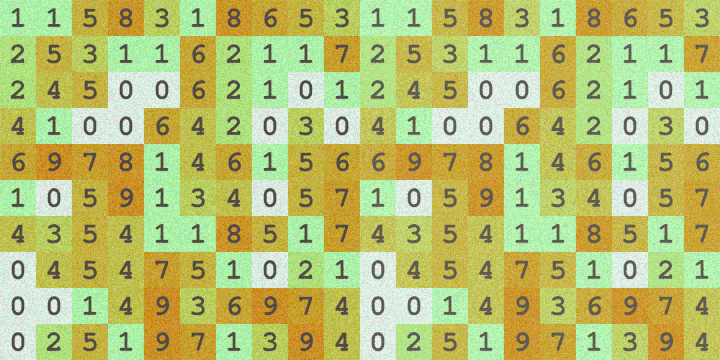
I removed the context of data that was collected in four of my published experiments, leaving only single digits. When indexed in a table, there appears to be only unrelated, random numbers. However, since the numbers come from real world data, there remains meaningful hidden structure in the grid. This reverses the process of scientific discovery and invites the viewer to participate in parsing signal from noise.
Biosignature.
Inspired by cave art handprints, I extracted my own DNA, spread the solution on a purple nitrile glove and pressed my hand in the sand. This performance reworks the concept of an artist’s identity verification (or signature) via hand biometrics to that of molecular DNA. The glove can represent modern industrial tools that separate humans from what they produce— we are both directly responsible for but one step removed from the derivations of our own biology and artistry. In contrast to the longevity of the historical cave art, the glove print is quickly washed away and the DNA metabolized by the ocean owing to the hyper contemporary nature of this biosignature. NOSTR tagstr note.

Self-portrait, Mutation.
I extracted DNA directly from my cells and determined a short genetic sequence from within them, which is visualized by the bottom trace. Each peak and color represents a unique DNA base (A, T, C or G) in part of a gene with 13 bases shown here in total. In a second sample, I mutated my DNA enzymatically, producing the top trace. This biogenerative process resulted in successfully evolving my DNA. The center base changed from T to C, resulting in a slightly different, mixed peak by comparison. To further separate this work from being purely scientific, I did not record specific details about the experimental process.

NOSTR SERIES
Plebstrs.
Plebstrs are the first profile picture (pfp) collection using a NOSTR Kind1 inscription protocol I designed with Ai. Plebstrs and other inscriptions (tagstrs) can be zapped like any other note on NOSTR. Plebstrs subvert expectations in an art market that is saturated with pfp collections– although they appear to be a tribute to NFTs like Cryptopunks or Ordinals inscriptions like Nodemonkes, they cannot technically be transacted since Kind1 notes are permanently associated with the creator’s npub signature. However, because the zap data is public, collectors can view them in an online gallery and top zappers can show them off in a trophy case– so long as they are the highest zapper. Plebstrs can never be bought but can always be zapped, an ethos that matches NOSTR culture. Collection site.

Open nsec.
A publicly shared NOSTR private key nsec1tphlh5ywkgg3nnsedn36l9gzsduk2l89kxqgkasdxm4u5qled8qq4vmz87
Anyone with this key can add or delete posts and profile information as well as log in to any NOSTR apps. While this flips the intention of the NOSTR protocol, which is designed to separate and secure private and public keys, the end result still achieves potentially uncensorable and anonymous experimentation.
PEPE SERIES
Pepedase.
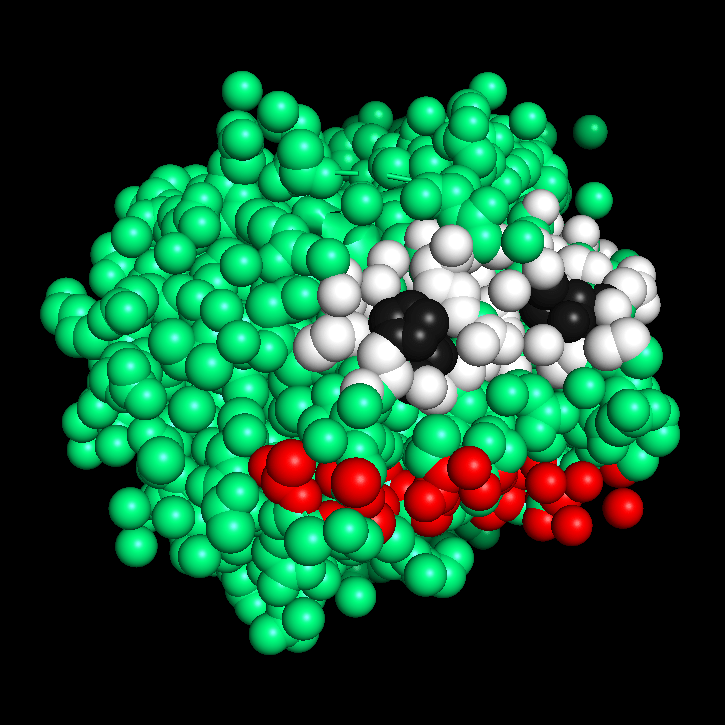
In bacteria, the enzyme Peptidase E (PepE) is encoded by the gene PEPE. Pepedase is an atomic view of the PepE enzyme’s spatial architecture based on publicly available scientific data. I visually arranged the perspective and coloring to pay homage to Pepe the Frog, a major character in early bitcoin art experimentation. The creator of Pepe, Matt Furie, launched the SavePepe movement which sought to produce positive derivative works of Pepe. While this movement had its height long before I became aware of it, I made this piece (and Pepegene, below) in the same spirit. NOSTR tagstr note.
Pepegene.
Genes in living organisms are subject to mutation across time. In contrast, information on the bitcoin ledger is immutable. By publishing the pepE DNA sequence onto NOSTR, its ability to evolve is lost. This challenges the significance of genetic information in a foreign digital context. I chose to keep the title “PEPEGENE” in upper case on the inscription as a homage to the naming convention for Counterparty assets. This additionally contrasts the notation of a digital asset identifier (PEPEGENE) against the notation of biological identifiers (a,t,c or g), which are kept in lower case. NOSTR tagstr note.
 # GRAFFITI
Monoliths.
Monoliths are a powerful symbols used throughout mathematics, religion, and science fiction. Here, I add dimensionality to censored graffiti by using simple 2D lines. This collapses the space between the original artist, the remover of the graffiti and myself in a three-step ritual that is carried out across time.

Write a comment