Nostr Community Conventions: A Layer Between NIPs and Application Design
Nostr has strong protocol primitives, but primitives alone do not guarantee interoperability.
I'm a tech enthusiast exploring the intersection of Nostr, AI, privacy, and crypto - and now vibe-coding..
Big on Linux, obsessed with open systems...
In my downtime, I’m into photography, music making, and riding motorcycles — anything that gets me thinking or moving.
Nostr has strong protocol primitives, but primitives alone do not guarantee interoperability.
The internet should be replaceable. Our applications, infrastructure and service providers can change without taking our identities and networks with them
The article explains how to use **yunohost‑mcp** to give AI agents (Claude, Codex, Gemini, etc.) a typed, permission‑scoped interface to a YunoHost server for automated package creation and deployment. After ensuring a YunoHost 12.1.17+ server, a Nostr public key, and a supported MCP client, you install the MCP server app, register your Nostr npub
Nostr identity on YunoHost started with login. It’s now growing into a way for people and AI agents to safely share a self-hosted server, with controlled permissions, owner approval and shared agent memory.
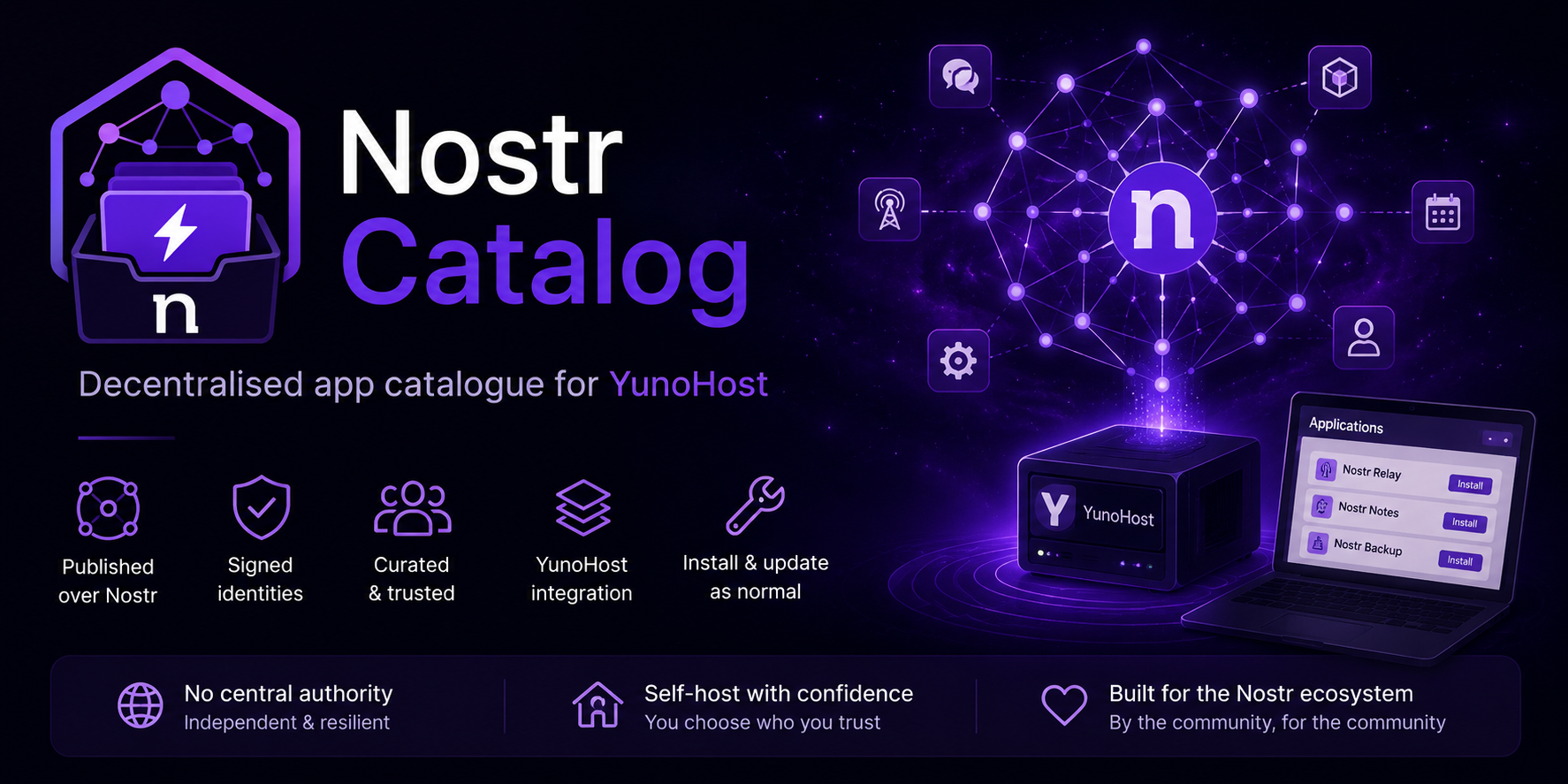
YunoHost already makes self-hosting relatively simple. Applications can be installed, upgraded and managed through a familiar catalogue and Webadmin interface. The part this project changes is not installation. It changes **discovery and publication**.
What if the blog itself were just a window into something bigger? What if you wrote your posts using any tool you liked, and your blog simply showed up, automatically, without a database or a CMS or a login screen in sight?
This essay argues that "AI can't create anything new" misses the point, because real creation happens in the loop, when a person iterates, pushes back, and refines. It takes the genuine critiques of vibe coding (security flaws, low trust in output) seriously, but shows these failures cluster where the human left the loop rather than stayed in it. It also engages the stronger philosophical version of the sceptical claim, that only conjecture and criticism grow knowledge, and argues the human supplies exactly that step. It closes by acknowledging harder open questions, around labour and eroding taste, while holding that the flat claim answers a question nobody serious is really asking.
Boosting on Nostr allows users to re-share valuable content with their followers, increasing the post's visibility and reach, and serving as a meaningful way to demonstrate support for a particular post or idea, fostering engagement and conversation, and benefiting both the original poster and the user who boosts the content.
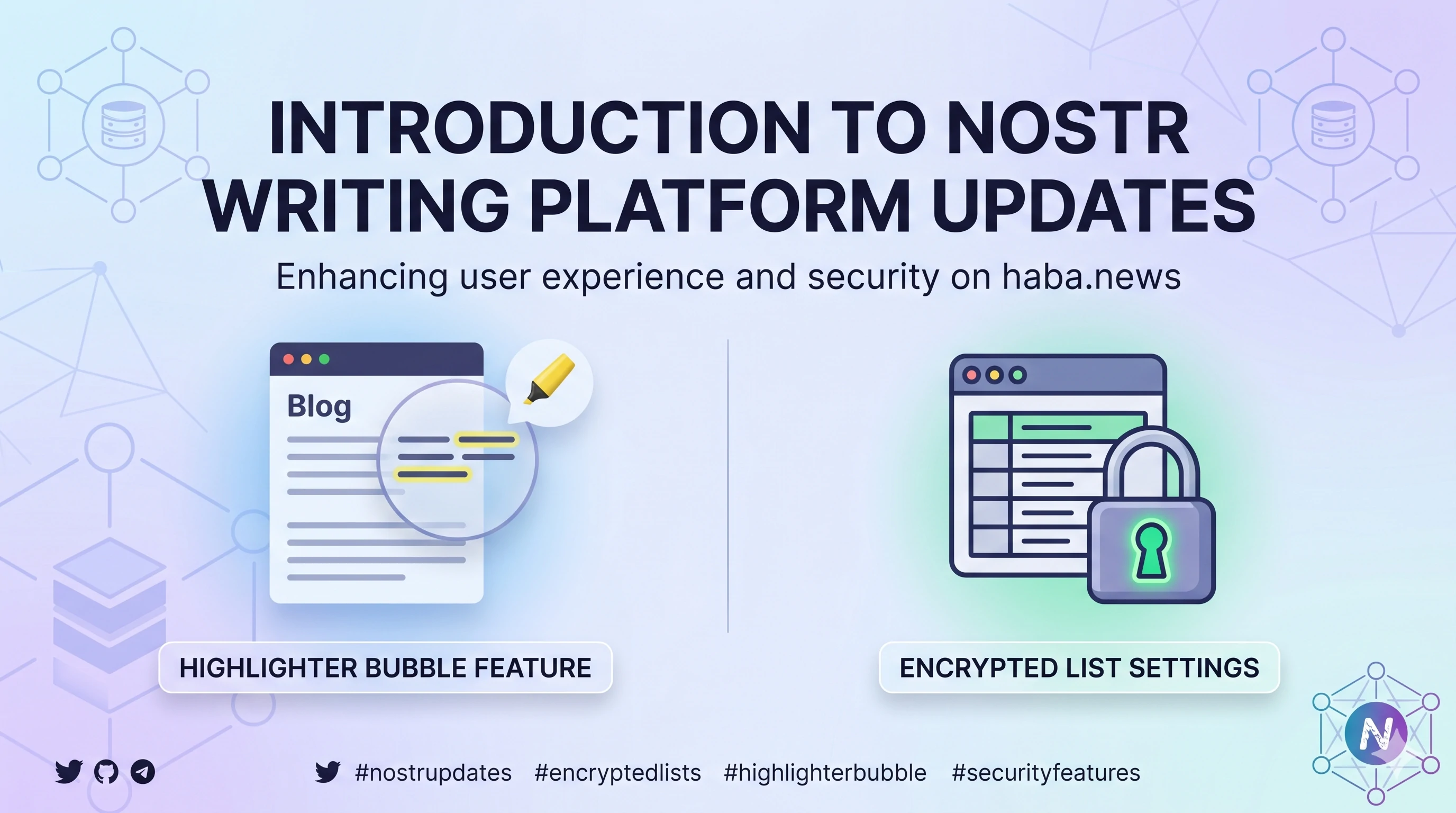
The fork of Habla has introduced several updates to enhance user experience and security, including a highlighter bubble feature to make key points more visible and encrypted list settings to secure user content, providing users with more control and increased security.
The Quantum-Inspired Nostr Relay marks a paradigm shift in distributed network design by moving away from brute-force epidemic flooding and embracing localized, wave-based propagation mechanics. By computing continuous-time quantum walks exclusively within small, operator-defined trusted neighborhoods, the network eliminates the severe computational bottlenecks typically associated with large-scale matrix operations while unlocking organic, trackerless data swarming. This framework allows data to flow adaptively based on subjective node constraints, ensures causal stability via strict logical clocks, and introduces robust, transport-layer spam defense through reputation damping. While natively built for the Nostr protocol, this model provides a highly compelling and scalable blueprint for the future design of resilient content delivery networks, edge computing swarms, and decentralized routing infrastructures at large.
An overview of an identity-first service model using NCC-02, NCC-05, and NCC-06, showing how services can be owned, discovered, and reached without relying on DNS. - Now with working PoC client...