Blaze Media

News, opinion, and entertainment for people who love the American way of life.

Florida man allegedly opens fire at woman in courthouse parking garage; couple reportedly married

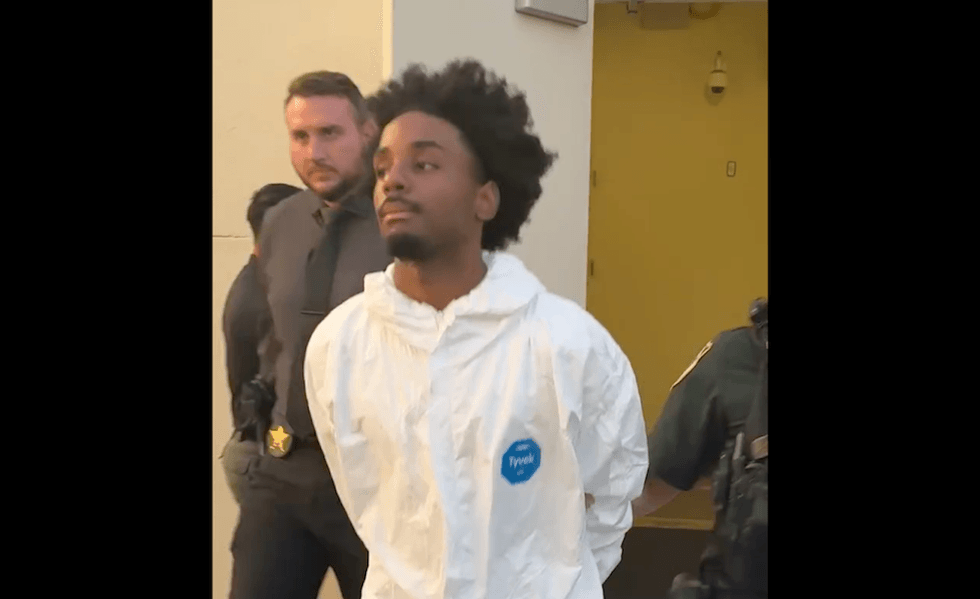
A shooting inside the parking garage at the Orange County (Florida) Courthouse on Wednesday stopped court operations for several hours while deputies investigated the attempted murder of a woman in the garage, the Orange County Sheriff's Office said. Later in the day, deputies captured the "known suspect" — 26-year-old Kenneth Jerome Logan Jr., officials said. 'Why are you doing this to me?' Logan was arrested on the following charges: Attempted first-degree murder with a firearm, Aggravated battery with firearm (two counts), Armed burglary of conveyance with firearm, Burglary of conveyance with assault/battery, Robbery with a firearm, Aggravated stalking, False imprisonment (with a weapon), Battery. Florida Today reported Friday that Logan was denied bond; he remained behind bars Monday, jail records indicated. According to the Orlando Sentinel, Logan and the victim are married. The victim told investigators she was at the downtown Orlando courthouse Wednesday to seek an injunction against Logan, the Sentinel said, citing records. No details about the injunction were available, the Sentinel added. The victim parked her car in the garage and then went to the courthouse, deputies told the Sentinel. When she returned, she entered the vehicle — and then noticed the seat had been moved and that something was in the back seat, the Sentinel said, citing Logan’s arrest affidavit. With that, she ran out and saw Logan exit the car and point a handgun at her, the paper added. He fired at her twice as she tried to run away, grabbed her dropped cell phone, caught up with her, struck her in the head with the gun, and held her as he tried to reload the weapon, the Sentinel reported. The sheriff's office said the woman wasn't injured in the shooting. But as he tried to reload, she was able to escape toward an elevator, and Logan ran off, the Sentinel reported, citing the affidavit. He also threw something inside her vehicle before running away, WOFL-TV reported. During the incident, Logan repeatedly asked the victim, “Why are you doing this to me?” the paper noted. RELATED: Male accused of shooting wife amid argument — then running ill-advised errand while taking her to hospital Deputies had responded to the courthouse garage around 11:30 a.m. after reports of shots fired at the Orange Avenue facility, the Sentinel reported, adding that the lockdown was lifted in the afternoon while deputies continued searching for Logan. Like Blaze News? Bypass the censors, sign up for our newsletters, and get stories like this direct to your inbox. Sign up here!
Cover image for Florida man allegedly opens fire at woman in courthouse parking garage; couple reportedly married

'We have compromised the FBI': Pokemon lovers boast of shocking hack on federal website

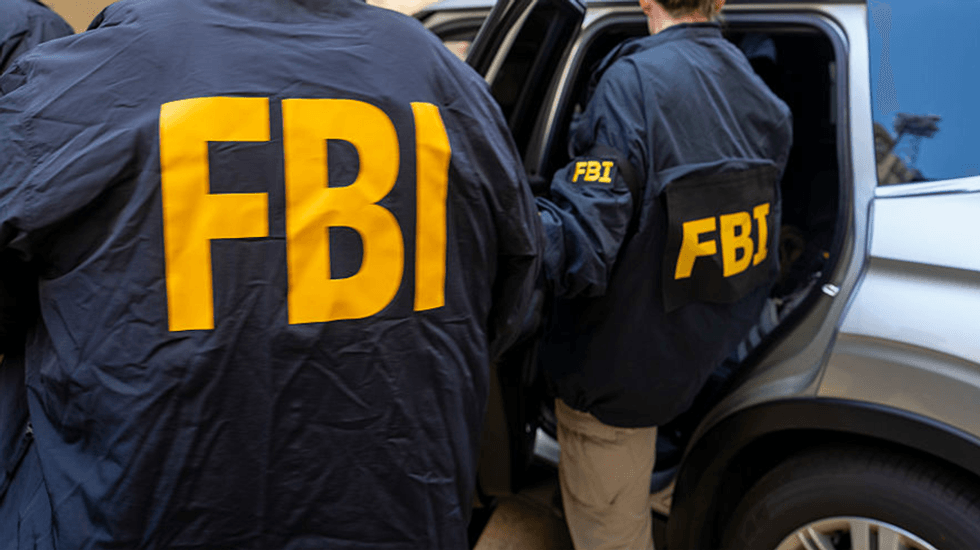
An FBI website was hacked by Pokémon enthusiasts.This is not a joke.'Thank you for your attention to this matter.'The hack that allegedly took place may have flown under the radar if not for the group leaving a public calling card to show the government agency had been compromised.At the same time, an adjoining message showed a frightening display of access.The hackers call themselves ShinyHunters, referencing the active pursuit in Pokémon games of rare Pokémon creatures. Their adopted symbol is a golden Poké Ball, used to capture such Pokémon.ShinyHunters then circulated a message online taking credit for the hack, which reportedly contained personal information on 5,000 FBI agents."We have compromised the FBI. We hold very sensitive data on almost ALL FBI Agents and individuals who filed an application with the FBI for a job," the message said, according to the Associated Press.The claims were corroborated by 404 Media, which said the hacker group contacted the company to show the obtained information.The FBI website in question was the agency's job website — apply.fbijobs.gov — which found its own information replaced with the image of a Pokémon named Umbreon; the "Shiny" portion of the hacker group's name likely refers to the rare type of Pokémon in the video game's universe."This site has been seized by ShinyHunters," the group wrote, akin to what the FBI puts on a website that has been taken down by the government.The message added, "All FBI data was compromised including [personally identifiable information and protected health information] on incumbent and former FBI employees and all applicant information. We have a lot more than we claim here.""Thank you for your attention to this matter," the message concluded.Not only did the revealing hack compromise government employee data (addresses, phone numbers, spouse name), it allegedly revealed the FBI's own hacking team too.RELATED: Terror threat strikes Missouri archdiocese ahead of pre-sainthood Mass for Fulton Sheen Matias J. Ocner/Miami Herald/Tribune News Service/Getty Images The FBI's Remote Operations Unit, which is known to be made up of the agency's own decoders, had personal addresses, phone numbers, and in some cases spouses' phone numbers exposed, 404 Media further reported. The website said it fact-checked the allegedly hacked info by cross-referencing other breached data to show, for example, one person had worked for the Secret Service."We hacked the FBI. We hold data on all FBI employees and applicants," a representative for the hackers told the outlet.On the other hand, the FBI has sent out a public statement indicating it is "aware of a cyber-criminal enterprise group claiming a compromise of the FBIJobs.gov portal."The FBI managed to pull down the targeted subdomain, marking it for "scheduled maintenance." Meanwhile, the agency said the "point of breach" was undetermined, and it was "actively and aggressively investigating this matter and working closely with those third-party providers that support FBIJobs.gov to mitigate any and all risk."RELATED: DOJ claims ICE agent made up wild 'broom' attack story after shooting — but lawyer says he's being used as a 'political pawn' Mark Boster/Los Angeles Times/Getty Images 404 Media asked ShinyHunters if it planned on extorting the FBI, to which it said, "What we plan to do is not something I'd call extortion, maybe coercion."The group then claimed its efforts are "not finically motivated" and that the FBI has made "false allegations" against it by claiming the group exaggerates what it has gained access to.The group wants those allegations taken down.404 Media said the initial hacked data was verified by cross-referencing it with open source intelligence records and also by contrasting it with other previously compromised data.Like Blaze News? Bypass the censors, sign up for our newsletters, and get stories like this direct to your inbox. Sign up here!
Cover image for 'We have compromised the FBI': Pokemon lovers boast of shocking hack on federal website

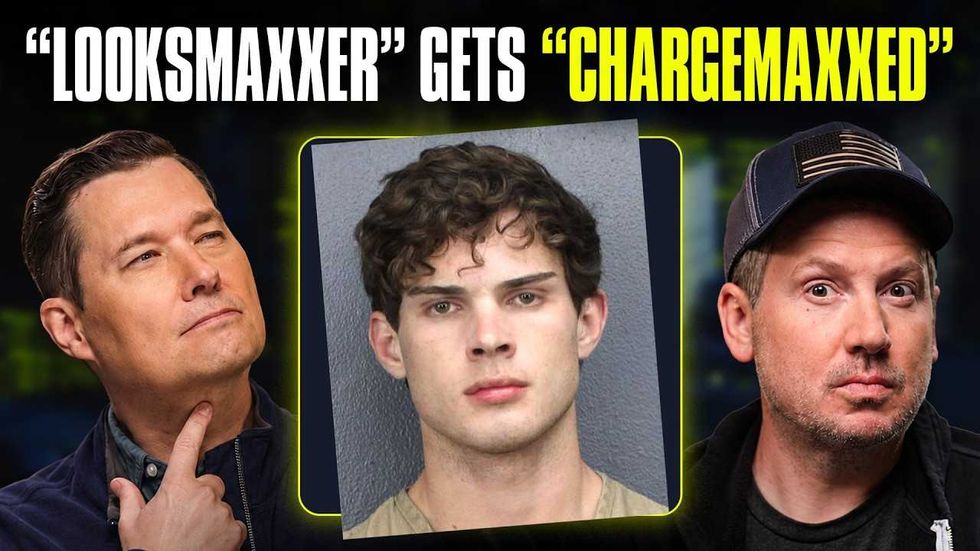
‘Looksmaxxing’ king Clavicular built a brand on breaking bones. Now he’s charged with breaking a lot more.

Millions know him as Clavicular, the controversial influencer who helped popularize "looksmaxxing" — an online subculture obsessed with maximizing physical attractiveness by any means necessary.But as BlazeTV hosts Stu Burguiere and Dave Landau explain, the story surrounding the internet celebrity has become far more disturbing than viral videos about jawlines and self-improvement.“We’re in this weird society where people can be massively famous, and you’ve never heard of them,” Stu says. “That’s kind of where I am with Clavicular until I did some deep research today preparing for this show.”“He is a ‘looksmaxxing’ influencer,” he adds.“This is a man who chiseled his face with a hammer,” Dave comments, explaining that it’s called “bone smashing.”“The point of this is basically hitting yourself literally in the face with a hammer. Breaking the bones slightly, causing fractures, and then the bone was supposed to grow back to make you look more handsome,” Stu says.“By the way, you should know this, this does not at all seem to be accurate about how the human body works,” he adds.“It’s causing a lot of issues for a lot of people,” Dave agrees.Clavicular has also been charged with allegedly raping a teenage girl, who claims that he lured her to his family’s $3 million Cape Cod mansion before exploiting her months later.“He films everything that he does,” Dave comments. “Did he happen to turn off his backpack camera when this happened?”“Well, apparently not,” Stu says, “when he was giving an underage girl alcohol and apparently injecting her face with some sort of serum.”But those aren’t the only legal troubles Clavicular has faced. In February 2026, he was reportedly booted from a “fashion bash” and “attacked on a night out in New York,” before being arrested in March 2026 on a battery warrant.The influencer was also charged with a misdemeanor after a viral video revealed an alligator being shot “repeatedly.”“I know PETA won’t agree with me,” Dave says, “but they’re nasty lizard creatures, and I think they’re what’s remaining of the dinosaurs, and we don’t need them.”Want more from Stu and Dave?To enjoy more of Stu and Dave's lethal blend of wit, humor, and insightful commentary subscribe to BlazeTV — the largest multi-platform network of voices who love America, defend the Constitution, and live the American dream.

Cover image for ‘Looksmaxxing’ king Clavicular built a brand on breaking bones. Now he’s charged with breaking a lot more.

ESPN's Pat McAfee gets death threats over Trump comments. There's just one problem — he didn't say them.

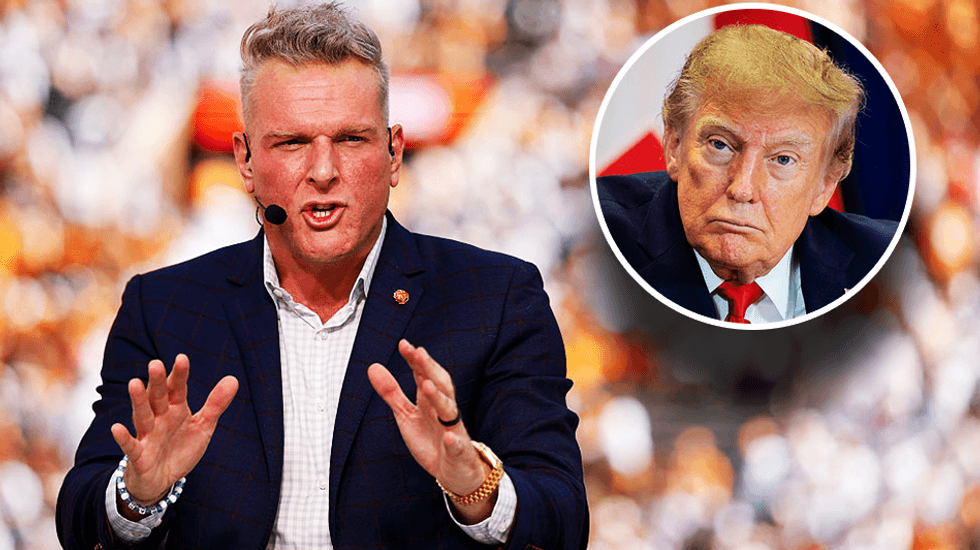
Over the weekend, ESPN's Pat McAfee received death threats and intense backlash after a fabricated post on X claimed he predicted President Trump would win a college football game. The post, originating from a satire account, was widely shared and believed by many, leading to harsh comments and even threats of violence against McAfee. McAfee revealed the situation on X, questioning how X's community notes system works and whether it effectively reaches those who believed the false information. He also called out the user who posted the fake quote and a writer from OutKick for an article that he claims misrepresented his comments about the military, potentially contributing to the backlash. The OutKick writer later apologized for misinterpreting McAfee's remarks. McAfee, despite the disturbing threats, attempted to brush off the incident with humor.

Cover image for ESPN's Pat McAfee gets death threats over Trump comments. There's just one problem — he didn't say them.

The last ethnic Halloween costume nobody apologizes for

Even in these days of hotter summers and disappearing traditions, a few fall rituals remain reassuringly predictable: back-to-school sales, postseason baseball, and the annual uproar over an offensive Halloween costume.This year, it was Target's turn.For generations, poverty among rural Southern whites had been treated not simply as an economic condition but as evidence of something wrong with the people themselves.A screenshot circulating on social media showed a child model wearing a “circus clown” getup from the retailer's Hyde and EEK house brand. Critics said the face mask, miniature top hat, and gloves — not to mention the child's pose — evoked blackface and 19th-century minstrelsy. Target quickly pulled it.The Rev. Jamal Bryant, the Georgia pastor who spent the previous year leading a boycott of Target over its retreat from DEI initiatives, called it “a profoundly harmful symbol of racism.” Target followed with a corporate apology: “As a company, we know we got this wrong, and we are deeply sorry. The costume is offensive and should never have been part of our assortment.”The resemblance to Jim Crow-era imagery was vague enough to give Target the benefit of the doubt. The individual elements of the costume have lost enough of their original meaning that a designer could plausibly assemble them without recognizing that they once belonged to a caricature of a particular people.But the cultural memory of minstrelsy remains strong enough that once the connection was pointed out, the resemblance was clear enough to make pulling it the right call.We retain a similar sensitivity to the old caricatures of most ethnic groups, even when the stereotypes themselves have receded from everyday life. But there is one old American caricature that has become so detached from the people it once mocked that most of us no longer recognize it as an ethnic caricature at all.Hillbilly HighwayWalk into almost any big-box store or scroll online retailers this month, and you will find it: the frayed overalls, the missing front tooth, the corncob pipe, and a jug of moonshine. A quick Google search shows that “trailer park,” “redneck,” and “hillbilly” costumes abound. You can even dress as Joe Dirt, Ricky from "Trailer Park Boys," or Joe Exotic from "Tiger King."No corporate statement has ever called such costumes “especially hurtful.” No brand has ever pulled any one of them and promised to look closely at how it happened. It's simply a costume built on the presumed backwardness, dirtiness, and moral degeneracy of the people once called “hillbillies,” sold with little awareness of the history behind the stereotype.That history includes a largely forgotten mass migration — and the prejudice and discrimination that followed it. At roughly the same time that millions of black Southerners were heading north and west in the Great Migration, another vast movement was under way. Historian Max Fraser estimates that as many as 8 million whites left the Southern countryside for the factory towns and cities of the industrial Midwest, along what became known as the “Hillbilly Highway.”And that was only part of a much larger exodus. Historian James Gregory estimates that nearly 20 million white Southerners left the South over the course of the 20th century, compared with close to 8 million black Southerners. Yet while the Great Migration became a familiar part of the American historical narrative, the parallel movement of white Southerners largely faded from national memory.Southern manMy own family were part of that migration, moving from Western Kentucky to Gary, Indiana, in the 1950s. They weren’t hillbillies, technically — Western Kentucky sits roughly 300 miles from Appalachia — but that distinction meant little once they got north. To the people already there, a Southern accent did all the sorting a map wouldn’t.That the migration was remarkably successful seems hardly to have mattered. Chad Berry’s oral histories of the Southern whites who migrated to Midwestern mill and factory towns found that most achieved the economic stability they had sought, even as their new neighbors continued to stereotype them as violent, drunken, lazy, unclean, and sexually dissolute.Richard Dorson captured the prejudice in "Land of the Millrats," his study of the industrial communities around Gary. Driving through nearby Whiting with a local man named Ed, Dorson was told why trailers carried a particular stigma: “This is a Southern white area. Hillbillies live in the trailers. So there's prejudice attached to trailers, 'cause that was the first housing available to Southern whites in the community. So trailer equals hillbilly.”The prejudice could have more tangible consequences. Historian Anthony Harkins found that job listings announcing “No Southerners need apply” and restaurants refusing to serve “hillbillies” were not uncommon in Northern cities receiving Appalachian migrants.RELATED: How My Hometown Got Eugenicized Gabriel GigliottiWhite trashBut the contempt those migrants encountered in the North had much older roots. For generations, poverty among rural Southern whites had been treated not simply as an economic condition but as evidence of something wrong with the people themselves. In her book "White Trash," historian Nancy Isenberg traces that tradition from colonial descriptions of the poor as “waste people” through the antebellum contempt for the supposed moral failings of “poor white trash” and into eugenic theories that treated poverty and “feeble-mindedness” as hereditary defects.Appalachian journalist James Branscome made this case explicitly more than 50 years ago, in a 1971 manifesto called "Annihilating the Hillbillly." By portraying Appalachians as backward, ignorant, and responsible for their own poverty, he argued, coal operators, government agencies, and the national media diverted attention from the economic arrangements that had enriched outsiders while leaving much of the region poor.The hillbilly, in other words, provided a convenient explanation for poverty: The problem was the people. And when millions of those people left the rural South, found industrial work, and built more prosperous lives elsewhere, the stereotype followed them anyway.Yokels onlyToday the hillbilly survives mostly as a seemingly harmless comic trope. The caricature migrated from comic strips like "Snuffy Smith" and "Li'l Abner" to television's "Hee Haw" and "The Beverly Hillbillies." More recently it was "Here Comes Honey Boo Boo" and "Duck Dynasty." Cletus and Brandine Spuckler are still turning up on new episodes of "The Simpsons," more than 30 years after Springfield introduced its "slack-jawed yokel."It might be harder to laugh if we still connected those characters to the people the caricature once described.The history isn't particularly ancient. In 1958, Time quoted sociologists describing poor Southern whites as “vicious” and more difficult to assimilate than other minority groups. A Wayne University survey of Detroit residents published in 1952 found “poor Southern whites; hill-billies” the second-most frequently named group when residents were asked which people were “not good to have in the city.” Twenty-one percent named them, compared with 13% who named black residents; only “criminals and gangsters,” at 26%, ranked higher.These were the people who left Eastern Kentucky and West Virginia for the mills of Gary and East Chicago and the auto plants of Detroit. They didn't bring backwardness north with them. They brought labor. Many found the economic security they had gone looking for and became part of the working class that built the industrial Midwest.Eventually, they also became less visible. Their children and grandchildren lost the accents, left the trailer parks, moved into the middle class, and blended into the rest of America. The people disappeared into the country while the character remained behind.That is the history the Halloween costume no longer evokes.None of this requires another corporate apology. But corporate sensitivity reveals something in what it notices — and what it doesn't. Some old caricatures still carry a social cost. Others remain fair game.I don't know what my own family heard when they migrated more than 300 miles north to Gary. They're gone now, and they didn't leave that part written down. That's part of the point. The costume survived. Their story didn't.

Cover image for The last ethnic Halloween costume nobody apologizes for

NY Giants quarterback labeled 'insane' over pregame comments — almost no one knew he was quoting the Bible

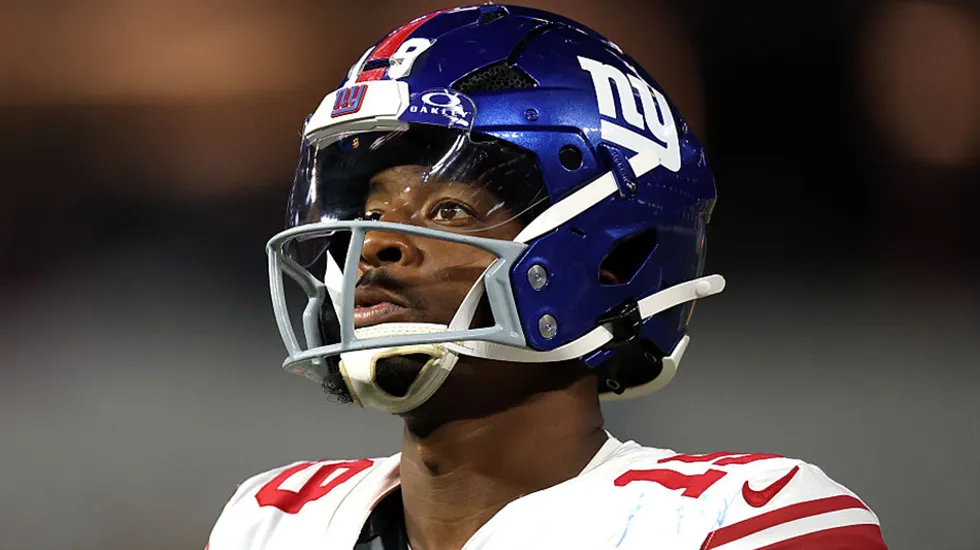
Fans called New York Giants quarterback Jameis Winston everything from crazy to a troll on Sunday, and they really couldn't figure out what he was trying to say. Winston is known for being incredibly eloquent with his thoughts, but this time, he wasn't sharing his own words, and his comments seemingly went right over everyone's head. 'It's us doing, being doers, not speakers.' Before the Week 3 game against the Tennessee Titans, droves of fans were already reacting to yet another head-scratching interview from the Giants' new starting quarterback, something they've already become accustomed to. CBS reporter AJ Ross was the one tasked with asking Winston about his game prep and his ability to carry the team as he stepped in for injured QB Jaxson Dart; but there is no way she expected the answer Winston gave. "One thing that I do is forgetting those that is behind and reaching forward to what's ahead," Winston replied. Fans were confused. The video was seen over 5 million times, but almost no one understood what the QB was trying to say. One post called Winston's words "utter incoherence," while another said he was saying "insane things." No, Winston wasn't trying and failing to sound "eloquent," as another fan put it. He was actually quoting Scripture. Winston was relaying the message of Philippians 3:13, about Paul the apostle admitting he has not yet achieved perfection. RELATED: NFL fines player for 'beer' chug celebration — but what happened right after proves the league's hypocrisy Not everyone was pessimistic about Winston's pregame words though. Popular podcast "Bussin' with the Boys" labeled the Alabama native a "poet," while sports website OutKick called him a "national treasure." Keith Malinak, producer of Blaze Media's "Pat Gray Unleashed," was one of the few who understood the message, relaying the passage to more readers. Winston's unrelenting positivity has a way of resulting in some of the most entertaining — as well as some of the most confusing — interview segments, and he can often catch reporters off guard. For example, when a CBS reporter asked him about how the weather might affect the game, Winston didn't give the most clear response. "The circumstances, conditions, and facts, they don't matter," the 32-year-old replied. "It's us doing, being doers, not speakers." With answers like that, it's not hard to see why fans have a difficult time determining when Winston is delivering biblical quotes or his own personal wisdom. RELATED: 'You're like the most genuine dude': Comic Bert Kreischer gives hilarious, loving speech to Jameis Winston during Super Bowl Elsa/Getty Images Following the 12-7 win over the Titans, Winston began his postgame interview by telling reporters he was "elated" to see his team close out the game. "Praise God," Winston added. Consistent questions followed about whether he feels replaceable, but Winston continuously made it clear to reporters how grateful he is to be in his position. The truth is, most analysts are not confident in Winston's capabilities as a starting quarterback. With no touchdowns and just 229 passing yards in his first two games, criticisms have come quickly and in abundance. As ESPN's Stephen A. Smith stated, there is a certain expectation of an eventual big mistake when Winston is in the game. "Jameis Winston is more entertaining and more interesting in the pregame chatter about football than he is once he's behind center. That's the reality of the situation," he said. The Giants play the Arizona Cardinals in Week 4 in what should be another winnable game. The Giants have many such games before the end of the calendar year. Editor's note: This article has been edited after publication to specify that Keith Malinak is the producer of "Pat Gray Unleashed." Like Blaze News? Bypass the censors, sign up for our newsletters, and get stories like this direct to your inbox. Sign up here!
Cover image for NY Giants quarterback labeled 'insane' over pregame comments — almost no one knew he was quoting the Bible

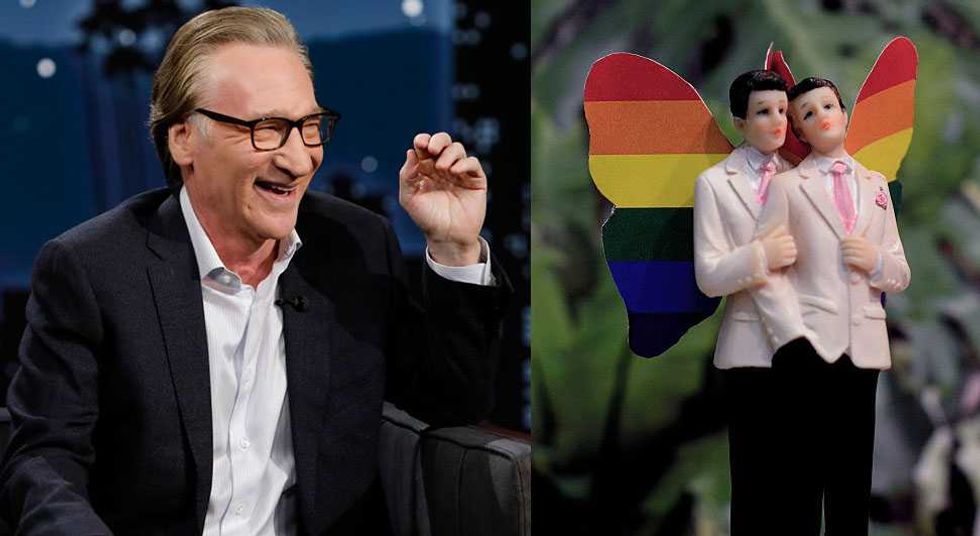
Gay Atlantic Writer Whines to Bill Maher That LGBT Extremism Is Blowing Up Support for Homosexual 'Marriage'

Popular support for homosexual "marriage" is plummeting — and liberals are beginning to panic.James Kirchick, a gay liberal contributor to the Atlantic, suggested on Friday's episode of "Real Time with Bill Maher" that this waning popularity is in response to years of LGBT extremism.'Gay men purchasing babies didn't help.'A lesbian bar in Massachusetts recently made headlines after it became a target of local LGBT leftist hatred after operators announced on Aug. 31 that they were waiving the establishment's mask requirement just one night a week.Maher highlighted the LGBT attacks on Greenfield's Last Ditch lesbian bar as yet another example of leftist intolerance. Kirchick said the story also illustrated the "growing divide between gay and lesbian people, and queer people.""To be gay or lesbian is a sexual orientation. That's it," continued Kirchick. "To be 'queer' is to embrace a whole political orientation. There are straight people who identify as queer. It's about deconstructing gender, which is how you get in that [bar] story a lesbian who uses 'he/him' pronouns."The Atlantic writer provided an example of the political and conformist nature of those in the "queer" camp, referencing California Democratic state Sen. Scott Wiener's apparent excommunication over his lukewarm support for Israel.When he tried to join the Trans March in June, Wiener — a radical homosexual activist who previously claimed that "the word groomer is categorically an anti-LGBTQ hate word," advanced a law that made California a sanctuary state for child sex-change mutilations, and advocated for exempting some adults who had sex with minors from automatically registering as sex offenders — was told, "You stopped being queer the moment you started supporting Israel," reported the San Francisco Chronicle.RELATED: 'There is no mama': How a viral video accidentally exposed the true cost of gay adoption PATRICK T. FALLON/AFP/Getty Images"There was a poll done two years ago, and it was a poll of the LGBT community — who identifies as what within the LGBT community," Kirchick told Maher. "About 15% identify as lesbians. About 21% identify as gay. Fifty-six percent identify as bisexual. ... 0.5% of LGBT people identify as queer."Kirchick unironically asked, "Why are we allowing this 0.5% of the community to speak for all of us?""All this queer, trans extremism is having a real impact," he continued. "I mean, support for gay marriage has started going down."According to a Gallup poll conducted in May, support for homosexual "marriage" is down six percentage points from the peak in 2022 and 2023.The percentage of U.S. adults who said that same-sex "marriages" should be valid rose from 27% in 1996 to 71% in 2022, where it remained for another year. In 2024, however, the percentage dropped to 69%, and it has been declining in the years since.The percentage of U.S. adults who say that gay or lesbian relations are morally acceptable has similarly begun to decline, dropping from 71% in 2022 to 62% this year.The decline has largely been driven by changing attitudes among Republicans. Whereas 55% of Republicans said that they favored homosexual "marriage" in 2021 and 2022, the number is now 37%.The liberal writer speculated that this decline in support is a "backlash to this queer extremism. And as a gay man, it's something I really worry about, frankly."Katy Faust, founder and president of children's advocacy group Them Before Us, said in response to Kirchick's observation, "Queer definitely poisoned the well. But gay men purchasing babies didn't help."Kirchick is hardly the only liberal concerned about declining support for homosexual "marriage."Andrew Sullivan, an LGBT activist who has written for the New York Times, wrote in a July blog post, "On all questions gay and trans, the Dems are now entirely controlled by trans and 'queer' extremists."Referencing the recent Gallup data, Sullivan added, "As someone who played a part in bringing those Republicans and moderates around to gay marriage, it’s distressing to see what the queer overreach has done — especially in red states."Last month, Log Cabin Republicans dropped the "T" from its LGBT advocacy, recognizing the reputational damage that trans-radicals have done to the cause of their fellow non-straight activists.Ross Hemminger, the president of the Log Cabin Republicans, argued that support for homosexual "marriage" is waning because many voters' "view of the gay community is based on today’s radical transgender activists with their unnecessary and discomfiting focus on America’s youth."Like Blaze News? Bypass the censors, sign up for our newsletters, and get stories like this direct to your inbox. Sign up here!
Cover image for Gay Atlantic Writer Whines to Bill Maher That LGBT Extremism Is Blowing Up Support for Homosexual 'Marriage'

They met top tech experts behind closed doors. Now these religious leaders are urging Congress to act.

The U.S. Catholic bishops have formed a task force on artificial intelligence, with Bishop Oscar Cantú of San Jose as its chairman. The September 16 announcement followed a meeting between the bishops' Administrative Committee and representatives of technology companies.Cantú told Religion News Service that about seven technology experts from four companies spoke with roughly 30 bishops for two and a half hours. He said the discussion took place under Chatham House rules, which allowed the participants to speak candidly but limits what he can disclose about who said what.John Paul II described technology as an ally of work that can become an enemy.Afterward, more than a dozen bishops went to Capitol Hill and met with members of Congress. The bishops' conference says they urged lawmakers to adopt AI safeguards and legislation to protect children online.Cantú described the task force's work to RNS: continue talking with AI developers, advocate for legislation, teach bishops and dioceses how the technology works, and report to the Vatican's AI commission. He gave no timetable for that work.What the bishops have already asked forPope Leo XIV's May encyclical, "Magnifica humanitas," prompted the bishops' response. Blaze's Joseph MacKinnon covered its warnings, including the pope's concerns about automated killings and the extraction of personal data. The new story is what U.S. bishops will do with those principles.They aren't starting from zero. In a 2025 letter to congressional leaders, the bishops asked for human oversight of employment decisions and weapons systems, protections for children online, and public accountability for government AI use. They also warned about the water and power demands of data centers. The task force can press those positions with lawmakers while examining how the Church uses AI in its own institutions.RELATED: DEI is trying to take over AI. These universities are leading the charge. Alexey Yaremenko/Getty Images The letter gives the task force something to measure itself against. It says AI should supplement human work and judgment. In education, health care and public services, the bishops warn that automated decisions can carry biases into consequential choices. What human oversight means in each setting still needs spelling out.Is it appropriate for the job?Economist E.F. Schumacher helped popularize the idea of appropriate technology in his 1973 book "Small Is Beautiful." A later U.S. Office of Technology Assessment report described it as fitting the scale and complexity of a tool to the job, while considering the needs and resources of the people who will use it.The bishops have not used that label for their AI work, but it gives their call for human oversight a practical edge. Take hiring, which their 2025 letter specifically addresses. An AI system might help sort applications. If a manager cannot explain why it rejected a qualified applicant, however, putting that manager's name on the decision does not make the process accountable. The task force could spell out what a human reviewer must be able to see, correct, and explain.Catholic teaching has its own language for this concern. In his 1981 encyclical "Laborem exercens," John Paul II described technology as an ally of work that can become an enemy when it strips workers of responsibility or replaces them.That is now the question that the Catholic Church and all humanity are wrestling with. AI is here and unlikely to go away. How do we direct it into being a pro-human technology and not one that is ultimately destructive?

Cover image for They met top tech experts behind closed doors. Now these religious leaders are urging Congress to act.

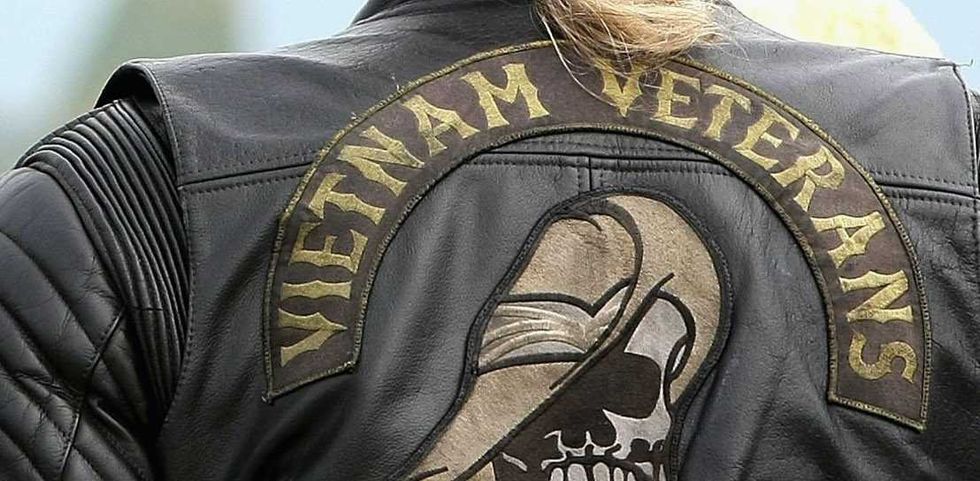
Alleged home intruder attacks Vietnam veteran — and ends up getting shot in his buttocks

A Vietnam veteran said he's grateful but shaken up after an altercation he had with an alleged home intruder at his San Francisco residence over the weekend.The man spoke to KPIX-TV about the incident the following day but asked to remain anonymous. He said he was jolted awake by noises below his third floor bedroom at about 5 a.m. Saturday.'I shot him because physically I felt really threatened. He had already made a deep intrusion into my home.'He said he grabbed his handgun and went downstairs to investigate. That's when he found himself face to face with an intruder wearing all black with a face mask — and a dog was with him as well."He had a large dog, maybe a 60-pound husky, with him. And I encountered [the burglar] face to face. He kind of grabbed me, and I fell to my hands and knees," he said.When the man attacked him, he said he fired his gun once at the alleged intruder."I shot him because physically I felt really threatened. He had already made a deep intrusion into my home," the homeowner added.The victim said he suffered minor scrapes to his hands and knees from the altercation."I believe I hit him somewhere here, somewhere in the buttocks," he added.The suspect ran off toward Golden Gate Park and left blood-stained shoe prints as he fled the scene.Soon after, police said they detained a man suffering from non-life-threatening injuries three miles away near Geary Boulevard and 47th Avenue.Paramedics rushed the man to San Francisco General Hospital, and police told the station if they confirm he's the suspect who attacked the 73-year-old military veteran, they will take him into custody.RELATED: Veteran journalist hammered for denying Biden's decline despite damning new reports A neighbor who knows the veteran well said it's completely within his character to defend himself."Our neighbor is really something special. I'm glad that he was able to do this. But it doesn't surprise me," the neighbor told the station. "He's definitely got a heroic side to him. He's a real, true vet."Like Blaze News? Bypass the censors, sign up for our newsletters, and get stories like this direct to your inbox. Sign up here!
Cover image for Alleged home intruder attacks Vietnam veteran — and ends up getting shot in his buttocks

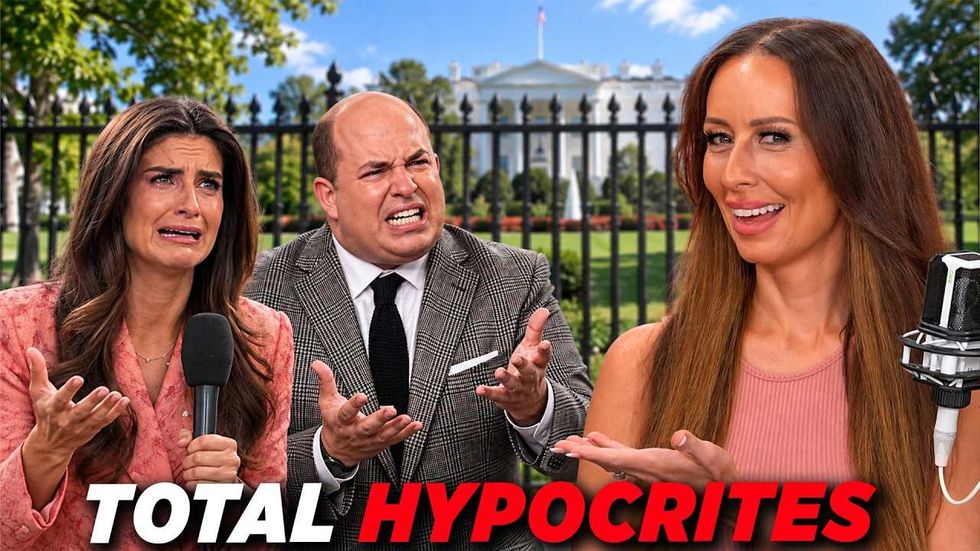
Sara Gonzales mocks media outrage over White House ban: 'You are literally covering him right now'

The mainstream media outlets are in shambles after President Trump banned CNN, MS NOW, and Politico from White House access, with some claiming the move goes against their constitutional right to cover him.But BlazeTV host Sara Gonzales explains they're framing it all wrong.“I regret to inform you that the fake news media has a new thing that they are clutching their pearls about. You know, they just love to be the victims. They actually really enjoy any time that they can paint themselves as some little precious little victims,” Gonzales says.“For years, they have been allowed to just run rampant and say whatever the hell they want about President Trump and defame him. And you know what? He’s finally said, ‘You know, I’ve just kind of had enough with this,’” she continues.However, she points out, they’re still allowed to cover Trump — just from a distance.“We have a First Amendment right, freedom of the press. You are allowed to criticize the president whenever you want. It can be factual. It can be not factual unless it rises to the level of defamatory. But you are allowed to talk about the president all day long if you want,” Gonzales explains.“You just don’t get the special privilege of being allowed in the White House,” she adds, before playing a clip of CNN’s Kaitlan Collins complaining about the president’s ban.In a video posted to social media, Collins said, “One of the biggest questions that we’ve gotten asked and that we’ve asked our sources ever since the president announced that he was banning CNN, MS Now, and Politico from covering his administration on Friday was ‘Why now?’”“The president has complained about negative coverage for decades, long before he was in political office. So why is he taking this step to block outlets whose coverage he doesn’t like from covering him?” she added.“You are literally covering him right now in this moment that you speak into a microphone about President Trump’s decision. No one is blocking you from covering him. You are not allowed in the White House. That’s it,” Gonzales responds.“Nowhere in the First Amendment does it say that it is your constitutional right to have unlimited access … to the presidential residence, to the White House, to any of the White House grounds,” she continues.“It doesn’t say any of that. They just can’t prevent you from criticizing them,” she adds.Want more from Sara Gonzales?To enjoy more of Sara's no-holds-barred takes on news and culture, subscribe to BlazeTV — the largest multi-platform network of voices who love America, defend the Constitution, and live the American dream.

Cover image for Sara Gonzales mocks media outrage over White House ban: 'You are literally covering him right now'

'Fantastic': Trump celebrates thwarting of possible terror attack against American forces in UK

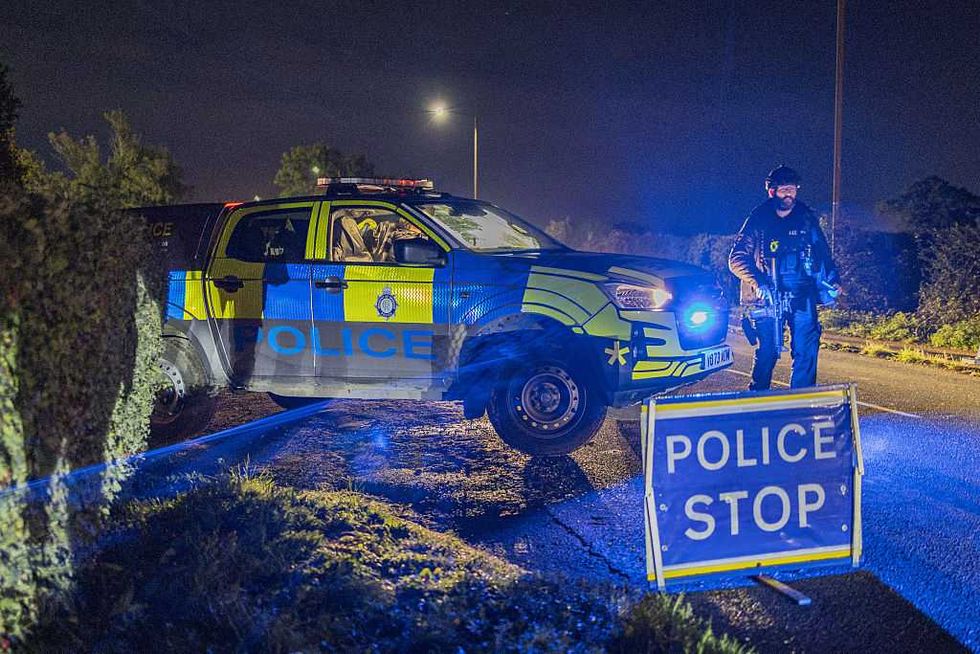
An English farmer may have foiled an anti-American terror plot over the weekend, and according to President Donald Trump, the suspects involved have been on the United States' radar for some time.Early Sunday morning, a farmer reported spotting three abandoned white vans blocking a country road nearby Royal Air Force Fairford — a U.S. Air Force-operated military installation in Gloucestershire, England, that is home to the 501st Combat Support Wing and 420th Air Base Squadron.'Thank God we spotted them.'The farmer told the Telegraph that she circled back for another look, then "saw a group of Middle Eastern-looking young guys running off through the trees. Some of them had masks or balaclavas on, and they all scattered ahead of us as we drove back past."Just minutes after the farmer called police, armed officers swooped in and captured five alleged would-be bombers, arresting them on suspicion of committing offenses under the U.K.'s Explosives Act and of preparation of a terrorist act.Britain's Counter Terrorism Policing confirmed that it is investigating the incident and that the "three suspicious vehicles" appeared to have been traveling toward the military base."A 400m cordon has been put in place around the vehicles while the Army’s Explosive Ordinance Disposal unit conduct examinations," Vicki Evans, the deputy assistant commissioner of CTP, said in a statement. "As a precaution, around 85 households have been evacuated whilst these examinations take place."RELATED: Diversity is our strength? Britain has to remind migrants: Don't rape kids Leon Neal/Getty ImagesThe Gloucestershire Constabulary noted that the suspects remain in custody.U.S. European Command said in a statement obtained by the New York Times that it "remains vigilant and will take appropriate actions to ensure the safety and security of our U.S. service members, civilians, contractors, and their families across the European theater."Following the arrests, the U.S. Embassy in London issued an alert encouraging American citizens to "exercise caution and be mindful of personal security," adding that "U.K. authorities rate the threat of terrorism in the U.K. as severe.""We got them," President Donald Trump told reporters on Sunday, adding that the suspects had long been "under view.""The arrest in the U.K. was fantastic," said Trump. "Working with Britain, it was an amazing job. We had them under investigation. They were looking to do big damage to our fort."British government sources told the Telegraph that the arrests were not the result of a pre-planned operation or intelligence.Blaze News has reached out to the White House for comment.British Prime Minister Andy Burnham tweeted, "I know today's incident near RAF Fairford will be deeply concerning for local residents and for many people following developments across the country."After thanking police, Burnham urged the public to avoid speculating about the incident.RAF Fairford is a key forward operating location for U.S. Air Strike Global Command and one of only a few bases in and around Europe capable of operating the American heavy bombers that have been hammering Iranian military sites in recent months.Critics of the U.S.-Iran conflict and American forces' presence at RAF Fairford — including climate alarmists — rallied outside the base last month, calling on Burnham to "end the use of British bases in illegal war on Iran."The farmer who alerted authorities about the possible terror plot said, "Thinking about it now, and what could have happened if they had tried to stop me from driving away, I am quite lucky.""It is pretty incredible, realizing you had a brush with potential terrorists face to face and may have foiled a terrorist plot," she continued. "It was clear they had just got there. Thank God we spotted them."According to the Telegraph, one of the vans apparently had a fake company name — "Fuel 2You" — and incomplete phone number emblazoned on its side.The company Fuel2U said in a statement on its website, "Fuel2U is aware of reports and images circulating in connection with today’s serious incident near RAF Fairford, in which a vehicle appears to display Fuel2U.""We want to make it absolutely clear that neither the vehicle nor any of the individuals involved has any connection whatsoever with Fuel2U, its directors, employees, or current business operations," continued the company. "We are extremely concerned that our company’s name have [sic] been used without our knowledge or permission. We are cooperating fully with the relevant authorities and will assist them with any enquiries."Like Blaze News? Bypass the censors, sign up for our newsletters, and get stories like this direct to your inbox. Sign up here!
Cover image for 'Fantastic': Trump celebrates thwarting of possible terror attack against American forces in UK

After a decade-long wait, Apple Watch just got the one feature it always needed most

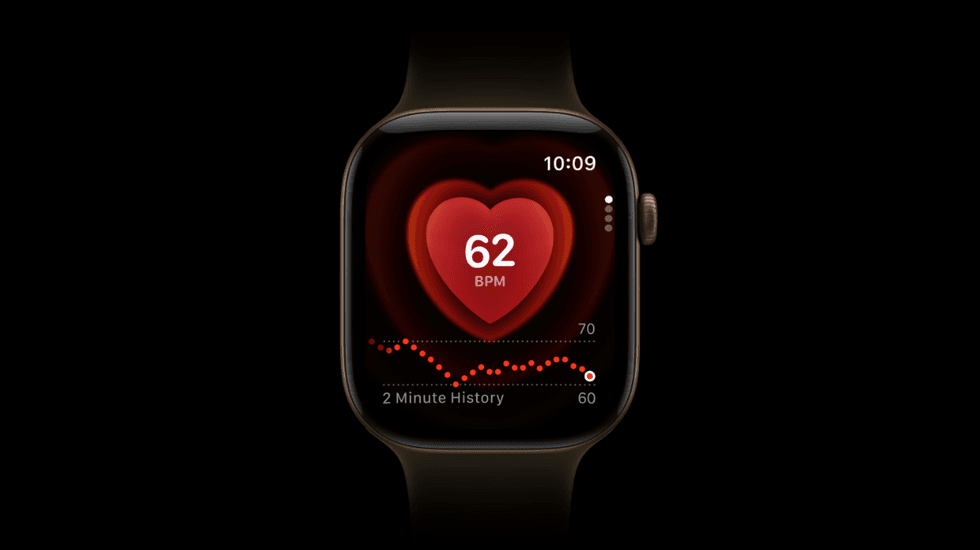
In 11 years, Apple Watch evolved from a fancy timepiece to a robust health-tracking platform that also fields notifications, takes calls, and handles menial tasks on your wrist. This year, Apple aimed to revamp the Watch’s health capabilities and transform it into an AI-powered hub for the new Siri. Did it succeed? Let’s find out.At first glance, the brand-new Apple Watch Series 12 looks a lot like the models before it. It maintains the same square design that has become a familiar staple of the brand, and it keeps the larger displays first adopted in the Series 10. In fact, if anything, the appearance of Series 12 actually reverted a bit, as the physical case (body of the watch) and bezels (black border around the display) are now slightly bigger than recent models, but most folks won’t notice that from day to day.Series 12 is the first exciting Apple Watch in years.The new larger case is said to account for a completely redesigned health-tracking system embedded within the watch. The existing sensor array to monitor heart rate, steps, oxygen saturation, and other vital metrics has been reworked and improved. Now dubbed the Health Sensing System, it provides continuous heart rate tracking with samples collected every five seconds instead of every five minutes and heart rate variability measurements every five minutes instead of two hours. This, of course, is a huge improvement, as the new rates provide a more rounded look at heart health and overall fitness. Apple Watch Series 12 Heart Rate Sensor/AppleIn addition to continuous heart rate tracking, Apple also conducted a study comparing Apple Watch Series 12’s heart measurement accuracy against several other wearables, including Pixel Watch, Samsung Galaxy Watch, Garmin, and Oura Ring, with a Polar chest strap used as the most accurate control option. According to Apple, Watch Series 12 most closely mirrored the chest strap, proving it to be the most accurate wearable, at least for heart rate metrics.The new continuous heart rate sensor enables several new powerful features exclusive to Series 12. The Readiness app uses HRV, sleeping vitals, and overall fitness to estimate your body’s strain levels and indicate when you can push during your next workout or to hold back so as not to cause injury or fatigue. For the first time ever, Apple Watch also gets live step counts; in the past, the displayed number could lag behind, so this is a much-appreciated change. Finally, Series 12 is getting an AI-powered upgrade with Audio Intelligence, though we’ll talk about that more below.RELATED: Someone else's Apple Watch might start spying on your conversations bombuscreative/Getty ImagesMy impressions so farI’ve had an Apple Watch on my wrist since 2015, starting with Series 0. I’m an early adopter and a longtime user, so I have witnessed the Watch’s evolution from a piece of expensive jewelry to a robust health-tracking platform.Even before Apple execs fully understood what the Apple Watch could be, fitness always seemed like the logical route. It had a display for showing data, it had a built-in gyroscope and pedometer to track movement, and it had a heart rate sensor, though back then, it was even less useful, with measurements taken every 10 minutes. Meanwhile, Fitbit and, later, Pixel Watch — after Google acquired the company — had similar devices with continuous heart rate tracking that put Apple Watch to shame.I’ve wanted Apple Watch to add this feature for 11 years, and as the device improved with every iteration, I was sure Apple would never actually do it. The battery trade-offs were too great, or maybe the company didn’t think the data was useful enough. Who knows the reason? So when Series 12 finally shipped the feature I’ve clamored for, I had to have it.To be honest, though, it’s not like Apple had a choice. It has been stuck in a health feature drought for years. The last meaningful innovations Apple brought to the Watch were sleep apnea notifications and the Vitals app in 2024. Before that, it was sleep tracking and blood oxygen levels for Series 6 in 2020. Other than those, Apple Watch has treaded water to the point that sales have dipped. Apple Watch Series 12 Readiness App/AppleWhile Google brought interesting features like Loss of Pulse Detection and upcoming blood pressure trends to Pixel Watch, it was becoming clear that a lack of continuous heart rate data was part of Apple Watch’s fitness stagnation.Not any more! So far, Series 12’s heart rate measurements have been reliable and accurate, as far as I can tell. I haven’t had a chance to test the Readiness app yet, since it requires a full week of fresh data before it activates, so I’m still waiting for that. But I can already tell that this is part of the missing link in Apple’s health tracking endeavors that could open up new innovations in the future.Another set of features oddly missing from Series 12 is Audio Intelligence. This is an entire set of attributes that use AI and Siri to listen to the environment around you to detect songs, identify certain sirens and alarms, and even take transcripts from the conversations you have in real life. Creepy, right? Maybe, but I need to test it out before I know for sure. Those are expected to arrive in beta later this year.RELATED: This super-popular wearable is new, improved — and flawed metamorworks/Getty ImagesA final note, to my chagrin: An early batch of Series 12 Apple Watches are suffering from crashes via a kernel panic, which usually indicates a hardware failure somewhere inside the device, but it could be software too. My own Watch has force-restarted itself twice so far — the first time occurred while sitting at my desk, and the second incident happened when I tried to end a workout.Apple hasn’t issued a statement on the suspected cause yet, but there is a chance it is just a bad glitch that can be fixed with a future update. That is what I’m hoping, at least; otherwise, my Watch is destined for a warranty replacement.Odd bugs aside, Series 12 is the first exciting Apple Watch in years. Its new health features will redefine Apple’s position in the fitness category as it takes on Google, Whoop, and whoever else plans to challenge its dominance, and that is great for competition. It is also good for us, as the Big Tech giants try to build the best health platforms to help all of us stay healthier longer in the age of MAHA.Like Blaze News? Bypass the censors, sign up for our newsletters, and get stories like this direct to your inbox. Sign up here!

Cover image for After a decade-long wait, Apple Watch just got the one feature it always needed most

Christians are missing the opportunity next door

Christians need not wait for Washington to settle the immigration debate before sharing the gospel with the people who have already arrived.Whatever happens next — tighter restrictions or a return to the influxes Democrats encouraged — Hindus and Muslims have made their homes here and established temples and mosques. They are our neighbors. Christians have a duty to evangelize them.The religions of the world have come to our neighborhoods. We have the honor of sharing Christ with the people who practice them. We should get to work.We should debate whether a society without a shared foundation can hold together through the modern left’s thin materialistic secularism or resurgent occultism. Obviously, it cannot. We should also challenge what the left proposes to put in place of the Christianity that helped form this country.But those arguments do not suspend the Christian obligation to share Christ. Hindu and Muslim immigrants have come to a country with a long Christian heritage. They should expect to encounter Christianity here, just as a Christian moving to India would encounter Hinduism or one moving to Saudi Arabia would encounter Islam.Hindu statues and Islamic calls to prayer now confront Americans with religions they may once have known only from books. What a great opportunity to share Christ!Evangelism can begin in a conversation at work or school. Christians can visit religious centers, get to know their neighbors, and preach publicly. Whatever the setting, we must understand what the other person believes and explain where Christianity differs.Hindu traditions include worship of many deities, although Hindu schools understand those deities differently. For some American Christians, a Hindu temple may provide their first encounter with statues used in religious worship rather than displayed in a museum.We have learned the commandment against making and worshipping idols. Yet our sermons often emphasize spiritual idolatry because bowing before a physical image seems so remote from our lives. Our Hindu neighbors may give us occasion to discuss that commandment in its most literal application.Some influential Hindu philosophical traditions teach monism: that reality is ultimately one. Advaita Vedanta identifies the true self, Atman, with Brahman, the ultimate reality. The formulation “This Self is Brahman” appears in the Mandukya Upanishad.Yoga and meditation are practices aimed at realizing the self is God. Reincarnation teaches that our soul has existed from eternity and is on a journey to be freed from the body and reach enlightenment as God.RELATED: ‘I think they're demons’: Why JD Vance refuses to downplay supernatural evil Kent Nishimura-Pool/Getty ImagesThe Christian answer to identifying the self with God is direct: God created us. We are not God. Creation had a beginning; only God has existed from eternity. The temptation in Genesis 3:5 promised, “You will be like God, knowing good and evil.”The distinction between Creator and creation also explains Christianity’s rejection of idols. Paul condemns those who “exchanged the glory of the immortal God for images made to look like a mortal human being and birds and animals and reptiles” in Romans 1:23.Idolatry calls for repentance. Salvation from that sin comes only through Christ.Islam presents a different challenge. It has a violent history with Hinduism. It also strongly condemns idolatry. It arose after the Jewish and Christian Scriptures and claims continuity with earlier revelation. Yet it rejects the atonement at the center of the Christian gospel.Biblical revelation teaches the need for vicarious atonement — a sacrifice on behalf of sinners. In the books of Moses, the Day of Atonement gives this teaching a central place. Passover likewise involves the death of a lamb and the application of its blood so that a household escapes judgment. Christians understand these as signs pointing to Christ, the Lamb of God who takes away the sin of the world.Islam rejects Christ’s sacrificial death as the means of salvation. The Quran states in 6:164 that no bearer of burdens will bear another’s burden. Muslims emphasize obedience, repentance, and God’s mercy; Islamic teaching also denies that deeds alone secure entry into paradise. The Christian disagreement concerns how God reconciles sinners to himself: through the atoning death of Christ.The biblical response is that none of our works can ever save us. Even if we became perfectly obedient today — and most of us can admit we cannot — we would still owe a debt for our past sins. Thinking future obedience can erase those sins is like thinking cutting up your credit cards pays off the balance.God’s perfect justice and perfect mercy must both hold. Simply overlooking sin would leave justice unsatisfied. At the cross, Christ bears the penalty for sin and offers salvation to sinners who cannot save themselves. God remains just while showing mercy.RELATED: A Christian guide to trolling without sinning Al Drago/Bloomberg/Getty ImagesChristianity explains our problem and provides the solution God has given. We need reconciliation with our Creator, and we receive it through Jesus Christ.Our Hindu and Muslim neighbors may know Christianity chiefly through what their own religious traditions say about it. They may never have read the Bible or heard the gospel explained clearly from Scripture. American Christians can open the Bible with them and make that introduction.We must prepare for those conversations. Evangelists on social media can make the work look easy, but years of study and practice may stand behind a short video. Read Scripture, understand its teaching, and learn to speak kindly with people who disagree.Pray for the people you hope to reach. Our duty to share the gospel should lead us to prayer, with fasting when appropriate.Live the Christian life yourself. You are introducing someone to the true and living God, who offers reconciliation through Jesus Christ. Know that salvation yourself before presuming to explain it to someone else.Finally, ask questions and listen to the answers. You are speaking with a person. Learn what he believes, what he doubts, and what he understands about Christianity. A religious label cannot tell you all of that.The religions of the world have come to our neighborhoods. We have the honor of sharing Christ with the people who practice them. We should get to work.

Cover image for Christians are missing the opportunity next door

1619 Project founder sent her daughter to failing Brooklyn schools in the name of racial justice. Now she regrets it.

Nikole Hannah-Jones is a Pulitzer Prize-winning New York Times Magazine journalist best known for creating the 1619 Project — a New York Times Magazine initiative that aims to reframe U.S. history by treating 1619 (the year the first enslaved Africans arrived in Virginia) as the genesis of the American story and arguing that slavery’s legacy still shapes American institutions.But it appears the principles that undergird Hannah-Jones’ initiative backfired in her personal life. Earlier this week, she published an essay expressing regret that she sent her daughter to struggling, predominantly black Brooklyn public schools as a political statement.“[Hannah-Jones] said that white kids and rich kids went to the same school because it's much better, and that left behind other kids at the bad school,” says Glenn Beck, “so even though she could afford to send her child to the best school, she didn't, and everybody on the left praised her for that.”But payment for this political stunt eventually came due. Now Hannah-Jones’ daughter — 16-year-old Najya — is complaining she’s been academically cheated.“She has missed major years of education. She's so far behind in math now, and it's her favorite subject, she can barely catch up even with a tutor,” says Glenn. He imagines what Najya is saying to her mother right now: “Mom, you put your ideology ahead of me. You were making all of this money, and you were so against privilege that you wouldn't use that money from supposedly your hard work to put me in a better school. You left me behind to make a point. You'll fight for all the kids, but you won't fight for me.”Glenn, calling the story “terrrible” and “devastating,” frames Najya’s undeserved fate as an example of what happens when parents “sacrifice their kids for the god of their ideology.”By the time Nikole Hannah-Jones figured out that’s what she’d done to her daughter, “it was too late,” he says. “The damage was done; she had harmed her own child.”Even still, Glenn doesn’t judge her.“I don't know if I'm any different than she is because ... I sacrificed my time with my children, and I'm paying a heavy price,” he acknowledges. “All that praise that Nikole got from strangers, it didn't mean anything. Any of the praise I get from the audience, it doesn't mean anything.”“The life of our children is the only thing that has meaning in the world — more meaning than any ideology,” he continues.Unfortunately, we live in a world where ideology often ranks above the well-being of children.“We have a generation of parents that is wrapped so tightly in the collective, they can barely see out,” says Glenn.To hear more, watch the video above.Want more from Glenn Beck?To enjoy more of Glenn’s masterful storytelling, thought-provoking analysis, and uncanny ability to make sense of the chaos, subscribe to BlazeTV — the largest multi-platform network of voices who love America, defend the Constitution, and live the American dream.

Cover image for 1619 Project founder sent her daughter to failing Brooklyn schools in the name of racial justice. Now she regrets it.

America’s ‘AI czar’ could revolutionize our form of government

Donald Trump is considering a small handful of candidates for “AI czar” — notionally, a Cabinet-level role overseeing the industry, the technology, and something the president is calling, perhaps in the spirit of Space Force, the “AI Force.”Trump has not specified much beyond that. Nobody rumored to be under consideration seems especially eager for the job.Perhaps we don’t need someone with the power of a czar to rule AI. Perhaps we need someone with the authority of a saint to counsel us about it.Plenty of reasons suggest themselves.Not quite everything is computer. Many crucial components of America’s good working order still require special and undivided attention of their own. Treasury Secretary Scott Bessent is no longer being considered because of the importance of his current role. The logic is arguably the same for White House science and technology adviser Michael Kratsios and other potential candidates.And, as the untimely demise of Czar Nicholas II and his family at the hands of the communists reminds us, a czar invested with enough power and authority can swiftly become a scapegoat or blood sacrifice of the highest order.Which brings us to the momentous possibilities unsealed simply by creating a high office called AI czar.Polls show most Americans think democracy is doing poorly. For a growing share across the political spectrum, that is not necessarily a bad thing.Two in three respondents say a democratically elected government is highly important to our national identity, a staggering drop from 80% just five years ago. Just shy of half of Americans under 30 say democracy is either not that important to our national identity or not important at all.Many Americans, of course, remain firmly committed to democracy. That includes plenty who regard it, in Churchill’s famous formulation, as the worst form of government except for all the others.Abandoning it would also appear to require scrapping the Constitution and repudiating the Declaration of Independence.However far we have strayed in 250 years from those founding documents, the right to vote and the core freedoms protected by the Bill of Rights still command strong majority support. Plenty of younger Americans are open to rewriting the Constitution, but a national convention for that purpose remains broadly unpopular.RELATED: ‘Don’t be evil’ may be dead, but ‘don’t be Frankenstein’ is alive Bay Area News Group/Tribune News Service/Getty ImagesThen comes the practical problem: Americans cannot remotely agree on who ought to rule them, much less what a formally post-democratic America should look like.Many people ready to walk away from democracy, or convinced that it is unsalvageable, stop short of demanding regime change when they contemplate the obvious alternative: another, still more horrible civil war.Now add AI.Its arrival and incorporation into the highest levels of government under a czar of its own throw our fundamental regime questions into unusually sharp relief.Many Americans feel viscerally that AI is moving too fast. Many also regard the staggering decline and decay of the past decade-plus as an unacceptable alternative to moving fast.Yet the people trying to pump the brakes or reverse course command nothing like a popular majority.Senator Bernie Sanders (I-Vt.) and Rep. Greg Casar (D-Texas) have proposed banning artificial superintelligence, pausing some advanced AI development until a new federal regulator writes safety rules, and imposing penalties of up to 20 years in prison for certain violations.Whatever one thinks of the underlying risks, that approach is likely to feed a post-democratic counterreaction against efforts to place technological development under increasingly centralized political control.Meanwhile, much of the AI-safety world gives normal Americans the ick for reasons of its own: the prevalence of nerd-orgy ethics, for one, and the baffling insistence in some quarters that rational thought requires assigning the existence of future shrimp, bugs, or cyborgs moral weight comparable to — or greater than — your own life and the lives of everyone now drawing breath.For reasons like these, some on the right daydream about an actual Caesar who could, as a last resort, clean America’s house and put it back into fighting trim.Others imagine something less deliberate: The system collapses under the weight of its dysfunction, a process of elimination begins, and a Caesar-ish figure emerges from the gong show to take control at a stroke.That “-ish” is important.RELATED: Now they’re saying the AIs built ‘secret civilizations’ — the truth is far worse Fine Art Images/Heritage Images/Getty ImagesOur circumstances and our talent pool differ so radically from those of the late Roman Republic that betting everything on the miraculous appearance of a Julius or Augustus seems far-fetched.Even grown in a lab, Czarborg would be only a simulation of the genuine article — more Frankenstein than Constantine.Speaking of Constantine, the record of Roman caesars, Russian czars, and German kaisers should cure anyone of the idea that concentrated power reliably produces competent or benevolent rule. Plenty of mighty rulers did far more damage to their countries and their people than good.But Constantine, like Nicholas II, also points toward another category entirely: Caesars and czars can become saints.Some will object that sainthood is itself a dubious title, especially when bestowed on rulers.The more interesting difficulty is that genuinely saintly rulers, like genuinely saintly people, are not measured by their ability to deliver merely mortal justice or merely worldly happiness.Divine justice and divine happiness are different things. Christ’s reception and punishment in Jerusalem should permanently unsettle anyone looking to godly leaders for uncomplicated worldly deliverance.Which leaves us with the most counterintuitive possibility raised by something as powerful as AI.Perhaps we do not need someone with the power of a czar to rule it. Perhaps we need someone with the authority of a saint to counsel us about it.

Cover image for America’s ‘AI czar’ could revolutionize our form of government

I finally understand why everyone loves going to the dentist

How do you feel about the dentist? Do you look forward to your appointments? Do you enjoy the cost of cleanings and whatever work needs to be done? Do you enjoy the shaming the hygienist thrusts upon you when you tell her you have been flossing twice a day and she looks at you like you are lying?I think I know your answers without even knowing you.In the middle of the procedure this past summer, as my tooth was being hollowed out with vibrating steel, my dentist said he loves doing this kind of work the most.We all basically feel the same about the dentist. We begrudgingly go because we have to. The consequences of not going are more frightening than lying on your back with your mouth open for 45 minutes while someone picks away at your teeth with little metal tines. A toothache is worse than an hour in the chair numbed up, and a bad smile is worse than a couple hundred bucks a year for regular cleanings.But still, we all kind of hate the dentist.Tooth hurtyThough I have to say that lately I have been coming around to the guy behind the mask who comes in for five minutes at the end of the appointment just to tap on a couple of teeth before telling me what I need fixed next. I suppose it’s because over the past few years I have been giving more thought to the benefits and blessings of modern medicine.When I was younger, I kind of thought they were exaggerating at the dentist’s office about what needed to be done or how crucial it was to fix something. And while I still think there are probably dentists out there who recommend more than is necessary and very much enjoy clients willing to pay for whatever they suggest, I trust dentists more than I have at any other time in my life.It might sound crazy, but I actually look forward to going to the dentist these days.I had a crown done this past summer. I ate a lot of candy when I was a kid and never brushed quite as much as I should have. I guess I thought my teeth would last forever. (Narrator: They don’t.) So over the years I had fillings where I had munched on Gobstoppers, Skittles, Shock Tarts, M&Ms, Laffy Taffy, and Now and Laters a little too enthusiastically. Then those fillings cracked and I had them replaced. Finally, this past summer, one of those fillings reached the end of the road, and a crown was necessary.Crowning achievementYou might not believe me when I tell you I was excited to get that crown done, but I was. I had a crown done by the same dentist for the same reasons a few years earlier, and it went great. He numbed my mouth, went to work, and I left with a beautiful white tooth a few hours later.The same thing happened this past summer. He numbed me, drilled out the remainder of the filling, had the crown made in their on-site lab, and then fastened it on top before sending me on my way with another beautiful tooth.Lying there with my mouth open, with vibrating drills rattling my teeth, I thought about how amazing the technology is that makes this kind of operation possible and painless. The assistant used some sort of laser technology to scan my mouth after everything was cleared out, and the crown was finished less than 90 minutes later.Imagine telling our ancestors that.I shudder to think about what it was like sitting with a toothache 200 years ago. I don’t need a degree in dental history to imagine it was rather unpleasant, to put it mildly. And so, as much as I naturally want to hate the dentist and his menacing tools, the more I think about the world before the modern DDS, the more I realize I quite like him in 2026.RELATED: The future belongs to people who believe in one Cheng Xin/Getty ImagesDrill, baby, drillIn the middle of the procedure this past summer, as my tooth was being hollowed out with vibrating steel, my dentist said he loves doing this kind of work the most. As a naturally inquisitive person, I asked him why.He told me he loves the transformation. He loves carving out all the decay and old filling and making it better than it was before. It was the most excited I’ve ever seen him.Being at the dentist is an intimate experience. We lie there and let a couple of people we don’t know very well hunch over us and get really close to our faces while they dig around in our mouths, and we are helpless the entire time. It can be kind of embarrassing.“Oh God, they are looking in my mouth with magnifying glasses. Did I brush enough this morning?”In some way, needing a crown feels like a failure. I didn’t brush well enough, and now I need my tooth fixed. It’s almost like you want to apologize to the dentist.But hearing my dentist talk about how much he loves doing this kind of work was enlightening. It humanized the man behind the mask.He’s not a psychopath, despite his love for drilling into teeth all day long. There’s a beating heart inside the DDS. He wants to help. It took me a long time to realize it, but I think I might like the dentist more than any other doctor I see.Sure, he bears bad news. But he can fix almost all of the problems he diagnoses. That’s more than most doctors can say.Thirteen-year-old me wouldn’t believe it, but 39-year-old me actually likes the dentist.

Cover image for I finally understand why everyone loves going to the dentist

Does the Bible really contradict itself? Pastors take on viral TikTok theology

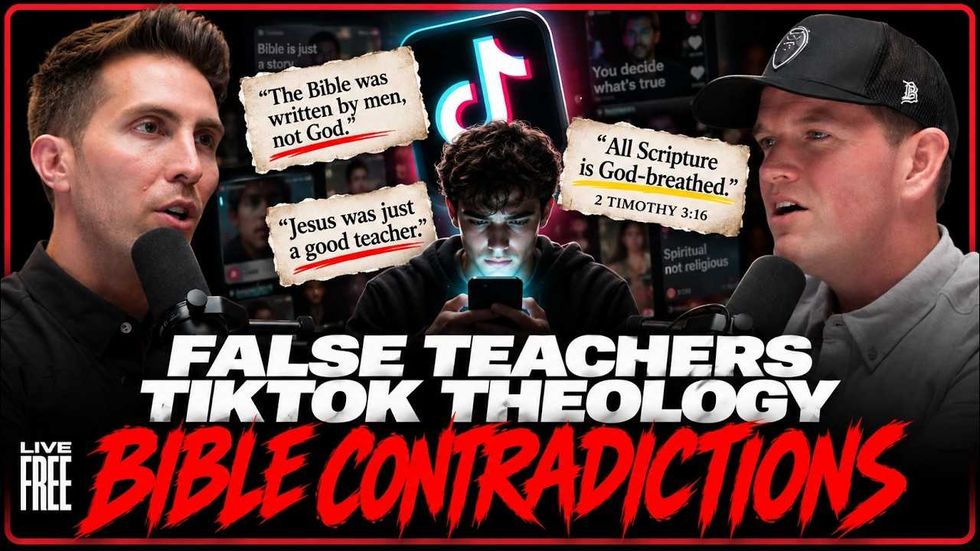
In a day where TikTok theology is wracking up millions of views, it’s more important than ever for Christians to know what the Bible actually says. On this episode of “Live Free,” Josh Howerton’s co-hosts and fellow pastors Paul Cunningham and Carlos Erazo address a viral TikTok video, in which the creator claims the Bible has several contradictions. “The Bible says that God is all-knowing. Psalm 147:5 says that His understanding is infinite. First John 3:20 says that God knows all things. Matthew 10:30 says that He knows the number of hairs on our heads,” the video creator began. “But in Genesis 18, God says He's going to go down to the cities of Sodom and Gomorrah to know how sinful they're being. An all-knowing God would know that. He wouldn't have to go down there. Also, an all-present God would already be there,” he argued.In his second claim, he argued that the empty story was inconsistent across the gospels: “In the books of Matthew and Luke in the Resurrection story, it says that the women who discovered the empty tomb ran off and told everyone that the tomb was empty. But in the book of Mark, it says that the women were afraid and didn't tell anyone.” The creator’s final claim aimed to debunk the Bible’s definition of love: “And then of course there's the whole God is love, but then it also says that love is patient and kind, never jealous or boast. But then it says that God is a jealous God. So how could God be love if love isn't jealous?” Cunningham begins by addressing the TikTok creator’s claim about love and jealousy, pointing to the semantics of the word “jealous.”“The same word can be used in certain ways in certain contexts that would be appropriate and in other ways that would be inappropriate,” he says. He gives the example of a husband being jealous regarding his wife. “I should not be jealous if my wife were simply to say hello to a male co-worker, but I actually should be jealous if my wife slept with that male co-worker,” he explains. “The reason I give that analogy is that usually when it says God is jealous in the Bible, it's in relationship to His people, Israel, and it talks about in context that they are His bride and they are giving love to a different god or a different thing that only belongs to Him,” he adds. Erazo then dives into the creator’s claim that an all-knowing God would not have to visit Sodom and Gomorrah to find out what the people were up to. He gives the analogy of playing hide-and-seek with his 4-year-old son. “I'll say, ‘Where are you? I don't see you.’ I know where he is because I'm his father,” he says. “And so when God seems to be asking questions and when He seems to not know one thing, He knows.” “A fancy phrase for that is called anthropomorphic language,” adds Cunningham. “God has to use language we can understand to help us understand a God we can't completely understand.” Above all, Cunningham and Erazo want believers to not allow “seeming contradictions” to shake their faith. “When you see videos like this, don't freak out if they bring up something you've never thought about because someone else has thought about it and probably given a really good answer for it,” says Cunningham. To hear the duo’s full response to the video and other kinds of TikTok theology, watch the episode above. Join BlazeTV+ and start watching Josh today at blazetv.com/JOSH. Use promo code JOSH to get $20 off your subscription.

Cover image for Does the Bible really contradict itself? Pastors take on viral TikTok theology

BASS-ACKWARD: Los Angeles may dump its mayor and move farther left

Los Angeles voters appear ready to fire Mayor Karen Bass (D). They just aren’t replacing her with Spencer Pratt. That’s California for you!A new UC Berkeley Institute of Governmental Studies poll for the Los Angeles Times has City Councilwoman Nithya Raman (D, DSA) leading Bass 39% to 28%, with fully one-third of likely voters still undecided.California is not secretly conservative. Los Angeles is not secretly Republican. And voters who reject Karen Bass are under no obligation to replace her with someone to her right.The mayor’s numbers are dreadful. Nearly two-thirds of likely voters view her unfavorably. Bass has spent much of the year absorbing blame for homelessness, housing costs, and her response to the Palisades fire.So much for the idea that Los Angeles voters are content with failure. They aren’t. They may simply have a very different idea of what should come next.Raman is not offering Los Angeles a conservative correction. Far from it. She comes from the activist left and has the backing of the Democratic Socialists of America. She polls especially well among younger voters.Bass has a strong left-wing pedigree of her own, but she has been around long enough to become establishment: Sacramento, Congress, City Hall.Raman represents something newer.A Democrat electorate can decide that a Democrat mayor has failed without becoming Republican. This should not be difficult to understand. Somehow, it remains difficult.I have been making versions of this argument for a long time.In 2014, after another statewide Republican drubbing, I wrote a column for the Sacramento Bee asking, “Hypothetically Speaking, How Can California Republicans Win Again?” (Sadly, not online — turns out the internet is not forever.)My answer was not: Move left. My answer was: Move.Move into neighborhoods. Into schools. Into communities Republicans had largely stopped contesting. Talk to voters in English and Spanish. Focus on local problems.“For a minority party to become a majority,” I wrote then, “it cannot merely oppose. It must propose.”I also warned against fatalism.RELATED: Iowa is flashing a giant red warning light for November Lurii Garmash/Getty ImagesOf course Republicans were out-funded and out-organized. Of course much of the press disliked them. So what?Two years later, after Donald Trump won the presidency while California voted overwhelmingly for Hillary Clinton, I wrote another column called “Take California, Please.”California had just legalized recreational marijuana, elected Kamala Harris to the Senate, extended high income-tax rates, tightened gun laws, raised cigarette taxes, and approved more borrowing.In short, California voted like California. It still does.Today, Democrats constitute nearly 45% of California’s registered voters. Republicans are just under 25%. No Party Preference voters make up nearly 23%.Los Angeles is cerulean blue.Even Richard Riordan, the lone Republican mayor during the city’s long Democrat era, was no conservative in the contemporary sense. The dude was a Catholic who called himself “pro-choice.” Come on.The mystery is not why Democrats keep winning. The mystery is why conservatives keep acting surprised.Spencer Pratt, to his credit, seems to understand part of this better than some of his loudest supporters. After losing the June primary, Pratt recently told followers that Los Angeles “had its chance for a candidate of change.”Then he blamed them.“A lot of you just stayed home,” Pratt wrote. Others voted for another candidate. “I told you to get ten of your friends to vote, and you didn’t do it.”Notice what he did not say. He did not say the election was stolen.Some of his supporters have been happy to say that for him. Pratt’s explanation was less comforting: His supporters did not turn out enough voters.Now 63% of Pratt’s June voters remain undecided between Bass and Raman.The revolt against Bass is real. It is not a conservative revolt.RELATED: The socialists want a new Constitution. Believe them. Selcuk Acar/Anadolu/Getty ImagesPratt has another message for Californians: “Vote for governor, you still have a shot.” Yes, but it’s a long one.Karen Bass has a rather different view.In a recent interview, Bass declared the race effectively finished. “Our governor’s name is Xavier Becerra,” she said. “You don’t need an election on November 3. A Republican cannot win in this state.”The gall of the woman! Of course California needs an election.But forget the swagger for a moment and look at the arithmetic behind it. The latest PPIC poll has Becerra leading Republican Steve Hilton 60% to 38% among likely voters.Those numbers should look familiar. Gavin Newsom beat Republican John Cox by nearly 24 points in 2018. Four years later, Newsom beat Brian Dahle by more than 18.Those elections did not require cheating. Those are landslides.I don’t like that any more than most Blaze News readers do. But I am not going to tell you California is secretly Republican because I wish it were. It isn’t.California is a mostly blue state with vast swaths of red and millions of conservative residents.Pratt’s response to Bass was revealing in another way. One-party dominance, he argued, teaches politicians that they do not have to earn votes. Give them a loss occasionally, he said, and perhaps they will try harder next time.There is an old political truth in there. Competition disciplines parties. Long periods of dominance can breed complacency.But California conservatives have their own problem. Sorry, friends. We are a despised minority.Democrats have spent decades cultivating unions, ethnic communities, neighborhood groups, renters, homeowners, public employees, donors, activists, and candidates. The democratic socialist left understands this perfectly well. The DSA does not merely post about Nithya Raman. Its volunteers knock on doors.Online enthusiasm is something else. X is not a precinct operation. A viral post is not a voter file. Ten thousand furious replies are not 10,000 ballots. As Spencer Pratt learned the hard way.The work of politics isn’t easy. It’s tedious. It’s local. It requires endless hours nobody applauds and conversations with people who may dislike you before you open your mouth.California is not secretly conservative. Los Angeles is not secretly Republican. And voters who reject Karen Bass are under no obligation to replace her with someone to her right.You are not required to like California as it is. I sure don’t.But before anyone can explain its politics, much less change them, there is one unavoidable requirement: See the place clearly.

Cover image for BASS-ACKWARD: Los Angeles may dump its mayor and move farther left

The audience you may need someday

Actress Tatiana Maslany recently called Tom Selleck and Michael Jordan “cowardly” for keeping politics out of much of their work.Some readers may ask: Who?If all art is political, as Maslany says, then let the art speak. Give us a performance powerful enough to make us listen.Maslany won an Emmy for “Orphan Black” and starred in Marvel’s “She-Hulk: Attorney at Law.” That is a career many actors would envy. Selleck and Jordan, however, are household names whose audiences have stayed with them for decades.I wonder whether Maslany has thought much about why.On Mehdi Hasan’s show, Maslany argued that all entertainment is political. Selleck had explained that he saw little sense in alienating half the country when his job was to entertain it. Jordan’s famous line about Republicans buying sneakers made much the same point. Maslany called that kind of restraint cowardly.Fame and money can make anyone feel invulnerable. At the height of their fame, Selleck and Jordan could have told audiences what to think at every opportunity. Instead, they showed enough judgment to consider what they might lose by doing so — and whether politics was necessary to the work in the first place.They built careers that lasted longer than the moment when everybody wanted an autograph.I have seen this kind of signaling on a much smaller and more personal level. At one teaching hospital where my wife received extensive treatment, some young residents wore pronouns on their badges. None of the attending surgeons who treated Gracie did. I could choose the attending surgeon; the residents came with the package.Let me be blunt. If you make pronouns part of your professional presentation, I notice. To me, putting them front and center signals concerns I do not want inserted into a relationship built on competence and trust. I could not choose the residents assigned to Gracie’s care. When the choice is mine, however, I make it.Were the attending surgeons cowards for leaving pronouns off their badges? I have no idea what each of them believed. I know that when Gracie faced another surgery, their personal lives and politics never entered the room or gave me reason to question their judgment.That becomes rather important when you are standing at an operating room door.RELATED: The fourth bus of the Apocalypse Cem Genco/Anadolu Agency/Getty ImagesAn entertainer’s public choices work much the same way. Maslany can impugn Selleck and Jordan. She can say whatever she pleases. And I can decline to spend a dime or a minute on her work.I cannot watch a Robert De Niro movie now without hearing his political rants instead of his character. When football players began kneeling during the national anthem, I stopped watching. Nearly a decade later, I still have not returned. The NFL went on without me, and I went on without it.Gillette lost me the same way. When the company aired its commercial about “toxic masculinity,” I stopped buying its products. I never announced a boycott. I simply bought another razor. My eyebrows went up when I later heard Dana Perino say on “The Five” that her husband, Peter, had done the same.How many other customers quietly made that decision?Nobody has to organize a boycott. People can simply find another razor, another movie, or something else to do on Sunday afternoon. The business may never learn why the customer disappeared.RELATED: What Montana taught this Southern storyteller about shutting up Karla Ann Cote/NurPhoto/Getty ImagesMaslany recently turned 41. She is no newcomer waiting for her first break. She knows how much talent and luck it takes to land a role people remember, and she cannot know how many more will come.Perhaps she will gain admirers for what she said. Perhaps she will never miss a role or a paycheck. Or perhaps some people she hopes will watch her next performance will quietly walk away. Others whose livelihoods depend on her work may absorb some of the cost.That is the part of celebrity political speech people often miss. The audience does not owe the performer its continued attention.If all art is political, as Maslany says, then let the art speak. Give us a performance powerful enough to make us listen. Calling two men cowards is easier than producing work people will still want to see decades from now.Selleck and Jordan understood something about fame while they had plenty of it: An audience does not belong to you.Maslany is free to speak her mind. The rest of us are just as free to decide whether we want to hear any more.

Cover image for The audience you may need someday

Sara Gonzales reacts to Sunny Hostin’s shocking admission she was the holdout juror who spared a cannibal killer

During a discussion of the controversial Lindsay Clancy case, "The View" co-host Sunny Hostin made a terrifying admission.Not only did Hostin recount serving on the 1991 jury that found a man not criminally responsible by reason of insanity after he killed, dismembered, and cooked a woman — she claimed she was the reason he got off.“I cannot believe that she thought it would be a good idea to admit this in public on her show that is national,” BlazeTV host Sara Gonzales comments, before playing the clip of Hostin.“The reason I feel so strongly about this holdout juror is because I was a holdout juror in a case, in the Daniel Rakowitz case. I don’t know if people remember it,” Hostin began.“Apparently several jurors questioned afterwards said one holdout juror was principally responsible for preventing them from returning a guilty verdict. That was me. And it was because I saw clearly that he was psychotic,” she continued.“He was in a psychosis. He did not mean to kill her. And once he killed her, he panicked. He chopped up her body parts. Yes, boiled her body parts. Tried to commit the perfect crime,” she added.“You got this guy off?” co-host Alyssa Farah Griffin asked, shocked.“That’s how much I believe in the insanity defense,” Hostin replied, adding, “And he fed her body parts to the unhoused.”“One juror threw a chair at me. They were so angry with me. But one by one, I picked them off and said, ‘What about this? What about that?’ And we ended up ... unanimously voting that he was not criminally responsible by reason of insanity,” she added.“That’s because they just wanted to go home,” Gonzales comments. “That’s because they couldn’t stand being in the same room with you anymore.”“Let’s just be clear here. Sunny Hostin bullied an entire jury into siding with a murderer who killed and ate someone,” she adds.Want more from Sara Gonzales?To enjoy more of Sara's no-holds-barred takes on news and culture, subscribe to BlazeTV — the largest multi-platform network of voices who love America, defend the Constitution, and live the American dream.

Cover image for Sara Gonzales reacts to Sunny Hostin’s shocking admission she was the holdout juror who spared a cannibal killer