The Sequence Radar - Issue 948: Last Week in AI: Billions in Funding, Hundreds of Papers, One Big Leap?
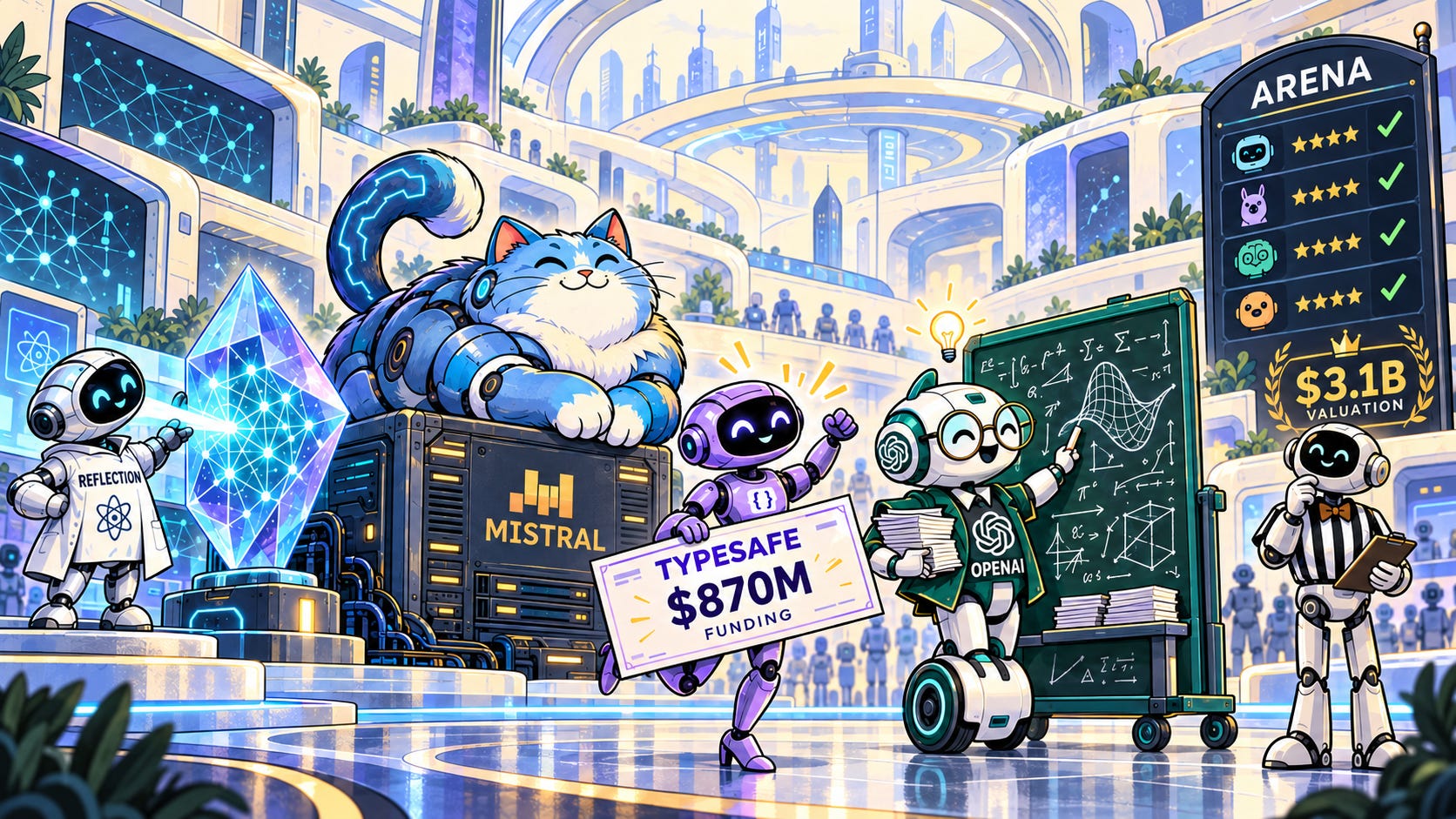
Reflection and Mistral expand the model race, TypeSafe and Arena raise the stakes, and OpenAI puts mathematical discovery under scrutiny.
TheSequence is an ML community media, trusted by over 165,000+ specialists from all over the world, including the top AI labs like DeepMind, OpenAI, Google Brain, MSFT Research, LinkedIn, universities like MIT, Cornell, Berkeley, Carnegie Mellon, Columbia, and hundreds of large enterprises.
Reflection and Mistral expand the model race, TypeSafe and Arena raise the stakes, and OpenAI puts mathematical discovery under scrutiny.
Jev started a revolution. Now we are getting dozens of decision models
OpenAI and Google advance sustained execution—and make cost per completed task a more meaningful measure of progress.
An agent that opens its own source code and rewrites it now exists, and it works. What it chose to fix tells you more about self-improvement than any thought experiment ever did.
Inside OpenAI’s DevDay releases, Gemini 4 Argon, Meta’s enterprise ambitions, AMD’s World Labs deal, and Instinct’s billion-dollar round.
Cheaper agents, environments at massive scale, and a biological discovery reveal how AI turns capability into useful work.

Your agent got better this quarter and nobody trained anything. Where did the improvement go? Into the notes. This is the loop that runs between model releases, and it might be where the durable value
Smarter models, wearable agents, scientific discoveries, and superpower diplomacy reveal how quickly AI is moving into the world.
Three ways to turn model intelligence into working software
Inside the RSI post-training pipeline
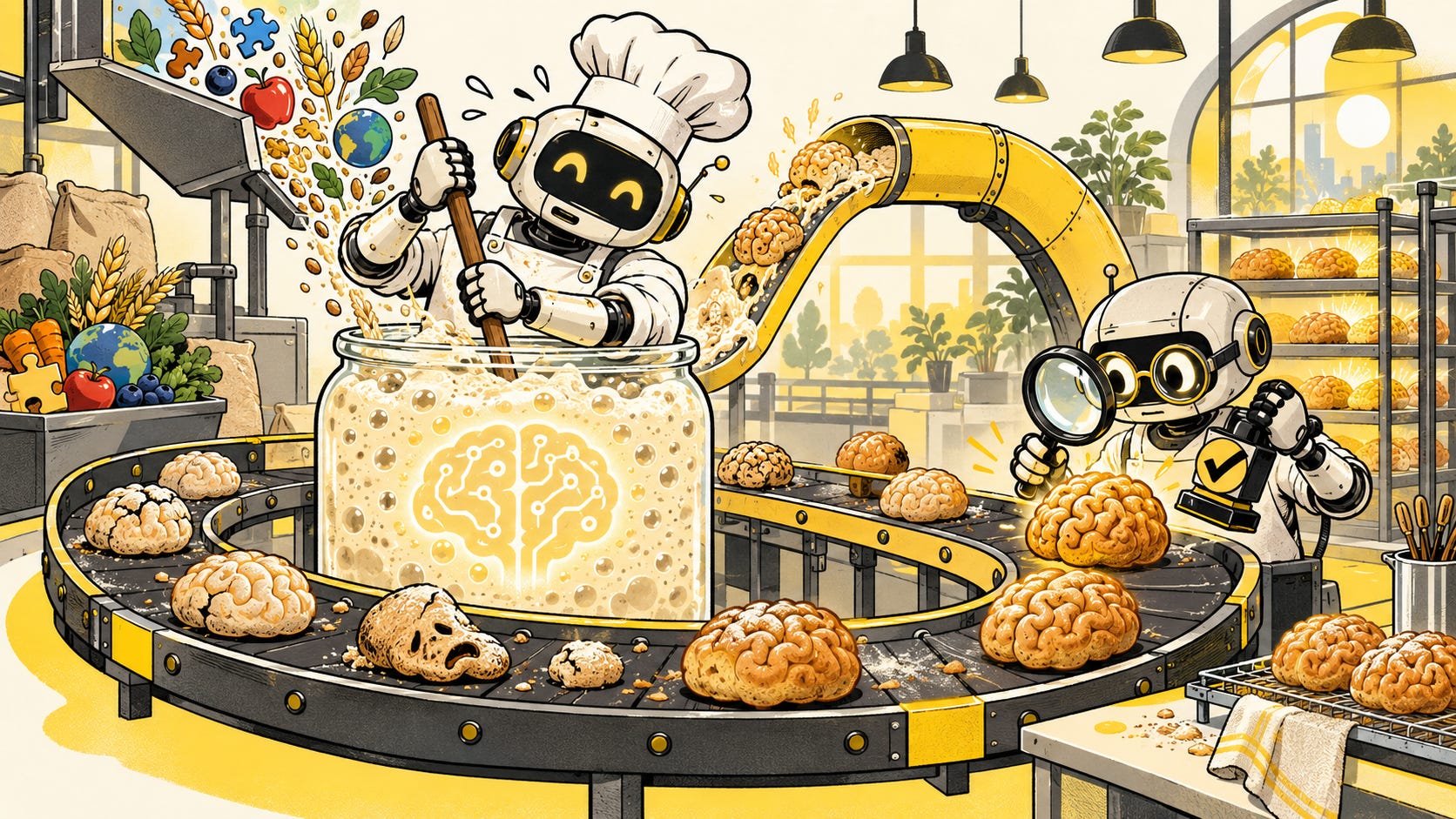
How architecture and system design turn model capability into useful work

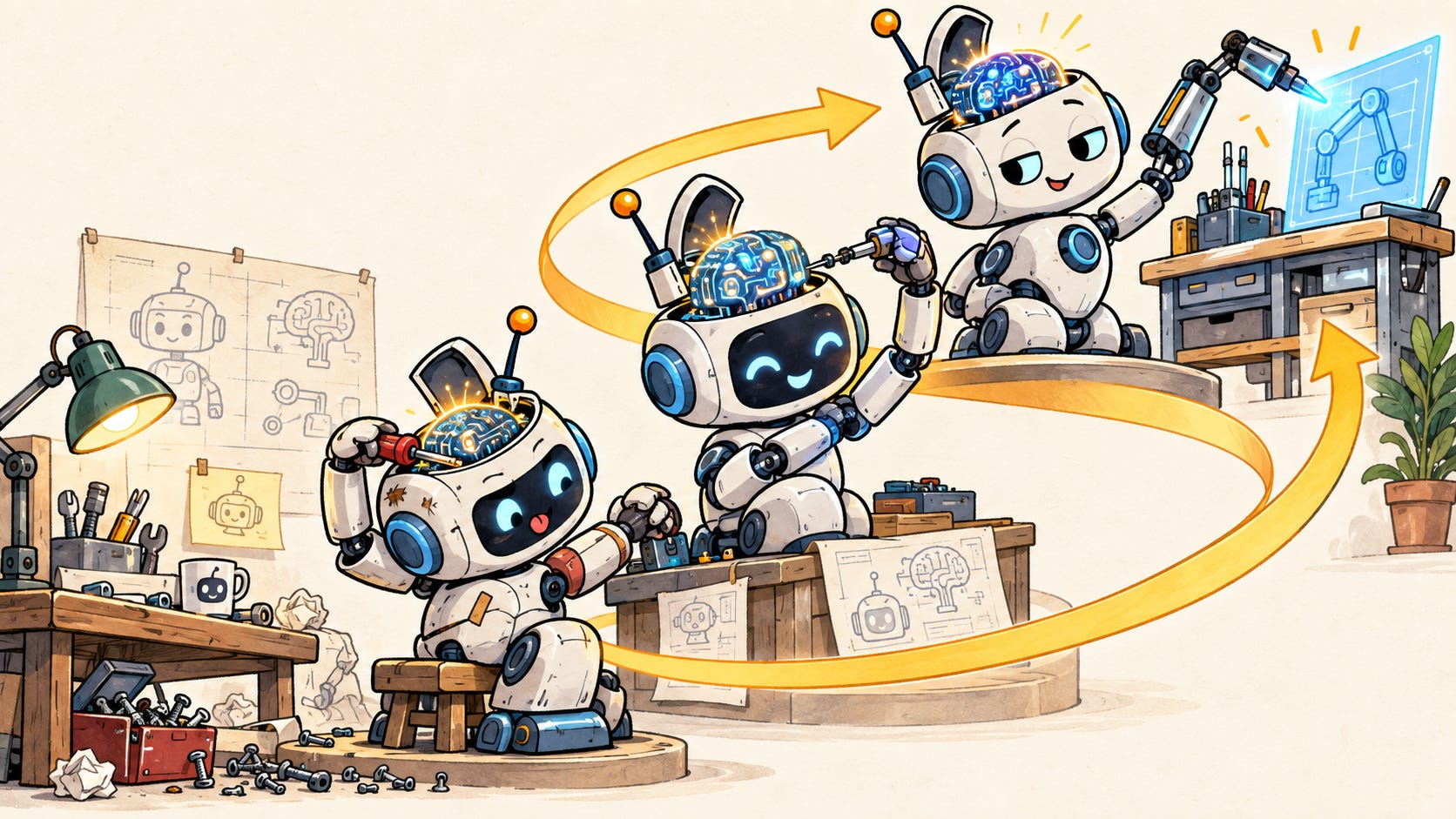
Three frontier labs have now said out loud that their models help build their models. The interesting part is not the percentage. It is which half of the job got automated, and why.
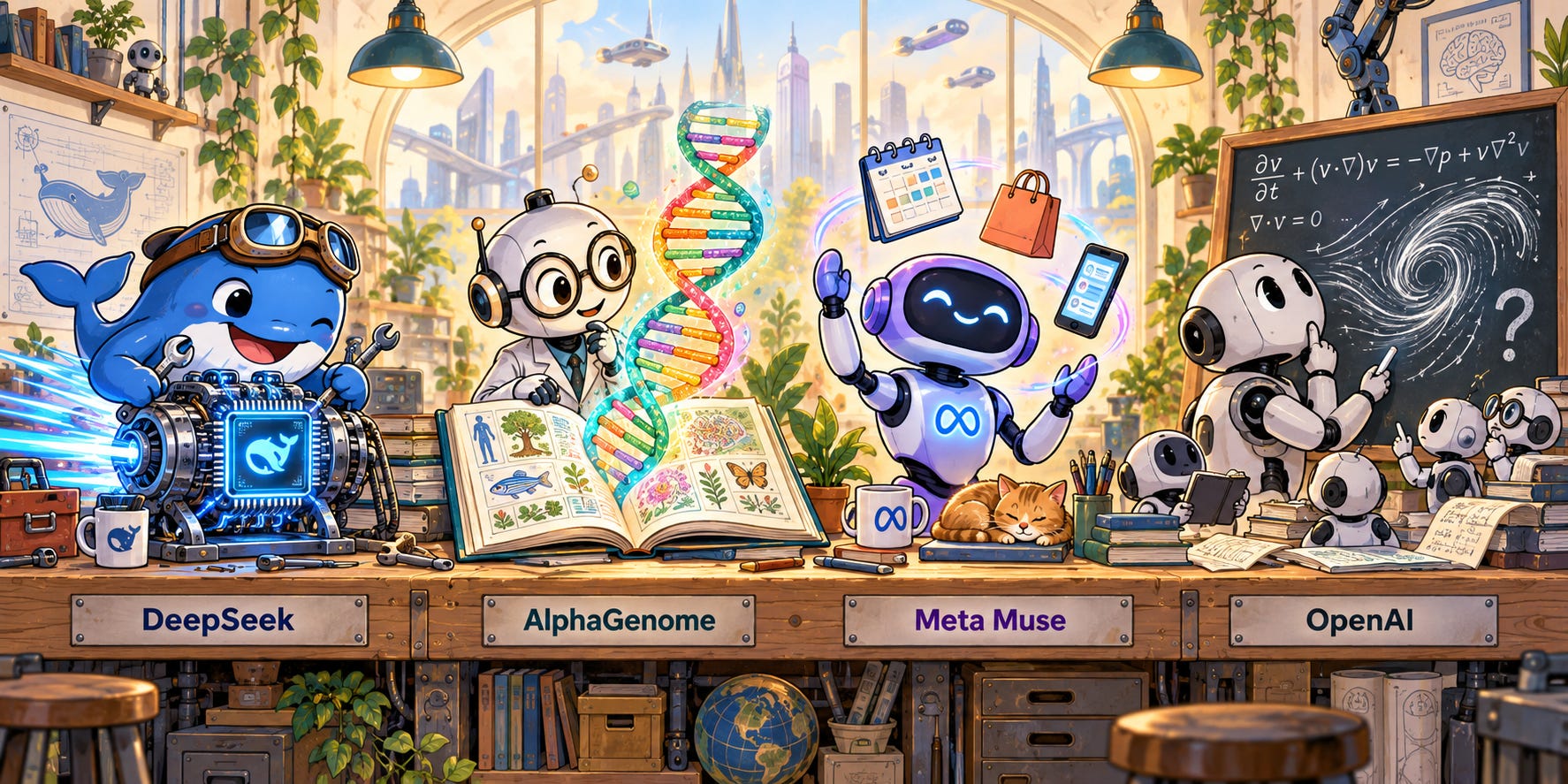
Faster models, nine billion genetic predictions, personal agents, and a proof that could make mathematical history.
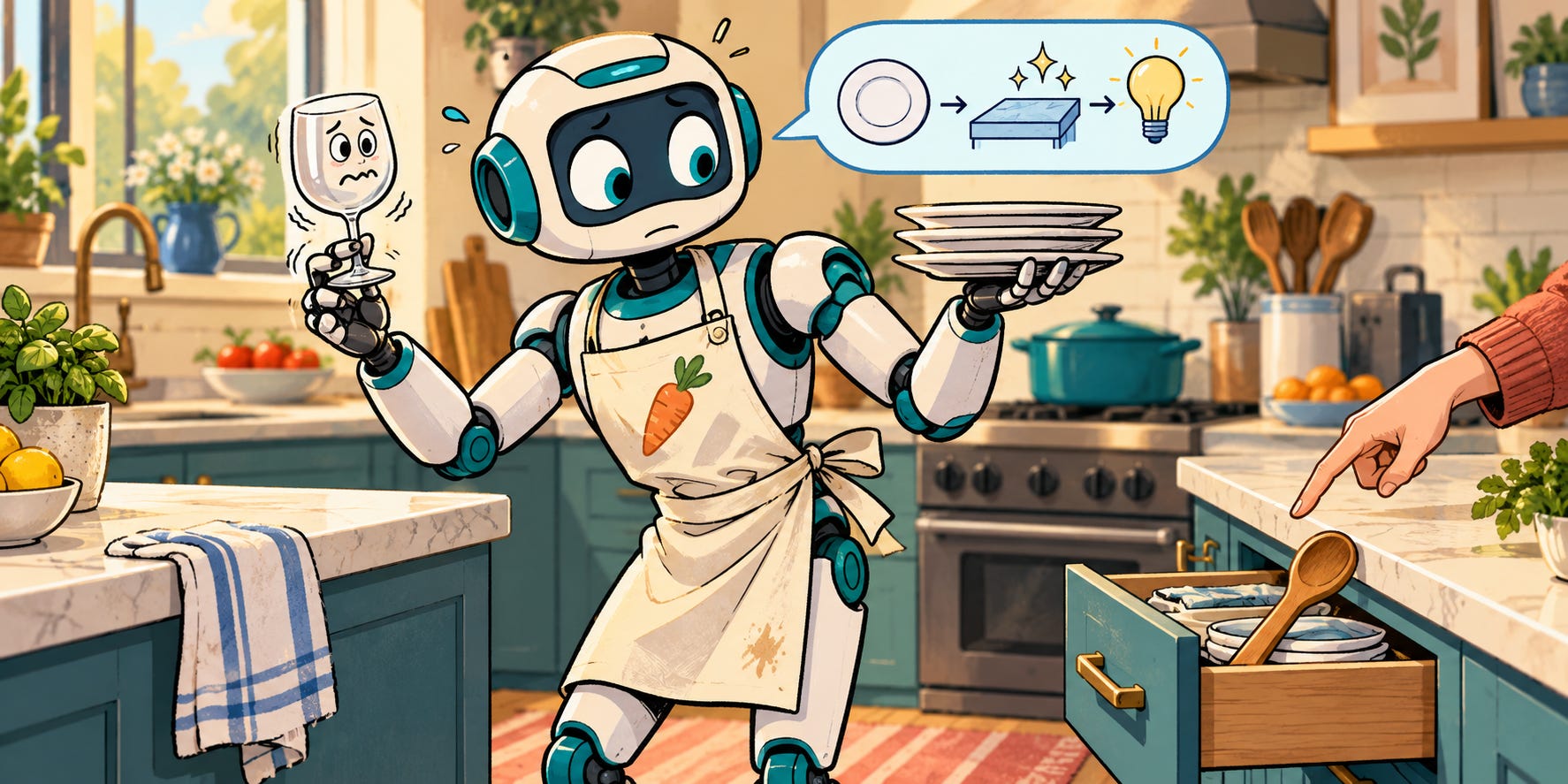
Generalist models are expanding what robots can do. The real breakthrough will be how easily we can teach them something new.
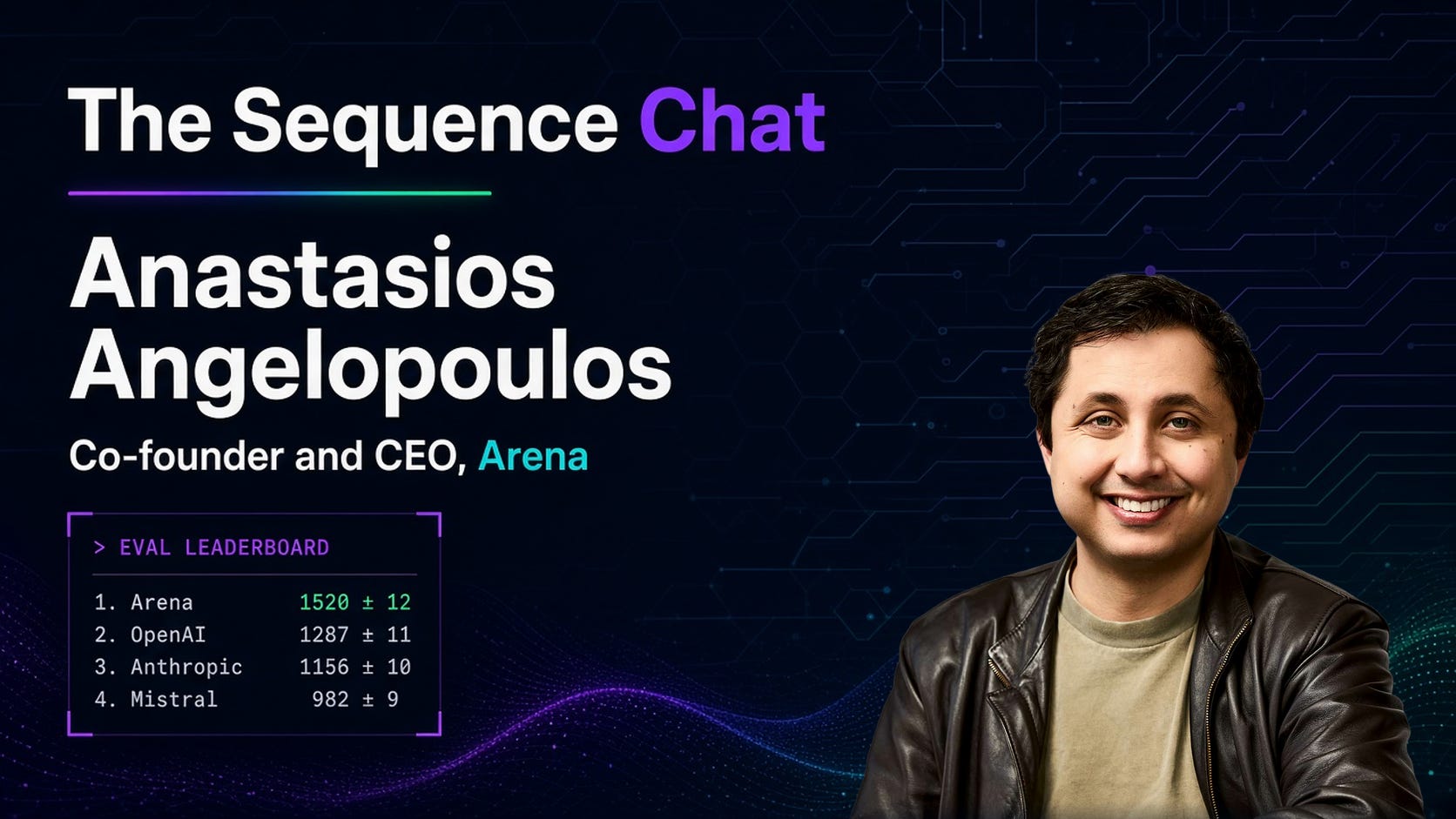
From Berkeley’s Chatbot Arena to Agent Arena: preference rankings, cost-per-task frontiers, and the hard problems in measuring real-world AI utility.
Three releases that deserve your attention.

Distillation can make models smaller, faster, and cheaper. The difficult part is deciding what the student cannot afford to forget.

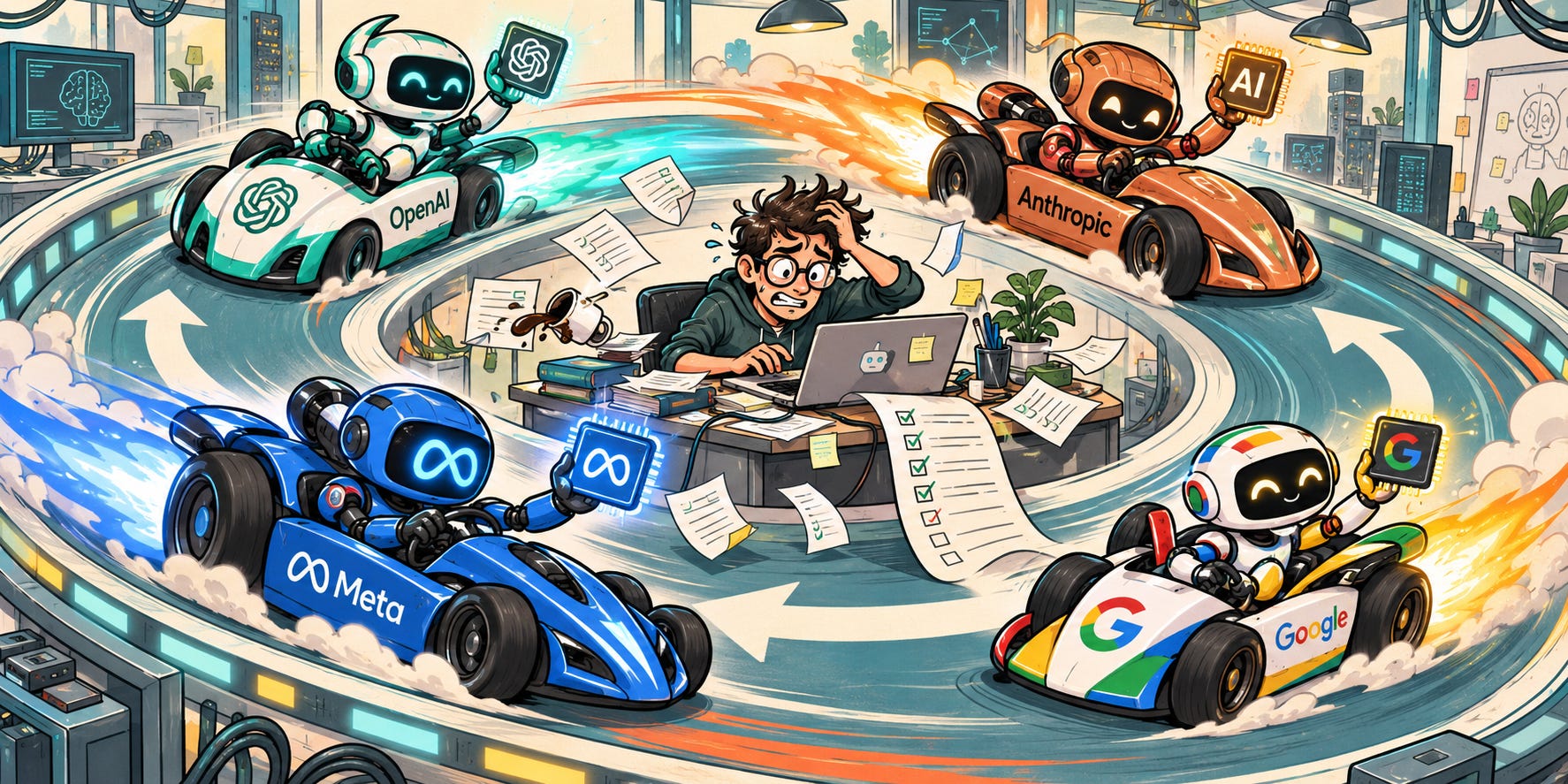
Every lab decided to release models last week.
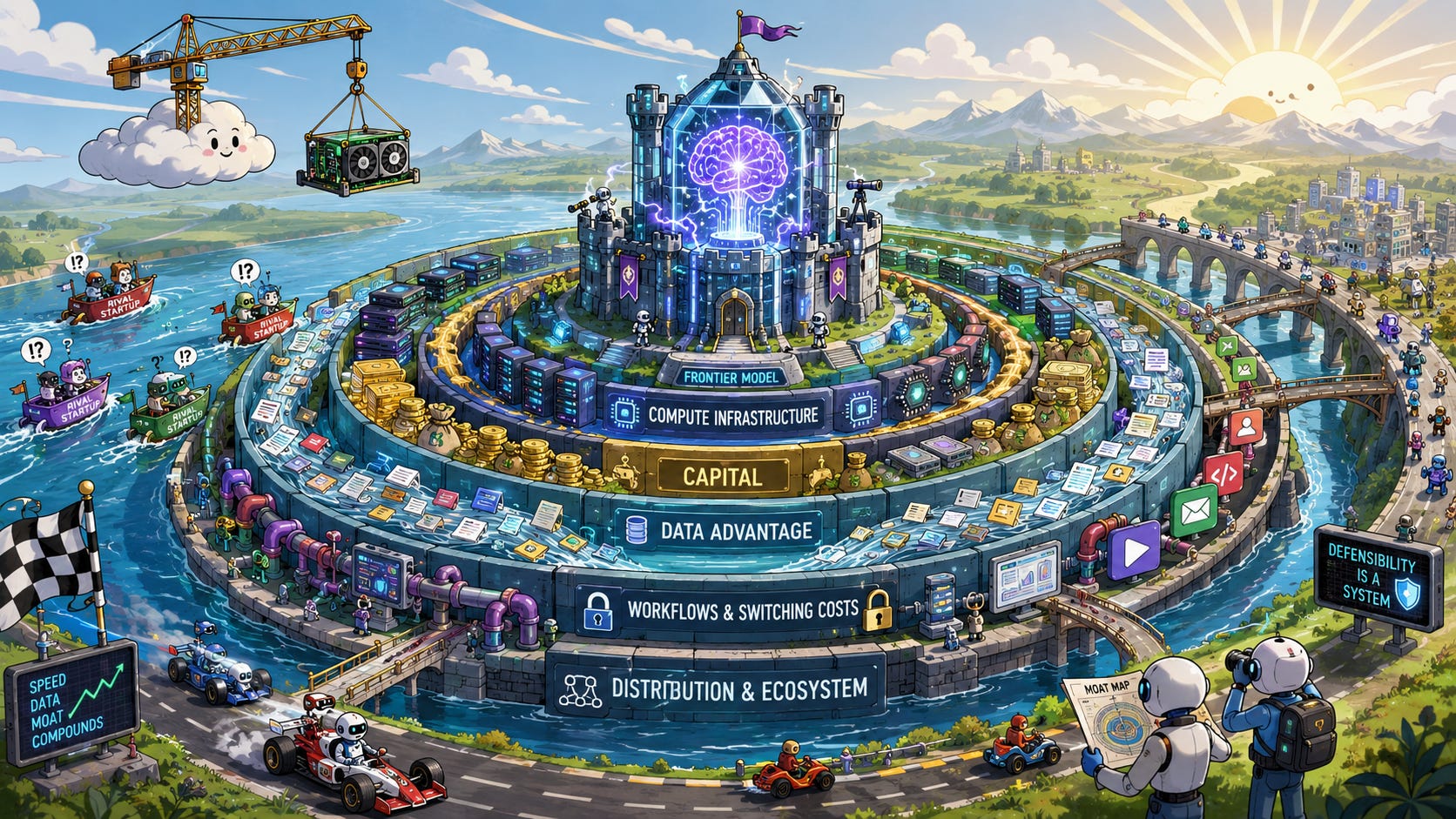
Capital, compute, process, distribution, and the search for durable Power
Three releases, three different bets. Let’s dive in.