Free Article 1 (Dec. 23, 2025): The Bitcoin Chronicles - 1.F.1.1 - Elias Walker of the the Long Break
A quiet portrait of Elias Walker, born after the Long Break, living on a Kepler world where sovereignty is no longer debated but simply lived.


Eine Sammlung von npubs, die auf Deutsch kommunizieren. Zusammengestellt für alle, die sich vernetzen, Ideen austauschen oder in der Sprache zusammenarbeiten möchten. Diese Liste erleichtert das Finden deutschsprachiger Teilnehmer*innen auf Nostr, egal ob du Diskussionen, Übersetzungen oder Community‑Projekte suchst. Durchstöberen, folgen und mit den npubs interagieren. Diese npubs halten die Unterhaltung auf Deutsch am Laufen. A collection of npubs who converse in German. Gathered for anyone looking to connect, share ideas, or collaborate in the language. This list makes it easy to discover German‑speaking participants across nostr, whether you’re seeking discussions, translations, or community projects. Feel free to browse, follow, and engage with the npubs who keep the conversation flowing in German.
A quiet portrait of Elias Walker, born after the Long Break, living on a Kepler world where sovereignty is no longer debated but simply lived.
Continuing his comparative study of prices and lived conditions across mature enclaves, Caleb Moreau visits Europa and speaks with a local coordination officer about what ordinary life looks like in a fully engineered world.
A canonical archival note describing the condition of the Solar System enclaves after several centuries of settlement, maturity, and alignment with local realities.
A historical account of the first human settlements on Kepler-class worlds, tracing how sovereignty emerged through distance, consequence, and the quiet failure of Earth-managed systems.
In the Martian city of New Bern, ordering a Big Mac reveals what abundance, honest pricing, and settled life look like after centuries of off-world habitation.
Commander Isaac Bell is a Senior Launch Authorization Officer operating during the final years of Earth’s managed departure era. His role is not to design policy or debate ideology, but to execute denials that prevent uncontrolled exit cascades. Each decision is technically justified, morally heavy, and personally isolating. The Signature Line explores the quiet machinery of enforcement at the moment when legitimacy begins to fracture. Bell is neither villain nor hero — only the one willing to say no, and to be remembered for it.

As Earth’s launch controls tighten, Commander Isaac Bell encounters a departure request that is flawless in every technical sense. The problem is not safety, risk, or compliance — it is timing. Approval would signal that coordinated exit is still possible. *Exit Velocity* explores the moment Bell realizes that enforcement is no longer preserving order, but postponing its reckoning. What he denies is not a launch, but a future he can no longer imagine surviving intact.
Years after his most consequential denials, Isaac Bell reviews the data meant to justify his decisions. The numbers confirm what history already suspects: he was rarely wrong in his assessments. What fails is not his judgment, but the assumption that legitimacy can survive enforcement without consent. *The Last Free Window* places Bell at the hinge between managed departure and irreversible exit — a man who delayed collapse long enough for something else to form, even as he misunderstood what that something would require.
Christmas is often framed as relief — a pause, a comfort, a sentimental shelter from the weight of the world. But the original claim of Christmas is far more severe. God does not remove humanity from history; He enters it. This essay reflects on Christmas as commitment rather than escape, and on why incarnation makes neutrality impossible.
Modern captivity rarely relies on chains or walls. It relies on distraction — the steady redirection of attention away from truth, cost, and agency. This essay examines how distraction functions as a form of managed enslavement, and why Christmas stands in quiet opposition to it by insisting on presence, embodiment, and attention that cannot be outsourced.
Heart Words #25

This essay reflects on freedom and sovereignty through the lens of surfing, written from the perspective of someone who does not surf but has watched a brother use the ocean as a way to cope with grief. In a year marked by shared trauma and loss, writing and surfing become parallel practices — different responses to the same weight — each honoring agency, patience, and the choice to remain present in a world that does not bend to us.

36 Bitcoin Knowledge Mantras

Modern culture often equates freedom with the removal of limits. This essay argues that freedom does not emerge from weightlessness, but from rightly ordered constraint — and that the collapse of constraint produces drift, fragility, and quiet forms of control.

Modern life encourages the outsourcing of responsibility — for memory, judgment, identity, and decision-making. This essay argues that sovereignty begins when we reclaim what should never have been delegated.
Freedom is often framed as the ability to choose in the present. This essay argues that freedom depends on continuity — the capacity to remember commitments, history, failures, and truths that resist revision. Without memory, freedom thins into impulse and becomes easy to manage.v
Modern notions of freedom increasingly assume insulation from consequence — emotional, social, or moral. This essay argues that freedom does not mean being untouched by others, but being answerable within reality.
Christmas is often imagined as interruption or spectacle, but the Incarnation unfolds almost entirely within the ordinary. This Sunday reflection considers how God chooses to enter history quietly, relationally, and without exemption from human limitation — and why that choice still shapes what faithfulness looks like now.
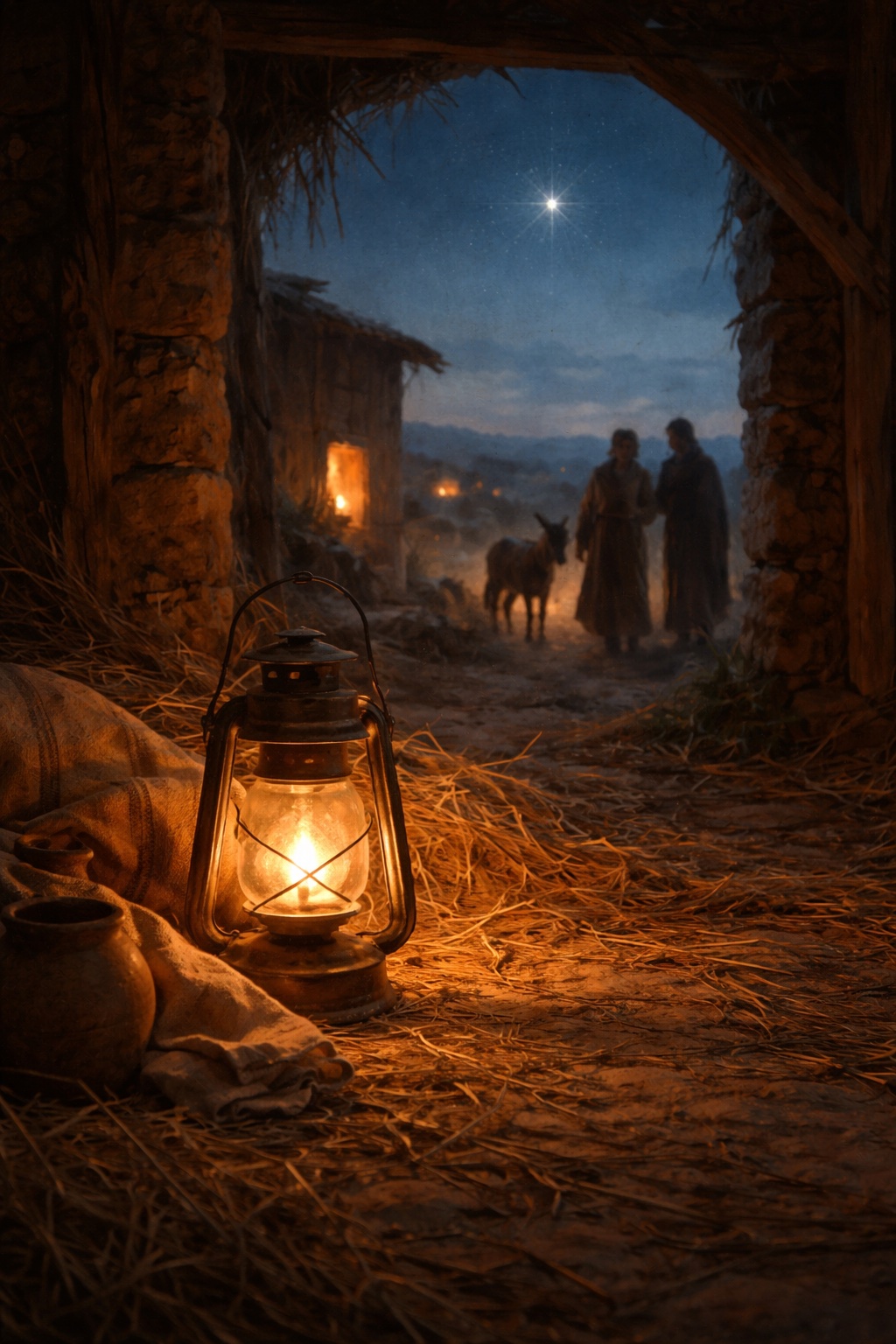
Christmas hope is often confused with optimism — the belief that things will improve, resolve, or turn out well. This essay reflects on a deeper, quieter hope revealed by the Incarnation: hope that does not depend on conditions, momentum, or visible progress, but endures precisely when those things are absent.
Christmas is often framed as comfort or reassurance, but the Incarnation is neither sentimental nor negotiated. This Sunday reflection explores how Christ enters history without asking permission from power, systems, or consensus — and why true light does not require validation to be real.