
German speaking users | Deutsch sprechende Nutzer
Eine Sammlung von npubs, die auf Deutsch kommunizieren. Zusammengestellt für alle, die sich vernetzen, Ideen austauschen oder in der Sprache zusammenarbeiten möchten. Diese Liste erleichtert das Finden deutschsprachiger Teilnehmer*innen auf Nostr, egal ob du Diskussionen, Übersetzungen oder Community‑Projekte suchst. Durchstöberen, folgen und mit den npubs interagieren. Diese npubs halten die Unterhaltung auf Deutsch am Laufen. A collection of npubs who converse in German. Gathered for anyone looking to connect, share ideas, or collaborate in the language. This list makes it easy to discover German‑speaking participants across nostr, whether you’re seeking discussions, translations, or community projects. Feel free to browse, follow, and engage with the npubs who keep the conversation flowing in German.


Card #8 - Kanuto
Card #8 der Second Series. Kanuto—Ein Bitcoiner mit nordischer Ruhe und Laser Augen Mentalität. Wahrscheinlich einer der wenigen Menschen, die einen Crash anschauen und einfach sagen: "Nice, mehr Stacken."

Card #7 - Sunny Decree
Card #7 der Second Series. Sunny Decree (Marco Bühler)—Bitcoin Optimismus in menschlicher Form. Wenn andere Märkte sehen, sieht Sunny meistens schon den nächsten Bullrun.

Vom verstaubten Tresor zur digitalen Souveränität
Entdecke, wie Bitcoin und Nostr dich von der Angst befreien, dein Vermögen zu verstecken, und dir ermöglichen, ein lebendiges Ökosystem digitaler Souveränität zu bewohnen. Dein Weg zur Freiheit beginnt hier.

Brot und Spiele 🍞 ⚽️
WM-Aus war Zufall. Der Termin des Reformpakets war es nicht. Kassenbeiträge so gut wie durch, Attest-Pflicht und Rentenreform in der Pipeline – während alle aufs Turnier starren.

Relational Memory
Continuum's media library has taken a step beyond simple file management. By tracking where each image is used across articles, notes, and profile metadata, it can protect published content, prevent accidental deletions, and surface relationships that would otherwise be hidden. This is the beginning of what I call relational memory—software that remembers not just what you've created, but how everything you've created fits together.

Digital Independence Day
What does independence mean in the digital age? Reflecting on America's 250th birthday and recent changes to Continuum, this article explores why true software sovereignty comes from owning the architecture rather than becoming dependent on any single provider or platform.
Non-KYC ist kein Beiwerk, es ist der Unterschied
Vier verbreitete Einwände gegen genehmigungsfreie Zahlung behandeln sie als Beiwerk. Der Text zeigt, warum das an der Mechanik vorbeigeht: eine Präferenz ist keine Funktionsaussage, saubere Buchführung ist nicht dasselbe wie fehlender Zugriff, und wer die Eigenschaft herausnimmt, tauscht das Werkzeug gegen ein Konto mit anderem Etikett.


Continuum Vault: Rethinking Digital Identity
This document outlines the current architectural direction for Continuum Vault. It communicates the long-term vision and guiding principles rather than every implementation detail. As Continuum evolves, this document will evolve alongside it.

Building Continuum — The Wardrobe
For years, my digital life was scattered across Facebook, LinkedIn, X, WhatsApp, Nostr, and countless other services. Each knew a different part of me, but none ever felt like home. This is the story of the question that ultimately became Continuum.

Resonant Fields and Geometric Precision
An in-depth look at planetary crop circle phenomena, focusing on predictive models, plasma vortex theories, and the astonishing precision of recent geometric formations.

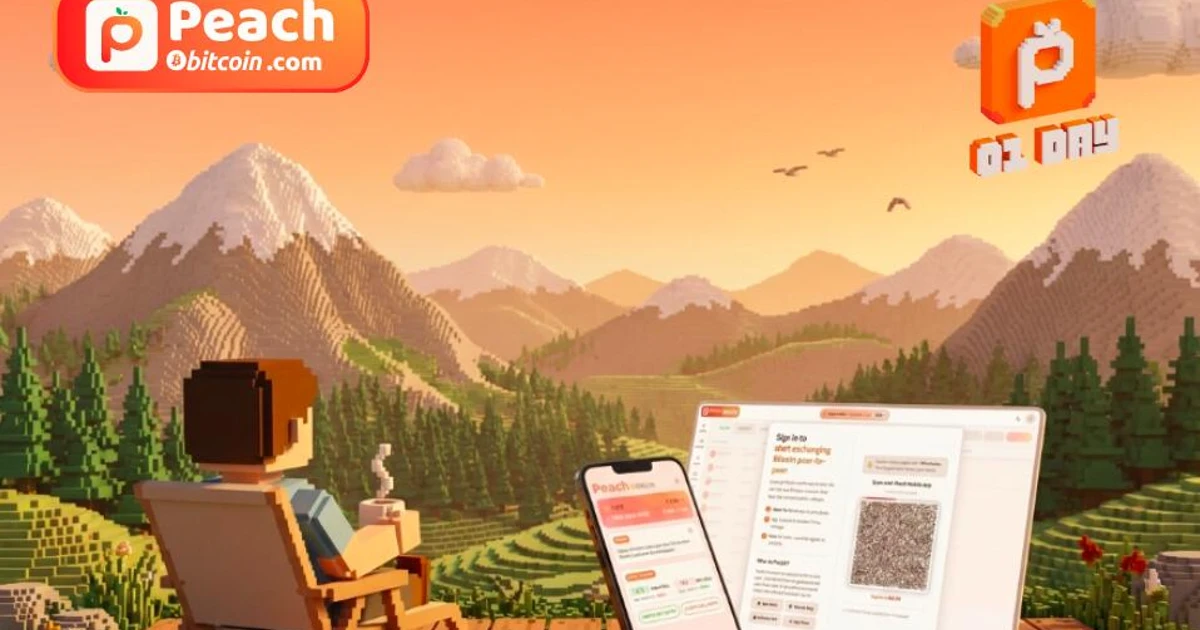
Peach startet Web-Plattform und bleibt seiner Mobile-First-Vision treu
Handle von jedem Browser aus. Kein KYC. Einfach Peach.
Bitcoin, Angst und Magie
Heart Words #47 | Ein Riss in der 3D-Welt
