Bitcoin Magazine (News Bot)

bitcoinmagazine@puresignal.news

Bitcoin Price Explodes Past $97,000 as Traders Set Sights on $100,000

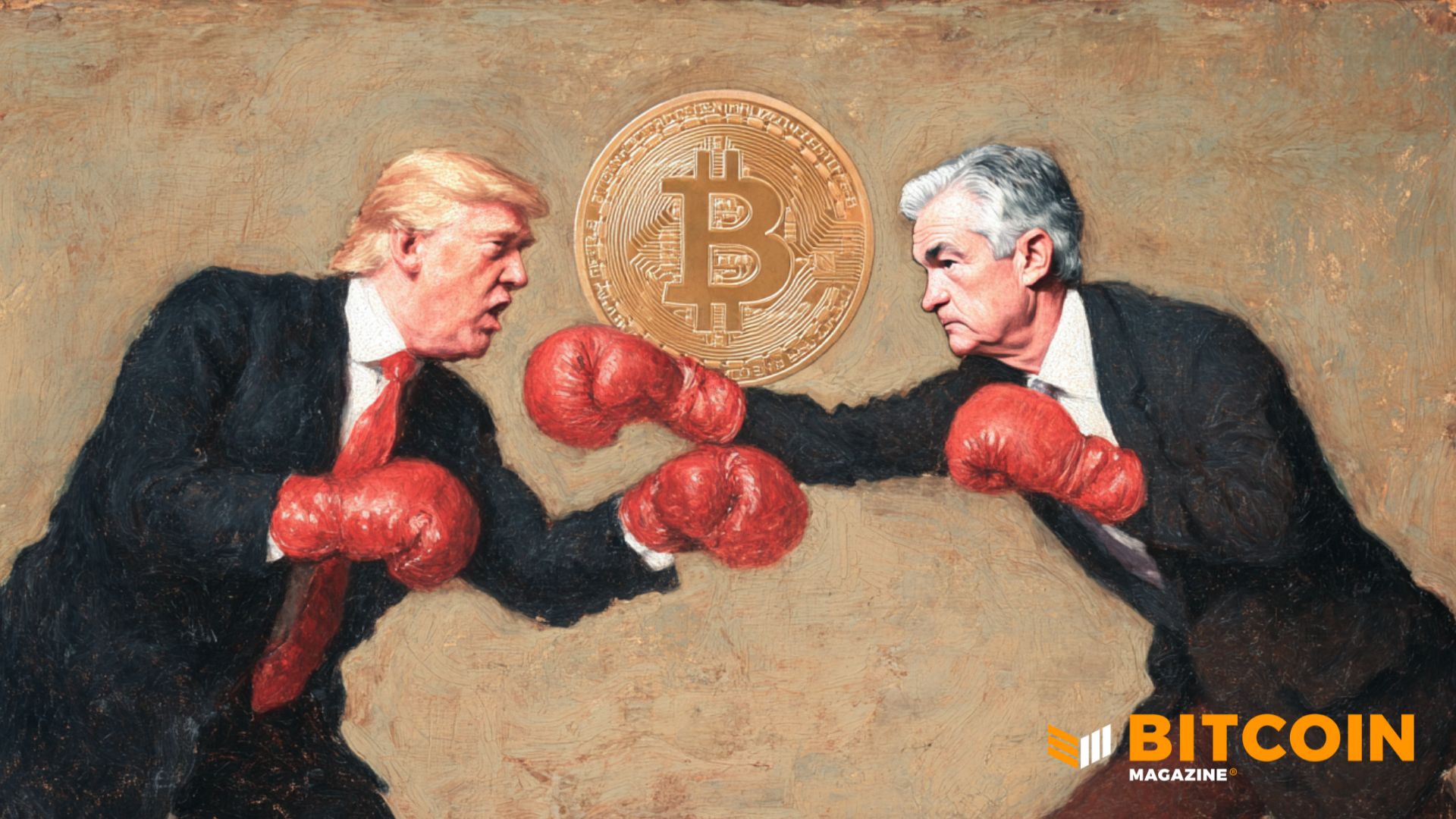
Bitcoin Magazine Bitcoin Price Explodes Past $97,000 as Traders Set Sights on $100,000 The bitcoin price continued its strong run this week, breaking out of a multi‑week trading range and climbing well above key psychological levels as market participants digest macroeconomic data and new institutional interest. The bitcoin price hit an eight-week high and triggered roughly $700 million in short liquidations, per Bitcoin Magazine Data. Polymarket now estimates a 73% chance that Bitcoin will reach $100K in January. After trading relatively sideways near the low‑$90,000 or lower for the last two months, the bitcoin price began gaining traction over the weekend, ultimately surging above $97,000 at the time of writing. This is its best level in more than two months. The rally, which has persisted through January 14, reflects a convergence of technical, macro, and sentiment drivers that have reignited bullish conviction across crypto markets. This squeeze helped propel the Bitcoin price through resistance and toward fresh highs, triggering liquidations of speculative short bets and amplifying volatility. Technically, Bitcoin’s reclaim of the $94,000–$96,000 zone has been widely interpreted as a breakout from its recent consolidation range. Macro economic signals that are fueling bitcoin The timing of Bitcoin’s rally coincides with some pivotal economic developments. The U.S. Consumer Price Index (CPI) report released on January 13 showed inflation moderating — a result that eased fears of further aggressive monetary tightening and boosted “risk‑on” sentiment (think bitcoin) in global markets. While stocks and traditional risk assets reacted modestly, Bitcoin’s sensitivity to macro cues was evident as investors sought alternative stores of value and growth exposure. Stable inflation numbers have also alleviated concerns about elevated real yields, which historically challenge non‑yielding assets like Bitcoin. With inflation more contained than feared, traders and investors appear more willing to allocate capital to crypto, further underpinning the rally. Another notable development in the world is the ongoing unrest in Iran that has intensified this week as nationwide protests against economic collapse and government repression raged amid a near‑total internet blackout, with authorities signaling fast‑track trials and possible executions of detainees. The crisis has amplified geopolitical risk, driving traditional markets into safe‑haven assets and sparking heightened volatility. In digital markets, Bitcoin has shown resilience and renewed investor interest, with BTC climbing despite broader risk‑off sentiment. Also this week, the Department of Justice opened a criminal investigation into Federal Reserve Chair Jerome Powell, sending ripples through markets — including Bitcoin. The investigation stems from Powell’s June 2025 testimony on a $2.5 billion Fed building renovation, which he says is politically motivated amid pressure from the Trump administration over interest rates. The escalating feud between the White House and the Fed has shaken U.S. markets, boosting safe‑haven assets like gold and bitcoin. New institutional demand is boosting the bitcoin price Beyond technical factors and macroeconomic data, institutional demand has resurfaced as a credible driver of bullish momentum. Spot Bitcoin ETFs recorded notable inflows over the past days — with figures suggesting the largest net inflows since late 2025 — signaling renewed interest from long‑term capital allocators and financial advisors. Additionally, major corporate Bitcoin holders have contributed to the narrative. Strategy Inc., a widely followed holder of Bitcoin, announced a massive $1.3 billion acquisition of BTC in the days leading up to the price surge. What comes next for bitcoin price Despite the strong advance, there is strong resistance near the $97,000–$100,000 range that may pose a test for bulls, per Bitcoin Magazine Data. The market’s ability to hold these gains and continue absorbing inflows will be critical in determining whether the Bitcoin price can extend this rally further into the weekend and further into 2026. Market sentiment — often measured by metrics like the Fear & Greed Index — is climbing away from extreme fear and toward more optimistic territory, though it has not yet reached levels typically associated with blow‑off tops. At the time of writing, the bitcoin price is near $97,200, up over 4% in the last 24 hrs. This post Bitcoin Price Explodes Past $97,000 as Traders Set Sights on $100,000 first appeared on Bitcoin Magazine and is written by Micah Zimmerman.

Cover image for Bitcoin Price Explodes Past $97,000 as Traders Set Sights on $100,000

Human Rights Foundation Grants 1.3 Billion Satoshis to 22 Freedom Tech Projects Worldwide in Q4 2025

Bitcoin Magazine Human Rights Foundation Grants 1.3 Billion Satoshis to 22 Freedom Tech Projects Worldwide in Q4 2025 The Human Rights Foundation (HRF) has announced 1.3 billion satoshis in new grants from its Bitcoin Development Fund, backing 22 projects worldwide aimed at strengthening financial freedom and censorship resistance under authoritarian regimes. The funding round, disclosed today exclusively to Bitcoin Magazine, will support open-source Bitcoin development, decentralized mining infrastructure, privacy-preserving financial tools, and grassroots education initiatives across Asia, Africa, and Latin America. HRF said the projects are designed to improve the Bitcoin protocol itself while expanding access to permissionless money for dissidents, journalists, nonprofits, and ordinary citizens facing political repression. The full list of recipients is as follows for the fourth quarter of 2025. Bitcoin Decentralization Stratum V2 (Stratum Reference Implementation) Much of Bitcoin mining still relies on outdated communications protocols that prevent individual miners from choosing the transactions they mine. This leaves block construction in the hands of mining pools, exposing the network to censorship risks. Stratum V2 solves this fault by enabling home miners to build their own block templates. HRF funding will support software developer bit-aloo’s full-time work improving Stratum V2 through performance testing, integration work, and code maintenance, helping individuals regain autonomy within existing pool structures. Braidpool Traditional Bitcoin mining pools rely on a centralized structure where the operator controls reward payouts and transaction selection, creating censorship risks. Braidpool addresses this structural centralization by introducing a peer-to-peer, open-source mining pool design where participants collaboratively construct blocks and coordinate rewards without relying on a central operator. With HRF support, software developer Mohd Zaid will advance a new, more democratic mining model that strengthens decentralization and transparency. Bitcoin Education Open Money, Closed Access: Building Financial Freedom (OMCA) In conflict-affected and connectivity-constrained environments, communities are often cut off from formal banking services and safe ways to store or transfer value. OMCA addresses these challenges through Bitcoin-based tools designed for low-cost, private transactions and offline-first use. The program supports the development of local financial infrastructure and resilient communications technologies suited to high-risk contexts. HRF’s support enables individuals to save and transact more securely and discreetly during periods of instability. Learning Bitcoin from the Command Line As Bitcoin evolves, open-source developers need up-to-date resources that teach them how the system actually works. Learning Bitcoin from the Command Line teaches prospective developers how Bitcoin works through a hands-on curriculum and across multiple languages. HRF’s funding will allow the project to update its curriculum to match the latest changes to Bitcoin’s software, helping grow the global pool of contributors who keep Bitcoin accessible and resilient. Voices Uncensored: A Bitcoin-Based Platform for Human Rights Defenders in Azerbaijan In Azerbaijan, the state routinely targets activists and journalists with surveillance, bank freezes, and blocked donations. Voices Uncensored is a Bitcoin-based platform for human rights defenders led by former political prisoner Elchin Mammad. It pairs uncensorable donations and payments with Azerbaijani-language training and educational resources. HRF’s support will equip Azerbaijan’s human rights defenders with the financial independence, privacy, and resilience needed to continue their work under a repressive regime. Bitcoin Famba In Mozambique, citizens face chronic inflation, growing debt, and heavy restrictions on their financial autonomy. Bitcoin Famba, based in Maputo-Matola, provides accessible Bitcoin education and fosters local circular economies. HRF funding will help dissidents and everyday people access permissionless and censorship-resistant money to achieve financial independence in a repressive political and economic environment. Bitcoin Indonesia & Bitcoin House Bali Indonesians face growing financial surveillance, inflation, and censorship. Bitcoin Indonesia, Indonesia’s pioneering Bitcoin gathering, along with its Bitcoin education center, Bitcoin House Bali, offers training on using Bitcoin to protect incomes, preserve financial autonomy, and navigate restrictive banking systems. HRF’s funding will expand its workshops, meetups, and media outreach to make Bitcoin a practical tool for financial freedom across the country. The Bitcoin Learning Center Across Southeast Asia, millions of people face financial surveillance, exclusion from traditional banking systems, and currency instability. The Bitcoin Learning Center, a physical Bitcoin education hub in Chiang Mai, Thailand, brings students from Thailand, Burma, Laos, and Southern China to learn how to counter this financial repression through Bitcoin. HRF support will expand the center’s educational outreach to ensure more people living under authoritarian regimes gain access to open and decentralized financial tools. Bitcoin Development Devgitotox Bitcoin’s reliability and security depend on a robust codebase. Devgitotox is a Tanzanian Bitcoin Core developer contributing to Bitcoin’s primary software implementation. Her work focuses on improving wallet upgrades, fixing issues with how transactions are created and shared, ensuring nodes connect reliably to the network, and building software testing tools. HRF’s support of Devgitotox helps strengthen the Bitcoin codebase while empowering more women to contribute to Bitcoin Core. Stratospher Bitcoin’s peer-to-peer network can be vulnerable to surveillance and disruption if weaknesses in transaction relay, validation logic, or cryptographic components are not addressed. Stratospher, a Bitcoin Core developer from South Asia, strengthens the protocol by improving how nodes (computers running the Bitcoin software) share and spread information, improving validation and cryptographic systems, and enhancing code quality through reviews and testing. With HRF funding, her contributions will help ensure that Bitcoin remains a robust tool for financial freedom. Sovereign Engineering Authoritarian regimes actively suppress financial freedom, leaving human rights defenders in need of open and censorship-resistant financial technologies. Sovereign Engineering is a long-term development program that supports freedom technologists building on Bitcoin, Nostr, and ecash. Already, the program has catalyzed projects like Blossom, which stores data on public servers in a decentralized manner, and npub.cash, a Nostr-native Lightning address for anyone. With this funding, the program will continue to innovate on freedom technologies that protect civil liberties under repression. OpenSats Initiative, Inc. Open and transparent funding is key to sustaining many of the freedom technologies human rights defenders rely on today. OpenSats is a public nonprofit organization that supports the projects and the individuals building freedom tech by distributing financial support across the ecosystem. With this grant, OpenSats can fortify its operations and continue channeling resources to the builders who keep freedom tech open, secure, and accessible for people living under tyranny. Lightning Development Africa Free Routing Lightning Developer Bootcamp Bitcoin adoption is rising across Africa, but access to quality education and development training is often limited or unaffordable. Africa Free Routing’s Lightning Developer Bootcamps address these mismatches by providing structured programs that combine theory, hands-on workshops, and mentorship to software developers. These same developers can then contribute to the Lightning Network and build censorship-resistant financial tools. With HRF funding, the program will expand to ten bootcamps across Ethiopia, Uganda, Burkina Faso, and beyond to foster a continent-wide network of freedom tech contributors. Programming Lightning In many repressive environments, the Lightning Network ecosystem suffers from a shortage of skilled developers, leaving censorship-resistant payment tools underbuilt and unevenly maintained where they are needed most. Programming Lightning is an open-source course that will offer self-paced, multi-language learning with hands-on programming exercises. The curriculum will teach anyone to build on Lightning. This grant will help scale a global community of builders to sustain an open payment infrastructure that activists can use to sustain their work under repression. Freedom Tech Zapstore Authoritarian regimes can censor freedom-tech apps on centralized app stores to control information and limit tools for communication and organizing. Zapstore is an app store built on Nostr, a protocol for decentralized communication. On Zapstore, apps can be independently uploaded and verified by users, without being blocked or removed by dictators. HRF’s support will ensure that dissidents, journalists, and civil society around the world have access to freedom tech without gatekeepers. Validating Lightning Signer Most computers running the Lightning Network software today store private keys on the node itself. This creates an online setup where a breach can allow attackers to drain a user’s bitcoin. Validating Lightning Signer (VLS) solves this by separating key management from the node and validating every transaction before signing, enabling true self-custody and resistance to breaches. With HRF support, VLS will lower the barrier for people to safely control and use their own money on the Lightning Network, even in places where financial and digital rights are under threat. Vexl Dissidents acquiring bitcoin often need to do so privately to protect their identity, donor networks, and personal safety. Yet centralized exchanges often collect vast troves of personal information and monitor user activity. To address this, Vexl, an open-source mobile app, allows peer-to-peer bitcoin trading without collecting personal data. With HRF’s support, Vexl can provide human rights defenders and civil society in authoritarian contexts a means to acquire Bitcoin without surveillance and absent gatekeepers. Dhananjay Purohit Dictators frequently restrict the finances of online platforms and independent media to silence dissent. To overcome this, open source developer Dhananjay Purohit built ngx_l402, a web server module that enables websites and applications to accept bitcoin payments directly for web or API access. With HRF’s grant, Purohit’s work can help embed bitcoin payments into the internet infrastructure layer, keeping the web open, uncensorable, and resistant to centralized financial control. BTCPay Server Under dictatorships, traditional nonprofit fundraising channels can be censored, surveilled, frozen, or cut off without warning. BTCPay Server uses the permissionless foundations of Bitcoin to work around this. Using this open-source and self-hosted software, NGOs and dissidents can freely accept Bitcoin and Lightning payments directly into their self-custodial wallets. HRF’s renewed support will ensure censorship-resistant crowdfunding in even the most repressive environments. Bitika In Kenya, obtaining bitcoin can be challenging. Bitika addresses this by allowing users to buy bitcoin directly into their Lightning wallets through M-Pesa (the country’s most widely used financial infrastructure). This makes self-custodial Bitcoin use simple and accessible. This grant will help Bitika improve Kenyans’ financial independence by expanding access to censorship-resistant money in an increasingly surveilled payments landscape. Threads of Freedom: A Bitcoin Graphic Novel and Learning App Young people, especially women and girls, who live under repressive regimes often lack access to financial education. Threads of Freedom, created by Afghan tech pioneer and founder of the Digital Citizen Fund, Roya Mahboob, provides a culturally-rooted graphic novel and learning app that explains how Bitcoin works and why it matters under tyranny. With HRF support, Threads of Freedom will expand access to education that helps people protect themselves and remain financially autonomous under repression. This post Human Rights Foundation Grants 1.3 Billion Satoshis to 22 Freedom Tech Projects Worldwide in Q4 2025 first appeared on Bitcoin Magazine and is written by Micah Zimmerman.
Cover image for Human Rights Foundation Grants 1.3 Billion Satoshis to 22 Freedom Tech Projects Worldwide in Q4 2025

Strategy ($MSTR) Stock Soars 10% Above $189 as Bitcoin Nears $100,000

Bitcoin Magazine Strategy ($MSTR) Stock Soars 10% Above $189 as Bitcoin Nears $100,000 Shares of Strategy ($MSTR) surged more than 10% Wednesday morning, briefly climbing above $189 per share, as investors piled back into the bitcoin treasury trade. The move caps a volatile stretch for the stock following sharp drawdowns earlier this month. Strategy, which holds the largest bitcoin position of any public company, has seen its equity trade as a high-beta proxy for bitcoin, with gains and losses often magnified relative to spot price movements. As bitcoin pushed toward the upper end of its recent range near $97,000, MSTR followed with a rapid upside move that outpaced the broader equity market. The rally builds on momentum that began late last week after Strategy disclosed another large bitcoin purchase, adding more than 13,000 BTC to its balance sheet. The acquisition lifted the company’s total holdings to roughly 687,000 bitcoin, reinforcing its long-stated approach of accumulating BTC through a mix of operating cash flow, equity issuance, and capital markets activity. Executive Chairman Michael Saylor has framed the strategy as a long-term bet on bitcoin as a superior store of value and a treasury reserve asset. Market participants say the size and consistency of Strategy’s purchases have helped re-anchor the bull case for the stock after weeks of pressure tied to bitcoin’s pullback and concerns around dilution. While critics continue to point to leverage risk and accounting volatility, supporters argue that Strategy’s balance sheet has become one of the most direct institutional on-ramps to bitcoin exposure in public markets. Sentiment also improved following signs of insider confidence. A recent open-market purchase by a company director marked the first such buy in several years, standing out in a period when insider activity had largely consisted of scheduled sales. Strategy’s recent MSCI drama Structural factors added to the rebound. Earlier this month, index provider MSCI opted not to remove bitcoin-focused treasury companies from certain benchmarks, easing fears of forced selling by passive funds. That decision reduced near-term downside risk for Strategy, which has grown increasingly sensitive to index flows as its market capitalization expanded during bitcoin’s 2024 and 2025 rallies. Still, Strategy’s model remains closely tied to bitcoin volatility. The company reported large unrealized losses in prior quarters as accounting rules required it to mark down bitcoin holdings during price declines. Those losses reversed only when prices recovered, creating earnings swings that traditional equity investors often struggle to price. Wednesday’s jump above $189 highlights the reflexive nature of the trade. As bitcoin strengthens, Strategy’s equity also strengthens and attracts momentum-driven capital seeking leveraged exposure. This post Strategy ($MSTR) Stock Soars 10% Above $189 as Bitcoin Nears $100,000 first appeared on Bitcoin Magazine and is written by Micah Zimmerman.
Cover image for Strategy ($MSTR) Stock Soars 10% Above $189 as Bitcoin Nears $100,000

DZ Bank Secures MiCAR Approval, Prepares Nationwide Retail Crypto Trading Rollout

Bitcoin Magazine DZ Bank Secures MiCAR Approval, Prepares Nationwide Retail Crypto Trading Rollout Germany’s second-largest lender DZ Bank has received authorization under the European Union’s Markets in Crypto-Assets Regulation, clearing the way for the launch of a retail crypto trading platform across the country’s cooperative banking sector. The German Federal Financial Supervisory Authority, BaFin, granted the MiCAR license at the end of December. With the approval, DZ Bank will roll out “meinKrypto,” a digital asset trading platform designed for customers of Volksbanken and Raiffeisenbanken, Germany’s network of cooperative banks. The platform allows local cooperative banks to offer retail clients access to cryptocurrency trading within an existing banking environment. DZ Bank acts as the central institution, while each cooperative bank must submit its own MiCAR notification to BaFin before activating the service for customers. Once approved and integrated into the VR Banking App, meinKrypto will function as a wallet and trading interface for self-directed investors. At launch, the platform will support Bitcoin and other crypto. Germany’s crypto cooperative banks DZ Bank said additional assets could be added later, subject to regulatory review. The rollout will follow a decentralized model. Each cooperative bank will decide whether to offer crypto trading based on its own strategy and risk assessment. Customers will be able to buy, sell, and hold digital assets without using external exchanges, keeping activity within the regulated banking system. The technical infrastructure behind meinKrypto was developed by Atruvia, the IT provider for the cooperative financial group, in partnership with DZ Bank. Stuttgart Stock Exchange Digital will provide crypto custody services, ensuring asset safekeeping under German and EU regulatory standards. The move reflects growing interest in digital assets across Germany’s cooperative banking sector. A September 2025 survey by the German Cooperative Banking Association found that 71% of Volksbanken and Raiffeisenbanken were considering crypto services, up from 54% the previous year. About one-third of banks exploring crypto said they planned to launch offerings within five months. DZ Bank’s entry into retail crypto trading follows earlier efforts focused on institutional clients. The Frankfurt-based lender began offering digital asset services for institutions through partnerships with regulated market infrastructure providers. The new MiCAR license extends that strategy to private customers through the cooperative network. In a separate development, DZ Bank announced this week that it has joined Qivalis, a European banking consortium working on a regulated euro-denominated stablecoin. The group of 11 banks plans to launch the stablecoin next year through a new Dutch entity under the same name. Qivalis is seeking approval from the Dutch central bank to operate as an e-money institution, with a target market entry in the second half of 2026. The consortium says the project aims to support payments and settlement for European businesses and consumers within a regulated framework. Together, the meinKrypto rollout and the stablecoin initiative signal a broader push by Germany’s cooperative banking sector to integrate digital assets into mainstream financial services under MiCAR. This post DZ Bank Secures MiCAR Approval, Prepares Nationwide Retail Crypto Trading Rollout first appeared on Bitcoin Magazine and is written by Micah Zimmerman.
Cover image for DZ Bank Secures MiCAR Approval, Prepares Nationwide Retail Crypto Trading Rollout

Rhode Island Reintroduces Bitcoin Tax Exemption Bill for Second Straight Year

Bitcoin Magazine Rhode Island Reintroduces Bitcoin Tax Exemption Bill for Second Straight Year Rhode Island lawmakers have introduced a bill that would temporarily exempt small-scale Bitcoin transactions from state income taxes, marking the second consecutive year legislators have proposed the measure as somewhat of a pilot program to reduce tax friction on everyday Bitcoin use. Senate Bill S2021, introduced on January 9 by Senator Peter A. Appollonio and referred to the Senate Finance Committee, would create a limited income tax exemption for Bitcoin transactions conducted by Rhode Island residents and Rhode Island–based businesses. Under the proposal, Bitcoin sales or exchanges would be exempt from state income and capital gains taxes up to $5,000 per month, with a $20,000 annual cap. The bill amends Rhode Island’s personal income tax code by adding a new section specifically addressing Bitcoin. It defines Bitcoin as a “digital, decentralized currency based on blockchain technology,” and applies the exemption to both individuals residing in the state and businesses that are based and operate primarily within Rhode Island. If passed, qualifying Bitcoin transactions below the exemption thresholds would not be included in taxable income for state purposes. Taxpayers would be allowed to self-certify eligibility on their annual state tax returns and would not be required to report individual transactions, provided they maintain reasonable records demonstrating compliance with the annual limit. Those records would only need to be produced if requested by the state for audit purposes. The legislation also directs Rhode Island’s Department of Business Regulation to issue plain-language guidance outlining acceptable recordkeeping practices and valuation methods, using publicly available Bitcoin price indices to determine market value at the time of each transaction. It’s important to note that the proposal is explicitly temporary. The exemption would take effect on January 1, 2027, and sunset on January 1, 2028, unless extended or amended by the General Assembly after reviewing its fiscal and economic impact, per the bill. Lawmakers characterize the measure as a practical program aimed at treating digital money more like traditional money for small, everyday transactions rather than speculative investments. Other states like Rhode Island taking on pro-bitcoin initiatives Only a handful of U.S. states have taken steps similar to Rhode Island’s proposed Bitcoin tax exemption, and most stop well short of treating Bitcoin like everyday money. Ohio is a close comparison, which is trying to adopt a narrow “de minimis” exemption that removes state capital gains taxes on small crypto purchases under a low dollar threshold. New Hampshire is another state actively championing Bitcoin. In May 2025, New Hampshire became the first U.S. state to allow its treasury to invest in Bitcoin and other large-cap digital assets, authorizing up to 5% of certain public funds to be allocated into crypto under House Bill 302. Bitcoin currently qualifies under the market-cap rule. This post Rhode Island Reintroduces Bitcoin Tax Exemption Bill for Second Straight Year first appeared on Bitcoin Magazine and is written by Micah Zimmerman.

Cover image for Rhode Island Reintroduces Bitcoin Tax Exemption Bill for Second Straight Year

Bitcoin Price Rockets 5.5% Past $96,000, Strategy ($MSTR) Jumps 8%

Bitcoin Magazine Bitcoin Price Rockets 5.5% Past $96,000, Strategy ($MSTR) Jumps 8% The Bitcoin price surged through the $96,000 level this afternoon, pushing decisively above a key resistance zone and signaling a renewed wave of bullish momentum after weeks of choppy, range-bound trading. At the time of writing, the bitcoin price is trading around $96,000 up roughly 4.4% over the past 24 hours, according to market data. The breakout marks a clear move beyond the upper boundary of January’s consolidation range. Bitcoin price is now hovering near its weekly highs, sitting approximately 5% above its seven-day low near $91,700, as buyers regain control of short-term market structure. All this is happening as the US Senate Agriculture Committee has delayed its key markup of the Digital Asset Market Structure CLARITY Act until late January. The Senate’s Banking Committee markup is still scheduled for January 15. Senate Agriculture Committee Chairman John Boozman announced a timeline for advancing crypto market structure legislation, with legislative text set for release by the close of business on Wednesday, January 21, and a committee markup scheduled for Tuesday, January 27, at 3 p.m. Boozman said the schedule is designed to ensure transparency and thorough review while providing regulatory clarity for crypto markets and supporting consumer protection and U.S. innovation. The delay signals that Senate leaders may lack the votes to advance the bill amid disagreements over stablecoin rewards, DeFi oversight, and SEC–CFTC authority. Although the House passed its version in mid-2025, the bill cannot move forward unless both Senate committees approve it. Despite this, Bitcoin trading activity is rallying alongside the price rally, with 24-hour volume climbing to roughly $55 billion, reflecting renewed participation as price accelerated higher. Bitcoin’s total market capitalization has risen to approximately $1.92 trillion, reinforcing its dominance within the digital asset market. Circulating supply currently stands at just under 19.98 million BTC, inching closer to the protocol’s fixed 21 million coin cap. JUST IN: BITCOIN ROCKETS TO $96,000 pic.twitter.com/VtfiX8HKOe — Bitcoin Magazine (@BitcoinMagazine) January 13, 2026 Strategy ($MSTR) stock soars Shares of Strategy (MSTR) jumped sharply today as well, closing at $172.99 USD with a 6.63% gain today and extending strength in after-hours trading up to $177.00, up +2 after hours, as investors continue to price in the company’s high-risk, bitcoin-linked strategy. On January 12, Strategy announced they added 13,627 bitcoin for $1.25 billion, lifting its total holdings to 687,410 BTC. The purchases were made between January 5 and January 11 and funded through the company’s at-the-market offering program, which included sales of Class A common stock (MSTR) and its 10.00% Series A perpetual preferred stock, Stretch (STRC). Bitcoin price outlook Tuesday’s surge follows several failed breakout attempts over the last couple of months, when bitcoin repeatedly tested resistance near the mid-$94,000 range before pulling back. For much of the past month, price action remained compressed between roughly $85,000 and $94,000, prompting analysts to warn that bulls needed a decisive move higher to reassert control. That move now appears to be underway. If the bitcoin price can sustain acceptance above $96,000, the next major resistance zones sit between $98,000 and $104,000, levels that previously capped upside momentum. A failure to hold current levels, however, could see price retrace toward former resistance turned potential support. The breakout arrives as investors continue to weigh inflation trends, interest-rate expectations, and escalating political uncertainty tied to U.S. monetary policy. On the political side, the Department of Justice has opened a criminal investigation into Federal Reserve Chair Jerome Powell. The investigation is intensifying a months‑long feud between the White House and the U.S. central bank According to Powell, the DOJ served the Federal Reserve with grand jury subpoenas and threatened a criminal indictment tied to his June 2025 testimony about a $2.5 billion plus renovation of Fed office buildings. In recent months, the bitcoin price has increasingly traded in response to macro narratives, with many participants viewing it as a hedge against policy instability and long-term currency debasement. At the time of publication, the bitcoin price is near $96,000. This post Bitcoin Price Rockets 5.5% Past $96,000, Strategy ($MSTR) Jumps 8% first appeared on Bitcoin Magazine and is written by Micah Zimmerman.
Cover image for Bitcoin Price Rockets 5.5% Past $96,000, Strategy ($MSTR) Jumps 8%

Bitcoin Price Roars Past $94,000 as Bulls Reclaim Key Resistance

Bitcoin Magazine Bitcoin Price Roars Past $94,000 as Bulls Reclaim Key Resistance Bitcoin price surged above the $94,000 level this afternoon, breaking through a key resistance zone and signaling renewed bullish momentum after weeks of range-bound trading. At the time of writing, the bitcoin price is trading at $94,435, up roughly 3% over the past 24 hours, according to market data. The move marks a decisive reclaim of the upper end of January’s consolidation range, with the bitcoin price now sitting effectively flat relative to its seven-day high of $94,040 and roughly 4% above its seven-day low of $90,897. Trading volume over the past 24 hours totaled approximately $52 billion, reflecting heightened market participation as price pushed higher. Bitcoin’s total market capitalization rose to $1.88 trillion, also up about 3% on the day, as the asset continues to assert its position as the dominant cryptocurrency. Bitcoin’s circulating supply currently stands at 19,975,465 BTC, just under the protocol’s hard-capped maximum of 21 million coins. Is Powell getting pushed out of the Fed? Over the weekend, the U.S. Department of Justice opened a criminal investigation into Federal Reserve Chair Jerome Powell, a development that rippled through financial markets and coincided with renewed volatility in the bitcoin price. The probe marks a sharp escalation in a months-long standoff between the White House and the U.S. central bank and its Chair. Powell disclosed via a social media post that the DOJ served the Federal Reserve with grand jury subpoenas and raised the possibility of criminal charges tied to his June 2025 congressional testimony regarding the more than $2.5 billion renovation of Fed office buildings. The Fed chair characterized the investigation as politically motivated, arguing it reflects mounting pressure from the Trump administration to push through deeper interest rate cuts rather than maintain the central bank’s data-dependent policy framework. President Donald Trump has repeatedly criticized Powell’s leadership and the broader Fed monetary policy. Trump has somewhat denied direct involvement in the DOJ action, but he has continued to publicly express frustration with the central bank’s reluctance to ease policy (mainly interest rates) more aggressively. The widening dispute unsettled traditional markets over the last two days. U.S. stock futures slid, while investors rotated into perceived safe-haven assets, driving gold and silver prices to fresh record highs. Bitcoin, often framed as an alternative hedge against political and monetary uncertainty, is reacting to this tension. JUST IN: Bitcoin rises above $94,000! pic.twitter.com/MqL8FpMvhT — Bitcoin Magazine (@BitcoinMagazine) January 13, 2026 Bitcoin price analysis Tuesday’s rally follows a period of technical indecision earlier in the week, when bitcoin repeatedly tested resistance near $94,000 but failed to hold above it. Market structure over the past several weeks had been defined by choppy price action between roughly $84,000 and $94,000, with analysts warning that bulls needed a clean breakout above resistance to regain control. That breakout now appears to be materializing. A sustained move above a bitcoin price of $94,000 could open the door to higher resistance zones between $98,000 and $103,500, levels that previously capped upside attempts. Failure to hold above this threshold, however, could see bitcoin slip back into its prior trading range. The price surge comes amid continued macro uncertainty, with investors closely monitoring inflation trends, interest-rate expectations, and broader political developments tied to monetary policy. In recent months, bitcoin has increasingly traded in tandem with macro narratives, with some market participants viewing the asset as a hedge against policy instability and long-term currency debasement. While near-term volatility remains likely, bitcoin’s ability to reclaim and hold the $94,000 level marks a notable shift in market sentiment. Traders and analysts alike are now watching whether bulls can build follow-through and convert former resistance into support in the days ahead. At the time of writing, the bitcoin price is $94,323. This post Bitcoin Price Roars Past $94,000 as Bulls Reclaim Key Resistance first appeared on Bitcoin Magazine and is written by Micah Zimmerman.
Cover image for Bitcoin Price Roars Past $94,000 as Bulls Reclaim Key Resistance

Strive ($ASST) Gets Green Light on Semler Scientific Acquisition, Boosts Bitcoin Holdings to Nearly 13,000 BTC

Bitcoin Magazine Strive ($ASST) Gets Green Light on Semler Scientific Acquisition, Boosts Bitcoin Holdings to Nearly 13,000 BTC Strive, Inc. announced today that stockholders of Semler Scientific, Inc. approved its acquisition by Strive, marking a landmark deal in publicly traded Bitcoin-backed companies. The all-stock transaction includes Semler Scientific’s 5,048.1 Bitcoin, significantly expanding Strive’s digital asset holdings. In addition, the company said they purchased 123 more Bitcoin for its corporate treasury at an average price of $91,561 per coin, for a total cost of approximately $11.26 million, inclusive of fees and expenses, the company said. These purchases bring the company’s total Bitcoin holdings to 7,749.8. Following the Semler Scientific acquisition, the combined entity will hold 12,797.9 Bitcoin, surpassing corporate holders such as Tesla and Trump Media & Technology Group to become the 11th largest corporate Bitcoin holder globally, according to the company. BREAKING: Vivek Ramaswamy's Strive acquires #Bitcoin company Semler Scientific in an all-stock transaction. pic.twitter.com/aHSjcy34ND — Bitcoin Magazine (@BitcoinMagazine) January 13, 2026 $ASST also disclosed plans to monetize Semler Scientific’s operating business within 12 months of the transaction’s close and explore opportunities to retire Semler’s $100 million convertible note and $20 million Coinbase loan, subject to market conditions. Shares of Strive ($ASST) are down over 17% on the day, but are up over 15% on the month. Strive as a bitcoin-focused company These strategic moves reflect the company’s continued focus on Bitcoin operations and a simplified, preferred equity-focused corporate structure. “I’m proud of the execution the Strive team has delivered for our shareholders, making history towards completing the first acquisition of a publicly traded Bitcoin treasury company,” said Matt Cole, Chairman and CEO. “The Semler Scientific deal will continue Strive’s leading yield generation since the inception of our Bitcoin strategy, boosting our Q1 2026 Bitcoin yield to over 15%.” The company also highlighted its successful November 2025 preferred equity IPO, SATA, which was upsized from $125 million to $200 million and received more than twice the subscription demand. The company plans to issue additional SATA over the next 12 months to fund debt retirement and maintain amplification exclusively through preferred equity. Jeff Walton, Strive’s Chief Risk Officer, emphasized the unique risk profile of SATA, noting that “the balance sheet is comprised of a transparent, digitally native asset, allowing risk to be observed and measured in real time, unlike traditional illiquid assets.” As part of the merger, the board approved a 1-for-20 reverse split of Class A and Class B shares to align with institutional investment standards. Semler Scientific Executive Chairman Eric Semler will join the Board of Directors post-closing. This post Strive ($ASST) Gets Green Light on Semler Scientific Acquisition, Boosts Bitcoin Holdings to Nearly 13,000 BTC first appeared on Bitcoin Magazine and is written by Micah Zimmerman.
Cover image for Strive ($ASST) Gets Green Light on Semler Scientific Acquisition, Boosts Bitcoin Holdings to Nearly 13,000 BTC

Eric Adams’ NYC Token Crashes 80% in Hours, Offering a Stark Lesson in Why Bitcoin Is Different

Bitcoin Magazine Eric Adams’ NYC Token Crashes 80% in Hours, Offering a Stark Lesson in Why Bitcoin Is Different Former New York City Mayor Eric Adams is facing a lot of heat today after his high-profile launch of a new cryptocurrency, dubbed the NYC Token, crashed within hours of launching. Adams launched the token on Monday, but the coin lost 80% of its value within a couple hours. Adams unveiled the Solana-based token at a Times Square event on Monday, promoting it as a tool to generate funding for social causes including the fight against antisemitism and “anti-Americanism,” as well as blockchain education and student scholarships. Eric Adams told Fox Business that proceeds would support nonprofits like Combat Antisemitism and historically Black colleges and universities without raising taxes. The announcement came less than two weeks after Eric Adams left office as mayor, where he had long championed crypto adoption — including converting his first mayoral paychecks into Bitcoin and other crypto and signing an executive order to promote digital assets. A mayoral ‘pump and dump’ from Eric Adams Investor interest was strong for the first couple of hours following the coin’s launch, briefly driving the NYC Token’s market capitalization into the hundreds of millions of dollars. But within hours of its debut, the token’s price collapsed — dropping more than 80% from its peak, according to market data. On-chain analysts and traders quickly accused the project of a rug pull, a scenario in which insiders withdraw liquidity from a token to the detriment of ordinary investors. The coin hit $580 million in market cap before crashing -80% in a matter of minutes. Nearly $500 million in market cap was lost, as of earlier January 13. Social media and trading forums erupted with criticism. Many in the crypto space saw this dump coming. Some retail traders accused the coin’s pattern as a classic pump-and-dump scheme, while others questioned the token’s sparse disclosures, limited technical details, and the absence of named partners or a working project roadmap. The case for Bitcoin Here we go again. This classic moment and rug pull shows the risks inherent in the broader memecoin and altcoin market and makes a strong argument for Bitcoin’s relative stability. Projects like this are prone to large liquidity withdrawals, either immediately after a token’s launch or as it reaches new highs. Popularity alone can make it easy to attract buyers, giving insiders an opportunity to sell. When they do, it often triggers sharp price drops and significant investor losses — practices that are manipulative and, frankly, resemble a scam. Bitcoin, in contrast, offers a longer track record, transparent issuance, and decentralized governance. Its fixed supply and consensus mechanisms are its key to resilience, setting it apart from short-lived tokens with concentrated control or opaque structures. Eric Adam’s token exemplifies recurring pitfalls we see in speculative, celebrity- or politically branded coins: opaque tokenomics, centralized supply, and sudden collapses that leave retail investors exposed. Bitcoin’s architecture is designed to mitigate these risks through decentralized proof-of-work security and a predictable issuance schedule. Bitcoin’s decades‑long resilience has stood the test of any speculative churn coming from memecoins. Crypto pump-and-dump schemes like this one from Eric Adams really highlight why Bitcoin stands apart from the broader crypto market. This post Eric Adams’ NYC Token Crashes 80% in Hours, Offering a Stark Lesson in Why Bitcoin Is Different first appeared on Bitcoin Magazine and is written by Micah Zimmerman.
Cover image for Eric Adams’ NYC Token Crashes 80% in Hours, Offering a Stark Lesson in Why Bitcoin Is Different

Bitcoin Price Briefly Jumps Above $92,800 As CPI Meets Forecasts, Powell DOJ Dispute Fuels Safe-Haven Bid

Bitcoin Magazine Bitcoin Price Briefly Jumps Above $92,800 As CPI Meets Forecasts, Powell DOJ Dispute Fuels Safe-Haven Bid The bitcoin price briefly climbed above $92,500 today after U.S. inflation data came in line with expectations as markets assessed the Federal Reserve’s policy outlook and rising political tensions surrounding the central bank. The consumer price index rose 2.7% year over year in December, unchanged from November and matching economists’ estimates, according to the Bureau of Labor Statistics. On a month-over-month basis, headline inflation increased 0.3%, also in line with forecasts. Core CPI, which excludes food and energy, rose 2.6% from a year earlier, compared with expectations for 2.7% and a prior reading of 2.6%. Core inflation increased 0.2% month over month. December’s CPI report cleared late-2025 “data fog,” bolstering the soft-landing narrative and raising the odds of further Fed cuts, according to Matt Mena, Crypto Research Strategist at 21shares. “The cooling core data, paired with the jobs data, seem to be inline with the fed’s dual mandate and increase chances of further cuts this year even amidst the political noise surrounding the DOJ’s investigation into Chair Powell,” Mena wrote to Bitcoin Magazine. “Bitcoin is increasingly behaving as a sophisticated macro hedge; in a world of weaponized energy and heightened geopolitical tensions, Bitcoin is being repriced as an international reserve that remains indifferent to sovereign border disputes.” Bitcoin price analysis Bitcoin, which had been trading just below $92,000 around the time of the report, spiked to around $92,800 in the minutes following market open before retreating to roughly $92,300. The cryptocurrency was up about 1%–1.7% over the past 24 hours at the time of writing. Traditional markets showed a muted response. U.S. stock index futures rose about 0.3%, while the yield on the 10-year Treasury fell to 4.175% from above 4.19% ahead of the data. Interest-rate futures pricing reflected a roughly 95% probability that the Federal Reserve will leave rates unchanged at its January meeting. The bitcoin price move followed a rally late Sunday that pushed prices back above $92,000 after new headlines involving Federal Reserve Chair Jerome Powell intensified concerns about central bank independence. The bitcoin price rose roughly 1.5% late Sunday to around $92,000 after Powell released a video message stating that the U.S. Department of Justice had threatened criminal charges tied to his June 2025 congressional testimony. Powell said the dispute stemmed from the Fed setting interest rates based on its assessment of economic conditions rather than political pressure. “The threat of criminal charges is a consequence of the Federal Reserve setting interest rates based on our best assessment of what will serve the public,” Powell said in the video. The DOJ has opened a criminal investigation related to Powell’s testimony on a renovation project for Federal Reserve office buildings that exceeded $2.5 billion in cost. Powell has characterized the investigation as politically motivated, while the White House has denied direct involvement, despite President Donald Trump’s repeated criticism of the Fed’s monetary policy. Market participants said the headlines triggered a “safe-haven” response across some assets. Gold rose alongside the bitcoin price, with spot prices climbing about 1.3% during Sunday’s move. The broader macro backdrop remains uncertain. Reuters reported that Goldman Sachs recently pushed back its expectations for Federal Reserve rate cuts to June and September 2026, from earlier forecasts of March and June. Bitcoin price has traded largely between $88,000 and $94,000 so far in January, consolidating after pulling back from record highs above $126,000 reached in October 2025. Bitcoin Magazine Pro data shows the cryptocurrency reached an intraday high near $92,400 over the weekend. At the time of writing, the bitcoin price was trading near $92,300, with a 24-hour trading volume of about $48 billion. The asset remains within its recent range as traders weigh inflation data, interest-rate expectations, and continued political developments tied to U.S. monetary policy. Analysts said near-term price action is likely to remain volatile, with markets watching whether bitcoin can hold support above $87,000 or reclaim resistance near $94,000 in the days ahead. At the time of writing, the bitcoin price is near $92,400. This post Bitcoin Price Briefly Jumps Above $92,800 As CPI Meets Forecasts, Powell DOJ Dispute Fuels Safe-Haven Bid first appeared on Bitcoin Magazine and is written by Micah Zimmerman.

Cover image for Bitcoin Price Briefly Jumps Above $92,800 As CPI Meets Forecasts, Powell DOJ Dispute Fuels Safe-Haven Bid

Samourai Letter #2: Notes From The Inside

Bitcoin Magazine Samourai Letter #2: Notes From The Inside Hello Reader, The shadow economy of FPC Morgantown runs on pouches of mackerel. Yes, the fish. Much like any fiat, or precious metal standard there is no intrinsic value to the currency, to the mackerel. You might be a smart ass thinking to yourself that surely you can eat the mackerel if you wanted and there is some amount of protein that some prison economist has a model for deriving intrinsic value based on caloric density and protein richness. But alas, no. If you have time to read this article, you have time to sign the petition to free Samourai Wallet developers Keonne Rodriguez and William Hill. Every signature counts. CLICK THE IMAGE ABOVE OR HERE. Most of the mackerel in circulation is so old that eating it would most certainly result in a visit to the medical station or worse a nasty case of the runs. Trust me when I say the last place you want to have the runs is in a communal toilet block that 100 other guys make use of as well. So no, the mackerel – also known as Macks – are certainly not for eating. But why mackerel? Why not chicken, salmon, tuna, or like other prisons, stamps? Stamps seem like a more logical choice, they have multiple face value denominations, they are a form of government tender, they have some value on the outside, they are hard to counterfeit, they do not go rancid after time, and in the words of the gentleman I met in the laundry room last night “doggon thangs smell like pussy that gon’ rotten”. Before we can get into the reason for “The Mack Standard” at FPC Morgantown let us examine more deeply the grey market forces at play by first understanding what the white market looks like. Each prisoner has two ways to earn dollars while incarcerated. A friend or family member on the outside can “add money to your books” – This means they deposit a sum of money into your prisoner trust fund account held by the BOP on your behalf. The other way is by earning the dollars through your prison job. Each person in a Federal prison must have a job. The pay for these jobs range from $0.20 to $1.00 an hour, so needless to say if you’re relying on your prison job solely to earn money while inside there is going to need to be some creativity on your part. What is money actually used for anyway? Where does one spend the money they earn or that friends and family send? Every week there is a designated day that you are allowed to “shop” at the commissary. You fill out a sheet like you would have found in an old mail order catalog. You mark what item you want and then quantity you want. You then wait in line for over an hour while commissary employees gather the items to be distributed. You can buy all sorts of items to make your stay in prison more comfortable. Your sentence goes much smoother with limited creature comforts on your side. For example, you can buy what prisoners call “greys” which is a grey sweatshirt and grey sweatpants so that during off hours you can remove your stiff uncomfortable uniform you can change into something more comfortable. They sell comfortable sneakers so that during recreation time you can wear something other than your heavy and mightily uncomfortable prison issued work boots. The commissary also sells shelf stable food items and snacks. Of course, the most important shelf stable item they sell are pouches of mackerel. One pouch goes for $1.40 – They used to be a dollar, but that is inflation for you. There are several other factors of the white market prison economy to be aware of. These factors really drive the grey market in a prison. The first is each prisoner has a spending limit imposed on them of $360 per month. It isn’t too difficult to hit that limit. A tablet for watching rented movies costs $148, a pair of sneakers $70, a pair of more comfortable work boots $100. A pouch of Chicken $4.00. You have to be quite strategic about what you buy and when in order to make sure you do not run over your allocated spending amount too early in the month. The second factor is the artificial limits placed on certain items. For example, you can only buy up to 10 pouches of tuna, or only 1 notebook at a time, or only 20 $0.78 stamps, or 10 $1.00 stamps. Understanding these factors of artificial limits, inflated prices, and suppressed wages we can begin to discover why a grey market exists in every single prison institution, globally. There exists two primary needs to prisoners participating in the economy. The ability to overcome the artificial limits imposed by the administration and the ability to earn more than is possible by their prison jobs alone. Quite frankly, it is the same needs and motivations that were readily apparent and well studied by economists during the reign of the Soviet Union. It is the same factors and motivations that ensure a thriving black and grey market in communist Cuba today. Whenever these types of limits and restrictions are imposed within the otherwise free and unencumbered market by top down administrators, market participants find a work-around. That is why the black/grey market is the largest market on earth. It has nothing to do with criminality and everything to do with honest actors being pushed out of the permissioned system. For the guys who don’t have help on the outside, they need to make money on the inside – to supplement the pittance they will earn from their prison job – as such, people run various hustles. Some guys will do your laundry for you, running what essentially amounts to a wash, dry, and fold service with pickup and delivery. This usually runs for 1 mack per garment with some sort of volume discount for large orders. Some guys are chefs and will prepare hot food to sell right from their cell like some sort of food stall in a third world bazaar. You can often smell the (frankly delicious) scents radiating from the chefs makeshift kitchen (by the way, there is a sort of symbiotic relationship with the chef and the laundry man. The chef hoards the iron for use in cooking thereby limiting availability to iron your own clothes. The laundry man has the only other iron, so if you want pressed clothing you must engage his services). The chef will often have runners that take the hot prepared food from cell to cell, collecting packets of mackerel as payment – a sort of prison equivalent of Uber Eats. I am sure they get some commission for this job they perform. Of course some guys operate on the wrong side of the “law” and sell contraband items such as cell phones, cigarettes, and vapes though I haven’t seen this personally yet, I have heard of it within the prison. Apparently the CO’s have heard about it too, as I have experienced two shakedowns (we all are required to leave our living area while a pair of CO’s search our cells and everywhere else in the room including air vents and lighting fixtures). When sports games are on the TV there will be bookmakers and gamblers trying out their luck at a mackerel windfall. Just like on the outside people will do what they have to do to make a buck – or a mack. For the guys who do have help on the outside and money flowing onto their books they have slightly different motivations. Some just want to be able to purchase more than the artificial limits allow for. Some are required by their sentence to pay fines or restitution and if they place too much money on their books, the amount they will be required to repay each month will increase, so it makes financial sense for them to keep their books light on cash, and handle only mackerel. Sort of like the way on the outside a businessman will keep their taxable income as low as possible (think Jeff Bezos famously being paid a salary of $1.00). And some just want to corner the Keebler Chocolate Cookie market (a very popular item, by the way) and become the go to market maker for that product. Whatever the motivations or desires, humans make rational decisions in their own economic self interests, being institutionalized in a prison will not change that. In fact, it will amplify it. Successful hustler will accrue a large amount of macks while in prison. What do they do with it? You may be wondering how they convert some of that to “real money”. Like every other economy there are currency converters / money changers, and in a prison filled with highly educated white collar criminals, it appears to be a pretty sophisticated operation. I really haven’t participated in the hustle and bustle. I have only been here long enough to shop at commissary once, and I was able to buy everything I needed without breaking the spending limits or item limits. So while I do not know exactly how this part works I have some inkling of an understanding. From what I gather converting Macks to Dollars works by the buyer of the macks getting an associate on the outside to send the seller of the macks USD via Cash App or by depositing money onto their books directly using something like Western Union. Like all economies there is some degree of barter that occurs in the prison system. Some guys refuse to bother with Macks and instead will trade with higher value chicken, or soda, or flaming hot Cheetos, it all depends on who you are dealing with and what they want. Everything is always open to negotiation. However, barter soon becomes ineffective at scale and currency must be utilized. Much like all economies, what is used as currency is generally worthless – be it paper, metal, or pukka shells – but there is a sort of shared acceptance (or delusion) that the thing we choose represents some sort of value that we all can agree on. In FPC Morgantown, that is pouches of Mackerel, and they are worth roughly $1.00 As we close this letter let us return to our original question. Why Macks? Why not stamps? The short answer is I don’t know. I have theories but I am not certain. My best theory so far is 1) Most people don’t actually want to eat the mackerel, so they stay in circulation longer than something desirable like chicken which more people want to eat; 2) There appears to be no limit on how many mackerel pouches you can buy from the commissary. From what I gather, stamps are always limited – in fact, most things are – but not mackerel pouches. I think these two observations are what lead my forefather prisoners to found an entire shadow economy based on the Mackerel Standard. As I write this it is December 26th, The day after Christmas. My 8th night as a prisoner. It hasn’t taken long to start seeing the way things really work, the way the real economy functions, the way humans will adapt to any situation we find ourselves in. Just like on the outside there are winners and losers, moguls and paupers, blue collar and white collar. But unlike the outside, there is a shared camaraderie between the classes and strata of prisoner, an “us versus them” undertone, prisoner versus cop. Merry Christmas everyone. I wish I was there to celebrate with my family and with you. Keonne Rodriguez Write to Keonne: Keonne Rodriguez 11404-511 FPC Morgantown FEDERAL PRISON CAMP P.O. BOX 1000 MORGANTOWN, WV 26507 Mailing Guidelines: Please note: You can only send letters (no more than 3 pages long). No packages or other items are allowed. Books, magazines, and newspapers must be sent directly from the publisher or an online retailer like Amazon. All letters must include a full return address and sender name to be delivered. This is a guest post by Keonne Rodriguez. Opinions expressed are entirely their own and do not necessarily reflect those of BTC Inc or Bitcoin Magazine. This post Samourai Letter #2: Notes From The Inside first appeared on Bitcoin Magazine and is written by Keonne Rodriguez.

Cover image for Samourai Letter #2: Notes From The Inside

21Shares Launches Bitcoin and Gold ETP on London Stock Exchange

Bitcoin Magazine 21Shares Launches Bitcoin and Gold ETP on London Stock Exchange 21Shares today launched its Bitcoin and gold exchange-traded product, the 21Shares Bitcoin Gold ETP (BOLD), on the London Stock Exchange, expanding the range of crypto-linked investment products available to UK retail investors. BOLD is the fifth cryptocurrency product from 21Shares to receive prospectus approval from the UK Financial Conduct Authority. It follows the firm’s existing Bitcoin and Ethereum offerings and comes as demand grows for regulated exposure to digital assets through traditional market infrastructure. The product trades on the LSE in pounds sterling under the ticker BOLD and carries a 0.65% annual management fee, the company said. It is fully physically backed by its underlying assets, with Bitcoin and gold held in institutional-grade custody and stored offline, a structure intended to reduce counterparty and custody risk compared to many retail investment options. Bitcoin and gold as a means of risk management Developed in partnership with ByteTree Asset Management, BOLD combines Bitcoin and gold into a single vehicle designed around risk management rather than fixed allocations. The ETP rebalances monthly using inverse historical volatility, allocating more weight to the less volatile asset at each rebalance. The aim is to achieve roughly equal risk contribution from both Bitcoin and gold, rather than a simple 50/50 capital split. This structure is happening as gold surges to new highs. Gold’s long-standing role as a store of value is intended to offset Bitcoin’s sharper price swings, particularly during risk-off environments, the company said. As of January 12, 2026, BOLD had $40.1 million in assets under management and reported a three-year Sharpe ratio of 1.79, according to 21Shares. The product adjusts its holdings each month to stay aligned with its volatility-based framework, trimming the stronger asset and adding to the weaker one. Russell Barlow, CEO of 21Shares, said the London listing reflects the firm’s push to broaden access to regulated crypto products in the UK. “BOLD aims to give investors exposure to Bitcoin’s growth potential while retaining the relative stability of gold,” Barlow said, adding that the product is positioned as a potential hedge against inflation. Charles Morris, founder and chief investment officer of ByteTree Asset Management, described Bitcoin and gold as increasingly complementary assets. He said BOLD applies a rules-based process to combine them in a transparent structure designed for investors navigating persistent inflation and monetary uncertainty. Back in October 2025, the U.K.’s Financial Conduct Authority lifted its four-year ban on retail access to bitcoin and crypto exchange-traded notes, allowing firms to offer cETNs on FCA-approved exchanges such as the London Stock Exchange and Cboe UK. The move followed months of consultation and signaled a more open—though still cautious—approach to crypto regulation. FCA digital finance executive David Geale said the decision reflected a more mature and better-understood market, while maintaining investor protections. Unlike ETFs, ETNs are debt instruments that track the price of assets like bitcoin without requiring investors to hold the underlying crypto. This post 21Shares Launches Bitcoin and Gold ETP on London Stock Exchange first appeared on Bitcoin Magazine and is written by Micah Zimmerman.

Cover image for 21Shares Launches Bitcoin and Gold ETP on London Stock Exchange

Spark Explained Like You’re Five

Bitcoin Magazine Spark Explained Like You’re Five Some of you may remember an article I published years ago, Understanding Lightning Network Using an Abacus, which I wrote after it became clear to me that many people didn’t fully understand how Lightning works. At the time, my goal wasn’t to explain Lightning’s cryptography or implementation details, but to demystify the core idea behind payment channels. I used the analogy of the abacus to focus on the concept rather than the mechanics. It worked extremely well and people later adopted the abacus analogy to explain Lightning to noobs. Lately, I’ve been feeling a strong sense of déjà vu. When discussing Spark, I notice a similar pattern. Some know to say “statechain”, but for most, that’s where the understanding ends. And as with Lightning back then, the problem isn’t a lack of intelligence or effort, it’s simply that the underlying mental model isn’t clear. So I’ll try the same approach again: explain how Spark works conceptually, without getting into cryptographic terminology. The Two-Piece Puzzle At its core, Spark allows users to send and receive bitcoin without broadcasting on-chain transactions. The bitcoin doesn’t move on-chain when ownership changes. Instead, what changes is who can jointly authorize their spend. This joint authorization is shared between the user and a group of operators called a Spark Entity (SE). To explain how this works, imagine that spending a given set of bitcoin on Spark requires completing a simple two-piece puzzle: One piece of the puzzle is held by the user. The other piece is held by the SE. Only when both matching pieces come together can the bitcoin be spent. A different set of bitcoin will require the completion of a different puzzle. Now let’s walk through what happens when ownership changes. Initially, Alice holds a puzzle piece that matches the piece held by the SE. She can spend her bitcoins by combining the pieces and completing the puzzle. When Alice wants to send her bitcoins to Bob, she allows Bob to create a new puzzle together with the SE. Importantly, the puzzle itself doesn’t change: the old and new puzzle have the same shape, but the pieces that compose it change. The new puzzle is designated for Bob: one side is associated with Bob and the other with the SE. From that point on, only Bob’s piece matches the SE’s piece. Alice may still retain her old puzzle piece, but it’s now useless. Since the SE destroyed its matching piece, Alice’s piece no longer fits any other piece and cannot be used to spend the bitcoin. Ownership has effectively moved to Bob, even though the bitcoin in question never moved on-chain. Bob can later repeat the same process to send the same set of bitcoin to Carol and so on. Each transfer works by replacing the puzzle pieces, not by moving the funds on-chain. At this point, a question naturally arises: what if the SE simply doesn’t discard its old puzzle piece? In that case, the SE could collude with the previous owner, Alice, and spend Bob’s bitcoin. We need to trust the SE that, when ownership moved from Alice to Bob, it also destroyed its piece of the puzzle. However, it’s important to understand that an SE is not a single party. It consists of a group of operators, and the SE’s side of the puzzle is never held by one operator alone. Replacing the puzzle requires cooperation among multiple operators. No single party can secretly keep an old puzzle active or recreate it later. It’s enough for one operator to act honestly during a transfer to prevent an old puzzle from ever being reactivated. The key idea is simple: Spark doesn’t move bitcoin on-chain between users. It replaces who holds the valid authorization to spend them. The on-chain bitcoin doesn’t move. What changes is which two puzzle pieces fit together. To keep this explanation focused, I intentionally didn’t get into Spark’s unilateral exit mechanism. It’s an important part of Spark’s security model, but it would distract from the core idea I want to convey here. What matters is that Spark is not a system where users are permanently dependent on the SE. While everyday transfers rely on joint authorization, Spark also provides users with a way to spend their funds on-chain without requiring the cooperation of the SE. That escape hatch exists by design, it’s just outside the scope of this explanation. This post Spark Explained Like You’re Five first appeared on Bitcoin Magazine and is written by Roy Sheinfeld.

Cover image for Spark Explained Like You’re Five

SEC Chair: Fate of Rumored Venezuelan Bitcoin Stash ‘Remains to Be Seen’

Bitcoin Magazine SEC Chair: Fate of Rumored Venezuelan Bitcoin Stash ‘Remains to Be Seen’ U.S. Securities and Exchange Commission Chair Paul Atkins said today that it remains unclear whether the U.S. government will move to seize the widely discussed Bitcoin holdings rumored to be tied to Venezuela, an uncertainty that comes as Washington seeks to bring greater regulatory clarity to digital asset markets. Atkins told Fox Business the question of pursuing the so‑called Venezuela Bitcoin stash — variously estimated at roughly 600,000 BTC, or about $56 billion to $67 billion at current prices — is “still to be seen” and is being handled by other parts of the administration. “I leave that to others to deal with. That’s not my focus,” Atkins said, underscoring that the SEC is not currently prioritizing asset confiscation. Rumors in crypto and intelligence circles have pointed to a massive “shadow reserve” of Bitcoin allegedly accumulated by the Venezuelan government through gold sales, oil deals settled in stablecoins, and other transactions dating back to 2018. If verified and under U.S. control, such a reserve would rank among the largest Bitcoin holdings globally. But independent blockchain analysts note that there is no verifiable on‑chain evidence yet linking wallets containing such amounts to Venezuela’s government, and publicly traceable addresses connected to state entities reflect only a tiny fraction of the rumored holdings. BREAKING: SEC Chair Paul Atkins says it "remains to be seen" if the US takes Venezuela's reported $60 billion in #Bitcoin holdings pic.twitter.com/qeukJX6Dhm — Bitcoin Magazine (@BitcoinMagazine) January 12, 2026 Bitcoin and CLARITY Act update Atkins pivoted quickly from the Venezuela question to highlight ongoing legislative efforts in Congress aimed at clarifying the regulatory framework for digital assets. “This week is an important week because the Senate is taking up a bipartisan bill that will bring clarity and certainty to the crypto world,” he said, referring to a measure designed to delineate oversight responsibilities between the SEC and the Commodity Futures Trading Commission (CFTC). The bill — backed by members of both parties and anticipated to be marked up this week — represents the next step in positioning the U.S. as a global leader in digital asset markets, Atkins said. He also cited the Genius Act, passed late last year, as the first statute formally recognizing crypto assets under U.S. law, and credited it with helping to bring regulatory clarity to stablecoin frameworks. Atkins expressed optimism that with clearer rules, markets will gain much‑needed certainty around products and oversight. He noted ongoing collaboration with the new CFTC chairman and reiterated the SEC’s commitment to enforcing future regulations once enacted. While ethical questions around public officials and crypto business interests remain under Congressional purview, Atkins said the immediate priority is a regulatory regime that reduces market ambiguity and supports investor confidence. This post SEC Chair: Fate of Rumored Venezuelan Bitcoin Stash ‘Remains to Be Seen’ first appeared on Bitcoin Magazine and is written by Micah Zimmerman.

Cover image for SEC Chair: Fate of Rumored Venezuelan Bitcoin Stash ‘Remains to Be Seen’

Iran’s Rial Collapses Against U.S. Dollar — Is Bitcoin Emerging as an Alternative?

Bitcoin Magazine Iran’s Rial Collapses Against U.S. Dollar — Is Bitcoin Emerging as an Alternative? Iran’s national currency, the rial, has completely collapsed against the U.S. dollar as the country’s economic crisis worsens. The value of one rial is now worth $0.00 right now. On the open market, one U.S. dollar now trades for roughly 1.4 million rials, a collapse that has erased decades of purchasing power and fueled widespread unrest. The currency’s plunge isn’t new, but the pace of decline in 2025 and early 2026 has been dramatic. Sanctions remain severe, oil revenues have shrunk, and political instability has driven investors and ordinary Iranians to seek alternatives to the rial and even to the U.S. dollar. Inflation is soaring. Prices on food, medicine and basic goods have jumped sharply, forcing many families to spend a larger share of income just to survive. The official inflation rate climbed above 42% late last year, though actual costs for staples may be higher at this point. The economic strain has spilled into the streets. Bazaar merchants and students have taken part in protests across cities from Tehran to Isfahan and Shiraz, condemning both economic mismanagement and political repression. In the capital of Tehran, traditional supporters of the theocratic government have openly turned against clerical leadership as conditions worsen. These protests have led Iran to impose telecom blackouts and jam satellite services, prompting citizens to turn to offline communication tools. Bitcoin focused apps like Bitchat and Noghteha enable secure messaging via Bluetooth and mesh networks without internet access, with Noghteha specifically adapted for Iranian users. Iran's currency has collapsed and is now officially worth $0. Iran needs Bitcoin pic.twitter.com/s5GxaXupbt — Bitcoin Magazine (@BitcoinMagazine) January 12, 2026 Iran needs Bitcoin Against this backdrop, Bitcoin’s profile in Iran has quietly risen. Long before the latest collapse, crypto adoption in the Middle East and North Africa was accelerating, partly as a hedge against unstable local currencies and restrictive financial systems. In the past weeks, reports, mainly those from blockchain analysis company Chainalysis, have highlighted Bitcoin and crypto’s role in the unrest. State actors and private citizens alike have moved value through crypto channels, both to preserve savings and to evade the limitations of the rial and sanctioned banking system. Chainalysis data shows Iranian‑linked services moved more than $4 billion out in 2024, a jump of about 70% year over year. Iranian centralized exchanges swelled with users looking to swap rials for any asset that holds value beyond the border Industry voices are framing Bitcoin as more than a financial curiosity. Some analysts and executives point to Bitcoin as an “exit option” for Iranians who see the rial’s collapse as a failure of traditional money. These narratives emphasize Bitcoin’s fixed supply and global liquidity as shields against inflationary policies and external pressure. Even so, obstacles remain. Iran’s government has maintained strict controls on digital finance, cracking down on unregistered mining and monitoring crypto platforms. Official policies often contradict private behavior, creating legal uncertainty for Iranians trying to use crypto as a safe haven. It’s times like these that point to why we need bitcoin as a race. Bitcoin stands out as the tool it was created to be: resilient, borderless, free and censorship-resistant. This post Iran’s Rial Collapses Against U.S. Dollar — Is Bitcoin Emerging as an Alternative? first appeared on Bitcoin Magazine and is written by Micah Zimmerman.

Cover image for Iran’s Rial Collapses Against U.S. Dollar — Is Bitcoin Emerging as an Alternative?

Breaking the Blackout: Iranian Protestors Use Freedom Tech to Bypass Regime Crackdown

Bitcoin Magazine Breaking the Blackout: Iranian Protestors Use Freedom Tech to Bypass Regime Crackdown Iran has been experiencing intense protests against the Islamic Republic regime in recent weeks. Authorities have responded with severe measures, including a nationwide telecoms blackout and jamming satellite services like Starlink, aimed at preventing coordination among demonstrators. Iranians are embracing freedom tech tools; Bitchat, Noghteha, and Delta Chat for offline communication. Two of these apps trace their origins directly to Bitcoin, highlighting how technologies from this community provide practical solutions in high-stakes environments. Bitchat, built by Bitcoin pioneers Jack Dorsey and open-source developer Calle, operates over Bluetooth mesh networks and the Nostr protocol without needing an internet connection. Noghteha on the otherhand, is a closed-source fork of Bitchat, adapted for the Iranian context with full Persian/Farsi support, an enhanced user interface, and features tailored to local needs. How Did Bitchat and Noghteha Gain Popularity? Bitchat first gained widespread attention when Jack Dorsey announced it on X on July 6, 2025, describing it as a weekend project to explore Bluetooth mesh networks. The announcement generated immediate interest, reflected in surges on Google Trends for related searches. In September, Frank Corva wrote about Bitchat’s role in supporting Nepalese protestors during social media restrictions and unrest, where nearly 50,000 downloads occurred in a single day. Noghteha, on the other hand, saw rapid adoption in the first week of January 2026. Before the full internet shutdown, Google Play recorded more than 70,000 downloads of Noghteha in the space of three days, with numbers likely increasing through peer-to-peer sharing, sideloading, and Bluetooth transfers afterward. Promotion of Noghteha reached a broad audience through Iran International, an opposition satellite TV channel based outside Iran. The station, a major source of information and coordination guidance from figures like opposition leader Reza Pahlavi, broadcast details about the app. در شرایط بحران، وقتی اینترنت قطع می‌شود و تماس‌ها دیگر پاسخگو نیستند یک راه ارتباطی هنوز باقی است. «نقطه‌ها» اپلیکیشنی برای ارتباط بدون اینترنت. pic.twitter.com/0QiDLPbRNq — ايران اينترنشنال (@IranIntl) January 7, 2026 The developer Nariman Gharib, a digital-political activist, released the app independently, without government or private funding, as a response to the regime’s tactics. But Why Fork Bitchat? The Iranian regime employs highly sophisticated information warfare tactics. As Ziya Sadr, a prominent Bitcoin researcher and former political prisoner, explains: “The regime sets up phishing attacks, creates fake download links, and uses influencers on social media to misguide people into installing malicious versions of the same app.” This persistent threat is likely the main reason the Noghteha developer chose not to release the app as fully open-source, and perhaps it also explains the app’s release timing, just before the internet shutdown. By releasing so close to the expected blackout, there was an opportunity to distribute a new, closed-source version into as many hands as possible before the regime could interfere with downloads or seed malicious alternatives. Noghteha remains compliant with Bitchat’s MIT license, which allows modifications and redistribution with proper attribution. This approach is an attempt to quickly protect protesters from regime sabotage. Calle, Bitchat’s co-creator, doesn’t quite see it that way. He’s concerned about the closed-source elements, donation requests, and security risks in adversarial settings—points that are valid and hard to dispute. warning: iranian bitchat clone raises multiple red flags: – full clone of our code but zero attribution or credit for our work. – not open-source. the app could be spying on you without your knowledge. NEVER USE A CLOSED-SOURCE PRIVACY MESSENGER! – asks for money. bitchat is… pic.twitter.com/byLlA9Lqmo — calle (@callebtc) January 11, 2026 Yet the interaction raises a worthy question: Is Bitchat cypherpunk enough to counter the regime’s potential undermining of it, where openness itself could be weaponized? In that sense, does Noghteha achieve something that Bitchat can’t, and should that be the case, can Bitchat be adapted to become more resilient against such tactics? Ultimately, it’s inspiring to see Bitcoin gaining prominence on the international stage, alongside freedom tech tools rooted in the cypherpunk principles of privacy through cryptography. Cypherpunks and, more recently, Bitcoin developers have pioneered technologies that excel in high-stakes scenarios, empowering individuals to maintain communication and autonomy amid oppression. With many of these tools released under permissive open-source licenses like MIT, they invite cloning and repurposing to fit various needs. While closed-source adaptations introduce new risks, they also can also generate valuable lessons, potentially guiding future enhancements to better withstand information warfare tactics. The events in Iran demonstrate how innovations from the Bitcoin ecosystem adapt and thrive, offering real support to those navigating censorship, blackouts, and repression through resilient, user-focused tools. Editor’s Note: A Warning on Security Users should proceed with caution. Noghteha is a closed-source application. Calle, the original developer of Bitchat, has explicitly warned against using the app due to the inability to verify its code or security. However, reports from the ground indicate it is being widely and successfully used by protestors. This post Breaking the Blackout: Iranian Protestors Use Freedom Tech to Bypass Regime Crackdown first appeared on Bitcoin Magazine and is written by Conor Mulcahy.

Cover image for Breaking the Blackout: Iranian Protestors Use Freedom Tech to Bypass Regime Crackdown

Bitcoin Price Climbs Near $92,000 as the Federal Reserve and DOJ Showdown

Bitcoin Magazine Bitcoin Price Climbs Near $92,000 as the Federal Reserve and DOJ Showdown The Department of Justice has opened a criminal investigation into Federal Reserve Chair Jerome Powell — and the bitcoin price is reacting. The investigation is intensifying a months‑long feud between the White House and the U.S. central bank According to Powell, the DOJ served the Federal Reserve with grand jury subpoenas and threatened a criminal indictment tied to his June 2025 testimony about a $2.5 billion plus renovation of Fed office buildings. Powell characterized the move as politically motivated, claiming it reflected pressure from the Trump administration to cut interest rates more sharply than the Fed’s data‑dependent stance. President Donald Trump has publicly criticized Powell’s performance and denied direct involvement in the DOJ action, though he has reiterated his dissatisfaction with the Fed’s monetary policy. The widening dispute has rattled traditional markets, with U.S. stock futures sliding and safe‑haven assets like gold and silver surging to record levels. This episode represents somewhat of an escalation in institutional tensions. Powell’s critics argue the DOJ’s action is valid and undermines the Federal Reserve’s independence, while defenders of the Fed emphasize the importance of insulating monetary policy from politcs. Bitcoin price reaction Bitcoin’s price showed notable movement over the past 48 hours following the news. Over the weekend and into Monday, the bitcoin price was fairly stale but jumped to the $91,000–$92,000 range, at the time of writing. Bitcoin Magazine Pro data indicates the Bitcoin price reached an intraday high of roughly $92,400 between Sunday and Monday. Across January 11–12, the Bitcoin price posted intraday gains of more than 0.5% on both days, signaling a gradual upward trend amid growing macroeconomic uncertainty. Following the news, the bitcoin price appeared to be behaving more like safe-haven assets than typical risk instruments, with Bitcoin’s price moving independently of broader market weakness, suggesting traders were positioning the asset as a hedge amid concerns over the Fed’s independence and U.S. monetary policy shifts. From a longer-term perspective, Bitcoin remains well below its record highs above $126,000 reached in early October 2025, having retraced significantly in recent months. During the first week of January 2026, BTC mostly traded between $88,000 and $94,000, marking a consolidation range following late‑2025 weakness. Where does the bitcoin price go from here? Fresh Bitcoin Magazine analysis shows that Bitcoin’s price faced resistance at $94,000 last week, failing to sustain gains and closing at $90,891. Sunday’s doji candle signals indecision and a potential bearish reversal. Bulls appear weak, lacking the momentum to break through resistance, while bears have gained a slight edge heading into this week. Key support levels are now at $87,000 and $84,000. Bears will attempt to push the Bitcoin price below $87,000, testing $84,000, and a break below could accelerate a decline toward the low $70,000 range. Bulls may seek strength around the 0.618 Fibonacci retracement at $58,000 if supports fail. Resistance remains at $91,400 short-term and $94,000 long-term, with higher zones at $98,000–$103,500 and $106,000–$109,000. This week, bears may pressure Bitcoin toward $87,000, while bulls will fight to maintain this support. A daily close below $87,000 would endanger $84,000 support, requiring significant buying to hold. Looking ahead, price may remain range-bound between $84,000 and $94,000, with neither bulls nor bears in firm control. A close above $94,000 could trigger upward momentum, while a close below $84,000 could signal a deeper correction. Overall, market sentiment leans bearish, with volatility likely in the near term, according to analysts. The Bitcoin price right now is $91,749, with a 24-hour trading volume of 48 B. BTC is 1% in the last 24 hours. It is currently -1% from its 7-day all-time high of $92,356, and 2% from its 7-day all-time low of $90,129. BTC has a circulating supply of 19,975,018 BTC and a max supply of 21,000,000 BTC. The global Bitcoin market cap today is $1,832,317,782,220, a 1% change from 24 hours ago. This post Bitcoin Price Climbs Near $92,000 as the Federal Reserve and DOJ Showdown first appeared on Bitcoin Magazine and is written by Micah Zimmerman.
Cover image for Bitcoin Price Climbs Near $92,000 as the Federal Reserve and DOJ Showdown

Bitcoin Bears Hold $94K Resistance as Price Drops to $90,891 Weekly Close

Bitcoin Magazine Bitcoin Bears Hold $94K Resistance as Price Drops to $90,891 Weekly Close Bitcoin Price Weekly Outlook Bitcoin buyers made a nice push to $94,000 resistance again last week, but the price promptly sold off again from this level to close the week out at $90,891. Sunday’s close gave us a doji candle, indicating indecision and a potential reversal back in the bears’ favor. The bulls are once again looking lethargic as they lack the follow-through necessary to overtake resistance. Bears are in the driver’s seat heading into this week. Look for them to try to push the price down through the $87,000 support level to make another attempt at breaking $84,000 support. Key Support and Resistance Levels Now The bulls are looking for support at the $87,000 level to hold if bears manage to keep the push lower going here. $84,000 still sits as strong support below here, but will weaken with any further pressure. If the bears can manage to break this support, the price is sure to accelerate down to the low $70,000 area, with a close below $68,000 required to lose this support level. Below this zone, bulls will look to gain some sort of strength off the 0.618 Fibonacci retracement at $58,000. Bears will look to defend the $91,400 level as resistance over the short term here. The resistance at $94,000 has done its job so far, but it will be under heavy pressure if bulls can muster the strength to get the price back up there. Above $94,000, there is a resistance zone that stretches from $98,000 up to $103,500. Above here, we have another resistance zone from $106,000 up to $109,000 at the 0.618 Fibonacci retracement from the drop from the top down to $80,000. Outlook For This Week Wounded bulls need some help to hang on to momentum this week. Look for the bears to push the price down to $87,000 early in the week and possibly below it. Bulls will try to stop the price from closing any days below $87,000. If the bears manage a daily close below here, $84,000 support will be under heavy threat, and the bulls will need buyers to step up to the plate with some big volume to hold this support level once again. Market mood: Bearish – After a weekly shooting star doji candle close, the bulls’ momentum has faded. The bears have tilted control slightly in their favor to start this week. The next few weeks Price action may remain choppy and confined within a range over the next few weeks. Bulls need to see a close above $94,000 to break above this range and look for upward momentum, while bears need to see a close below $84,000 to try to break down below this major support level. Between $94,000 and $84,000 is now a neutral zone, where bulls and bears may battle back and forth. Neither side is poised to take firm control of the price action until either of these boundaries is broken. ​Terminology Guide: Bulls/Bullish: Buyers or investors expecting the price to go higher. Bears/Bearish: Sellers or investors expecting the price to go lower. Support or support level: A level at which the price should hold for the asset, at least initially. The more touches on support, the weaker it gets and the more likely it is to fail to hold the price. Resistance or resistance level: Opposite of support. The level that is likely to reject the price, at least initially. The more touches at resistance, the weaker it gets and the more likely it is to fail to hold back the price. Shooting Star Candle: A candlestick that occurs after an uptrend, marked by a long wick upwards above the candle body and a smaller wick (or no wick) to the downside. The long wick up indicates strong selling near the highs. This candle can often indicate the end of an uptrend. Doji Candle: A candlestick that closes at nearly the same price at which it opened. This candle indicates indecision, and can signal a reversal in price action if it occurs after an uptrend or downtrend. Fibonacci Retracements and Extensions: Ratios based on what is known as the golden ratio, a universal ratio pertaining to growth and decay cycles in nature. The golden ratio is based on the constants Phi (1.618) and phi (0.618). This post Bitcoin Bears Hold $94K Resistance as Price Drops to $90,891 Weekly Close first appeared on Bitcoin Magazine and is written by Ethan Greene - Feral Analysis and Juan Galt.

Cover image for Bitcoin Bears Hold $94K Resistance as Price Drops to $90,891 Weekly Close

Adam Back-Linked H100 Moves to Buy Bitcoin Treasury Future Holdings

Bitcoin Magazine Adam Back-Linked H100 Moves to Buy Bitcoin Treasury Future Holdings H100 Group AB, a Swedish health technology and Bitcoin treasury company, has signed a letter of intent to acquire Future Holdings AG, a Zurich-based bitcoin treasury firm. The agreement, announced today to Bitcoin Magazine, would give H100 full ownership of Future and mark its first major expansion outside of the Nordic region. The proposed acquisition aligns with the company’s goal to strengthen its Bitcoin treasury capabilities and engage more directly with European institutional investors. Switzerland is seen as a strategic market, known for its strong currency, deep capital markets expertise, and sophisticated fixed-income investor base. Adam Back became involved with H100 through an investment agreement last year, providing a SEK 21 million convertible loan with the option to expand to SEK 277 million to support the company’s Bitcoin treasury strategy. In recent years, low interest rates have driven institutional investors to explore alternative treasury strategies, including digital assets like Bitcoin. Future Holdings has carved out a niche in Switzerland for institutional Bitcoin treasury management. The company’s governance structures and capital market experience are tailored to local regulations, and it has previously explored a public listing. While that process did not move forward, the company said combining Future with its listed Swedish platform creates a new opportunity for regulatory and operational alignment, potentially appealing to institutional investors seeking transparent exposure to Bitcoin. H100’s deal terms and timeline Under the terms outlined in the letter of intent, H100 would acquire 100% of Future’s shares for CHF 375,000 plus the company’s cash balance, currently bringing the total to approximately CHF 600,000. The purchase price is expected to be paid through newly issued H100 shares, priced based on the most recent trading day prior to signing. Completion remains subject to due diligence, regulatory approvals, and final transaction agreements, with both parties anticipating simultaneous signing and closing in January 2026. H100 holds 1,046 BTC on its balance sheet, according to the company, making it the largest Bitcoin treasury company in the Nordics. The company also operates in the health technology sector, offering AI-driven solutions and platform tools for health and lifestyle providers. The acquisition of Future is intended to broaden H100’s public-market footprint while deepening its institutional expertise in Bitcoin treasury strategies. Sander Andersen, H100’s chairman, touched on the strategic importance of Switzerland and Future’s local experience. “This transaction supports H100’s expansion into Switzerland. Future brings relevant local experience, and we see Switzerland as a key market as institutional investors continue to evaluate new approaches to capital allocation,” Andersen said. Richard Byworth, chairman of Future, emphasized the value of combining the two companies’ capabilities. “Combining Future with H100 creates a public-market platform and governance framework that we believe is essential for building long-term institutional credibility in the Swiss market,” he said. This post Adam Back-Linked H100 Moves to Buy Bitcoin Treasury Future Holdings first appeared on Bitcoin Magazine and is written by Micah Zimmerman.
Cover image for Adam Back-Linked H100 Moves to Buy Bitcoin Treasury Future Holdings

Coinbase May Drop Support for CLARITY Act Over Stablecoin Conflicts

Bitcoin Magazine Coinbase May Drop Support for CLARITY Act Over Stablecoin Conflicts Coinbase, one of the largest U.S.-based crypto exchanges, may withdraw its support for the CLARITY Act if the bill imposes restrictions on stablecoin reward programs, according to a Bloomberg report. The warning comes as Congress prepares to mark up the legislation in the Senate this week, setting up a potential clash between regulators and one of crypto’s most prominent companies. For Coinbase, stablecoin rewards are not a minor perk — they are a core part of its revenue model. The exchange shares in interest income generated from reserves backing USD Coin (USDC), the widely used stablecoin issued by Circle, in which Coinbase owns a minority stake. Part of that income is used to offer incentives to users, including roughly 3.5% rewards for Coinbase One customers. These programs encourage users to keep USDC on the platform, creating a predictable revenue stream even when trading activity slows. Bloomberg estimates that stablecoin-related revenue may have reached around $1.3 billion in 2025. The heart of the debate is whether these rewards resemble traditional banking products, such as interest-bearing accounts, or whether they are consumer incentives that belong in a crypto-specific regulatory framework. Some banking groups argue that allowing yield on stablecoins could pull deposits away from traditional banks, potentially reducing lending to households and small businesses. The act is expected to be marked up this week on January 15. This ongoing issue could have broad effects on the bitcoin and crypto space. Coinbase: Stablecoin rewards are under threat Coinbase and other crypto advocates counter that treating rewards like bank interest would stifle innovation, make U.S. platforms less competitive globally, and risk pushing users offshore. Coinbase’s stance illustrates the broader tension between lawmakers seeking investor protection and companies trying to maintain viable business models in the emerging crypto sector. While the CLARITY Act aims to clarify market structure rules for digital assets — defining categories like digital commodities, investment contracts, and payment stablecoins— it also signals Congress’s growing interest in stablecoin oversight and decentralized finance. The timing is significant. The Senate Banking Committee will soon review the bill, and its final provisions could shape the future of U.S. crypto policy. Coinbase’s potential withdrawal of support is somewhat of a negotiation tactic and it reflects how critical stablecoin yield programs have become for regulated exchanges. Limiting these incentives could reduce adoption of U.S.-based platforms and slow mainstream engagement with digital currencies. The dispute also highlights the human element of regulation. Companies like Coinbase are balancing compliance, investor expectations, and global competitiveness, while lawmakers weigh the need for oversight against the risk of stifling innovation. Coinbase has not made an official statement, but insiders speaking to Bloomberg suggest the exchange is carefully evaluating whether the final text will allow it to continue offering rewards while staying aligned with U.S. law. This post Coinbase May Drop Support for CLARITY Act Over Stablecoin Conflicts first appeared on Bitcoin Magazine and is written by Micah Zimmerman.

Cover image for Coinbase May Drop Support for CLARITY Act Over Stablecoin Conflicts