Why Oil Will Never Hit $200
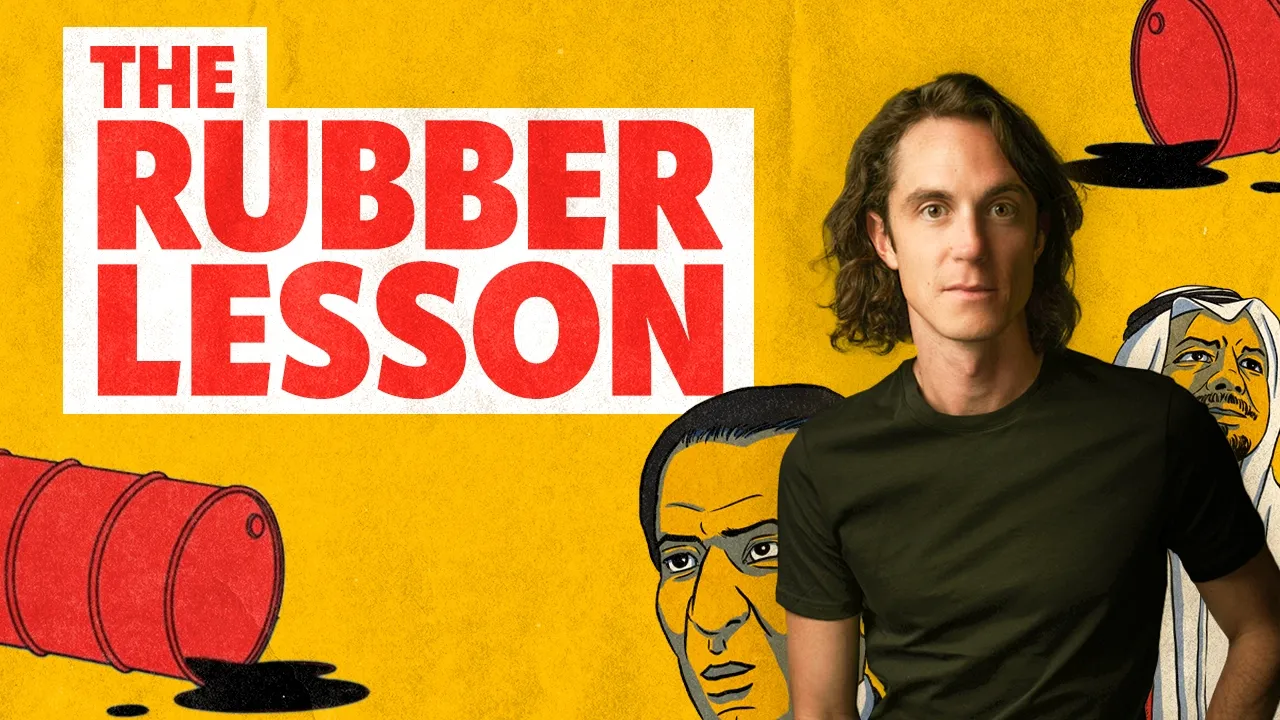
Source: Why Oil Will Never Hit $200 Channel: Maxinomics Published: May 8, 2026 | Archived: May 12, 2026
Video: Why Oil Will Never Hit $200
Channel: Maxinomics
Published: May 8, 2026
Duration: 18:19
Views: 305,828
Category: News & Politics
Video ID: 2L5buspfCNY
Description
The Real Reason Saudi Arabia Will Always Side With America
Eleven men sit around a table deciding the price of oil for the entire world. Ten of them want to raise it. One walks out, flies home to talk to his king, comes back eight hours later, and quietly torpedoes the whole thing.
That moment is why the Middle East looks the way it does today.
This isn’t really a story about diplomacy or alliances. It’s a story about the math underneath all of it — what it actually costs Saudi Arabia to pull a barrel of oil out of the ground ($3), what Iran needed to sell it for to keep their economy from collapsing ($19), and the one thing that genuinely terrifies a petrostate: not low prices, but prices so high the world finds a replacement and stops needing you at all.
In this one we get into:
— Why the Ghawar oil field is basically cheating, and how Saudi Arabia gets 10,000 barrels out of a well using the same electricity it takes Texas to get 500
— What a “fiscal breakeven” price actually is, and why $40 oil is fine for some countries and a death sentence for others
— How the Stevenson Plan killed the British rubber monopoly in the 1920s, and why every Saudi oil minister since has been quietly haunted by it
— Why Saudi Arabia did to American shale in 2016 what they did to Iran in 1976 — and what that reveals about who the kingdom is actually loyal to
The short version: Saudi Arabia doesn’t pick friends. It picks self-interest. Sometimes that lines up with America. Sometimes it doesn’t. The oil math explains all of it.
#Maxinomics #Oil #SaudiArabia #Iran #OPEC #Geopolitics #Economics
00:38 Breakeven Oil 03:05 The Day Saudi Arabia Betrayed Iran 04:47 Petrostates 09:53 The Rubber Lesson 11:29 Oil Per Person 14:01 Is It America’s Fault? 15:02 Footnotes
Follow Maxinomics on social: X: https://x.com/maxinomics Instagram: https://www.instagram.com/maxinomicsmb TikTok: https://www.tiktok.com/@maxinomics
This video was sponsored by tastytrade, inc. This does not imply that tastytrade endorses, recommends, or supports any content, opinions, and materials discussed or displayed in this video. tastytrade is a registered broker-dealer and member of FINRA, NFA, and SIPC.
Tags
maxinomics morning brew investing investment explainer business business news economics
Transcript — YouTube panel (English
) (human-authored)
0:00 This video is about the one existential threat the Middle East worries about. It’s the real reason Saudi Arabia will always side with America. A story that has rarely been told. An exact date and exact time the Middle East morphed into what it is today. What happened on that date split the Middle East into two groups. Friends became enemies. Neutral attitudes became aggressive.
0:17 Through this story, the present and future Middle East comes into a perfect focus, only achieved by a deep understanding of the selfishly crude world of oil, controlled not by the outsiders, the buyers of oil, but by the countries who would collapse if the price of oil went to zero. If the world stopped buying the one thing they have to sell. This video was sponsored by Tasty Trade.
0:36 More on them later. There’s the price you can sell one barrel of oil for, and then there’s how much it cost to get that barrel out of the ground. We call this the break even price. Sell the oil coming out of a well for less than the price it cost to pump it. You’re not breaking even profit loss. The plains of Texas desert to Saudi Arabia. Canadian tundra. The shallow waters of the North Sea to the deepwater rigs dotting the Gulf of Mexico.
1:00 The break even price to pull out a barrel of oil is different everywhere. Trapped in limestone rock full of tiny holes and cracks. Oil flows to the ground that makes up the world’s largest oil field. Gua like a sponge. $3 is all. It cost Saudi Arabia to get a barrel of oil out of this place. By far the lowest of any country. Yes, they have a lot of oil, but that’s only part of the Saudi miracle.
1:20 We’re using the same amount of electricity that takes a well in Texas to get 500 barrels of oil. The kingdom will get 10,000 force to the surface by pushing an endless supply of sea water taken from the Persian Gulf down into the oil filled rock, creating pressure that pushes oil up through the holes drilled in it, funneling it through a series of pipes that turns right around and goes back to the ocean, where the oil flows on a waiting tanker sitting on water that will eventually be used to deliver more oil to them.
1:45 A round trip just 200 miles long to deliver the world’s favorite type of crude called Arab light. There is no other place on earth where it’s this cheap to get oil out of the ground. Every fields break. Even price stays roughly the same over its lifetime. Of course, what does not is the price. You can sell a barrel of oil for the whole fracking phenomenon in the United States over the past decade.
2:05 Every well that’s drilled has a very short lifespan. If the Galois oil field is like the sun, a well in this is like a bottle. Rocket oil needed to be 60 to $80 for the math to work, which it very much did with oil at $115. When the fracking boom kicked off. Everybody wants that money until there are too many wells, too much oil, and the price of oil starts to fall. And seven years after the boom started, oil at $40.
2:28 80% of the companies drilling for oil in those areas were either bankrupt or on the verge of bankruptcy. It was a catastrophic period for that industry. Oil at $80. Every oil field around the world is minting money. $60 for the tar sands of Canada. They’re starting to feel the pain. $40 the American fracking fields stop drilling wells. $20. The only oil fields not anxious are those in the Middle East.
2:50 Well, they’re not anxious the way other oil fields are anxious. Their anxiety at $20 is a much deeper, restless worry because there’s a type of break even price calculated only for the countries, mostly in the Middle East, whose entire society rests on the price of oil. 13 men gathered in the East Room of the Gulf Hotel. It was Qatar’s turn to host the annual meeting, where the country’s controlling 70% of the world’s oil would set the price people would pay for it.
3:16 This was brand new power for these 13 countries for the 90 years before discovering how to raise the price of oil without asking for anyone’s permission. Oil had slowly drifted up from $1 to just $3. Seven companies had controlled everything about oil, pulling it out of the ground, moving it around the world, refining it into the gasoline or diesel that was pumped into your car.
3:34 One of their gas stations, and of course, the price. Then, quite suddenly, they did not. Iran kicked the oil companies out first, then Libya, Iraq. Within the span of six years, every major oil country had taken back their oil fields from whichever of these seven companies called the seven sisters had controlled them, doing the most rational thing what anyone would do. The country started charging more for the oil coming out of their land.
3:55 What are people going to stop driving cars? This was such an upheaval for how the world worked at the time, that those few sensors just do not do it justice. 100 years, $1 to $3. But those numbers $1 and $3 are very deceiving. $1 back in 1900 was worth $38 today, but $3 in 1970 is only worth $27 today, which means the price of oil had actually done nothing but go down a lot for almost a century.
4:21 This is all anyone alive had known. Oil didn’t get more expensive. It got cheaper. These 13 men were deciding how much to continue breaking away from that pattern. How much to once again make the price go up with the current price of $12, it had taken just four short years to make $3 look like a gift. 11 of the people in the room now want it to be $13.50. Only two did not they debate?
4:43 They argued. They contemplate the impact on the world. Every leader of every country has been ringing these gentlemen’s phones off the hook. Please do not raise again. We are begging you. And then it begins. Saudi Arabia cannot support this. Then it’s Iran and ten others against one. You. You do not understand the consequences of what you’re asking for. We have raised the price of oil 500% in four years.
5:06 The world is cracking under that pressure and it is still not enough. Gentlemen, I need to consult with my king. The man representing Saudi Arabia gets up suddenly. He hadn’t made any indication he was planning to go anywhere that day. Walks out of the hotel, gets in a car which takes him to a plane which flies to Jeddah on the other side of the Arabian Peninsula. Eight hours pass.
5:25 The other men are just hanging around, waiting. Tick tock, tick tock. Finally, at 10:18 p.m.. Which we know because this meeting is very well documented. Reporters everywhere, the entire world was completely on edge. What are we going to do if the price of oil goes up again? Yamani arrives back at the hotel. That’s his name, Ahmed Zaki Yamani, the Saudi oil minister. The other members, they’re alerted.
5:45 And within an hour, all 13 are back in the East Room. What happened next? Radically changed the trajectory of the Middle East. The trajectory we are still on today. I have spoken with the Crown Prince. Saudi Arabia will accept a 5% increase. No more. 5% is not. I’m not finished. We will also increase our production 8 million barrels to 11 million per day. At the lower price, you would flood the market against your own members.
6:13 We will produce what the market requires. 150 doesn’t seem like a big deal, right? It’s still at $12. Who cares? You’re still minting money. But look at who the loudest one in favor of the increase was. Iran. Three years after this meeting, Iran has a major bloody full tilt revolution, the beginning of which traces right back to this meeting. To be explicitly crystal clear. It would be incorrect to say this is the singular reason, but the evidence and path of destruction from 1976 to the Iranian Revolution in 1979 make it very clear that this was the moment it went from here on, a little unstable to we should make sure our embassy in Iran has an evacuation plan.
6:53 Let’s get that settled. 1350 is what those 11 members, particularly Iran, wanted to get out of this meeting. But what Iran needed was 1350 at this meeting. 15 at the next meeting. 19 within two years, Iran, more specifically, the Shah of Iran, the somewhat unpopular leader of Iran in 1976, needed $19 per barrel to pay for everything needed to run the country, help getting back into power by the U.S.
7:18 to reclaim the throne he once sat on. In the 1950s, the Shah was doing everything the Middle East had never done. He’s building out the electric grid, funding education, railways, spending lavishly on the military. Some say the fifth largest military in the world at the time, a massive new subway system for Tehran was in the works. All sorts of projects, all promised to the people promising a booming economy, jobs, a rising tide that would lift everyone’s boat, all of it resting on the price.
7:42 Iran could sell a barrel of oil for their called Petro states for a reason. A country whose economy is heavily dependent on the extraction and export of oil or natural gas. This is how much of government spending for these countries is funded by selling oil and gas. Back in the 70s, it was an even bigger chunk. Now you can see the problem here. Oil falls in the ability of your country to function becomes a very real question.
8:05 We call this the fiscal break even oil price. The price of oil must be for these governments to not be spending more than they are bringing in. All the Shah had been saying for five years this oil number go up. Making more and more promises. The amount of money needed to pay for all of those promises had quadrupled over the same time period, all spectacularly unshakable linked to oil number go up like being at a blackjack table, having way too much money riding on the hand, and the dealer draws the exact card that wipes you out.
8:33 Saudi Arabia vetoing the price increase Iran needed hit like the dealer collecting your chips while you sit and watch. Saudi Arabia was getting worried about Iran’s growing power. That’s true. America pushed Saudi Arabia to do it so oil prices wouldn’t keep going up. Also true, but what is the most true about all the truth surrounding the different perspectives on why this happened? Exactly.
8:52 The biggest threat to a resource like oil, it’s not someone else who has the same resource. It’s a price so high that your customers find a way to stop needing you at all. Saudi Arabia cannot let what happened to the rubber industry happened to them. While we’re on the topic of oil, the price of it has been moving up and down a lot over the past couple of months. The perfect environment for the sponsor of this video.
9:14 Tasty trade and all in one investing platform built to help active investors learn, analyze and trade with confidence. Because when supply shifts, breaks or is just uncertain, prices follow and traders who understand why can act sooner. And we see this situation happening over and over lately. Oil chips, memory, software, freight. Every other day, something new seems to appear on the list of things we either have too much or too little of.
9:35 Tasty trade is built for active investors who want to analyze these moves and trade them, not just watch them happen. It’s been voted the best platform for options trading multiple times because volatility and helping active investors management is what they were built for. So thank you to Tasty Trade for sponsoring this video. Now let’s get back to it. A long spirals cut to a rubber tree, letting the milky white sap rubber flow into a bucket.
9:59 Add a little bit of acid, some sulfur and once dried you have yourself the most important commodity that existed in 1900 blocks of natural rubber. Everyone was just now starting to need it. Tires, industrial parts, military equipment like the gas mask for World War One. It all came from tapping rubber trees first from Brazil, then after Henry Wickham somehow managed to smuggle 70,000 rubber tree seeds past Brazil.
10:20 Customs from Malaysia, where it turned out, the trees grew much better. The rubber was better, the price was way better. A tapper in Malaysia could collect more rubber in an hour than one in Brazil could in a week. England, who had sent Wickham to steal the seeds, then knighted him when he successfully did it, controlled it all. All this new rubber supply led to more people demanding it.
10:39 We don’t care if there are trees in Brazil. They can’t produce enough to meet 5% of global demand. If you want the other 95%, you play by our rules, said the British official James Stephenson. Raise prices, cut shipments. The price doubled, then tripled. Germany, America, the Soviet Union. Everyone was like, screw this. In the age of tanks and cars, you couldn’t mobilize an army or grow a country without rubber.
10:58 It needed to be a stable, reasonably priced supply. Kicking off a true arms race. No different than chips today that ended with synthetic rubber thrown in a test tube that was actually better than natural rubber. Within 20 years, no one gave a passing thought to Britain’s rubber trees and henceforth every business school would forever study how the Stephenson plant killed the British monopoly on natural rubber, including the Saudi oil minister Yamani, the guy that left the meeting in Doha and came back having studied it deeply.
11:25 He said this while talking about the link between rubber and oil. The Stone age didn’t end because we ran out of stones, and the age of oil won’t end because we run out of oil. Take all the oil. Saudi Arabia had divide by the number of citizens in 1976, with oil at $12 per barrel, every Saudi citizen was sitting on $2.3 million worth of oil. The oil is very high quality. It’s easy to get out of the ground, and the country has very little to fall back on.
11:50 As a desert nation, Iran had $150,000 in oil per citizen. Why wait, thought the shot oil to the moon. We’re not going to live off this indefinitely. We obviously can’t. We don’t have enough. I want that money then, now. So we can get on to it. Passed oil onto the next phase. Exactly the mindset that makes the king of Saudi Arabia very nervous. Far more nervous than low prices. No no no no no oil being too high.
12:13 And the 2.3 million might end up at zero within 30 years. Then one nuclear was in vogue. Solar was definitely a conversation. Electric cars were even being made in small numbers as necessary as it is for the world to function, there is a very real price ceiling for oil. The price at which a replacement becomes attractive. Under no circumstances could Saudi Arabia let that happen.
12:33 You would flood the market against your own members. They would, and they did, sending Iran into a tailspin. Not only did Saudi Arabia say no to the price, within a few months, they were dumping an extra 3 million barrels of oil on the market every day. Iran’s economy started to buckle. Groups of people who really dislike the Shah seized the opportunity, force him to flee, overturned his plans, established their own rule.
12:55 And that is where Iran remains today, frozen in time. 40 years later, they did it again, proving what Saudi Arabia is truly loyal to. A twist of fate no one saw coming because no one saw America becoming a major supplier of oil again, the steadfast ally to America opened the taps and flooded the newly booming American fracking market right into a massive wave of bankruptcies, not to protect against high prices.
13:18 This time, the 2016 version was to protect their share of the market. The type of crude pulled out of Texas competes directly with the type pulled from the oil fields of Saudi Arabia. This was the thing the U.S. had wanted for decades. Countless U.S. politicians ran on ending dependance on the Middle East. It was a major, tried and true part of everybody’s campaign red, blue, yellow, green.
13:38 But that was not in Saudi Arabia’s best interest. So despite a decades long, cozy relationship with America, they made the most rational decision they could make and push the price down. Of course, the U.S. could tolerate it better than Iran, but it was the same thing. Saudi Arabia doesn’t choose France. It chooses self-interest in a way that only such an elegantly simple situation affords.
13:56 The only thing that matters to the kingdom is oil, because it is the only thing they have every way of spinning. What happened between the U.S., Iran, and Saudi Arabia that continues to this day is a service to a different agenda. Is there a kernel of truth to parts of it? Of course. But that spin sits above the fundamental layer, where actions can easily be explained by what exactly the price of oil represents to different groups of people.
14:18 One of the more interesting ways to look through this whole situation is to read through the perceptions from a variety of other countries, how they view who did what and why, and what it means for everyone else. And while they’re not identical, they all pivot around. The same idea of America did this to us, which is a far more useful story than the true one, which is that Saudi Arabia made the most rational economic decision.
14:39 A country with 23,000 barrels of oil per citizen could possibly make for that part of the story. The US just so happened to want the exact same thing lower oil prices, a partnership formed out of mutual interest. But when that interest has diverged, Saudi Arabia unwaveringly follows its own interest. Oil must remain dominant and the kingdom must remain the king of it. It’s time for everyone’s favorite part of these things the footnotes, interesting bits and notes that, for a variety of reasons, didn’t make it into the video, but I think are still very much worth sharing.
15:10 But first, it has been brought to my attention that four out of five people who watch these videos regularly are not actually subscribed to the channel. Can you do me a big favor? If you enjoy the show? If you like these videos, please can you hit the subscribe button? It truly does help the channel. There is a direct relationship between how big the channel is and how many videos we get to make.
15:29 Look at this list of videos I would love to make, and the more videos, the better they get. It makes a huge difference. Thank you very much for those footnotes one. Yes, the US played a very real role in the turmoil of Iran during the middle of the century. Without doing some very impressive gymnastics, it would be almost impossible to make a credible argument that the US wasn’t the critical piece of machinery that overthrew the democratically elected Mosaddegh in 1953 to reinstall the Shah.
15:57 It was technically the king back to his throne. Some will say it was not purely the U.S. there was ground level support for getting rid of most today. But of course there was. Every democracy has some number of people that would work to overthrow the person power if given a realistic opportunity. Iran was taking back its oil. Britain was outraged about this. Britain really did lead the charge, and eventually the US government came around to supporting Britain, partially because the US intelligence agencies were afraid of communism.
16:23 Ruling in Iran, but also to a significant but lesser degree. Oil number two, those rubber trees in Brazil. That rubber was in such high demand that two little towns in Brazil were some of the wealthiest in the world. They controlled the entire rubber supply. They became so wealthy they were doing things like sending their laundry to Europe to be washed. This is in the time where it would take many weeks to get across the Atlantic, and many weeks back when I said rubber was the most important commodity at the turn of the 20th century, it was not an exaggeration.
16:50 It unlocked an incredible number of other technologies. Charles Goodyear of Goodyear Tire fame. He figured out how to get rubber to behave at a much wider temperature range. That was the big thing with this process vulcanization. This led to durability because you can’t have rubber used in tires if the rubber melts. When a car is doing 40. Number three, worth shedding with the idea that the nuclear power plant built out in the U.S.
17:12 fell off an absolute cliff in the 1970s, odd, right? Given it should have been a tailwind, get off oil and on cheaper nuclear. But the rise in oil prices triggered a massive surge in inflation that dwarfed anything we’ve seen over the past five years. When inflation goes up, we’ve seen interest rates go up too. So amongst the fear being spread, new regulations, the cost to borrow money that had to sit for five, six, seven years with no return while nuclear plant was being built, that was a significant factor in the death of nuclear, the second most popular video we’ve ever put out, it’s called They’re Lying to You About nuclear.
17:42 Very entertaining, very watchable. Guaranteed to make you think I am biased? Yes, but I strongly believe it is the best video on nuclear on this platform. Maybe even the internet. All right, that’s it. Thank you. It was a pleasure having you here. Hit that subscribe button. I’ll see you in the next video.
- Reference: https://www.youtube.com/watch?v=2L5buspfCNY
Write a comment