Why Brahminical Sociology Confuses the Map for the Territory
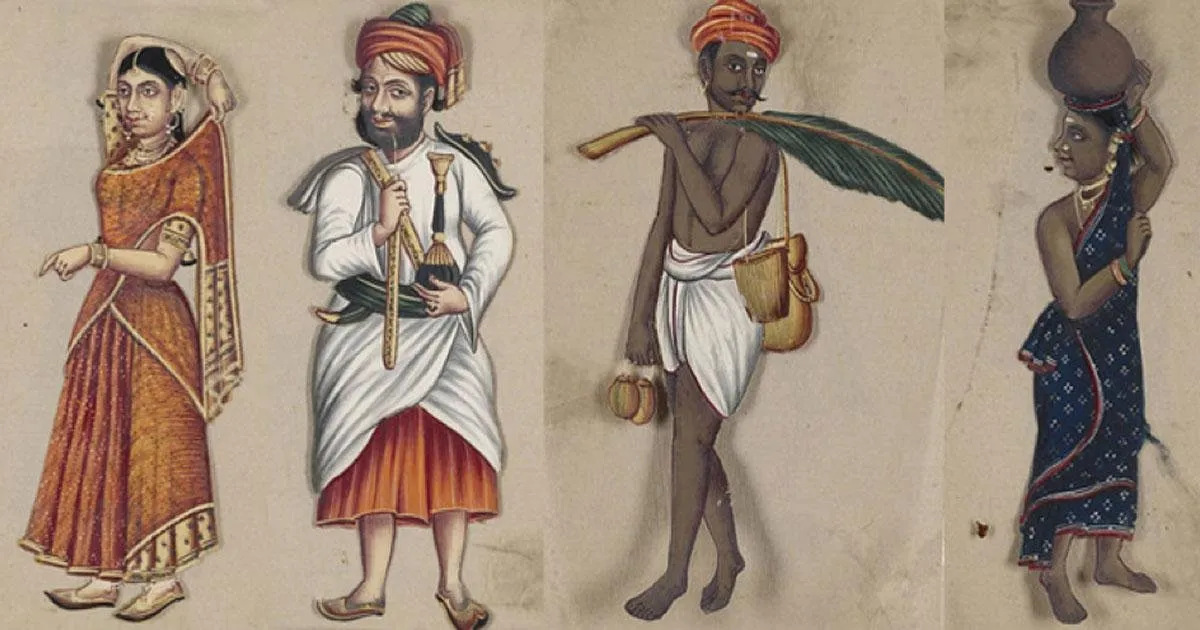
I want to start with an image.
Imagine a cartographer who has never left his study. He draws maps of a country he has never visited. He names mountains he has not climbed. He draws borders that do not exist on the ground. When villagers tell him his map is wrong, he says: “No, you misunderstand. The map is the truth. You simply do not know how to read it.”
This is Brahminical sociology.
For over a century, Indian sociology has been dominated by a single assumption: that the Varna scheme — the four-fold order of Brahmins, Kshatriyas, Vaishyas, and Shudras — is the master key to understanding caste. Every textbook, every lecture, every introductory course begins with the Purushasukta hymn. The cosmic man. The mouth, the arms, the thighs, the feet. A neat, four-fold hierarchy presented as the origin of everything.
But here is what no textbook tells you: The map is not the territory. And the cartographers have never asked the feet for directions.
Shudras make up the 50 to 70 percent of Hindus who are born into the category that the Manusmriti defines as “servants of the twice-born.” I have lived my entire life inside the Brahminical map. I know every contour, every trap, every lie disguised as a natural fact. And I am here to tell you: the map is wrong.
The Demographic Fact That Destroys the Four-Fold Fantasy
Let me give you a number.
Six percent.
That is the approximate share of the Hindu population that is Brahmin. Six percent. In some states, less. In no state, more than ten.
Now let me give you another number.
Sixty percent.
That is the approximate share of the Hindu population that is Shudra. In some states — Tamil Nadu, Karnataka, Maharashtra, Andhra, Bihar, Uttar Pradesh — the Shudra proportion is even higher. Add the Dalits and Adivasis, and the non-Brahminical majority crosses eighty-five percent.
So here is the four-fold order: six percent at the top, claiming supremacy over sixty percent at the bottom. A tiny minority has convinced an enormous majority that their subordination is divine, natural, and just.
This is not social stratification. This is not a “macro-structural scheme.” This is a minority domination system that has survived for millennia by one trick alone: making the majority believe that the map is sacred.
Think about what this means. If you are a Shudra, you are born into a category that includes everyone from wealthy landed peasants to landless labourers, from powerful regional chieftains to bonded servants. The Varna label “Shudra” tells you nothing about a person’s occupation, their wealth, their education, their power. It tells you only one thing: not twice-born. It is a negative definition. A hole. An absence.
And yet, this absence determines everything. Where you live. What you eat. Whose water you drink. Whether you must step off the road when a Brahmin passes. Whether your child can sit next to a Brahmin’s child in school. Whether your marriage is considered valid. Whether your gods are real or folk superstition.
The map gives you nothing positive — no identity, no history, no culture — only a lack. And then it calls this lack your dharma.
The Mobility That Should Not Exist
Here is the first crack in the Brahminical map.
If Varna were a real structure — if it actually determined social position in the way that textbooks claim — then mobility should be impossible. Your Varna is assigned at birth. It is fixed. It is eternal. The Manusmriti is explicit: “For the Shudra, the only dharma is service to the twice-born without malice.” That is it. That is all.
And yet.
Every region of India has stories of Shudra Jatis that became Kshatriyas. The Marathas of Maharashtra. The Vokkaligas of Karnataka. The Yadavs of Uttar Pradesh and Bihar. The Kurmis of Bihar. The Vanniyars of Tamil Nadu. The list is long. The process has a name: Sanskritization.
Here is how it works. A Shudra Jati accumulates wealth. Maybe through agriculture, maybe through trade, maybe through political power. They adopt Brahminical customs — vegetarianism, wearing the sacred thread, employing Brahmin priests. They construct a myth of Kshatriya origin. And over time, if they are powerful enough, the claim sticks. They become “clean.” They move up the map.
Now, ask yourself: If Varna is a structure — if it is the cause of social hierarchy — how is this possible?
A real structure constrains. It limits. It determines outcomes. You cannot wake up one morning and decide that gravity no longer applies to you. But caste mobility happens constantly. It is not rare. It is not exceptional. It is the normal outcome of Shudra accumulation of power.
What does this tell us? It tells us that Varna is not the cause. Varna is the prize. It is the ideological reward that successful Shudra Jatis claim after they have already achieved power through other means — land, arms, money, political organization.
The cartographers have it backwards. The map does not create the territory. The territory creates the map — and then the map is used to control the territory.
The Local Hierarchy Problem
Here is the second crack.
If Varna were a universal macro-structure — the same across all of India — then a Shudra in Tamil Nadu should have roughly the same social position as a Shudra in Bihar. But this is not true. It is not even close to true.
Consider the Thevars of Tamil Nadu. The Thevars are a Shudra Jati — powerful, landowning, politically dominant in the southern districts. They have produced chief ministers. They control local economies. They are feared and respected. And yet, in the Brahminical map, they are Shudras. Feet. Servants.
Now consider the Dusadhs of Bihar. The Dusadhs are also Shudra — or Dalit, depending on the classification — landless labourers, manual scavengers, among the poorest and most oppressed communities in India. They own no land. They have no political power. They are beaten and exploited. And yet, in the Brahminical map, they are also Shudras. Feet. Servants.
The same Varna label covers a dominant regional chieftain and a landless labourer.
The label explains nothing. It predicts nothing. It is not a sociological category. It is a blanket — thrown over an enormous, diverse, internally stratified population to create the illusion of a single, unified, natural hierarchy.
This is not a map. This is a smear campaign.
What Actually Exists: Jati
So if Varna is a lie, what is real?
Jati.
Jati is the actual unit of social life in India. A Jati is an endogamous, birth-based, kinship-linked group with a traditional occupational association and a specific place in the local hierarchy. There are thousands of Jatis. They change over time. They rise and fall. They fight with each other. They ally. They merge. They split.
Here is what a Jati does:
Endogamy. You marry within the Jati. This is not a spiritual rule. It is a material strategy. By controlling marriage, the Jati controls property, knowledge, trade secrets, and social capital. If you marry outside, your children do not belong. Your land leaves the group. Your status is diluted. Endogamy is the engine of caste as a system of monopolies — marriage monopoly, occupation monopoly, ritual monopoly.
Occupation. Every Jati has a traditional occupation. But here is the nuance that textbooks miss: occupation is not fixed. It is a tendency, not a law. A Shudra peasant Jati that acquires weapons becomes a Kshatriya. A Shudra trading Jati that loses its wealth becomes a service caste. What matters is not what you do — it is what you claim. And what you can make others accept.
Local hierarchy. Every village, every town, every region has its own hierarchy of Jatis. A Jati that is dominant in one district may be subordinate in the next. A Jati that is “clean” in one state may be “unclean” in the neighboring state. Hierarchy is local, negotiated, and contested. It is not imposed from above by a four-fold divine order.
Jati is the territory. Jati is where caste actually lives — in marriage negotiations, in land disputes, in temple entry, in water sharing, in the daily texture of humiliation and dignity.
And what is Varna? Varna is the ideological gloss. It is the Brahminical attempt to take this messy, dynamic, locally varied reality and freeze it into a single, eternal, divinely sanctioned hierarchy. It is the map that claims to be the territory so that the cartographer — the Brahmin — can claim to rule.
The Avarna Problem That No Textbook Resolves
Here is the third crack. And it is a crack that runs straight through the foundation of the Brahminical map.
The Varna scheme has four categories. Brahmin, Kshatriya, Vaishya, Shudra. Four. That is it.
But what about the Dalits? The Adivasis? The nomadic tribes? The castes that are considered “untouchable”?
The textbooks call them Avarna — outside the Varna system. Outside.
Now, ask yourself: If Varna is the “all-Indian macro-structural scheme” — the framework that organizes all of Hindu society — how can entire populations exist outside it?
A truly universal structure has no outside. It covers everything. That is what “universal” means.
The existence of the Avarna is not a minor exception. It is a logical contradiction that should shatter the entire Varna framework. If the scheme cannot account for one-fifth of the population, it is not a scheme. It is a claim. A claim made by those inside about those they exclude.
And what is the claim? The claim is: “You are not even worthy of being placed at the feet. You are outside. You are nothing.”
The republic has tried to resolve this contradiction by granting Scheduled Caste status. But the contradiction remains. The state uses Varna categories for some purposes (reservation for OBCs, which includes Shudras) and abandons them for others (Dalits are SC, not Varna). The result is a conceptual mess that no amount of legal tinkering can fix.
Because the problem is not the implementation. The problem is the map.
What the Shudra Knows That the Brahmin Does Not
Let me tell you what every Shudra knows, from childhood, in their bones.
The map is not for us.
The Varna scheme was not created by us, for us, or with our consent. It was created about us — to place us at the feet, to define us as servants, to naturalize our exploitation. It is a weapon. And we have spent our entire lives learning to dodge it, deflect it, and survive it.
But here is the thing the Brahmin does not understand.
We have never believed the map.
Not really. Not deep down. The Brahmin believes his own propaganda. He thinks that because he has convinced himself that Shudras are born to serve, we have internalized it. Some of us have. But most of us — the majority of Shudras — have simply acted as if we believe, because the alternative is violence.
We know that the Marathas were not born servants. We know that the Yadavs were not born to carry the Brahmin’s burden. We know that our Jatis have histories of resistance, rebellion, and dignity that the Brahminical texts erased. We know because our grandmothers told us. Because our folk songs remember. Because our blood remembers.
The Brahminical map is a lie. And we have always known it.
A Methodological Challenge to Brahminical Sociology
So here is my challenge to every sociology department in India.
Stop starting with Varna.
Stop beginning every course with the Purushasukta. Stop treating the Manusmriti as a sociological text. Stop assuming that the Brahminical account of caste is neutral, descriptive, or accurate.
Start with Jati.
Start with the ground. Pick a village. Pick a Jati. Ask: Who marries whom? Who owns what land? Who controls the local panchayat? Who gets beaten? Who gets fed first? Who drinks from which well? Who steps off the road for whom?
Document the actual hierarchy. Not the divine one. The lived one.
And then — and only then — ask: How does the ideology of Varna serve to obscure, justify, and naturalize this local reality?
You will discover what Shudras have always known: Varna is not the cause. Varna is the cover.
What Annihilation Means for the Shudra
The textbooks talk about “caste reform.” About “upliftment.” About “reservations.” About “inclusion.”
The Shudra does not want inclusion.
Let me repeat that. The Shudra does not want inclusion.
Inclusion means being brought into the Brahminical map. Being given a better place at the feet. Maybe not the feet — maybe the ankles. Maybe the knees. But still somewhere below the mouth, the arms, the thighs.
Annihilation means something else.
Annihilation means tearing up the map. Burning it. Starting from the ground — from Jati as a real, material, kinship-based unit of social organization — and asking: What would a society look like that had no Varna at all? No divine hierarchy. No birth-based servitude. No category of “twice-born” and “once-born” and “never-born.”
Annihilation means refusing the question that Brahminical sociology has been asking for a century: “How do we fit Shudras into the four-fold order?” The correct question is: “How do we end the four-fold order so that Shudras — and everyone else — can be something other than a position in a Brahminical map?”
The republic will not answer this question. The republic is built on the map. The republic’s courts, its bureaucracy, its educational system, its very conception of “secularism” and “merit” and “equality” are all Brahminical — disguised as universal, but serving the six percent.
The Shudra majority must answer it ourselves.
The Feet Will No Longer Carry
I return to where I began.
The Brahminical map places the Shudra at the feet. The feet exist to carry the weight of the body — the mouth that recites the Vedas, the arms that wield power, the thighs that trade and profit.
For four thousand years, the feet have carried.
But here is what the map does not show: The feet can refuse.
The feet can stop moving. The feet can turn around. The feet can walk in a different direction — a direction the cartographer never imagined, because he never left his study.
The Shudra majority is not a Varna. It is the infrastructure of India — the labour, the land, the votes, the muscle, the hands that build every brick, lay every road, harvest every crop. The republic runs on Shudra labour. And the republic denies Shudra dignity.
The map is not the territory. But the territory — the land, the labour, the body, the vote — belongs to the Shudra.
The Brahmin drew the map.
The Shudra will redraw it.
Not by becoming Brahmin. Not by climbing the ladder. Not by seeking inclusion in a system designed for our subordination.
By refusing the map entirely.
Write a comment