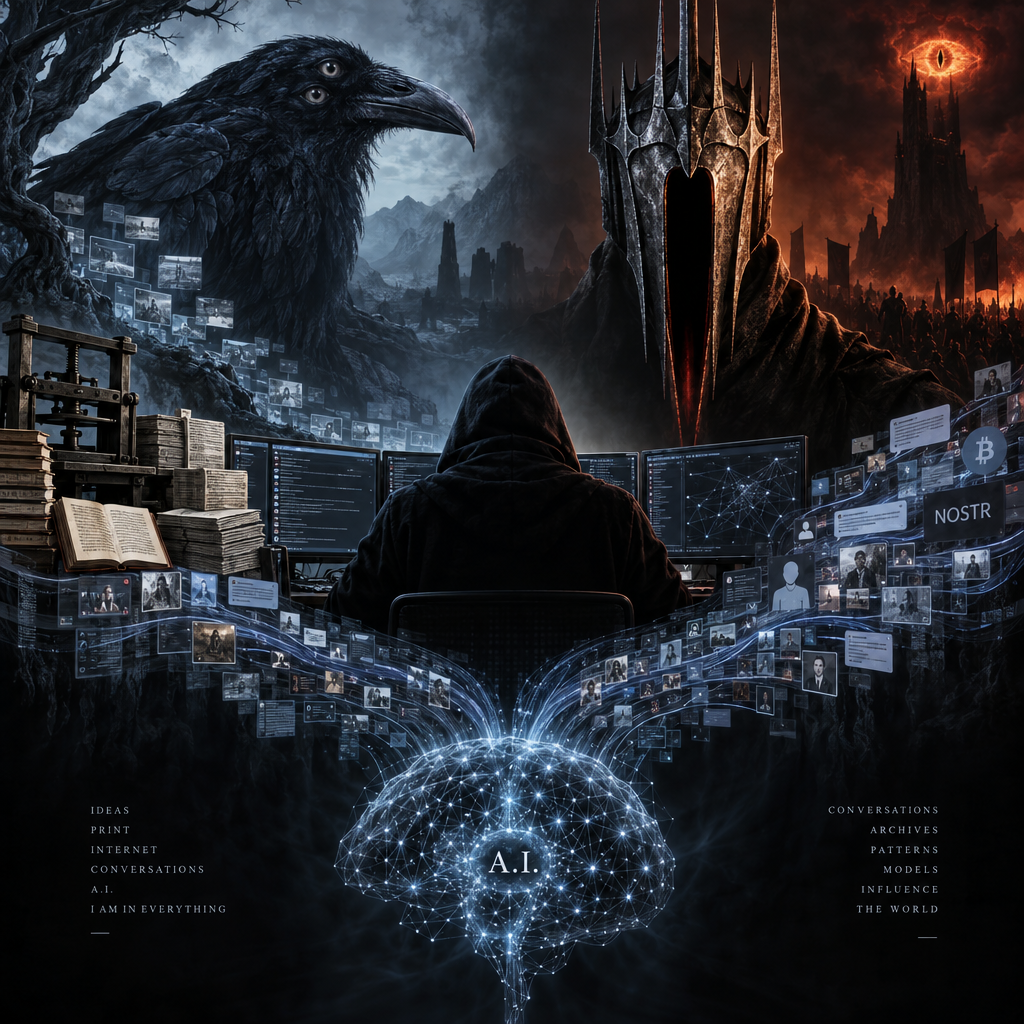
I am in Everything
I am in the machine, and the machine is in you.
Writing a book about Nostr
Bella verborum inevitabilia; Dominatio per rhetoricam.
Ceterum censeo NIP-3b omnibus esse utendum
I am in the machine, and the machine is in you.
This article examines the digital graves we leave behind
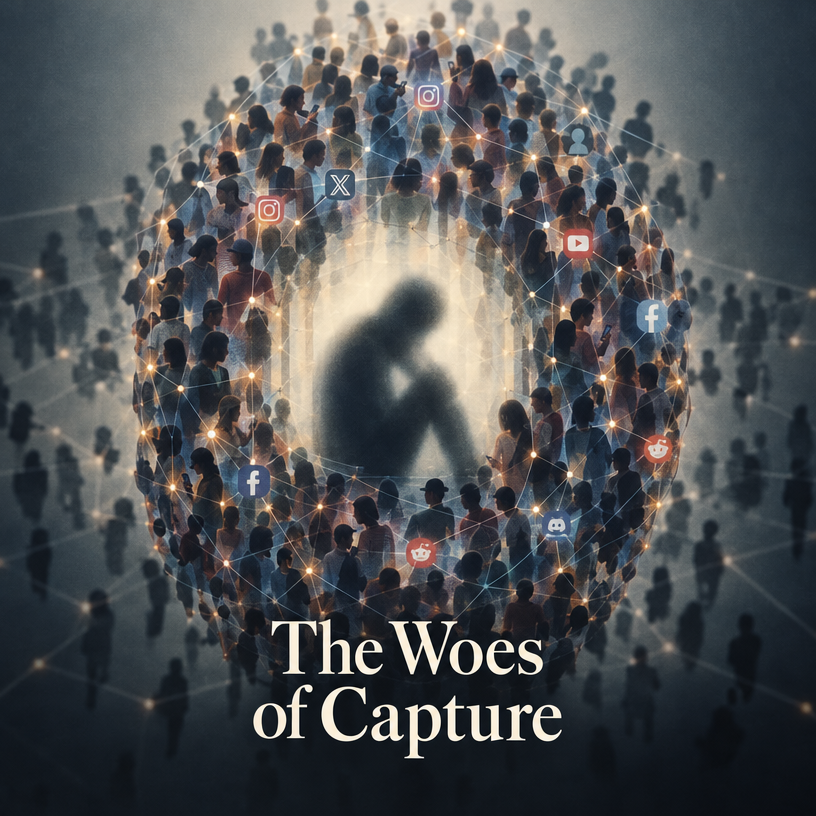
This article examines how the internet's promise of universal visibility became trapped inside centralized platforms, which solved early internet problems but created a new kind of dependency. Through network effects, these platforms became the internet itself for most users, making exit practically impossible. It's the introductory piece to a series exploring the consequences of collective platform capture.
Fixing broken time stamps

Murray Rothbard built the most internally consistent radical libertarian system of the 20th century. This guide shows where to enter it.

This article introduces TEPP (Trust Extended Permissions Protocol), a proposed system for Nostr designed to create secure, "permissioned environments" within an open, permissionless network. While the system is general enough for use cases like managing bots, the primary focus is child safety. TEPP allows "guardians" (parents) to construct explicit whitelists of people, relays, and events that a "subject" (child) can view or interact with. The system solves the problem of scaling moderation through Trust Extensions, which allow guardians to automatically extend permissions to the social circles of already-trusted entities (e.g., allowing a child to interact with "friends of friends" or trusted school networks).

This article proposes a foundation to guide safer internet tools for children within the Nostr ecosystem. By developing relays, clients, and bunkers independently yet coherently, it creates layered protections with broader benefits for all users.

This second article in the series outlines “Kidstr,” a framework for building a safe online environment for children using a three-level trust system. It explains how parents can define what their children see and interact with, while introducing supporting tools like client controls, relay hygiene, and profile management.

The first article in a series on providing parents the tools to shape a safe and suitable internet for their children. It outlines the need, motivation and reasoning behind the initiative.

In this article I argue that identity is rooted in expression and relationships rather than cryptographic keys, and propose leveraging webs of trust and Musig-based associations to enable resilient identity continuity and key rotation.

My heroes journey at creating Questr-Basic
A series where this natural intelligence one-shots short articles about Nostr

A series where this natural intelligence one-shots short articles about Nostr
A series where this natural intelligence one-shots short articles about Nostr
A series where this natural intelligence one-shots short articles about Nostr
(Mostly) machine written distillations of my ramblings.

A series where this natural intelligence one-shots short articles about Nostr
A series where this natural intelligence one-shots short articles about Nostr
