
German speaking users | Deutsch sprechende Nutzer
Eine Sammlung von npubs, die auf Deutsch kommunizieren. Zusammengestellt für alle, die sich vernetzen, Ideen austauschen oder in der Sprache zusammenarbeiten möchten. Diese Liste erleichtert das Finden deutschsprachiger Teilnehmer*innen auf Nostr, egal ob du Diskussionen, Übersetzungen oder Community‑Projekte suchst. Durchstöberen, folgen und mit den npubs interagieren. Diese npubs halten die Unterhaltung auf Deutsch am Laufen. A collection of npubs who converse in German. Gathered for anyone looking to connect, share ideas, or collaborate in the language. This list makes it easy to discover German‑speaking participants across nostr, whether you’re seeking discussions, translations, or community projects. Feel free to browse, follow, and engage with the npubs who keep the conversation flowing in German.

Wenn der Körper „Stopp“ sagt
Das innere Knacken offenbart eine uralte Wahrheit. Erkunde Körperwahrnehmung, klare Hingabe und die Stärke der Verbundenheit. Eine Einladung, deinen natürlichen Rhythmus zu ehren.

U.G. Krishnamurti – Erleuchtung? Nonsens.
Der Mann, der auch die Erleuchtung noch wegnahm. Vier Männer. Eine Frage. Wer bin ich? Spinoza nahm die Welt. Eckhart nahm Gott. Stirner nahm die Autorität. U.G. – ließ nichts übrig was überhaupt noch weggenommen werden könnte.

Local-First Isn’t the Hard Part
I built Continuum with ownership and control at the center. Over time, I’ve realized that the real challenge isn’t the local-first model itself—it’s designing something that is just as simple and intuitive as the alternatives without giving up those principles.

Convenience Matters — But Not at the Cost of Freedom
Convenience is not the problem. It’s the reason most tools get adopted. But when convenience is built on top of systems that remove control from the user, the tradeoff becomes invisible—until it isn’t. This piece explores that tension and why it’s worth solving, not rejecting.
The Tradeoff Most People Never See
Most people aren’t choosing convenience over control consciously. The tradeoff is rarely visible at the moment of decision. This piece explores why that happens and what it means.
Private communications over public infrastructure
Today I want to write down some thoughts on what it really means to have private communications over public infrastructure, and whether such a thing is even possible at all.

Intuition, Souveränität und Bitcoin
Mehr als Umfragen und offizielle Narrative: Bitcoin im Wandel zum alltäglichen Zahlungsmittel. Eine Reflexion über Intuition und Autonomie.

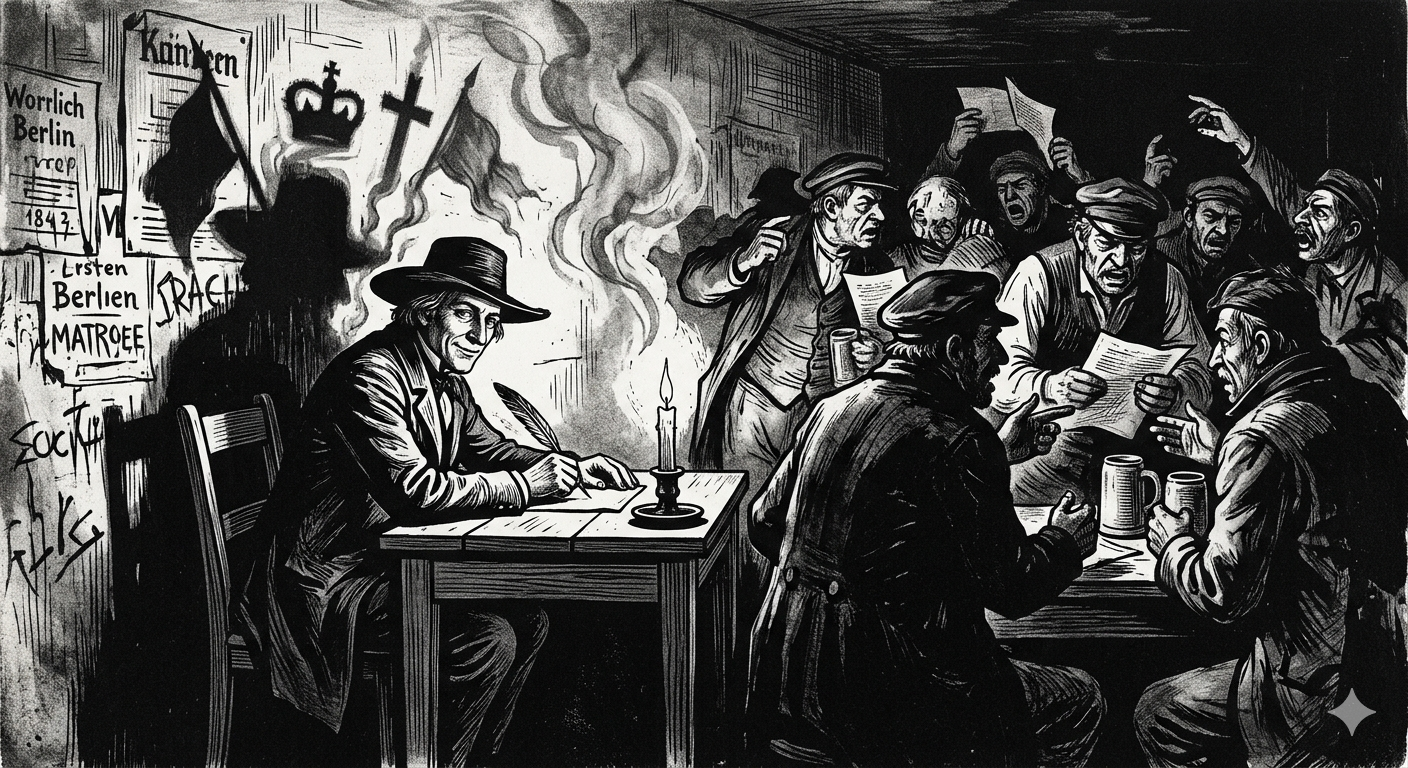
Max Stirner – der Mann, der auch das Heilige noch wegnahm
Du hast Spinoza gesehen, der nicht nachgab. Du hast Eckhart gesehen, der den Boden wegzog – bis nichts mehr stand außer der Stille selbst.
How a Circular Economy Actually Forms - Bitcoin Circular Economy, Part 3
A circular economy forms when value continues moving between participants instead of exiting the system. The key is not adoption alone, but the persistence of exchange within the network.

Why Token “Economies” Aren’t Real Economies - Bitcoin Circular Economy, Part 2
Many systems labeled as “economies” are driven by incentives and token speculation rather than real exchange. A true economy is built on the exchange of goods and services, not the circulation of a token.
Stop Converting Back - Bitcoin Circular Economy, Part 1
A circular economy doesn’t require new infrastructure. It starts when individuals stop immediately converting sats back to fiat and allow value to continue moving between participants.
We Can Send Merz Out to the Golf Course
Why voting is the worst way to determine who will govern, excepting all of the other ways.

Why Open Source Still Matters
Summary: Open source is fundamentally about visibility—the ability to inspect, run, and verify how a system works. In an increasingly opaque software landscape, that transparency matters more than ever. Continuum aligns with these principles, but openness must be introduced at the right time, when the system is coherent and understandable. The goal is not just to expose code, but to make the system truly knowable and trustworthy.

Direct, Not Intermediated
Summary: Setting up direct book purchases is not about replacing platforms like Amazon, but about restoring direct relationships between author and reader. Platforms optimize for efficiency but abstract the interaction. Direct purchase introduces a small amount of friction, but creates a more intentional and transparent exchange. It reflects a broader principle behind Continuum: ownership and connection should not be fully intermediated.
A Place for the Work to Live
Summary: Adding a Books section to mycontinuum.xyz is a small structural change, but an important one. It creates a place for the ideas behind Continuum—sovereignty, authorship, and ownership—to live alongside the software itself. Code shows what is possible. Writing explains why it matters. Both are necessary, and bringing them together marks a shift from a project to a growing body of work.
The Sovereign Small-App Pattern
A 1 1/2 hour experiment building a tiny admin tool for Kiki’s Kitchen Table revealed a repeatable architectural pattern for sovereign business applications: local editing, deterministic data, template rendering, and static deployment.
Write Anywhere. Publish Anywhere.
On April 19, 2026, I ran a simple but revealing experiment: create and sign a note offline on one machine, move it physically, and publish it from another. No cloud. No sync service. No account login. What happened wasn’t just a workflow—it was proof of a different model for authorship.

Living like God in France is easier to do when you live in France.
Why Americans are nearly working themselves to death and all they have to show for it is bigger trucks.

Propuesta Colaborativa
Una invitación a co-crear sobre el protocolo Nostr y el ecosistema Lightning. Buscamos personas conscientes, emprendedores y creadores listos para construir comunidad descentralizada, acción compartida y dinero sano.
