Featured writers

Featured writers

Long-form writers we noticed.

Why You Cannot Achieve Monetary Freedom Without Freeing Your Mind

What if the greatest obstacle to your freedom isn't the government, the banking system or the institutions that seek to control your life, but the beliefs you have been conditioned to accept without question? We live in an age of unprecedented access to information, yet intellectual dependency has never been more pervasive. From education systems and corporate media to political institutions, monetary orthodoxy and the identities we unconsciously inherit, the invisible architecture of our confinement is far more deeply embedded than we care to admit. Before you can break the chains imposed upon you by the world, you must first recognise the chains you have learned to impose upon yourself.

Cover image for Why You Cannot Achieve Monetary Freedom Without Freeing Your Mind

Is It Really Your Money?

What good is having money if someone else gets to decide whether you can access it? From Yanis Varoufakis' rather ironic encounter with debanking to the spectacular collapse of Paraguay's Ueno Bank, the events unfolding around us expose an uncomfortable truth: the modern financial system is built on layers of counterparty risk, institutional dependency and political discretion. Your bank balance is not financial sovereignty; it is a promise from an institution that can fail, freeze your funds or deny you access when you need it most. If money is ultimately a question of power, perhaps it is time we stopped trusting the very institutions that monopolise it. Financial freedom begins where institutional dependence ends.

Cover image for Is It Really Your Money?

An Essay on Capital

Kirzner explains capital goods as interim stages of ongoing plans and applies that view to sunk investment, waiting, durability and measurement.

Cover image for An Essay on Capital

The Economics of Inflation

Bresciani-Turroni explains German currency depreciation from 1914 to 1923 through Treasury and commercial credit, and why credible issue limits ended it.

Cover image for The Economics of Inflation

Lessons for the Young Economist

Murphy's introductory textbook derives specialization, saving, profit, calculation, price controls and business cycles from purposeful choice, counting forgone alternatives as costs.

Cover image for Lessons for the Young Economist

Study Guide to Human Action

Murphy and Gabriel's companion to Mises's Human Action pairs chapter summaries with technical notes and study questions that test compressed arguments.

Cover image for Study Guide to Human Action

Our Need for War ⋅ Metro 2033

The way we remember the world has created enemies that contradict our past. The way we remember the world has driven us underground in the present.

Cover image for Our Need for War ⋅ Metro 2033

Give the Image Less Power

White Noise 2026.10.27 for Android decodes GIF and WebP animation in a permissionless worker and adds memory checks on capable phones.

Cover image for Give the Image Less Power

Against Intellectual Monopoly

Michele Boldrin and David K. Levine argue creators can earn without excluding imitators, examining steam engines, patent pools, software and pharmaceuticals.

Cover image for Against Intellectual Monopoly

Vonu: A Strategy for Self-Liberation

Radliff’s vonu survey rewards readers who examine how mobility, community, and digital privacy change their dependencies without assuming protection from coercion.

Cover image for Vonu: A Strategy for Self-Liberation

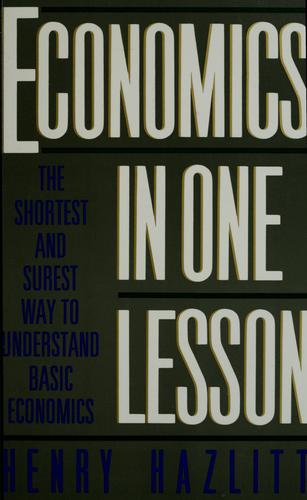
Economics in One Lesson by Henry Hazlitt

Hazlitt’s Economics in One Lesson guides beginners through prices, machinery, employment and saving, tracing economic consequences for all groups over time.

Cover image for Economics in One Lesson by Henry Hazlitt

Who Can Redeem the Dollar

Rothbard's short monetary primer traces money from market exchange through bank claims and coin ratios to the end of gold redemption.

Cover image for Who Can Redeem the Dollar