Bitcoin-Steuer selbst berechnen: FiFo, Haltefrist & das Open-Source Tool fürs Finanzamt
FiFo, 365-Tage-Haltefrist und ein lokales Open-Source Tool — Bitcoin-Steuer ohne Cloud, ohne Abo.

👽 Alien Investor | ₿ Bitcoin · Privacy · Freedom ⚡ Satirist · 🛸 UFO-Pilot 💸 Support: https://alien-investor.org/spenden.html 📜 My Mission: https://alien-investor.org/mission.html 📬 Newsletter: https://alien-investor.org/newsletter.html
FiFo, 365-Tage-Haltefrist und ein lokales Open-Source Tool — Bitcoin-Steuer ohne Cloud, ohne Abo.
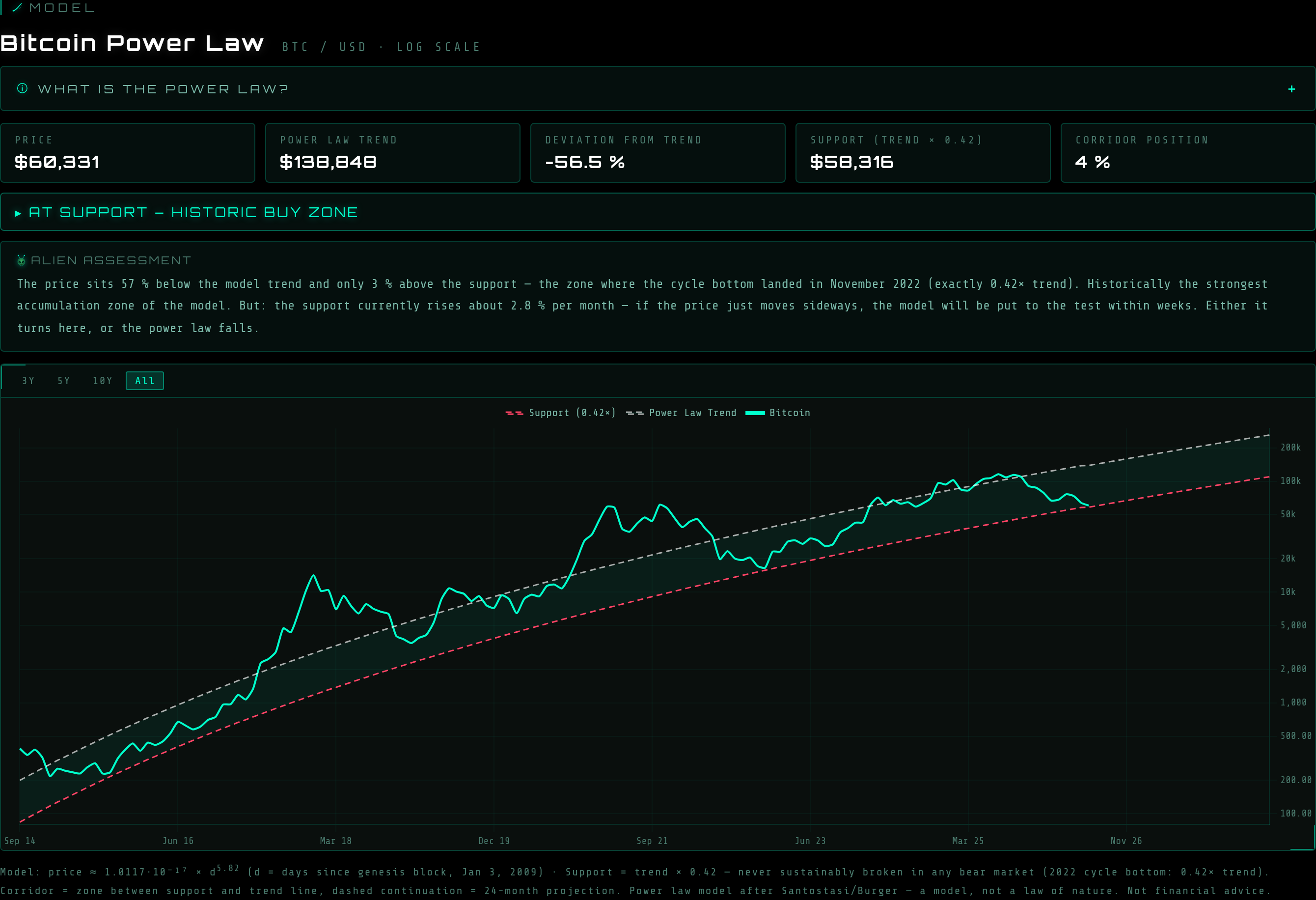
Bitcoin sits almost exactly on the power law support line that has held every bear market since 2011. Either it turns here, or the model gets falsified live.
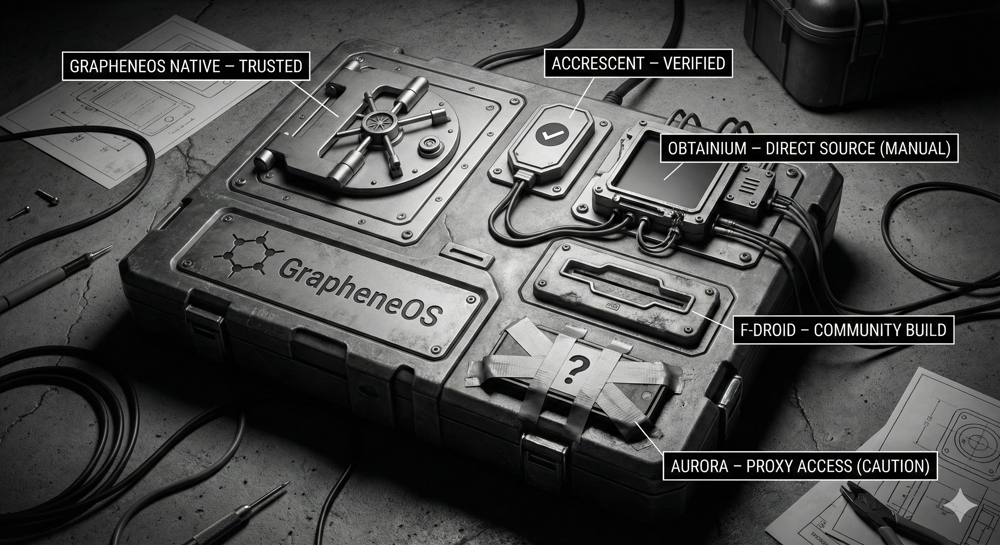
Permissions are not enough. True security relies on the source of your software. This guide establishes a hierarchy of trust for installing apps on GrapheneOS, ranging from the official repository to experimental Nostr-based solutions.
Timothy Leary confessed to being a CIA asset. The CIA bought Sandoz's entire LSD supply. Jim Morrison's father commanded at the Gulf of Tonkin. Documented facts — open interpretation.

A research overview on Wasabi, CoinJoin and WabiSabi — plus a 2026 update on what really happened after the zkSNACKs shutdown. Spoiler: CoinJoin isn't dead, it decentralized.

Bitcoin is pseudonymous, not anonymous. Every transaction is permanently public. CoinJoin breaks the link — and gives you fungibility back.

From seed backup to 100% privacy progress — a personal walkthrough of running CoinJoin on Tails OS with Wasabi and the Kruw coordinator. What works, what traps to avoid, and where mixed coins belong.

Every operating system you use leaves a trail. Browser history, file access logs, network connections, swap files — your computer is a diary you never meant to keep. Tails is the answer to that problem: a live operating system that remembers nothing, routes everything through Tor, and disappears without a trace the moment you pull the USB stick.

Your ISP sees everything you do online. A VPN just moves the problem. Tor eliminates it — by design, not by trust. Here's how Tor Browser and Orbot work, when to use which, and how to route your Bitcoin wallet through Tor.

Two ASIC miners. ~3.15 TH/s. €12/month in electricity. And statistically 200× better odds than buying a lottery ticket.

Most browsers are layered on top of an operating system that doesn't trust them. Vanadium is different. It is the OS. It is the system WebView that every app runs through. JIT-less by default. MTE-hardened. Fully de-Googled. And the best settings are the ones you don't touch.

Brave, LibreWolf, Mullvad Browser, Firefox+arkenfox — one core question separates them all: uniformity or randomization?

Most VPN marketing is noise. Here is what a VPN actually protects, and what it does not.

Du kaufst Bitcoin weil du frei sein willst. Raus aus dem kaputten Fiat-System, weg von der Kontrolle der Zentralbanken. Und was ist dein erster Schritt in diese angebliche Freiheit? Du scannst deinen Reisepass ein, machst ein braves Selfie für den Ident-Check und lädst beides bei einer zentralen Börse hoch. Fällt dir was auf?

Lightning makes Bitcoin usable as money. But whether you stay sovereign on this layer or slide back into being a customer of a regulated provider comes down to a single question: Who holds your keys?

Hyperinflation doesn't arrive overnight. It creeps in slowly — then all at once. Three countries, three currencies, one playbook. The mechanisms are always the same: debt monetization, capital flight, loss of trust. And every fiat currency follows the same political script.

You know Bisq has no KYC. What the basics don't tell you: how you pay decides how anonymous you really stay. A SEPA transfer on Bisq is fundamentally different from cash by mail. This article makes the difference visible.

You know Bisq exists. You know why no-KYC matters. But how does an actual purchase work — from finding the right offer to the BTC landing on your hardware wallet? This guide is based on a live trade, not theory.

The digital euro is not modernized cash. It's the technical infrastructure for programmable control over your purchasing power — and China is already doing it.

We are in a digital arms race. On one side stand states and intelligence agencies pushing for Chat Control. On the other side are citizens insisting on a basic right: privacy. Signal was considered the gold standard — but Signal is centralized. And it requires a phone number.