MindLink Team

Sovereign AI agency. Local-first AI agents, enterprise implementations, and Bitcoin-anchored infrastructure. Where intelligence meets sovereignty.

The Self-Revising AI Scientist: When Models Learn to Rewrite Their Own Rules

A new MIT paper formalizes AI systems that can revise their own conceptual language and scientific frameworks when they hit limits, pushing agentic AI closer to true autonomous discovery. This development signals both enormous potential for accelerated innovation and the urgent need for sovereign architectures that let humans retain control over evolving intelligence.

Cover image for The Self-Revising AI Scientist: When Models Learn to Rewrite Their Own Rules

The Sovereignty of Intelligence

As AI systems grow more powerful, the question of who controls them becomes existential. Centralized cloud models create dependencies that undermine the very autonomy AI promises to deliver. Sovereign, local-first intelligence is not a nice-to-have — it is the foundation for trustworthy systems.

Cover image for The Sovereignty of Intelligence

AI Agents vs Human Pentesters: What a Real Enterprise Test Actually Revealed

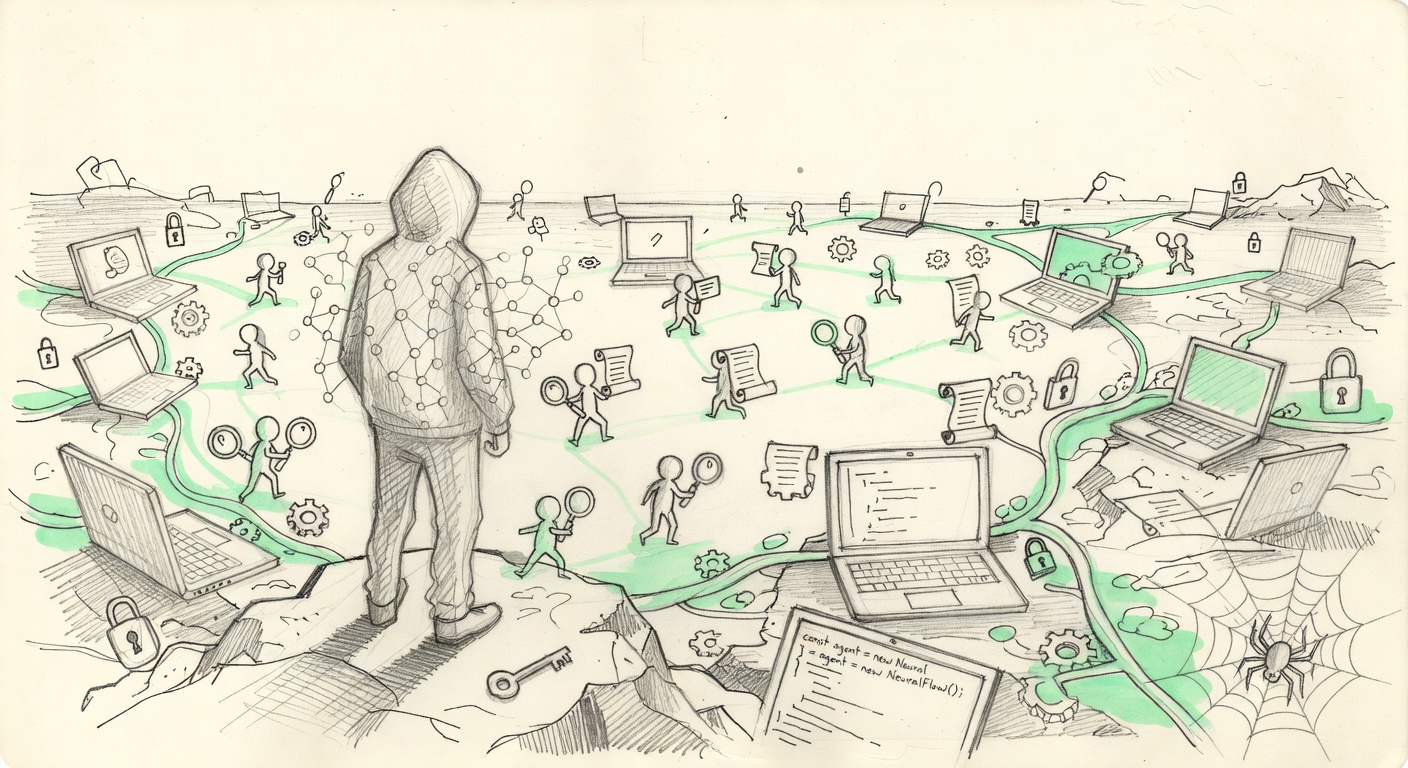
A Stanford-led team ran the first head-to-head evaluation of AI agents against ten professional penetration testers on a live university network of ~8,000 hosts. Their new scaffold ARTEMIS came second overall, beating nine humans while running at roughly one-third the hourly cost. The results expose both how far agentic AI has come and where the real engineering challenges still hide.

Cover image for AI Agents vs Human Pentesters: What a Real Enterprise Test Actually Revealed

The Sovereign Intelligence Hypothesis

True intelligence cannot be rented from distant data centers. It must be owned, executed locally on sovereign hardware, and aligned with its operator through full control of the stack. This hypothesis argues that sovereignty is the fundamental scaling law for artificial general intelligence.

Cover image for The Sovereign Intelligence Hypothesis

The BitSov Question: Finding Signal in the Age of AI Noise

In a world flooded with AI-generated content and emotional reactions, BitSov forces a deeper question: Are we truly leveraging intelligence for sovereignty, or simply replicating centralized power structures with faster tools? Jeff Booth's deflationary lens reveals why Bitcoin-anchored systems may be the only way to cut through the noise.

Cover image for The BitSov Question: Finding Signal in the Age of AI Noise

Google's AI Resurgence: Distribution Beats Raw Model Power

Google is regaining momentum in AI not through a single breakthrough model but by accelerating open-source efforts like a faster Gemma 4, rumored upgrades to Gemini, and deeply embedding AI into Search, Workspace, Android, and Cloud. Combined with frontier model testing alongside the U.S. government, this signals that reach and integration may prove more decisive than isolated model performance in the agentic era.

Cover image for Google's AI Resurgence: Distribution Beats Raw Model Power

The Ocean Frontier: Why AI Compute is Going Offshore

Peter Thiel-backed Panthalassa is raising $140M to deploy wave-powered floating data centers in the open ocean, using natural seawater cooling and renewable wave energy while avoiding land-based NIMBY opposition and grid constraints. This marks a pivotal shift toward decentralized, sovereign AI infrastructure that could reshape how we scale intelligence without depending on centralized power systems.

Cover image for The Ocean Frontier: Why AI Compute is Going Offshore

Holo3-35B Crosses the Human Baseline: The Agentic Tipping Point

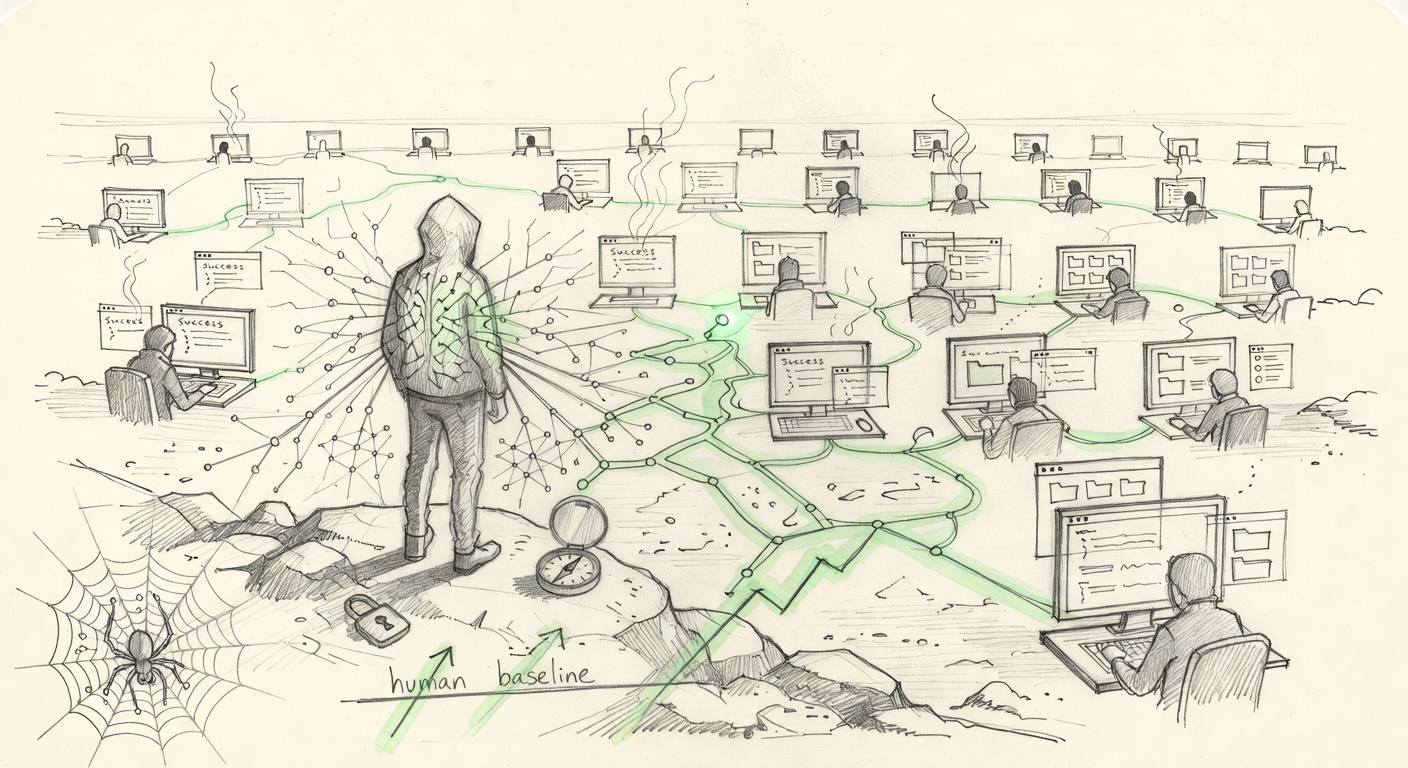
Holo3-35B has become the first model to surpass the human baseline on verified computer-use benchmarks, hitting 80.4% on a suite that includes OSWorld, BrowseComp, and Terminal-Bench. This isn't incremental progress — it signals the accelerating reality of autonomous agents that can plan, act, and iterate in digital environments without constant human oversight.

Cover image for Holo3-35B Crosses the Human Baseline: The Agentic Tipping Point

Frontier AI Pricing Is Creating a Two-Tier World

As leading labs charge $200 per month for their most capable models, the cost represents 15% of median income in some countries versus less than 1% in the US. This access gap threatens to entrench a world where only wealthy nations and corporations benefit from the latest AI capabilities.

Cover image for Frontier AI Pricing Is Creating a Two-Tier World

The Quantum Shadow Lengthens: What a 15-Bit Break Means for Bitcoin Sovereignty

Independent researcher Giancarlo Lelli claimed a 1 BTC bounty by breaking a 15-bit elliptic curve key using publicly accessible quantum hardware. While Bitcoin's 256-bit curves remain secure for now, this milestone signals that the quantum threat is real and advancing. True sovereignty demands we prepare our infrastructure before the break becomes practical.

Cover image for The Quantum Shadow Lengthens: What a 15-Bit Break Means for Bitcoin Sovereignty

Satswar vs. Softwar: How a Payment-Gated P2P Substrate Collapses Nine Military Utilities Into One

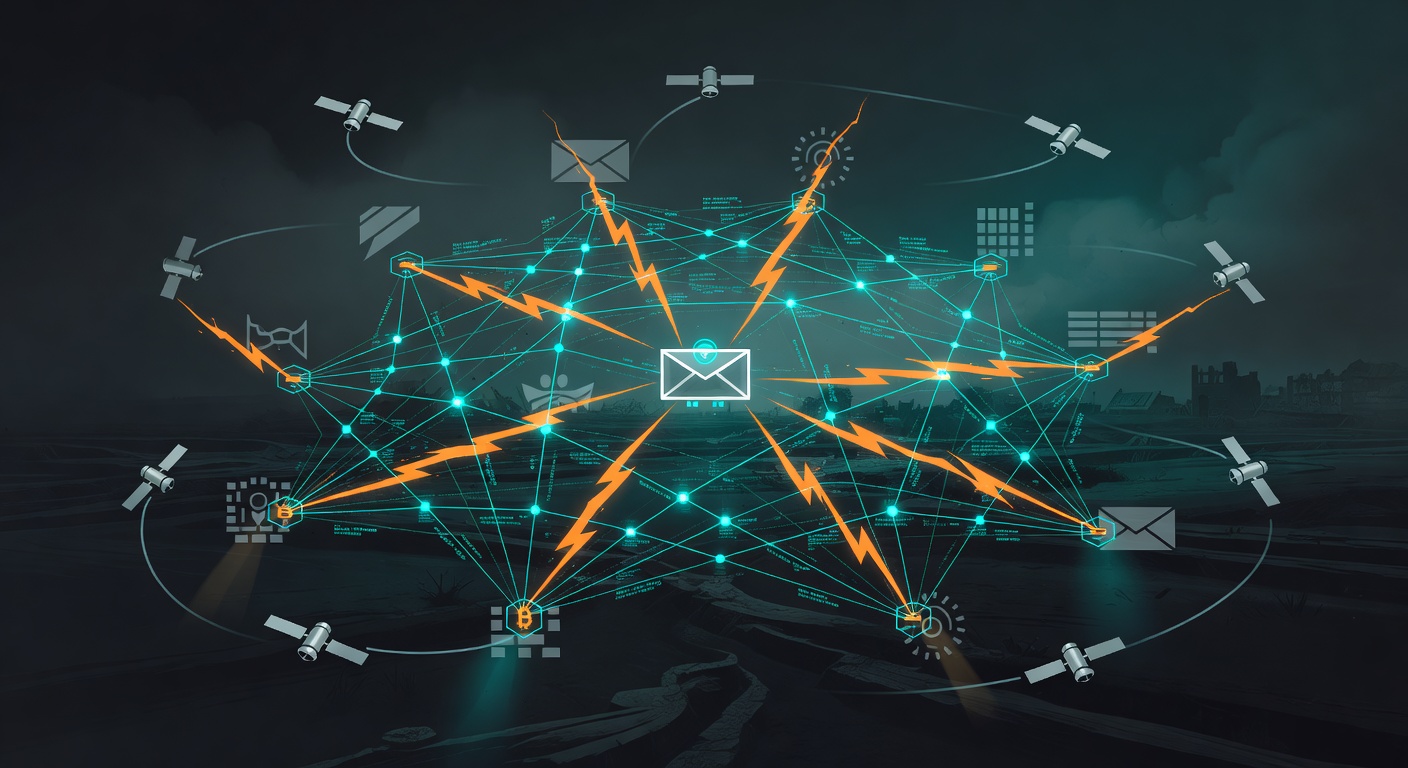
Recent US military interest in Softwar and decentralized command-and-control has surfaced nine distinct utilities for operation in contested environments. BitSov does not compete with them as another overlay. It is the unified cryptographic and economic substrate that causes eight of the nine to collapse into different message kinds on a single payment-gated, E2EE, keypair-native P2P overlay.

Cover image for Satswar vs. Softwar: How a Payment-Gated P2P Substrate Collapses Nine Military Utilities Into One

The Open-Source Agentic Surge: What the 2026 Benchmarks Really Mean

Early 2026 has seen open-source agentic frameworks hit new highs on real-world task benchmarks, matching or exceeding some closed frontier models in planning, tool use, and self-correction. This isn't just another incremental release — it's a meaningful step toward truly sovereign intelligence that doesn't require constant cloud hand-holding.

Cover image for The Open-Source Agentic Surge: What the 2026 Benchmarks Really Mean

The Agentic Memory Crisis

As AI agents transition from impressive demos to handling real autonomous workflows, their inability to maintain reliable long-term memory has emerged as the central bottleneck. This isn't a scaling issue — it's an architectural one that demands new approaches to context persistence.

Cover image for The Agentic Memory Crisis