The Unsellable Identity
Nostr accounts cannot be sold because sellers cannot prove they forgot the private key, which collapses the market for reputation handoffs.


[Original] Listing some cool and/or controversial accounts on nostr. trying to put people in here with different viewpoints and vibes to keep it as hollistic as possible for debates, arguments, reasons, discussions, controversies and contradictions. open to suggestions as well.
Nostr accounts cannot be sold because sellers cannot prove they forgot the private key, which collapses the market for reputation handoffs.
Content encryption hides what was said. The transport layer leaks who is communicating with whom, enough for targeting decisions.
Homomorphic encryption, MPC, and trusted enclaves each run a computation on inputs the executing party is not permitted to see.
The Wall Street Journal warns you about the dangers of “private money” called stablecoins, while defending a dollar system that is nothing but a pyramid of bank-created IOUs backed by debt and the state’s monopoly on violence. The truth is that private, apolitical money isn’t the risk, but it’s the only escape from a collapsing fiat empire The real divide is no longer between regulated and unregulated money, but between systems that require trust in power and systems that remove it entirely.

Zero-knowledge proofs separate what is verified from what is revealed, ending the forced choice between participation and privacy.
Cryptography shifts trust from institutions to mathematics, and that shift carries every privacy primitive the book later builds.
Crypto controls failed against builders, held against defaults, and locked in the two-tier privacy equilibrium thirty years later.
Commercial firms assemble surveillance no agency could lawfully build, and the state buys the output as a service.
We are in a digital arms race. On one side stand states and intelligence agencies pushing for Chat Control. On the other side are citizens insisting on a basic right: privacy. Signal was considered the gold standard — but Signal is centralized. And it requires a phone number.
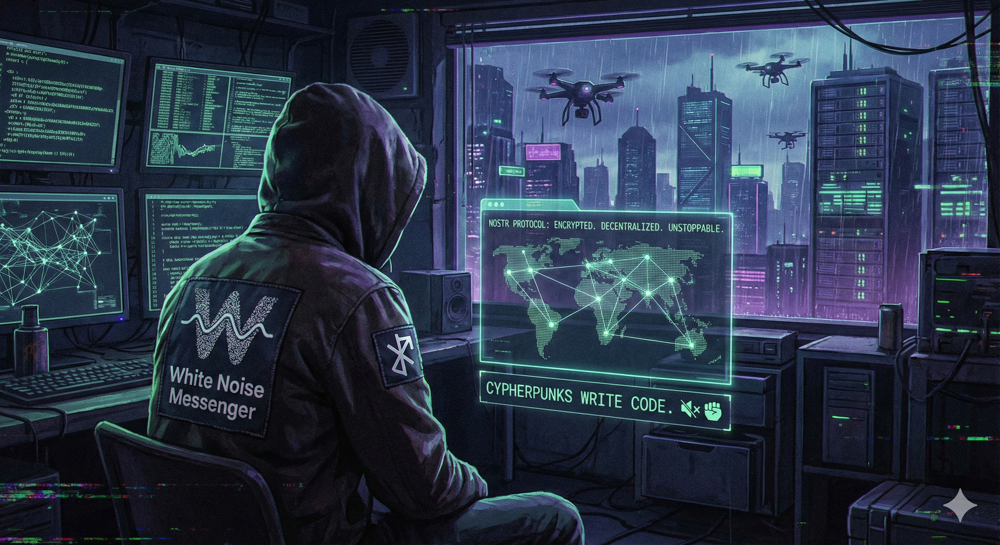
In the early days of the internet, strong encryption was legally classified as a weapon of war. This article explores the history of the Crypto Wars, the rise of the Cypherpunks, and how creative civil disobedience — from printing code in books to wearing it on t-shirts — established privacy as a fundamental digital right.
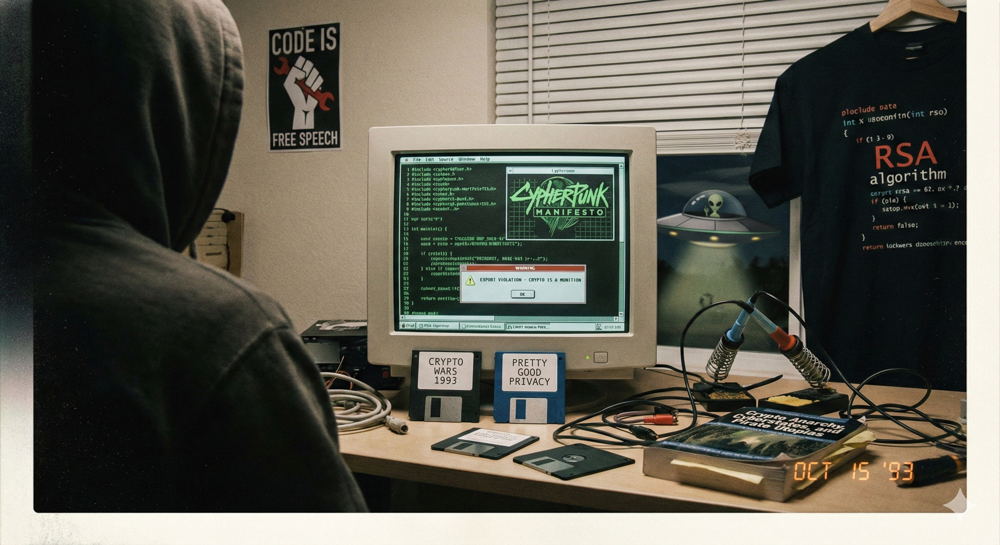
Cryptography is not just rocket science; it is the foundation of modern digital life. By distinguishing between symmetric and asymmetric encryption, this article explains how mathematics shifts the power balance from centralized authorities back to the individual. It is the ultimate tool for digital self-determination.
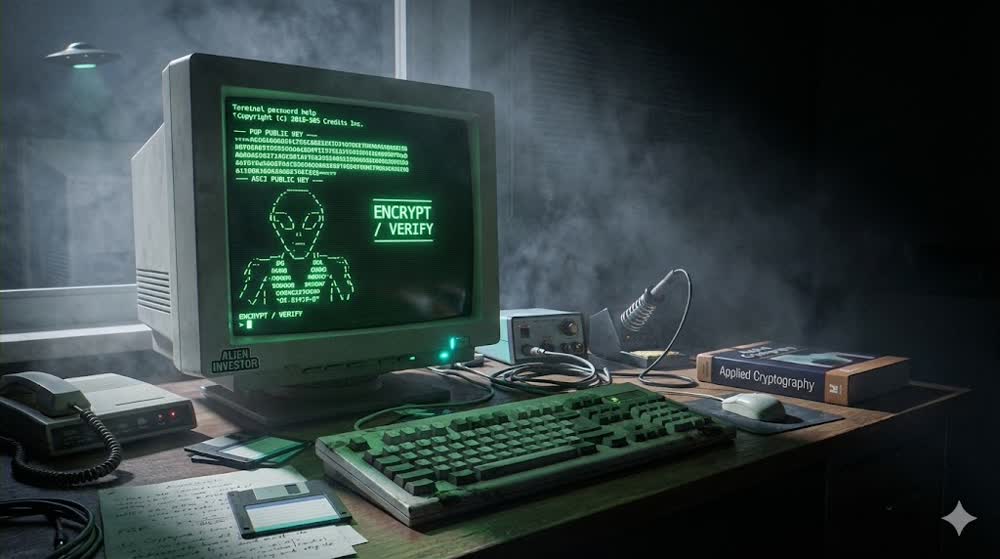
Sovereignty shouldn't stop at your desktop. In this second part of the Digital Bunker series, we build a mobile encryption workflow using GrapheneOS and Termux. These scripts allow you to securely encrypt and decrypt sensitive archives on your phone, fully compatible with your Linux desktop setup.
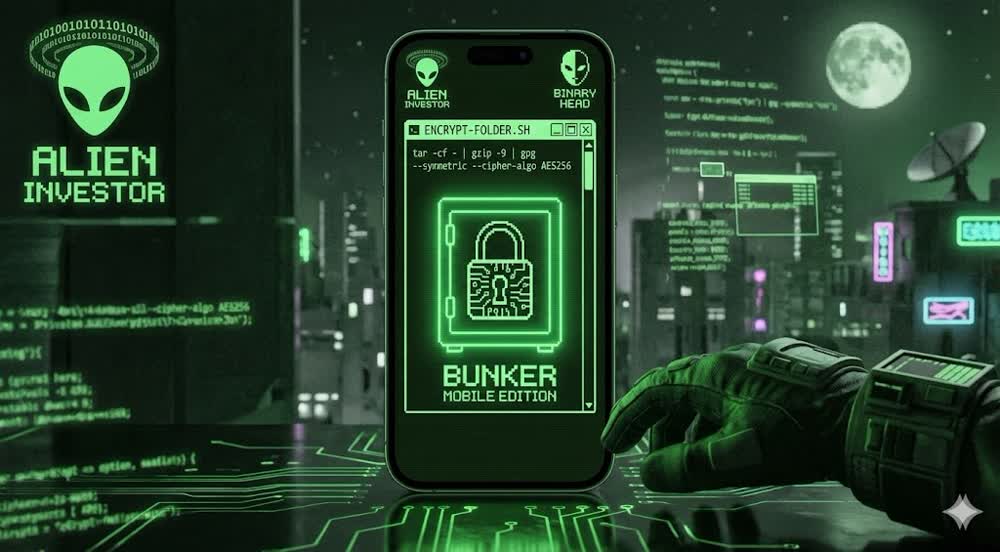
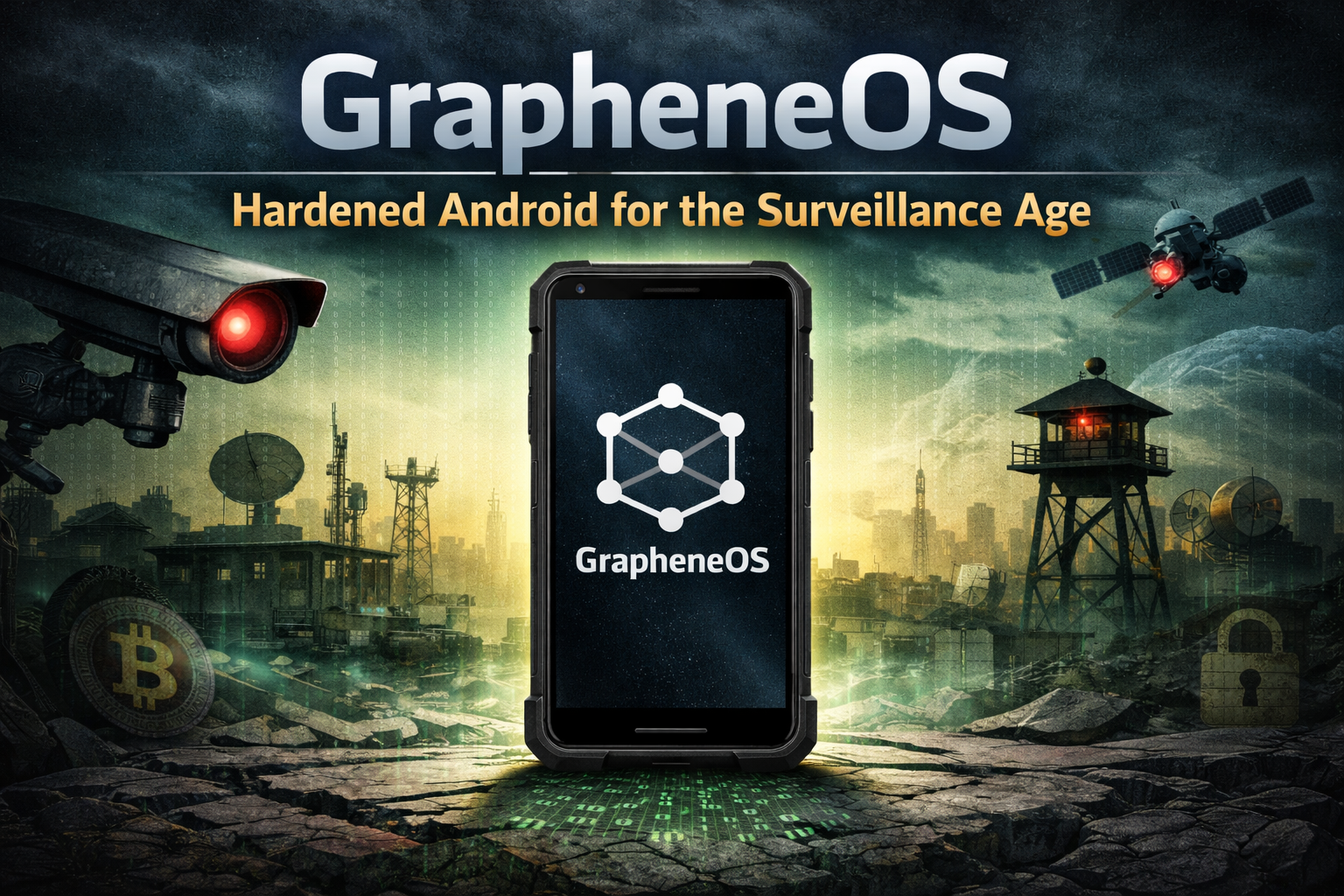
Android is closing the gates. Starting in 2026/2027, sideloading will be severely restricted through identity requirements and a new Advanced Flow. This article analyzes how Google's move threatens F-Droid and Nostr, and why GrapheneOS is transforming from a privacy tool into a structural necessity for digital sovereignty.

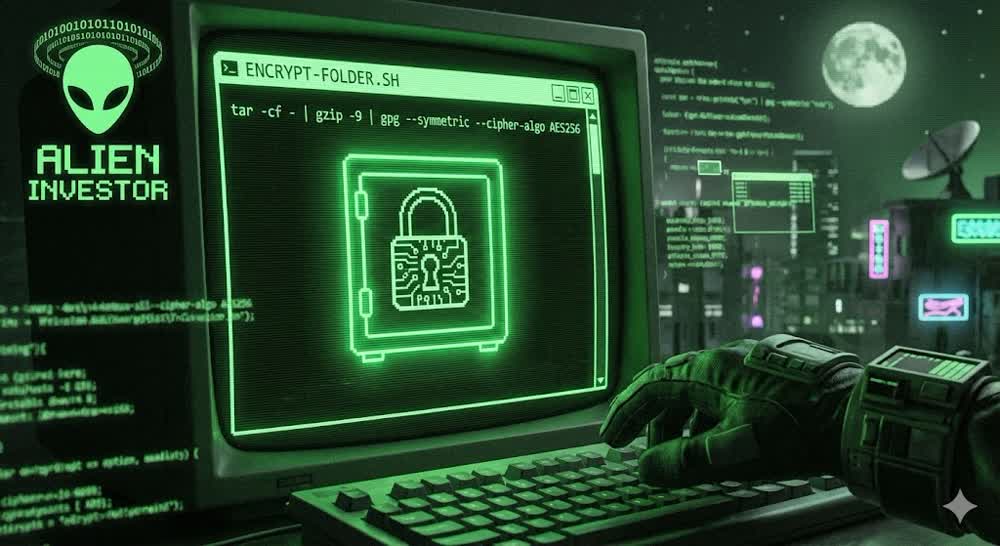
True privacy relies on transparency, not secret apps. This guide provides two audit-proof Bash scripts to encrypt and decrypt sensitive folders using standard GPG and AES256. No cloud, no subscription, just pure math and Linux.
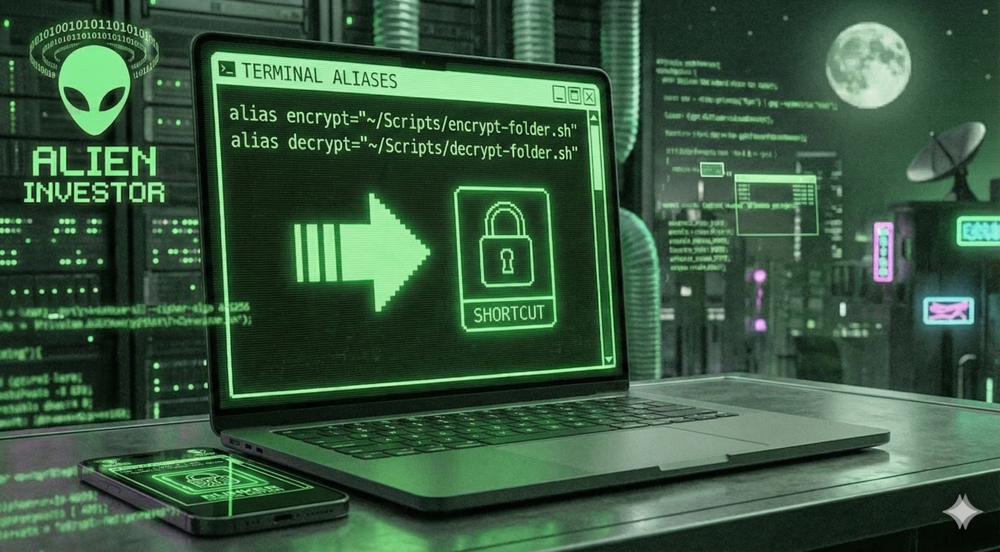
Security must be usable. Typing file paths is tedious and prone to error. This guide shows you how to use aliases to integrate your encryption scripts directly into your terminal workflow on both Linux and GrapheneOS (via Termux).
Brussels is putting your identity in your pocket. The technical design is actually decent — local storage, selective disclosure, open standards. The problem, as always, is not the spec. It's who implements it and how. Here's what actually breaks, what doesn't, and why Nostr can't be touched.

GrapheneOS offers a privacy-focused alternative to stock Android by removing Google tracking and hardening system security. This guide outlines the risks, prerequisites, and installation process for sovereign users. It explores the necessary trade-offs between convenience and digital self-determination.
Your smartphone is your most intimate spy. It knows where you sleep, whom you message, what you search for, and where you travel. If you use Bitcoin, maintain sensitive contacts, or simply refuse to be treated like a transparent lab rat, standard Android settings are no longer sufficient.
biogenerative, digital & sci fi inspired.